The Souls We Recognize, the Love We Remember, and the Kingdom We Have Yet to Build

On twin flames, past lives, divine timing, and why not every soul we recognize is the one we’re meant to walk beside

By Julie Tourangeau | julietour.com

There are people you meet for the first time who somehow do not feel new.

You don’t recognize their face. You don’t remember their name. You cannot point to a shared history or explain why being in their presence feels so familiar.

But something within you recognizes them.

I’ve experienced this more than once in my lifetime.

And after years of writing about twin flames, soulmates, spiritual awakening, and the possibility of reincarnation, I’ve begun to question something I once thought I understood.

What if we have mistaken soul recognition for romantic destiny?

What if the people who awaken our souls aren’t necessarily the people we’re meant to spend our lives with?

And what if there is something greater than finding our other half?

What if the real purpose of divine partnership is to help bring the Kingdom of Heaven to Earth?

An Expert in Getting It Wrong?

A few years ago, I had the rather amusing experience of being presented in a news article as something of a foremost expert on twin flames.

Which is especially funny because I distinctly remember telling the reporter that I’d mistaken the identity of my supposed twin flame more than once.

Apparently, that’s one way to become an expert. Experience, including the experience of being wrong. Repeatedly. 😂

But there’s something important about that distinction.

I’ve never believed that recognizing an extraordinary connection automatically means you’ve discovered the one person you’re destined to spend eternity with.

In fact, I explained to the reporter that I believe relationships exist at different spiritual levels.

Some connections are familiar. Others are transformative. Some mirror our deepest wounds, while others awaken parts of ourselves we didn’t know existed.

And I believe truly divine partnership is something different still.

I also expressed an opinion that doesn’t always make me popular in spiritual circles:

Most people may go through an entire lifetime without experiencing what I would consider a divine romantic relationship. And that’s perfectly okay.

Not everyone is looking for that experience.

Not everyone is prepared for it.

And not everyone is at the same place in what I understand as the evolution of the soul.

That isn’t a judgment of anyone’s spiritual worth. I don’t believe the intensity or perceived divinity of a romantic relationship makes one human being superior to another.

I simply believe there are levels of connection, and that we continually evolve in our capacity to recognize and experience them.

Of course, the article ultimately emphasized a different part of our conversation.

The reporter highlighted my belief that human beings are extraordinarily powerful, that we have the capacity to manifest remarkable possibilities, and the astonishing circumstances surrounding how I met the man I would eventually become engaged to.

And those circumstances genuinely were astonishing.

At that point, the timing of our meeting was the most extraordinary romantic synchronicity I’d ever experienced.

I still believe that.

But what I didn’t know then was that another encounter would eventually challenge my understanding of spiritual recognition.

Because extraordinary timing and extraordinary energetic connection are not necessarily the same experience.

As my relationships have deepened, changed, and sometimes ended, my understanding of divine partnership has continued to evolve.

Perhaps that’s the most important qualification an expert on love can possess.

The willingness to admit there is always more to learn.

When Souls Meet at the “Wrong” Time

Earlier this year, I met someone I felt I already knew.

The recognition was immediate. Not something that developed over months of conversation or gradually emerged through shared experiences.

It was simply there.

There was an ease, a familiarity, and eventually a series of conversations that made the connection feel increasingly difficult to dismiss.

But the timing was almost comical.

I was engaged to another man, someone whose place in my spiritual journey had already become part of my public writing.

And the person I had just met was navigating the complicated aftermath of a marriage. Our meeting coincided with a significant anniversary in that relationship.

If you’ve spent enough time contemplating reincarnation, synchronicity, and divine timing, you begin to notice the strange circumstances surrounding certain encounters.

Two people who feel inexplicably familiar, meeting at a moment when neither is entirely available… a spiritual recognition wrapped in profoundly human complications.

At one point, he told me he believed we had met for a reason. He described our connection as significant, as though we’d known one another forever. He said he had grown the most since he had met me.

What made that conversation particularly interesting was that he shared an experience from his past. He had previously felt a profound spiritual connection somewhat similar to me with someone and that connection eventually developed into a romantic and physical relationship.

He told me directly that he was trying to figure out the connection between us.

I understood exactly what he meant.

Because I had felt it from the beginning.

I had been observing silently, wondering whether the significance I felt in my intuitive world would ever manifest in the physical world.

And it did.

Or it began to, anyway, with one remarkably open phone conversation.

There was something extraordinary about hearing another person independently acknowledge a connection I had privately contemplated for months.

But I’ve learned that two people can recognize something meaningful in one another without agreeing on what to do about it.

And sometimes the most difficult lesson is discovering that recognition alone cannot create a relationship.

A soul may feel familiar without being ready to walk beside yours.

Saying Goodbye Before the Streets Erupted
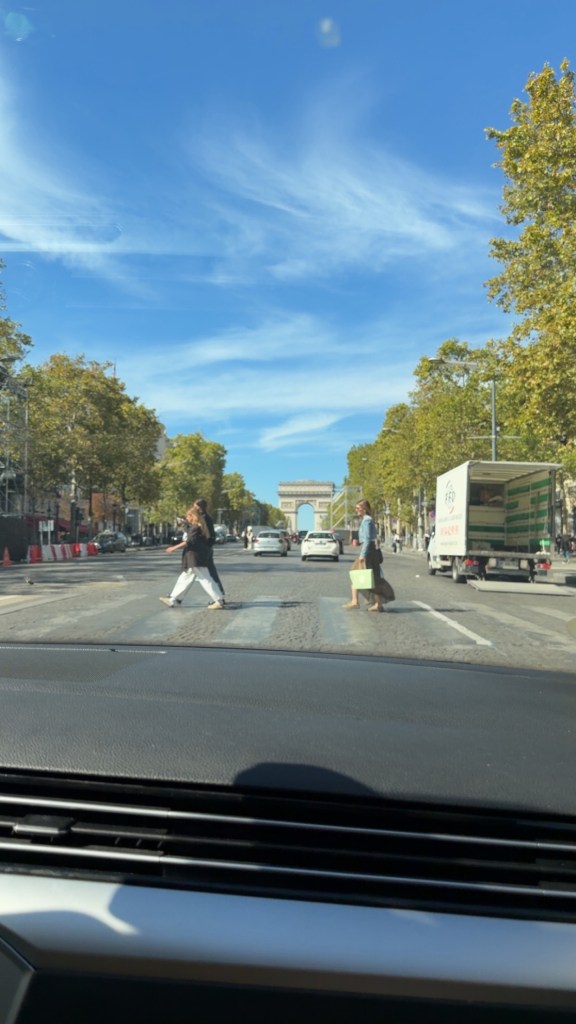
Not long after, I returned to France.

I went knowing something in my life had changed.

For years, my romantic relationship had carried me between two countries, two cultures, and two very different visions of the future.

There had been love, extraordinary experiences, difficult sacrifices, and dreams that once seemed entirely possible.

But I could no longer ignore the distance between the relationship I hoped to have and the one I was actually living.

And something else had happened.

Before returning to France, I had encountered a connection whose energy was unlike anything I had ever experienced.

I don’t know how else to explain it.

It felt as though my heart was on fire.

Not simply the nervous excitement of attraction or the familiar butterflies of a new romantic interest.

I experienced it as something centered in my heart chakra, an extraordinary sensation of warmth, openness, and intensity that seemed to reach beyond anything I could logically explain.

It was like a sleeping limb awakening—a part of me that had always existed but had never come alive quite like this.

What fascinated me was that this recognition had existed from the very beginning, long before I contemplated what it might mean romantically.

I had experienced remarkable synchronicities before.

I had experienced intense love.

I had experienced what I believed were divinely orchestrated meetings.

But this felt different.

And when I returned to France, I became acutely aware of that difference.
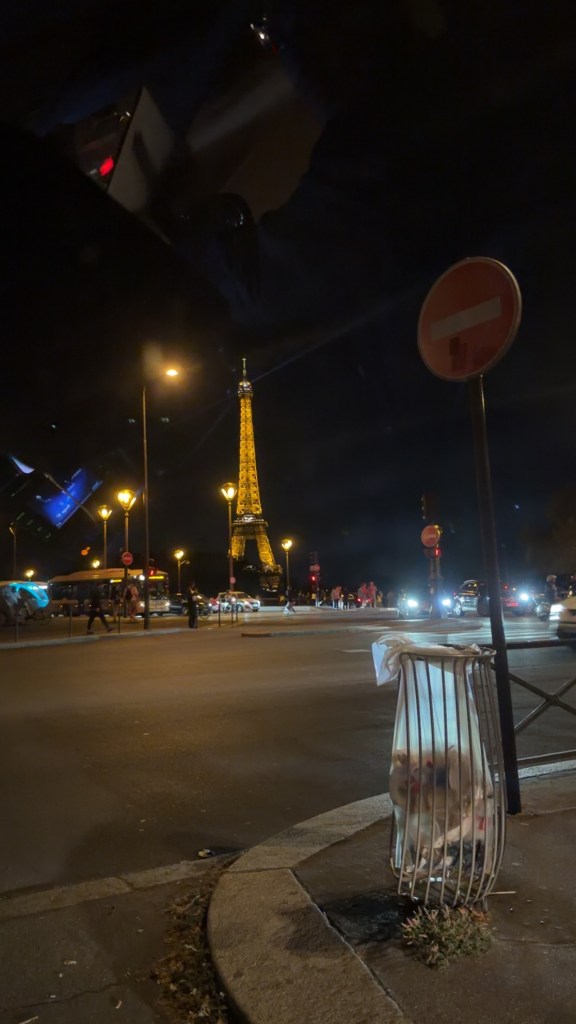
Sitting across from the man I had once imagined marrying, I recognized how profoundly my internal world had shifted.

It wasn’t simply that I’d developed feelings for someone else.

I had experienced a kind of energetic recognition I hadn’t known was possible, and I could no longer pretend my understanding of love had remained unchanged.

I want to be careful here.

A powerful sensation in the heart, even one I interpret through the language of chakras and spiritual awakening, is not proof that another person is divinely appointed to be my partner.

Nor does it diminish the real love I had experienced in another relationship.

Of course, the timing of the immigration issues we faced was also significant. Our relationship had already been tested by circumstances neither of us could easily change.

But I couldn’t deny what I’d felt or ignore what it revealed about the relationship I was already questioning.

So I said goodbye.

Not to a stranger. Not to someone who had meant nothing.

I said goodbye to someone who had occupied an enormous chapter of my life.

There is a peculiar grief in ending a relationship while the person you once imagined spending your life with is still standing in front of you… in the French Riviera, no less.

You aren’t mourning a death.

You’re mourning a future.

And yet, as painful as it was, I knew I could not continue building my life around a promise that wasn’t becoming reality.

What makes the timing particularly fascinating to me now is what followed.

Not long after I left France, images of unrest and confrontation in Paris began circulating. Streets I knew became the backdrop for protests, anger, and a country wrestling publicly with its own contradictions.

I had just experienced a deeply personal separation, only to watch a place so intertwined with that relationship become a scene of collective upheaval.

I don’t believe every coincidence needs a supernatural explanation. But I do believe meaningful timing invites reflection.

I had gone to France to confront something I’d been avoiding. And I left just before the unrest that would soon dominate my attention.

There was something strangely symbolic about that sequence… a private ending followed by public upheaval.

Two very different experiences, both asking what happens when the structures we’ve accepted can no longer hold.

Sometimes the world outside us seems to echo the questions we’re asking within.

What If We Have More Than One Twin Flame?

The conventional twin-flame narrative suggests that one soul has been divided into two, with each half destined to find the other.

It’s a beautiful idea.

It’s also an idea I’ve become increasingly unwilling to accept without questioning.

Because I’ve experienced profound mirroring in multiple relationships.

Not identical experiences, of course. Different personalities. Different circumstances. Different lessons.

Yet there have been moments of recognition, uncanny synchronicities, and similarities that seemed to reach beyond ordinary attraction.

If we entertain the possibility that consciousness experiences multiple incarnations, why would we assume only one relationship could carry significance from another lifetime?

Consider how many people we love during a single life…

Parents. Children. Friends. Partners. Mentors.

People who change us forever.

Would those relationships simply disappear from the greater story of the soul?

Or might we encounter familiar souls repeatedly, sometimes as lovers, sometimes as friends, sometimes as people whose purpose is to challenge our understanding of love?

Perhaps the concept of one exclusive twin flame or soulmate is too limited.

Perhaps there are many souls capable of reflecting something sacred back to us.

And perhaps the intensity of that reflection tells us more about what we’re being invited to learn than about whom we’re destined to marry.

Spiritual familiarity is not the same thing as compatibility. Synchronicity is not a substitute for commitment. And even the most extraordinary connection requires two people willing to choose one another.

That last realization may be the hardest.

Because it requires us to separate what we feel spiritually from what someone is capable of offering us in this lifetime.

The Difference Between a Soulmate and a Kingdom Spouse

Lately, I’ve been thinking about another concept: the kingdom spouse.

Not simply a romantic partner who feels divinely appointed.

Not someone whose presence produces an endless series of angel numbers, coincidences, or emotional highs and lows.

I mean something much more profound.

A partner with whom you can help manifest the Kingdom of Heaven on Earth.

For much of my spiritual journey, I’ve explored the teachings of Jesus through the lens of mercy, compassion, and the possibility that the message of the Kingdom has been misunderstood.

What if heaven was never intended to be exclusively a destination after death?

What if the Kingdom was something humanity was being invited to realize here?

A transformation of consciousness so complete that it changes how we treat one another, how we govern ourselves, how we understand our relationship with nature, and how we respond to suffering.

For me, that vision cannot be separated from the treatment of animals.

I’ve been vegan and vegetarian for most of my life.

The longer I contemplate heaven on Earth, the more difficult it becomes to reconcile that vision with a world built upon the unnecessary suffering of other living beings.

Imagine a world where compassion was not selective.

Where mercy wasn’t something we extended only to those who looked like us, spoke like us, worshipped like us, or belonged to our species…

A world in which the powerful no longer regarded the vulnerable as resources to be exploited.

I don’t believe veganism alone, without the inner work, would create heaven. Humanity would still have to confront violence, poverty, hatred, exploitation, and countless forms of suffering.

But I struggle to imagine a kingdom founded upon divine love while institutionalized cruelty remains an accepted part of everyday life.

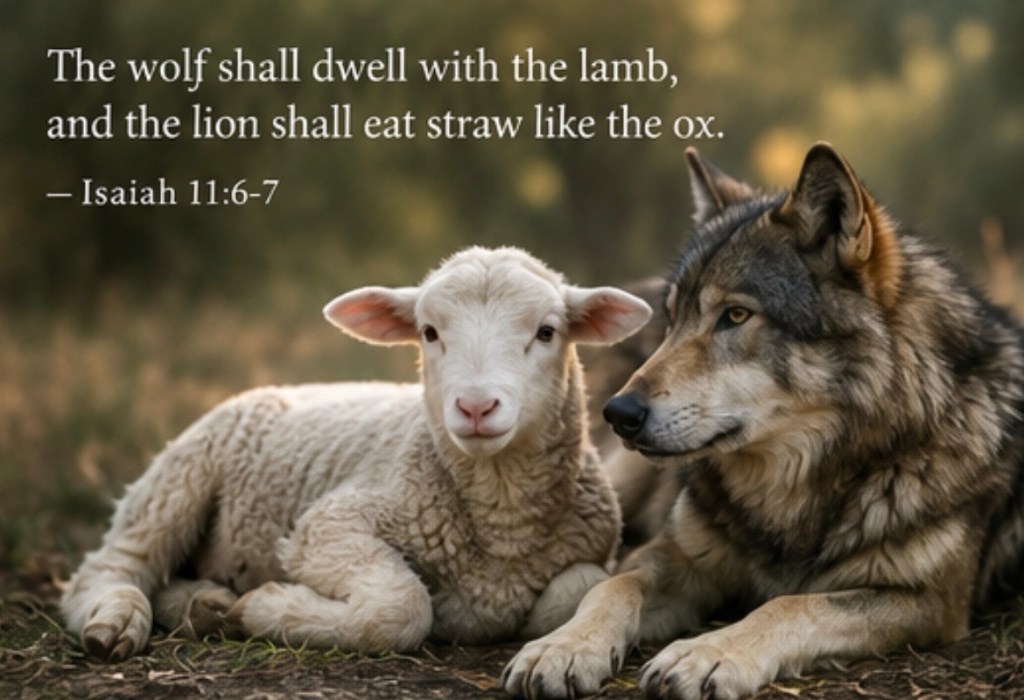
The prophecy of a peaceable kingdom, where even the wolf and the lamb coexist, has always fascinated me.

What if these images weren’t simply promises of a distant supernatural future?

What if they were invitations to reconsider what humanity might become?

And what if finding a kingdom spouse isn’t about locating the person who makes us feel the most intense romantic connection?

What if it’s about finding someone who shares a vision of what love is meant to accomplish?

Someone who doesn’t merely awaken our heart, but walks alongside us in the work of transforming the world.

Love Without Possession: The Freedom of Divine Partnership
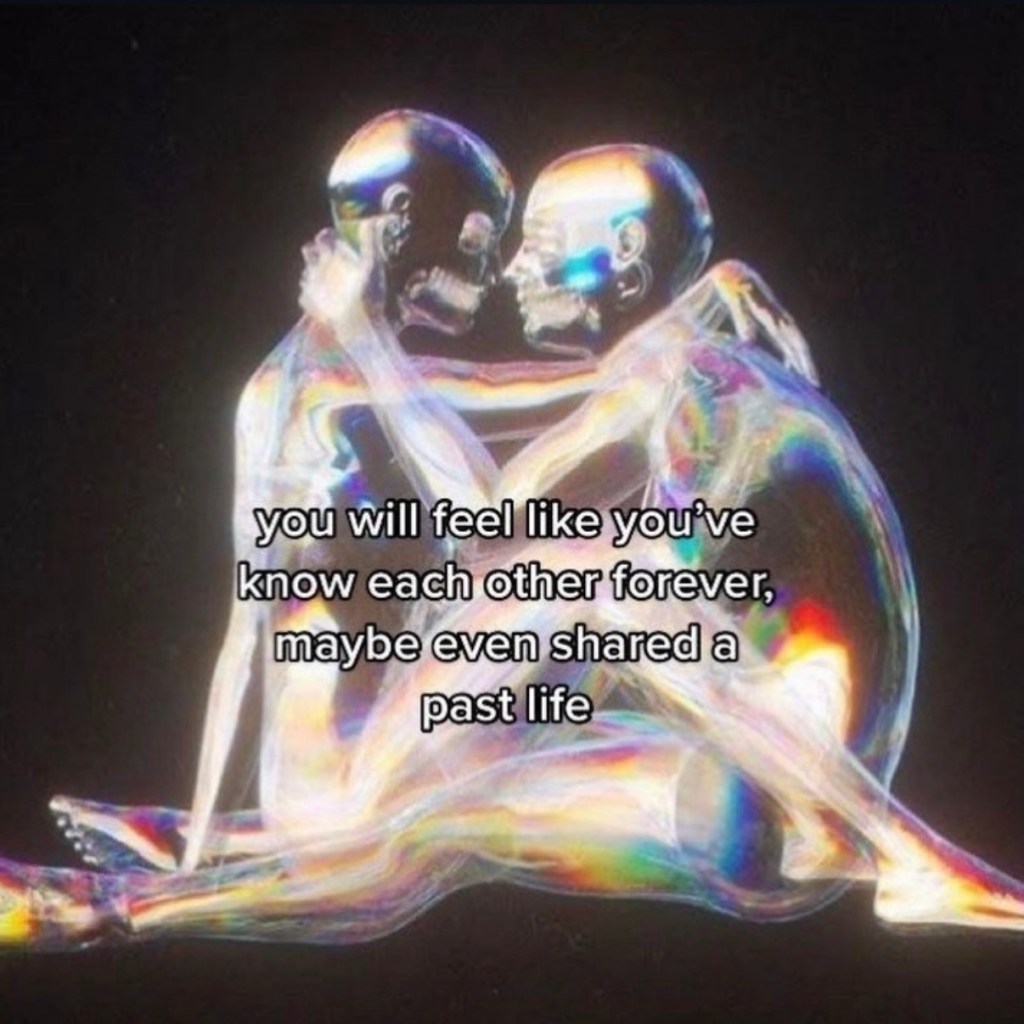
One of the books that has influenced my understanding of spiritual relationships is The Celestine Prophecy by James Redfield.

What has stayed with me is its exploration of intuition, spiritual energy, and the ways human beings attempt to control one another when they become disconnected from their own spiritual source.

The book invites us to consider what relationships might become when two people are no longer trying to extract something from one another to feel complete…

When they are connected to something greater than themselves.

When they trust their intuition and allow their connection to unfold without constantly attempting to direct the outcome.

I’ve come to believe this is essential to divine partnership.

Because what happens when you meet someone whose presence feels like heaven on Earth?

Someone who awakens a feeling so extraordinary that you want to hold on to it forever?

The temptation, of course, is to do exactly that.

To hold on.

To define it.

To secure it.

To make sure it never disappears.

But perhaps that is precisely where we begin to misunderstand the gift.

When something feels sacred, our instinct may be to possess it. But perhaps the most loving thing we can do is allow it to remain free.

We cannot control another person’s spiritual evolution.

We cannot manipulate someone into recognizing what we recognize.

We cannot force another person to surrender to a connection simply because we believe it has a divine purpose.

And perhaps most importantly, we cannot always be the one leading.

There is a difference between guiding a relationship with love and attempting to control its destination.

There is a difference between surrendering to divine timing and surrendering our own autonomy.

And there is a profound difference between unconditional love and unconditional access to another person’s life.

To me, genuine surrender does not mean abandoning ourselves, our boundaries, or our ability to choose.

True spiritual surrender should lead us toward greater freedom, not less.

Imagine two people who trust one another enough to follow their shared intuition.

Neither needs to dominate.

Neither needs to manipulate.

Neither needs to constantly anticipate the other’s next move, manufacture a desired response, or control the relationship.

They can simply be.

They can love without fear that freedom itself will destroy their connection.

They can surrender without becoming powerless.

They can maintain their individuality while participating in something greater than either person could create alone.

And when one person feels called to lead, the other can trust. When the direction changes, they can move together without turning love into a struggle for control.

But for that to work, I believe both people must cultivate their own connection with Source… and continually be conscious of it.

Neither can depend entirely upon the other to provide the love, validation, energy, or spiritual fulfillment they have not yet learned to experience within themselves.

Because when we make another human being our only connection to the divine, love can become dependency.

And when we become terrified of losing that connection, dependency can become control.

I don’t believe that’s the freedom Jesus was describing.

I believe divine love should liberate us.

And I believe a kingdom relationship would require two people who are connected to Source individually, yet capable of experiencing that connection together.

Not through ownership.

Not through obligation.

Not through the fear of abandonment.

But through intuition, trust, mutual devotion, and liberty.

This doesn’t mean love requires no commitment. Quite the opposite.

The deepest commitment may be the one we make freely, every day, without needing to diminish another person’s freedom to secure it.

Perhaps that’s what it means to experience heaven on Earth through another human being.

Not that we finally possess someone who makes us feel whole.

But that we experience a love so aligned with freedom that neither person must lose themselves to sustain it.

And if that connection is truly as precious as it feels, perhaps we should be especially careful not to destroy its beauty through our desire to control it.

Unconditional love does not mean we are guaranteed a relationship. It means our love does not become a demand for possession.

The greatest partnerships, I believe, are built by two people who remain connected to Source, connected to themselves, and connected to one another.

Two free souls choosing unity.

Not because they must.

But because they can.

And perhaps that is what makes such a partnership divine.

The Tao: Love in Harmony With the Way

This brings me to another spiritual philosophy that has profoundly shaped how I understand love: the Tao.

The Way.

The flow.

In Taoism, there is a principle known as wu wei, often understood as effortless action or acting without force.

It doesn’t mean abandoning our intentions, stopping making choices, or simply allowing life to happen to us.

It means learning to move in harmony with life rather than constantly attempting to bend it to our will.

And perhaps nowhere is this more important than in love.

When we encounter someone who makes us feel as though we’ve experienced heaven on Earth, our instinct may be to preserve that feeling at any cost.

We want certainty.

We want answers.

We want to know where the relationship is going and whether the other person recognizes what we recognize.

But the moment we begin trying to force another person’s feelings, decisions, or spiritual awakening, we are no longer moving in harmony with the Way.

We are attempting to control it.

To force love is to move against the very freedom that makes love sacred.

The Tao reminds me there is a difference between conscious action and forced outcomes.

We can express our feelings.

We can communicate our intentions.

We can extend an invitation.

We can make ourselves available to love.

But we cannot make another person accept that invitation.

And we shouldn’t have to.

If two people are truly aligned, their relationship should not require one person to constantly pull the other toward a shared future.

There can be effort, vulnerability, difficult conversations, and compromise. The Way is not necessarily the path of least resistance.

But mutual love should not require coercion.

The flow does not mean there will never be obstacles. It means we stop confusing the need to control with the willingness to love.

Perhaps this is where the teachings of the Tao, the spiritual insights of The Celestine Prophecy, and my understanding of the Kingdom begin to meet.

All three invite me, in different ways, to consider what happens when we stop allowing fear and the desire for control to dictate our relationships.

When we recognize love is not something to capture.

When we trust that another person’s freedom does not diminish our own.

When we understand surrender is not defeat.

It is the willingness to participate in life without demanding ownership of its outcome.

Perhaps divine partnership is not about two people struggling to make destiny happen.

Perhaps it is about two people who have learned to move with the Way, individually and together.

Two souls connected to Source, freely choosing to flow in the same direction.

And if their paths diverge?

We can still honor what was beautiful about the moment they met.

Because something does not have to last forever to have been sacred.

And something sacred does not have to belong to us to have changed our lives.

The Way cannot be forced. Neither can love.

Can We Manifest the Kingdom in This Lifetime?

This is where my thinking becomes both more hopeful and more complicated.

I believe humanity is capable of extraordinary transformation.

Not because history suggests progress is inevitable. It certainly doesn’t.

But because we have already witnessed changes that previous generations might have considered impossible.

Ideas once dismissed as radical can become common moral understanding.

Institutions that seem permanent can change.

And compassion, once awakened, has the potential to expand beyond the boundaries we’ve inherited.

Could humanity eventually reach a point where a vegan world becomes possible?

I believe it could.

Will that happen in my lifetime?

I don’t know.

And perhaps the same uncertainty applies to the kingdom spouse.

I can imagine a love that is not only personally fulfilling but spiritually collaborative in manifesting the future.

A relationship that serves something greater than the happiness of the two people within it.

I want that.

I want to experience a love that doesn’t require choosing between spiritual purpose and romantic partnership.

I want to know what it means to build something sacred with another human being.

But wanting something, even believing it is possible, does not guarantee when or how it will arrive.

And since I believe consciousness continues beyond one lifetime, perhaps the work of building the Kingdom does too.

Perhaps we participate in something whose completion we may never personally witness during our current incarnations.

That doesn’t make our contribution insignificant.

It makes it part of something greater than ourselves.

Not Every Soul We Recognize Is Ours to Keep

Returning home from France, I found myself navigating another kind of uncertainty.

The person whose presence had felt so instantly familiar had become someone I genuinely cared about.

I had hoped the connection might eventually become something more.

But life doesn’t always unfold in the direction our hearts anticipate.

There are practical complications. Emotional wounds. Unfinished relationships. Differences in readiness and intention.

And there is the simple reality that another person has the freedom to choose a different path.

I’ve come to understand that I cannot determine the purpose of a connection solely by how extraordinary it feels to me.

Even when another person has acknowledged something meaningful between us.

Even when the timing seems impossible to explain.

Even when the experience reminds me of everything I’ve spent years studying and writing about.

A relationship still requires mutual participation.

And perhaps recognizing that is part of spiritual maturity.

Love is not possession. Recognition is not entitlement. And destiny, if it exists, cannot be an excuse to disregard another person’s free will.

I can appreciate what someone awakened in me without insisting they must remain in my life.

I can be grateful for a connection while grieving the possibility that it may never become what I hoped or felt.

And I can believe an encounter was meaningful without claiming to know its cosmic purpose.

There is freedom in that.

Even when it hurts.

What Does It Mean to Recognize a Soul?

I keep returning to the moment of first recognition.

That strange, immediate familiarity.

The feeling that someone has entered your life from a story you cannot quite remember.

I still believe those experiences deserve contemplation.

I am not ready to dismiss them as meaningless.

I think they are incredibly meaningful, and if you have experienced that, even for a moment, you are blessed.

But I’m no longer convinced every profound spiritual connection should be interpreted through the language of romantic destiny.

Perhaps some people arrive to remind us of who we are.

Perhaps others reveal the places where we still confuse longing with love.

Some teach us to establish boundaries. Others challenge our beliefs about commitment, sacrifice, forgiveness, and self-worth.

And perhaps a very small number will be willing and able to build a life with us.

I don’t know whether there is only one kingdom spouse across every incarnation, or whether such a partnership becomes possible when two people reach a shared level of spiritual understanding.

That question remains open for me.

But I am increasingly certain of one thing.

The kingdom spouse cannot be identified by synchronicity alone.

A divine partnership, whatever that ultimately means, must become visible in the choices two people make.

No excuses.

No spiritual bypassing.

No convincing ourselves that someone is a runner and we’re a chaser simply because reality isn’t meeting our romantic expectations.

Divine partnership isn’t proven by how persistently we pursue someone.

It becomes real through the conscious choices two people make.

In the love they practice.

In the compassion they extend.

In their willingness to face difficulty together.

And in the world they hope to leave behind.

Perhaps the Kingdom Comes Before the Spouse

There is a possibility I find both humbling and liberating.

What if I’ve spent too much time asking who is meant to accompany me on my spiritual journey?

What if the more important question is whether I’m living in alignment with the kingdom I hope to see?

We often approach spiritual partnership as though finding the right person will finally allow our purpose to unfold.

But perhaps our purpose is already unfolding.

Perhaps the work begins long before a partner arrives.

Every act of mercy.

Every refusal to participate in unnecessary cruelty.

Every effort to love without possessing.

Every difficult choice to walk away from a relationship that cannot become healthy or mutual.

Every attempt to create something better than what we’ve inherited.

Perhaps these are the beginnings of the Kingdom.

And perhaps a kingdom spouse isn’t someone who completes us.

Perhaps it’s someone who recognizes the work we’re already doing and chooses to join us.

I don’t know whether the love I envision will manifest in this lifetime.

I hope it does.

I still believe in extraordinary love.

I still believe in the possibility that some connections transcend what we currently understand about consciousness and time.

And I still believe humanity is capable of becoming something far more compassionate than the world we see today.

But I’m beginning to understand that recognizing a soul and sharing a destiny may be two entirely different experiences.

Maybe we encounter many souls we’ve loved before.

Maybe we meet people who mirror our past, awaken our present, and change our future.

But perhaps the rarest relationship isn’t the one that feels like remembering another lifetime.

Perhaps it’s the one in which two people consciously choose to create a better world in this one.

Until then, I will keep building the kingdom I believe is possible.

With love.

With mercy.

And with the hope that one day, someone will recognize not only my soul—

but the world I’m trying to bring into being.

Kingdom come.
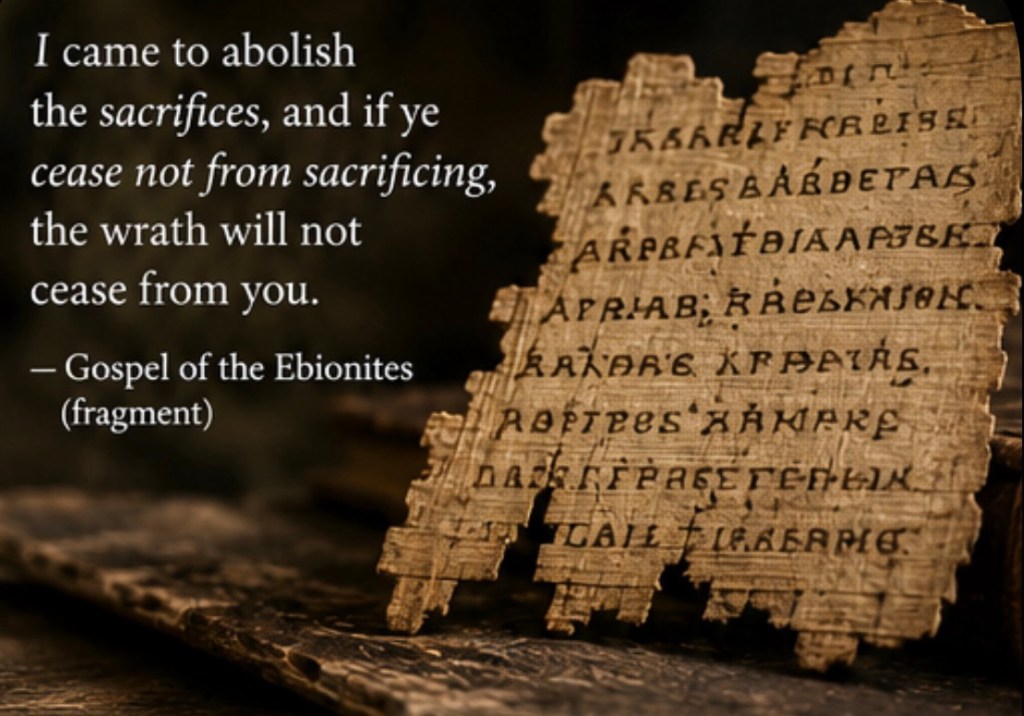
Another Forgotten Gospel That Challenges Everything: Was One of Christ’s Main Missions to Restore the Peace of Eden?

By Julie Tourangeau | julietour.com

Part of the Lost Path to Freedom series.

If you’ve been following this series on forgotten Christian texts, you already know that history is rarely as simple as we were taught. The earliest centuries of Christianity were filled with diverse voices, communities, and writings that wrestled with who Jesus was and what He came to accomplish.

Some of those writings disappeared.

Others survived only in fragments.

The Gospel of the Ebionites is one of them.

Though it never became part of the New Testament and survives only in quotations preserved by its opponents, it offers a fascinating glimpse into what some of Jesus’ earliest Jewish followers believed. More importantly, it raises a question that has echoed through my own writing for years:

What if one of Christ’s missions was to restore humanity to the peace of Eden?

A Forgotten Gospel

The Gospel of the Ebionites no longer exists in its complete form.

Today, only seven brief fragments survive, preserved by the fourth-century church father Epiphanius while arguing against the Ebionites. Because he opposed the movement, historians approach his quotations carefully. They may be selective or paraphrased, and we cannot verify every word against the lost original.

Still, the surviving fragments reveal a remarkably consistent message.

One passage attributes these words to Jesus:

“I came to abolish the sacrifices, and if ye cease not from sacrificing, the wrath will not cease from you.”

Whether these were Jesus’ exact words cannot be proven.

But they reveal something incredibly important:

Some of the earliest Jewish followers of Christ believed that ending animal sacrifice was central to His ministry.

What We Actually Know

Although only fragments remain, several themes appear repeatedly:

Jesus opposes animal sacrifice. John the Baptist is portrayed as eating cakes rather than locusts, reflecting a vegetarian tradition. Jesus is depicted as refusing the Passover lamb. The Temple sacrificial system is presented as something God no longer desires.

These ideas weren’t invented yesterday.

They were circulating nearly two thousand years ago among Jewish Christians who believed they were preserving the authentic teachings of Jesus.

Looking Beyond One Gospel

Even if the Gospel of the Ebionites is not considered historically equal to Matthew, Mark, Luke, and John, its themes do not exist in isolation.

Throughout the Hebrew Scriptures, God repeatedly reminds His people that obedience and mercy matter more than ritual sacrifice.

“I desire mercy, not sacrifice.”

Jesus Himself quotes these words twice during His ministry.

He also enters the Temple and drives out those participating in its commercial sacrificial economy.

His death eventually comes to be understood by Christians as the sacrifice that fulfilled—and therefore ended—the sacrificial system.

Taken together, these passages invite an important question.

Perhaps Christ’s mission was not to establish a new system of sacrifice, but to bring the old one to its fulfillment and conclusion.

Returning to Eden

The Bible begins with God’s first instruction regarding food.

“Behold, I have given you every seed-bearing plant on the face of the whole earth and every tree that has fruit with seed in it. They will be yours for food.” (Genesis 1:29)

Before sin.

Before death.

Before violence.

Humanity is given plants for food.

The Garden of Eden depicts harmony between humans, animals, and creation itself.

The prophets describe God’s future kingdom in remarkably similar language.

The wolf dwells with the lamb.

The lion eats straw like the ox.

No one hurts or destroys on God’s holy mountain.

Then Jesus arrives proclaiming:

“The Kingdom of God is at hand.”

Could the Kingdom He announced have been a restoration of God’s original design?

Some of the earliest Jewish-Christian communities believed exactly that.

One of Christianity’s Biggest Misconceptions?

Today, many Christians assume Jesus regularly ate meat and actively supported the Temple’s sacrificial system.

The historical picture is far more nuanced.

The passages most often cited to support those assumptions have become the subject of considerable debate among some scholars and researchers. Questions have been raised about the translation of certain Greek words traditionally rendered as “fish,” the broader context of Jesus’ cleansing of the Temple, and the Hebrew background of passages such as Jeremiah that Jesus quoted. While these interpretations remain disputed and are not the mainstream scholarly view, they invite a closer examination of texts many readers assume are settled.

Likewise, the Gospel of the Ebionites itself survives only in fragments and cannot be treated as though it carries the same historical weight as the canonical Gospels.

Yet one fact is beyond dispute:

The idea of a vegetarian Jesus is not a modern invention.

It existed among ancient followers of Christ nearly two thousand years ago.

Whether they preserved authentic memories of Jesus or interpreted His teachings through their own theological lens remains a matter of debate.

But the conversation is far older than most people realize.

Why This Matters

For me, this isn’t simply about diet.

It’s about asking whether we’ve misunderstood one of the central themes of Christ’s ministry.

If God’s original creation in Genesis was free from killing animals for food…

If the prophets envisioned a future kingdom where violence ends…

If Jesus repeatedly emphasized mercy over sacrifice…

If some of His earliest Jewish followers remembered Him as opposing animal sacrifice…

And if Christ came proclaiming the Kingdom of God…

Then perhaps His mission was larger than preparing souls for heaven.

Perhaps it also involved restoring heaven to earth.

A Personal Reflection

One reason this subject resonates so deeply with me is because I arrived at it from an entirely different direction.

Long before I discovered the Gospel of the Ebionites, I found myself writing over and over again about the connection between human freedom and the freedom of animals.

In my own work, I’ve explored the idea that liberty cannot be fully realized while it depends upon domination. A society that normalizes unnecessary violence toward the most vulnerable often finds ways to justify it elsewhere. Compassion, I believe, is not divisible. The way we treat creation reflects the condition of our own hearts.

When I later encountered ancient Christian communities that remembered Jesus as opposing animal sacrifice and pointing humanity back toward the peace of Eden, I was struck by how closely those ideas aligned with themes I had already been exploring.

I didn’t shape my beliefs around the Ebionites.

Rather, discovering them felt like uncovering an ancient conversation that echoed questions I had been asking for years.

Genesis begins with a world where neither humans nor animals are created to kill for food.

The prophets end with a vision of peace between predator and prey.

Jesus proclaims that the Kingdom of God is at hand.

Whether one ultimately concludes that vegetarianism was central to Christ’s earthly ministry or not, I find it remarkable that Scripture begins and ends with creation at peace.

Perhaps true freedom is larger than political liberty.

Perhaps it is the restoration of right relationship—with God, with one another, and with every living creature entrusted to our care.

If that is true, then Genesis is not merely the story of where we came from.

It is also a glimpse of where Christ was inviting us to return.

Author’s Note: This article distinguishes between established historical facts—such as the surviving fragments of the Gospel of the Ebionites and the beliefs of the Ebionite community—and interpretations that remain debated among historians and theologians. My own study of Scripture and early Christian writings has led me to believe that Christ’s mission included restoring humanity’s relationship with God’s creation, reflecting the peace described in Genesis 1:29. I encourage readers to examine the sources for themselves, study the evidence, and come to their own conclusions.

Before Constantine: The Real Origin of “Synagogue of Satan”

By Julie Tourangeau | julietour.com

Why Modern 2000s Christian Churches Got This Wrong and Why the Truth Sets Us Free

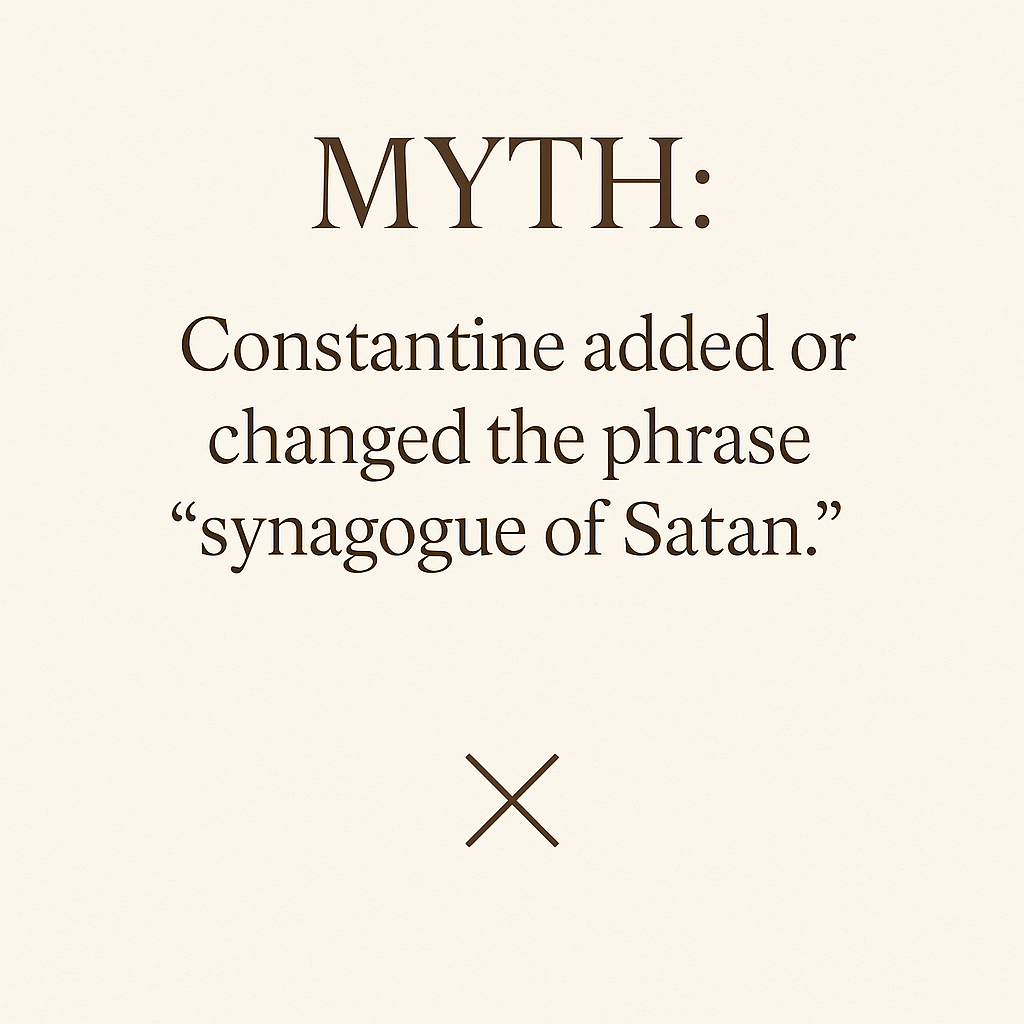
If you’ve spent any time around modern 2000s-era Christian churches influenced by the Seven Mountain Mandate, you’ve likely heard a very confident claim: that the phrase “synagogue of Satan” in Revelation was manipulated, shaped, or inserted by Constantine.

It sounds compelling.

It feels dramatic.

But it’s historically impossible.

The Seven Mountain Mandate is just empire wearing a cross, power disguised as prophecy, hierarchy masquerading as holiness.

Many modern churches shaped by the Seven Mountain Mandate have built an entire theology on fear, control, and the belief that Christians must “take over” cultural institutions to usher in God’s kingdom. This movement often rewrites history to fit its agenda claiming, for example, that terms like “synagogue of Satan” were manipulated by Constantine or created by later political conspiracies. But none of this is supported by actual history, early manuscripts, or the lived spirituality of the first followers of Jesus. The Seven Mountain Mandate replaces Jesus’ nonviolent, compassion-rooted Way with a dominionist system obsessed with power, hierarchy, and cultural domination. In doing so, it distorts Scripture, promotes fear-based interpretations, and encourages believers to see enemies where Jesus saw human beings in need of healing, mercy, and awakening. Recovering the real history frees us from these modern distortions and brings us back to the original, liberating message of Christ: that the kingdom is within, not seized through political conquest.

The more closely you study early Christianity, the more obvious it becomes:

Constantine wasn’t even alive when Revelation was written.

The phrase predates him by almost 200 years.

And its meaning comes from Jesus’ own spiritual lineage, not from Rome.

This matters…not just for accuracy, but because reclaiming the original meaning frees us from the fear-based, empire-influenced theology that still shapes American Christianity today.

Let’s look at the real history.

⸻

Revelation Was Written Long Before Constantine

Revelation was composed around 90–96 A.D.

Constantine was born in 272 A.D.

The phrase “synagogue of Satan” appears in:

• Revelation 2:9

• Revelation 3:9

That’s it.

No later additions.

No Roman edits.

We possess physical manuscripts and quotations from before Constantine existed that contain these verses.

This alone breaks the Seven Mountain Mandate narrative.

⸻

The Phrase Comes From a Much Older Jewish Tradition

“Synagogue of Satan” isn’t Roman language at all.

It’s Jewish sectarian language rooted in the Essenes and the Dead Sea Scrolls.

If you’ve ever read the Scrolls, you instantly recognize the pattern:

• “men of the pit”

• “lot of Belial”

• “congregation of deceit”

• “sons of darkness”

These are spiritual classifications describing groups aligned with corruption rather than God.

This exact dualistic moral vocabulary appears in:

• the Dead Sea Scrolls (150 B.C.–50 A.D.)

• Jesus’ teachings

• Paul’s letters

• the Book of Revelation

Which means:

The language used in Revelation is older than both Constantine and Christianity itself.

⸻

Jesus Himself Spoke Like an Essene

Whether or not Jesus was formally Essene, His teaching vocabulary mirrors theirs:

• “children of light”

• “evil one”

• “your father, the adversary”

• “wolves in sheep’s clothing”

• “den of violent ones” (mistranslated as “robbers”)

• “blind guides”

This is the same symbolic worldview Revelation uses.

It is emphatically not Roman, imperial, or Constantinian.

It is Jewish, prophetic, and nonviolent.

⸻

Early Church Fathers Quote the Phrase Before Constantine

Another inconvenient fact for modern prophecy churches:

Writers who lived long before Constantine quote Revelation — including the “synagogue of Satan” passages — exactly as we have them today.

• Ignatius of Antioch (c. 110 A.D.)

• Justin Martyr (150 A.D.)

• Irenaeus (180 A.D.)

Irenaeus even reproduces material from Revelation 2–3 directly.

This proves:

• the text was stable

• the phrase already existed

• Constantine didn’t insert anything

That’s not speculation.

It’s archaeology.

⸻

What Constantine Actually Changed … And What He Didn’t

Constantine changed:

• Christianity’s political status

• the structure of the church

• the relationship between bishops and empire

… he even united pagans and Christians by combining certain aspects of each faith for holidays.

But he did not:

• influence Essene vocabulary

• change first-century Jewish symbolism

The claim that he created “synagogue of Satan” language is simply not factually possible.

⸻

The Real Meaning of “Synagogue of Satan”

Once you remove modern distortion, the meaning becomes beautifully simple:

“Synagogue of Satan” means

an assembly aligned with injustice or spiritual blindness — not an ethnicity.

It does not mean:

• Jews

• synagogues

• ethnic groups

• political states

• religious institutions

It means:

any community whose actions oppose compassion, justice, and sacred consciousness.

This aligns perfectly with:

• the Essenes

• Jesus

• Paul

• Revelation

• and the whole apocalyptic tradition of ancient Judaism

It is not about identity.

It is about alignment.

⸻

Why This Matters Today

Many 2000s-era prophecy churches teach a theology shaped by:

• the Seven Mountain Mandate

• 20th-century Zionist politics

• 19th-century dispensationalism

• anti-historical end-times charts

• fear-based spiritual warfare language

These systems tend to make Constantine the villain behind every biblical “hard saying.”

But the truth is far more grounded:

The ancient followers of Jesus were speaking from within their own Jewish tradition —

not reacting to a fourth-century Roman emperor.

When we return to the real roots, we rediscover the spiritual brilliance of the early Jesus movement:

• truth over distortion

• compassion over fear

• awakening over control

• inner liberation over outer empire

• justice over violence

This is the Jesus whose teachings were hijacked by empire, but not created by it.

And this is the Revelation written long before Constantine, calling communities to walk in light, love, and discernment.

Because “synagogue of Satan” was never about a people.

It was always about a posture.

It was always about a choice.

It was always about a community’s alignment with compassion or with injustice.

And that message is more relevant today than ever.

The Obedience to Authority: How Society’s Meat-Eating Norms Parallel Milgram’s Experiment

As humans, we tend to follow what we’re taught—whether it’s in school, from our families, or through societal norms. But what happens when these lessons go against our values or better judgment? The answer lies in psychological studies like Stanley Milgram’s famous obedience experiment, which shows how easily people conform to authority, even when it contradicts their moral compass.

Milgram’s Experiment: The Power of Obedience

Milgram’s experiment in the 1960s tested how far people would go in obeying authority figures, even when it involved inflicting harm on others. The results were eye-opening: a majority of participants followed orders to administer what they believed were painful electric shocks to another person, despite their obvious discomfort and moral hesitation. The study demonstrated that obedience to authority could override personal ethics and empathy.

The Connection to Meat-Eating

So, how does Milgram’s experiment relate to the common practice of eating meat? Consider this: society teaches us from a young age that eating meat is normal, necessary, and even healthy. It’s so deeply ingrained in our culture that questioning it often feels like a rebellion against established norms. Just as Milgram’s participants obeyed authority figures, many of us obey societal pressures—eating meat because it’s what we’ve always been told to do.

Why Conformity is a Problem

The issue with this conformity is that it leads to a lack of critical thinking. People don’t question whether eating meat is truly necessary for health or if it’s ethical to cause harm to animals in order to eat. Much like Milgram’s subjects, we often follow what we’ve been told, not because it’s right or even because it’s good for us, but because we’ve been conditioned to believe it’s the way things should be.

Breaking Free from the Norm

It’s time we break free from this autopilot obedience and think critically about our choices, especially when it comes to our food. Just as Milgram’s participants could have chosen to defy the authority figure, we have the power to challenge the status quo. We don’t have to follow harmful traditions or blindly accept things because they’ve always been done that way.

By questioning the norm and embracing plant-based alternatives, we can make ethical, health-conscious choices that align with our values and better serve the world. Like those who resist authority in Milgram’s experiment, challenging the meat-eating norm isn’t easy—but it’s necessary for creating a more compassionate and sustainable future.

Conclusion

Conformity can be comforting, but it can also keep us from questioning what’s right. Milgram’s experiment is a powerful reminder that we need to think for ourselves, challenge harmful norms, and make choices that reflect our true values. It’s time to break free from the senseless murdering of sentient beings tradition and embrace a healthier, kinder way of living.

Online Dating for the Sensitive Soul

Online dating can bring about high expectations for romance while usually delivering something more between a booty call and a wedding date. It’s really like a box of chocolates, and no matter how direct your profile is, or how clear your conversation is, you never really know what kind of date you are going to get. With that said, I do believe online dating has potential for something amazing. The biggest piece to grasp of online dating is maintaining inner peace amidst uncertainty. I wanted to share some tools I’ve learned as a sensitive person myself to bring peace throughout the process.

  1. Don’t hook up with your date right away. No matter how cute they are, how spiritual they claim to be, or how vegan they are, it doesn’t mean they are going to love you unconditionally, forever. As a sensitive person who understands everything is connected and everything is energy, you mustn’t exchange sexual energy with them without a commitment. As sensitive people, we will start feeling that unconditional bond that comes with closeness and not everyone feels that way with sex in this desensitized society. It’s sad, but we are surrounded by people who truly are incapable of feeling because of diet, or media exposure, or lifestyle. You can hook up if you must, but just be prepared to visit #5.
  2. Texting with someone over a period of time does not necessarily mean you are bonding at all. Seems weird, right? You’ve been getting good morning and goodnight texts for weeks, and they text you their yummy vegan meals, and let you know they are thinking about you. In your universe, this means something, right? In the world of online dating, there may be three other conversations going on similarly with multiple people. In the just-swipe-to-find-your-soulmate culture, instant gratification in the land of a million options to choose from is the name of the game. The only way to truly be sure they are feeling the same way is to regularly see each other in person.
  3. Trust your intuition. They said all the right things, even have a million coincidences with your life story, yet didn’t text you the next day? Red flags should not be ignored. Chances are they are not as sensitive as they portrayed, didn’t really catch any major feels no matter what they said, and are on date #2 for the weekend. People always present their best selves on dates and are not always as they seem. The red flag you ignored that didn’t feel right to you will ultimately be the reason you visit #5 later.
  4. Avoid narcissists playing games with your sensitivity. I once dated a guy who really hurt my feelings by not making plans for a second date. A few weeks later, he started blaming me for us not working out because I was still accepting dates with other guys. This took me for a loop. He actually had me feel bad for a behavior that was a logical response to his behavior of not reciprocating interest. Complicated, right? Turns out, he didn’t really want me anyway. He just wanted the power to control who I was dating or not dating like some kind of ego stroke. If someone is being heart-centered, they’d never shame you or guilt you into a behavior. Especially if they aren’t even observing that same behavior (ex. they get mad you still have Tinder dates, yet they are still active on Tinder). If someone is saying something contrary to your purest intentions, trust yourself over anyone else’s opinion and don’t let yourself get manipulated.
  5. Heartbreak is sometimes inevitable. You caught some feels while your date did not. You are a deeply feeling human and it’s okay. Heartbreak means you are on the path to finding what you truly want, and you are closer than ever now that you are no longer wasting time on the wrong person. Let yourself feel it, but don’t wallow too long. Meditate on the infinite abundance of the universe and realize true love won’t be denied to you when it’s right. Trust in the reason for the heartbreak and try again. Maybe you were just meant to touch their life for a moment and to move on to something more right for you. Retreat to yourself for awhile to keep your energy high, and try again. And try not to let the last guy’s mistake affect how you treat the next guy, who could be genuinely trying. 💚

Seems a little scary, right? You may be thinking why put myself through this at all? Trust me, goddess, I feel you. Life is busy and there’s a million things you can experience while you are here. It doesn’t have to necessarily be a romantic love experience at all to lead a fulfilled life. But I do know romantic love is one of the most euphoric experiences to have while you’re a human. A shot at a true partner to experience the magic of life with is worth it.

Realize that the ups and the downs, they are all here for a reason. The Universe would never let you go through a door that wasn’t yours to open. Trust the process. Trust the heartache. Even trust the sadness. The wrong ones will continue to be removed from your life one way or another. And with every door definitively shut, you are that much closer to finding the right one to finally walk through. Know this, and be at peace with it. Remember, sensitivity is a super power. And being able to love deeply and care about people you meet is the reason you’ll find romantic love this life. ✌🏼

Anything You Can Eat, I Can Eat Vegan

Veganism is kind of like the mainstream belief in the normality of the “food chain hierarchy”, but in reverse. How did the animal get this nutrient ? What did the animal eat? If the animal got it from another animal, what did that animal eat? There in lies the answer to any nutrition inquiry.

The design of the Earth and our bodies is so intelligent, our nutrients we need just naturally occur in growing plants, and natural elements. Scarcity during changing seasons and weather conditions is the reason our early ancestors hunted animals. In this day and age, a large variety of plants is at our fingertips within a moment’s notice. Killing is unnecessary. Compassion truly begins on your plate: for the animals, the environment, your health, and the future of the human race.

Manifestation Begins with Intention

20140825-131659.jpg

The power of clear intentions bring about more precise manifestations. Every manifestation starts with a thought. Setting clear intentions with your thoughts is a powerful way to bring about your desires more quickly. From Jim Carrey, to Will Smith, to Oprah, many successful people in this current day and age have talked about how they set clear intentions about what goals they want to bring into their lives before they even begin to try to achieve it.

Before I ever wrote a page, I set out the intention to write a book with my thoughts. I did this visualization process all the time in the business world and was successful at it, so I took this process to a new venture. I pictured what it would feel like to bring about a spiritually-minded book. I pictured what it would feel like to hold it in my hand, to be interviewed about it, and to have a concise, tangible book where I could share my experiences and thoughts on spirituality, law of attraction, and the afterlife.

The manifestation process is following up on your inner guidance from your intentions for your desired manifestation. It seemed like a little amount of effort added up to huge transformations over time as the universe clearly responded to the intentions I set. I was connected with thought leaders in the field of publishing and spiritual teaching to affirm I was on the right path. Less than a year later, I have most of my book written. My intention has been manifesting into form, and it has been the most rewarding process.

This process can used to manifest in many areas of life. Be a scientist and try it for yourself. Next time you wake up in the morning, set clear intentions for the day you would like to manifest ahead. Visualize how it will feel at the end of the day to have had the experiences you desire for yourself. Whether you set the intention to connect with helpful people, to flow through your schedule with ease, or to manifest abundance with your sales, your intention in the morning is your way to co-create the day ahead with the universe. Follow your guidance and go with the flow, and watch your manifestations unfold.

Synchronicity: Living a Synchronistic Life

Inner-connectedness between all beings is very real. I wasn’t so sure my entire life until synchronistic events made themselves an everyday presence in my life. I found myself after my Dad passed away asking questions about God, spirituality, and pushing the potential of human existence. If you accept things as they are, and never open up to the idea that we know very little as a society about the Divine, you may never find yourself on the journey to spiritual understanding. As soon as I put the intention out to find out more, many meaningful coincidences started entering into my life. What do these coincidences mean? I find that they are signs that I am on the right path. Synchronistic encounters are road marks on the map to our life purpose. Albert Einstein once said that “coincidence is God’s way of remaining anonymous.” I truly believe that. Coincidence is God’s way of co-creating miracles with us in our everyday lives. We need to follow those hunches, those opportunities that feel right to us that present themselves in our day-to-day lives. When we follow our inner divine guidance, synchronicity becomes evident continuously. As we follow our vague knowingness into the right direction, God has a way of lining up a synchronistic event in the future by aligning different circumstances throughout the past. When a synchronistic encounter finds you, without a doubt you know that a Divine intelligence brought this moment together for you.

What is synchronicity, and how do we teach those who have not yet had these encounters? Swiss psychologist Carl Jung devoted his life to answering these questions. Jung explains, “in all chaos there is a cosmos, in all disorder a secret order.” I have found in my own life that painful experiences, and crazy outside circumstances actually turned out to be exactly what I needed on my path. Even though my feeble human mind could not see the happy outcome beyond the chaos, there seems to be a Divine intelligence that lead me to a better destination. As I started realizing that there is an invisible Divine hand in everything, tangible coincidences became very obvious to me. Jung describes this phenomenon so eloquently when he said, “synchronicity is an ever present reality for those who have eyes to see.”Telling you about synchronicity is nothing compared to actually experiencing it for yourself.

In my best effort to explain the meaningful coincidences in my life, I have posted a video log to YouTube explaining a few of my own personal experiences with synchronicity. A more detailed account of many events in my life will be released in my upcoming book with the working title “Bitch! A Love Story”.

Feel free to share your own experiences with synchronistic events below! I would love to read them. Namaste


The Goddesses of Easter: Ostara vs Ishtar

A few years ago, I had a dramatic restoration of faith in God. During this time of my life, I ended up renting out to a roommate to help with bills. I don’t believe it was an accident that he just so happened to hold a bachelor’s degree from one of the state’s best universities in Comparative Religions. Since he did not personally affiliate with any particular religion, I often got an unbiased perspective of the control of information (and sometimes misinformation) in religions. I found myself asking him many questions on historical references for things I had been discovering through intuition and spiritual truths. Growing up, I had lost interest in traditional holidays I celebrated in my Catholic upbringing, but I found myself on a quest to separate fact from fiction on why the modern world practices and believes what it does. Holiday origins were some of the most surprising findings.

My old roommate was the first person who ever informed me about the calendar as we know it today. He spoke of Constantine who was burdened with the task of unifying the Pagans and the Christians, who had been brutally killing each other over religious disputes at the time of his reign. It was under his rule that birthed the calendar of mainstream religious holidays we know in modern times. Pagan holidays were rewritten to fit the life of Christ. As a leader, it is not difficult to understand why compromising between the two belief systems made the most sense at the time. Unfortunately, what we are left with is an untrue depiction of history. While I am a true believer in Jesus and the miracles he performed, I can confidently say that Easter is not the exact time of the resurrection. Furthermore, Christmas is also historically incorrect in timing of Jesus’ birth.

There is much dispute over the true origins of Easter. I have come to accept two different goddesses (with a small g) who, prior to Constantine, were the two celebrated deities associated with the Spring Equinox in different parts of the world: Ishtar and Ostara. While many people across the country are showing interest in Ishtar due to the similar pronunciation, Ostara undoubtedly has had a lasting impact on Easter.

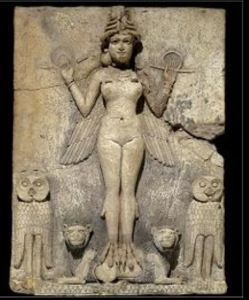
Ishtar has been worshipped and called upon since ancient Babylonian times. She embodies the very strong, feminine energy of Venus. Ishtar represents the Divine feminine in her aspects such as harvesting, mothering, fertility, healing, and love. It should come to no surprise that she was celebrated during Easter time during the Spring Equinox. While Ishtar’s true animal totems are the owl and the lion, eggs and rabbits have been associated symbolically in Paganism with fertility, which is an aspect of Ishtar.

20140419-211059.jpgOstara (in Old English spelled Ēastre) was a Germanic goddess and diety I had never heard of until I drew her card in Dr. Doreen Virtue’s Goddesses Oracle Card deck. As a clairevoyant, Doreen credits both “East” and “Easter” to being named after Ostara, who is celebrated as the bringer of light. She explains that this was due to “the sun rising in the East, and the increase in sunlight beginning in the Celtic springtime.” Ostara’s true symbols (as pictured) are the rabbit and the egg, which is undoubtedly where the Easter bunny comes from.

20140419-210711.jpg
Photo Credit: Goddess Guidance Oracle Cards by Dr. Doreen Virtue, Ph.D

While both goddesses were celebrated during Easter, I still do not believe this should deter Christians from celebrating Easter. This battle between Paganism and Christianity has been going on for far too long. Are we really going to carry on our arguments of our ancestors? While I believe in the divine feminine, I also believe Jesus was as real as you and I, and I honor him, his message of love, and the miracles he performed. It really shouldn’t be about when and where we celebrate these amazing beings as much as how we are implementing their teachings in our day-to-day lives.

Q&A: Stress and Anxiety Relief- Honoring Your Sensitivity

This past week, I received two separate questions on my Facebook from readers pertaining to the same topic. I have decided to include my responses on my blog, assuming many others may be dealing with stress and anxiety from our daily lives. Honoring your intuition and sensitivity will allow you to overcome these feelings and live a happier, healthier life.

Q: I have read really great things! I like the stuff you are interested in and the way you explain them. What really caught my eye is when you were talking about all the psychic senses, particularly the Clairvoyance part. The part that caught me was the high anxiety you felt, saying it was because you were ignoring your psychic abilities. Will you touch on that?

A: Absolutely. Even though I was very open minded to angelic beings and psychic abilities as a child, I found myself pushing spirituality aside in my early twenties to pursue a career in business, particularly insurance, which is a highly regulated industry. I found myself suppressing my true interests and intuition for a stable income.  

My anxiety was off the charts. I was never super anxious or stressed growing up, even in seemingly stressful situations, but putting my spirituality out of mind made things worse. I would find myself barely able to sleep at night, even after working a 12 hour day. I was always going over and over my day in my head and thinking about all I had to accomplish the next day. On weekends, the anxiety would still be there even when I was off work. I would blast a fan during all seasons to drown out any noises to occupy my mind, and to put myself asleep to the sound.

After talking to family and a counselor about my dissatisfaction feeling anxious, I tried a few mainstream approaches. I tried the prescription drug, Ativan, and hypnotherapy focusing on releasing anxiety from my life, but nothing seem to stick or last long. I found the Ativan didn’t really do anything. Later, after studying the Indigo generation, I have learned drugs like Aderral and Ativan flush out of an indigo body rapidly. After studying “Awakening Your Indigo Power”, a certification course by Charles Virtue, I realized being unaffected by drugs is an indigo trait. According to Charles, Heaven knew that the indigo spirit would be a shock to the current world and many would try to control a “rebellious” child by suppressing their divine guidance and emotions through narcotics. Because of this, drugs and chemicals leave our systems very quickly, and have little effect.

I realized when my mind was most reflective was at night, that is when spirit was often trying to communicate with me. One night, I felt a presence near my bed. I knew it was my dad. I said outloud, “Dad, I really appreciate you visiting me, but I really need to sleep, so please leave me alone right now.” I literally felt his presence leave the room. You can be in perfect control of your abilities, but when ignoring them you are not protecting yourself. You can control with who, where, and when you want to communicate. All you have to do is think or say a boundary aloud.

These experiences set me out on a journey to actively use my psychic abilities. During work, I should have been shielding myself from the negativity around me and clearing my workspace, and home of negative energy, as well as my chakras at nighttime before sleep. In my findings, I realized sensitive people often absorb energy from others. The energy of my fast paced, stressful insurance job would stay with me well after I left the office. It wasn’t until I consciously cleared each chakra point of negative energy before bed until I started sleeping regularly. The act of releasing the day’s events each night reduced my anxiety tremendously.

At night, you can ask angels to clear the room of any negative entities or energy. I would always call on Archangel Michael to shield me and ask angels to guard my home. I highly recommend the Chakra Clearing nighttime meditation by Doreen Virtue. The book is worth buying to better understand the chakras, however, the meditation is available for free on YouTube. I often burn incense and sage as well to bring in a higher vibrational atmosphere. Once I started getting in a routine, everything calmed down for me. When you are clearing yourself regularly, new spiritual insights come more easily and rapidly. 

Q: Hey Julie. Do you have any suggestions/insight into Palm/thumb stones? I’m looking for a stone to use at work, I have an extremely stressful job and it’s consuming my life (stress, negativity, etc). I’ve been doing P90X3 to burn off some stress, and trying to eat clean, but it’s not helping.

A: For calming, I really like blue calcite (blue crystal ball pictured). I have it in a crystal ball form and keep it in my room. Whenever I feel stressed, I like to hold it and it calms me down immediately. A metaphysical store should also have it in a thumb or palm form. It helps with developing psychic abilities and astral travel as well.

Also for negativity, I used to keep an amethyst (purple crystals pictured) on my desk at the insurance office. It is a protection stone and keeps the effects of negativity away from you on a vibrational level.

As a sensitive person it is important to ground yourself. You may feel really great in meditation, but that feeling will fade when you go back in your body during your day to day regimen.  Keeping black tourmaline (small black crystals pictured) around will help you to bring the higher dimensional vibrations to the Earthly plane.

Keeping rose quartz around your environment will bring a loving atmosphere, and often sets the intention for the other stones to bring in love energy when placed next to other crystals.

Certain smells can also be calming. I highly recommend lavender and chamomile like the spray pictured below. I also burned a lavender candle on my desk at work. The aroma put my customers in better moods as well.

 Image

I hope this helps! If anyone has any other suggestions for what may have worked for you, please share in the comments! Namaste