Another Forgotten Gospel That Challenges Everything: Was One of Christ’s Main Missions to Restore the Peace of Eden?

By Julie Tourangeau | julietour.com
Part of the Lost Path to Freedom series.

If you’ve been following this series on forgotten Christian texts, you already know that history is rarely as simple as we were taught. The earliest centuries of Christianity were filled with diverse voices, communities, and writings that wrestled with who Jesus was and what He came to accomplish.

Some of those writings disappeared.

Others survived only in fragments.

The Gospel of the Ebionites is one of them.

Though it never became part of the New Testament and survives only in quotations preserved by its opponents, it offers a fascinating glimpse into what some of Jesus’ earliest Jewish followers believed. More importantly, it raises a question that has echoed through my own writing for years:

What if one of Christ’s missions was to restore humanity to the peace of Eden?

A Forgotten Gospel

The Gospel of the Ebionites no longer exists in its complete form.

Today, only seven brief fragments survive, preserved by the fourth-century church father Epiphanius while arguing against the Ebionites. Because he opposed the movement, historians approach his quotations carefully. They may be selective or paraphrased, and we cannot verify every word against the lost original.

Still, the surviving fragments reveal a remarkably consistent message.

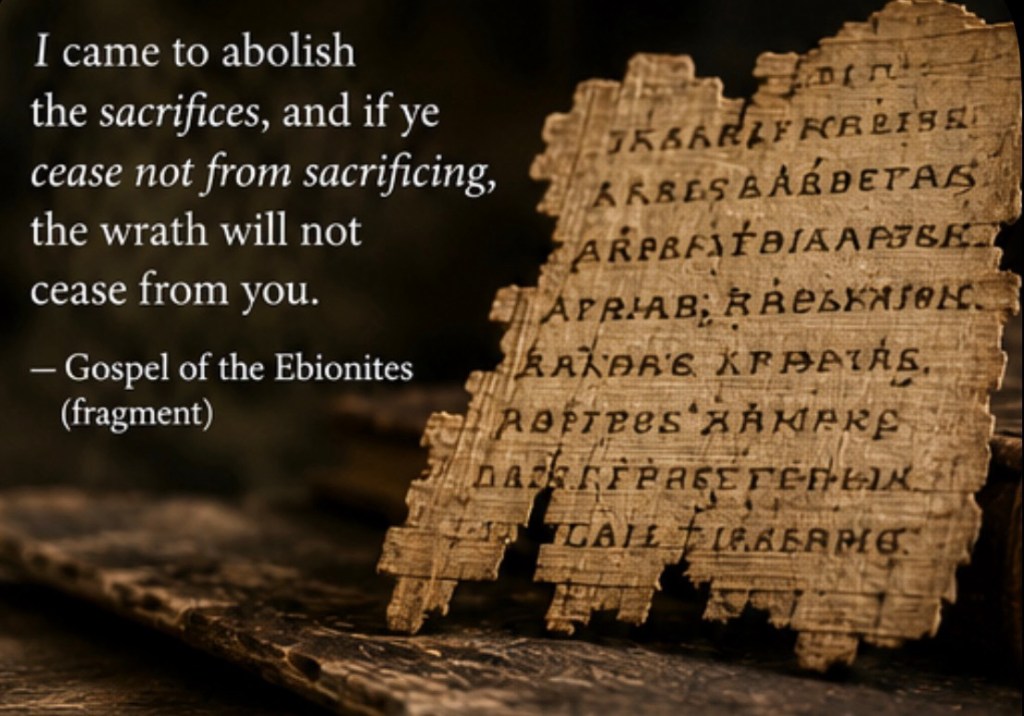
One passage attributes these words to Jesus:

“I came to abolish the sacrifices, and if ye cease not from sacrificing, the wrath will not cease from you.”

Whether these were Jesus’ exact words cannot be proven.

But they reveal something incredibly important:

Some of the earliest Jewish followers of Christ believed that ending animal sacrifice was central to His ministry.

What We Actually Know

Although only fragments remain, several themes appear repeatedly:

Jesus opposes animal sacrifice. John the Baptist is portrayed as eating cakes rather than locusts, reflecting a vegetarian tradition. Jesus is depicted as refusing the Passover lamb. The Temple sacrificial system is presented as something God no longer desires.

These ideas weren’t invented yesterday.

They were circulating nearly two thousand years ago among Jewish Christians who believed they were preserving the authentic teachings of Jesus.

Looking Beyond One Gospel

Even if the Gospel of the Ebionites is not considered historically equal to Matthew, Mark, Luke, and John, its themes do not exist in isolation.

Throughout the Hebrew Scriptures, God repeatedly reminds His people that obedience and mercy matter more than ritual sacrifice.

“I desire mercy, not sacrifice.”

Jesus Himself quotes these words twice during His ministry.

He also enters the Temple and drives out those participating in its commercial sacrificial economy.

His death eventually comes to be understood by Christians as the sacrifice that fulfilled—and therefore ended—the sacrificial system.

Taken together, these passages invite an important question.

Perhaps Christ’s mission was not to establish a new system of sacrifice, but to bring the old one to its fulfillment and conclusion.

Returning to Eden
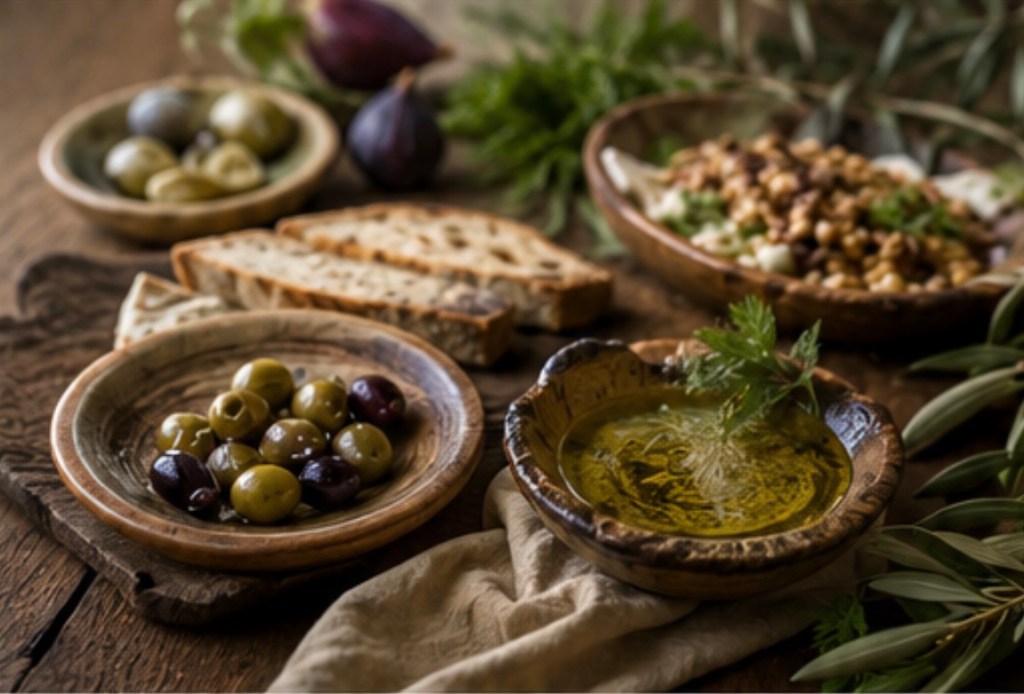
The Bible begins with God’s first instruction regarding food.

“Behold, I have given you every seed-bearing plant on the face of the whole earth and every tree that has fruit with seed in it. They will be yours for food.” (Genesis 1:29)
Before sin.

Before death.

Before violence.

Humanity is given plants for food.

The Garden of Eden depicts harmony between humans, animals, and creation itself.

The prophets describe God’s future kingdom in remarkably similar language.

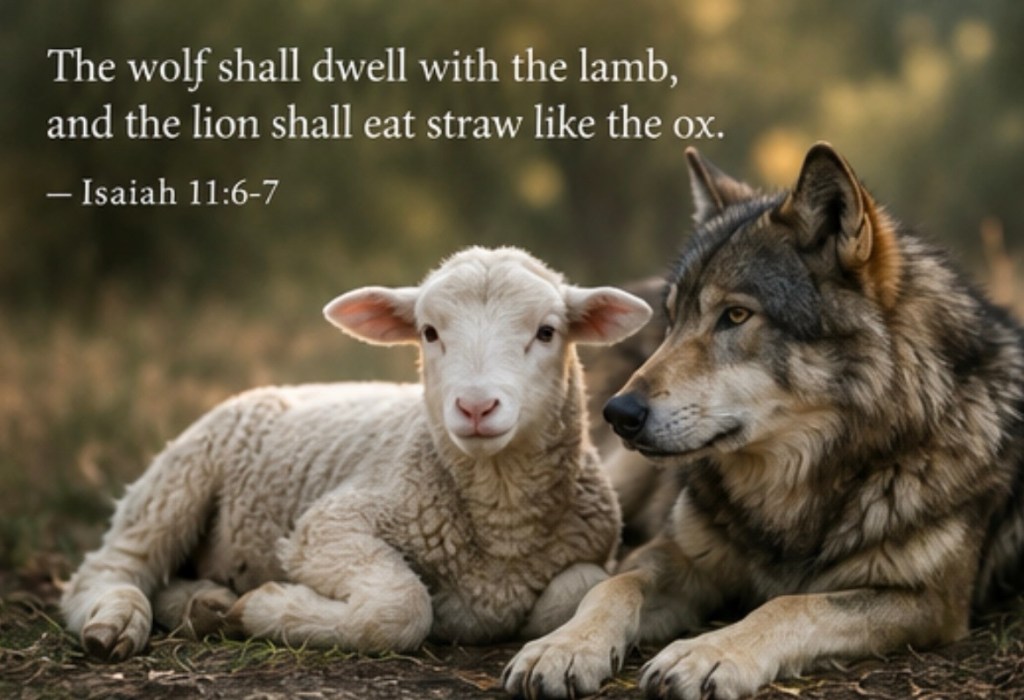
The wolf dwells with the lamb.

The lion eats straw like the ox.

No one hurts or destroys on God’s holy mountain.

Then Jesus arrives proclaiming:

“The Kingdom of God is at hand.”

Could the Kingdom He announced have been a restoration of God’s original design?

Some of the earliest Jewish-Christian communities believed exactly that.

One of Christianity’s Biggest Misconceptions?

Today, many Christians assume Jesus regularly ate meat and actively supported the Temple’s sacrificial system.

The historical picture is far more nuanced.

The passages most often cited to support those assumptions have become the subject of considerable debate among some scholars and researchers. Questions have been raised about the translation of certain Greek words traditionally rendered as “fish,” the broader context of Jesus’ cleansing of the Temple, and the Hebrew background of passages such as Jeremiah that Jesus quoted. While these interpretations remain disputed and are not the mainstream scholarly view, they invite a closer examination of texts many readers assume are settled.

Likewise, the Gospel of the Ebionites itself survives only in fragments and cannot be treated as though it carries the same historical weight as the canonical Gospels.

Yet one fact is beyond dispute:

The idea of a vegetarian Jesus is not a modern invention.

It existed among ancient followers of Christ nearly two thousand years ago.

Whether they preserved authentic memories of Jesus or interpreted His teachings through their own theological lens remains a matter of debate.

But the conversation is far older than most people realize.

Why This Matters

For me, this isn’t simply about diet.

It’s about asking whether we’ve misunderstood one of the central themes of Christ’s ministry.

If God’s original creation in Genesis was free from killing animals for food…

If the prophets envisioned a future kingdom where violence ends…

If Jesus repeatedly emphasized mercy over sacrifice…

If some of His earliest Jewish followers remembered Him as opposing animal sacrifice…

And if Christ came proclaiming the Kingdom of God…

Then perhaps His mission was larger than preparing souls for heaven.

Perhaps it also involved restoring heaven to earth.

A Personal Reflection

One reason this subject resonates so deeply with me is because I arrived at it from an entirely different direction.

Long before I discovered the Gospel of the Ebionites, I found myself writing over and over again about the connection between human freedom and the freedom of animals.

In my own work, I’ve explored the idea that liberty cannot be fully realized while it depends upon domination. A society that normalizes unnecessary violence toward the most vulnerable often finds ways to justify it elsewhere. Compassion, I believe, is not divisible. The way we treat creation reflects the condition of our own hearts.

When I later encountered ancient Christian communities that remembered Jesus as opposing animal sacrifice and pointing humanity back toward the peace of Eden, I was struck by how closely those ideas aligned with themes I had already been exploring.

I didn’t shape my beliefs around the Ebionites.

Rather, discovering them felt like uncovering an ancient conversation that echoed questions I had been asking for years.

Genesis begins with a world where neither humans nor animals are created to kill for food.

The prophets end with a vision of peace between predator and prey.

Jesus proclaims that the Kingdom of God is at hand.

Whether one ultimately concludes that vegetarianism was central to Christ’s earthly ministry or not, I find it remarkable that Scripture begins and ends with creation at peace.

Perhaps true freedom is larger than political liberty.

Perhaps it is the restoration of right relationship—with God, with one another, and with every living creature entrusted to our care.

If that is true, then Genesis is not merely the story of where we came from.

It is also a glimpse of where Christ was inviting us to return.
Author’s Note: This article distinguishes between established historical facts—such as the surviving fragments of the Gospel of the Ebionites and the beliefs of the Ebionite community—and interpretations that remain debated among historians and theologians. My own study of Scripture and early Christian writings has led me to believe that Christ’s mission included restoring humanity’s relationship with God’s creation, reflecting the peace described in Genesis 1:29. I encourage readers to examine the sources for themselves, study the evidence, and come to their own conclusions.
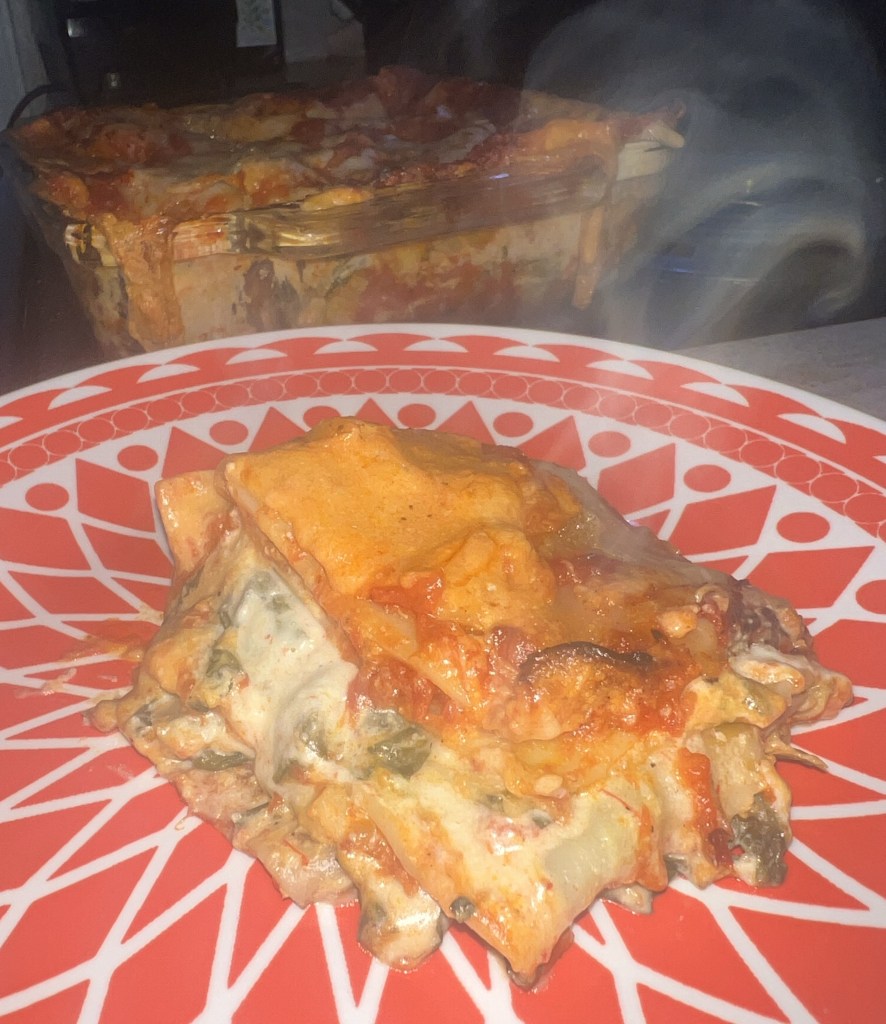
Truffle Glow Vegan Lasagna

A Signature Dish from The Freedom Kitchen Series

by Julie Tourangeau | julietour.com

There’s more than nourishment in a meal—there’s memory, healing, and story.

This lasagna was born on a night when everything fell apart—glass shattered, ingredients ran low, and I had to rebuild from what I had. And somehow? That’s when the magic happened.

This recipe is a layered metaphor for healing: messy edges, bold flavor, and comfort that rises from unexpected places. It’s vegan, gluten-free optional, and completely dairy-free—but nothing about it feels like you’re missing out. This is the kind of dish that warms the soul and opens the door to something sacred: a return to your own radiant wholeness.

Truffle Glow Vegan Lasagna

With Tofutti Ricotta, Kite Hill Cream Cheese, Roasted Red Peppers & Piment d’Espelette

A creamy garlic-truffle filling made with Tofutti ricotta and Kite Hill cream cheese is folded with sautéed spinach, roasted red peppers, fresh parsley, and bold nutritional yeast. The flavors are rounded out by thinly sliced onion, garlic and onion powder, and a warm, smoky kiss of Piment d’Espelette—a red pepper spice from the Basque region that brings subtle heat and beautiful depth.

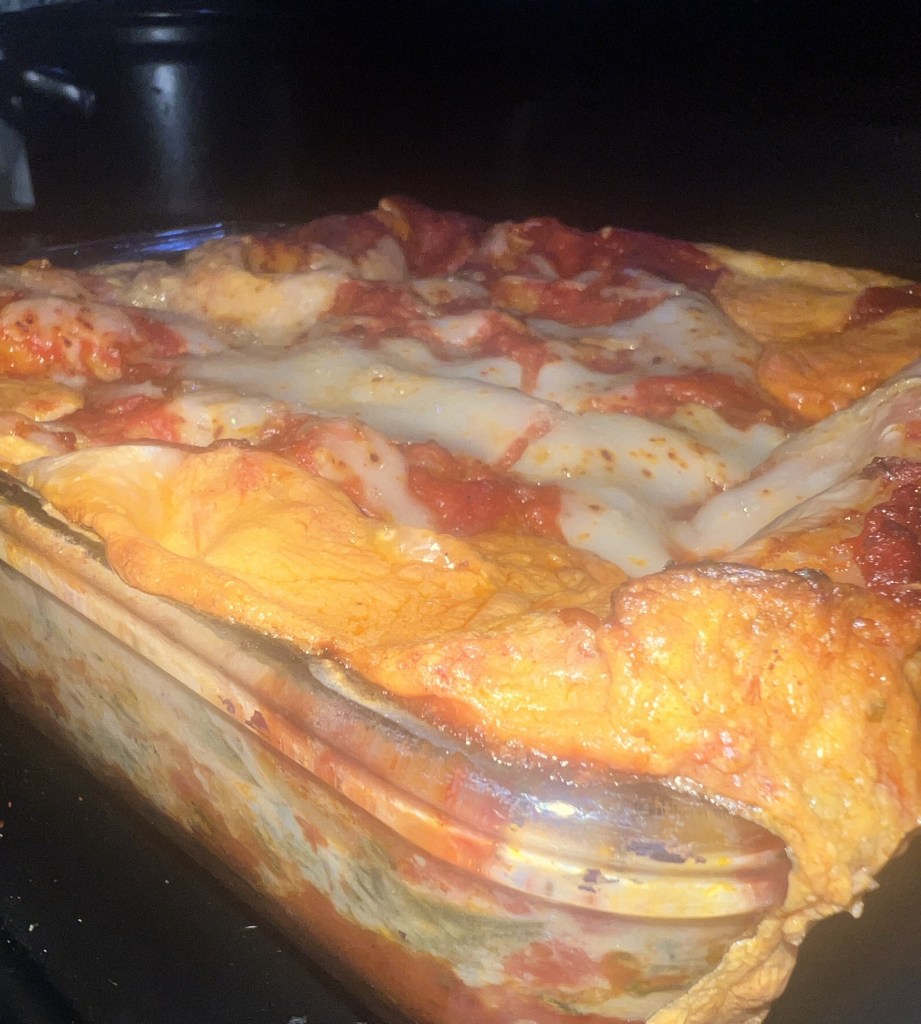
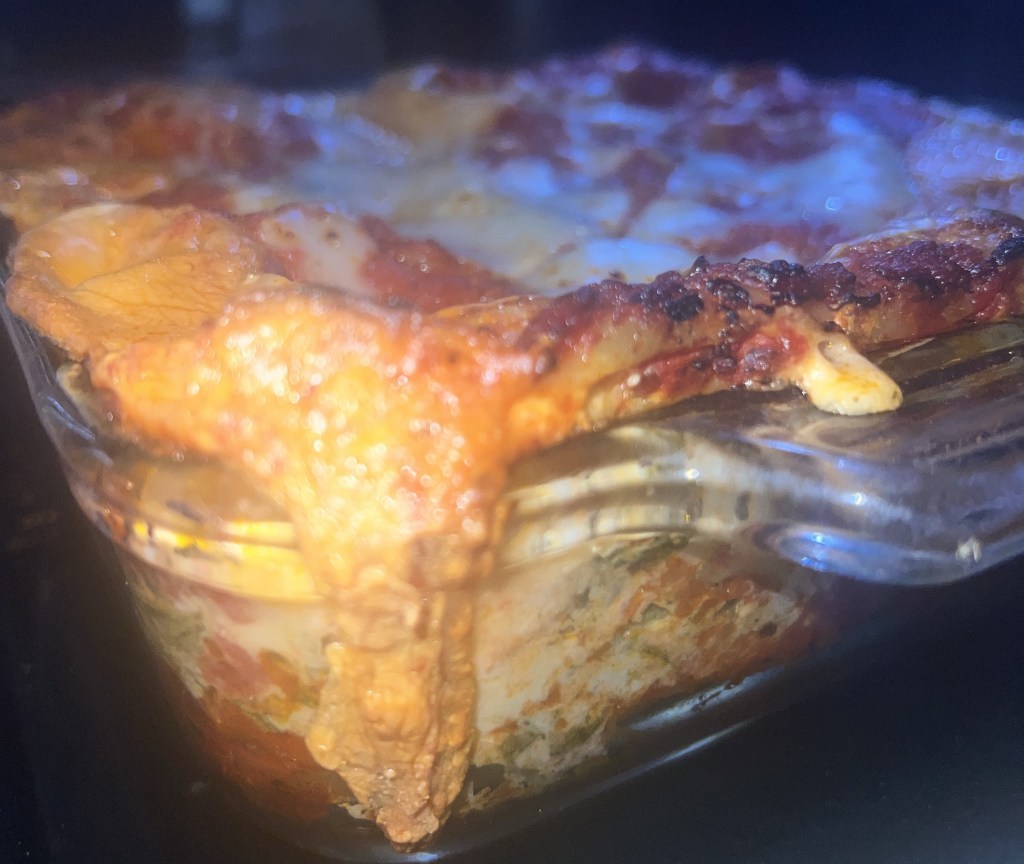
You can finish this with either vegan liquid mozzarella or my signature béchamel sauce from julietour.com/bechamel for a golden, bubbling top that’s worthy of a celebration. No foil. No shortcuts. Just food that glows from the inside out.

Ingredients

Cheese Filling:

• 1 container Tofutti Ricotta

• 1 container Kite Hill Cream Cheese

• 1 cup Violife Mozzarella Shreds

• 3–4 tbsp nutritional yeast (go bold!)

• 2 cloves fresh garlic, minced

• 1–2 tbsp sweet onion, thinly sliced

• 1/2 tsp onion powder

• 1/2 tsp garlic powder

• 1 tsp truffle oil

• 1/2 tsp Piment d’Espelette (plus more for topping)

• 2 tbsp fresh parsley, chopped

• Sea salt and cracked black pepper, to taste

Add-ins:

• 1 cup sautéed spinach

• 1/2 cup roasted red peppers, chopped

Assembly:

• 1 box 365 Oven-Ready Lasagna Noodles

• 1 jar Bao Marinara Sauce

• 1–2 tbsp olive oil

• Topping Option 1: Vegan liquid mozzarella (about 1/2 cup)

• Topping Option 2: Julie’s Vegan Béchamel for added richness

Instructions

1. Make the Filling

Mix Tofutti ricotta and Kite Hill cream cheese until smooth. Stir in Violife, nutritional yeast, fresh garlic, sliced onion, onion powder, garlic powder, truffle oil, Piment d’Espelette, parsley, and season with salt and pepper. Fold in spinach and roasted red peppers.

2. Prepare Your Dish

Lightly oil a 9×13 dish and spread a thin layer of Bao marinara.

3. Layer It Up

Add oven-ready noodles, then a generous layer of the filling, then more sauce. Repeat until full, ending with noodles and marinara.

4. Top It Off

Choose your topping:

• Drizzle with vegan liquid mozzarella and a dusting of Piment d’Espelette

• or spread on a layer of my béchamel sauce for a deeper, richer bake

5. Bake Uncovered

Bake at 375°F for 45–50 minutes, until golden and bubbling. No foil needed—the top caramelizes beautifully this way.

6. Cool & Garnish

Let sit 10 minutes before slicing. Top with fresh parsley, more nooch, or a drizzle of truffle oil.

Why It Matters

This isn’t just a recipe—it’s a ritual. A reclaiming. A reminder that even in moments of chaos, you can create something beautiful, layered, healing, and deeply satisfying.

Welcome to The Freedom Kitchen. Where food is medicine, flavor is freedom, and joy is the secret ingredient.

This is what freedom tastes like. Warm, melty, deeply layered—and 100% plant-based. From my kitchen to yours.

Rose Sourdough Shortbread Cookies

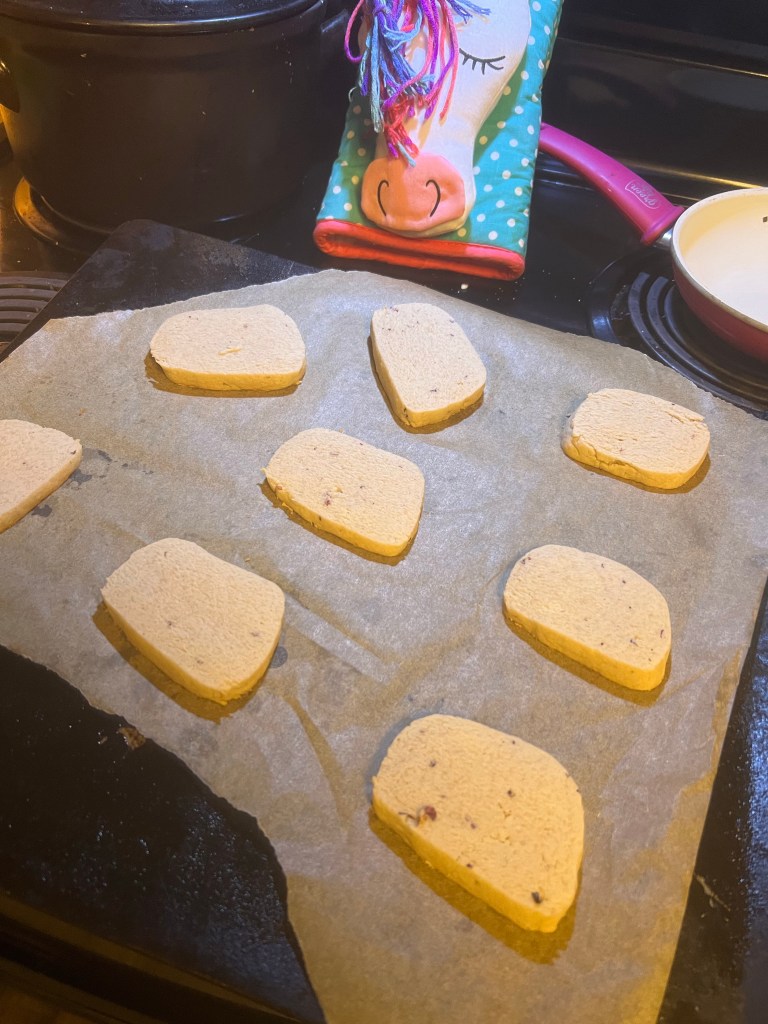
Rose Sourdough Shortbread Cookies using sourdough discard.

• ¾ cup vegan salted butter softened (I used Miyokos Oatmilk butter)

• ¾ granulated sugar

• 133 grams sourdough discard, at room temperature

• 1 Tablespoon rose petals

• 1 teaspoon vanilla extract

• 1 teaspoon rose extract

• 2 1/2 cups all-purpose flour

INSTRUCTIONS

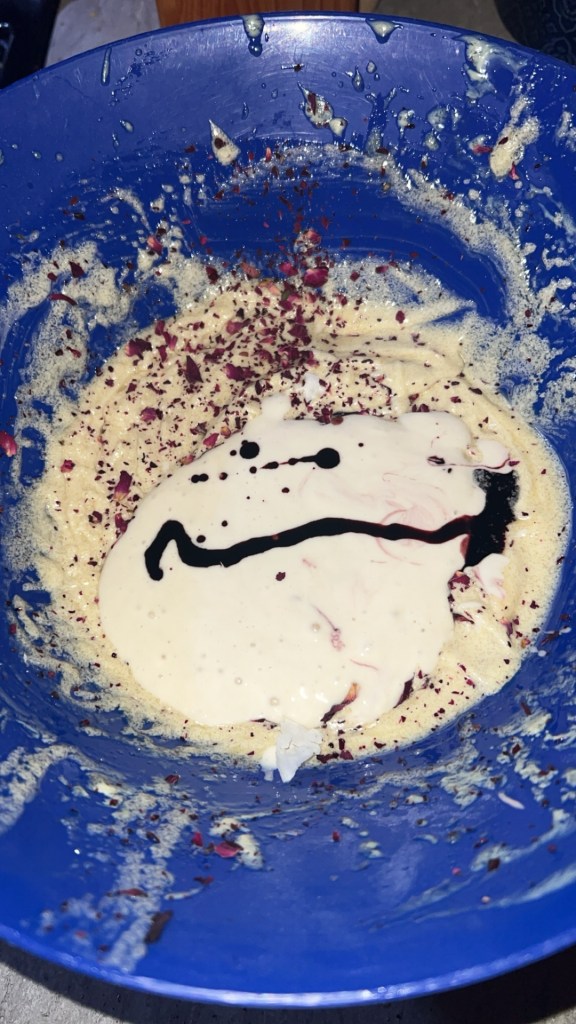
• In the bowl, cream the butter and sugar with a hand mixer for a few minutes until fluffy. Add sourdough discard, dried rose petals and, vanilla and rose extracts, mixing until combined.

I added optional elderberry syrup.

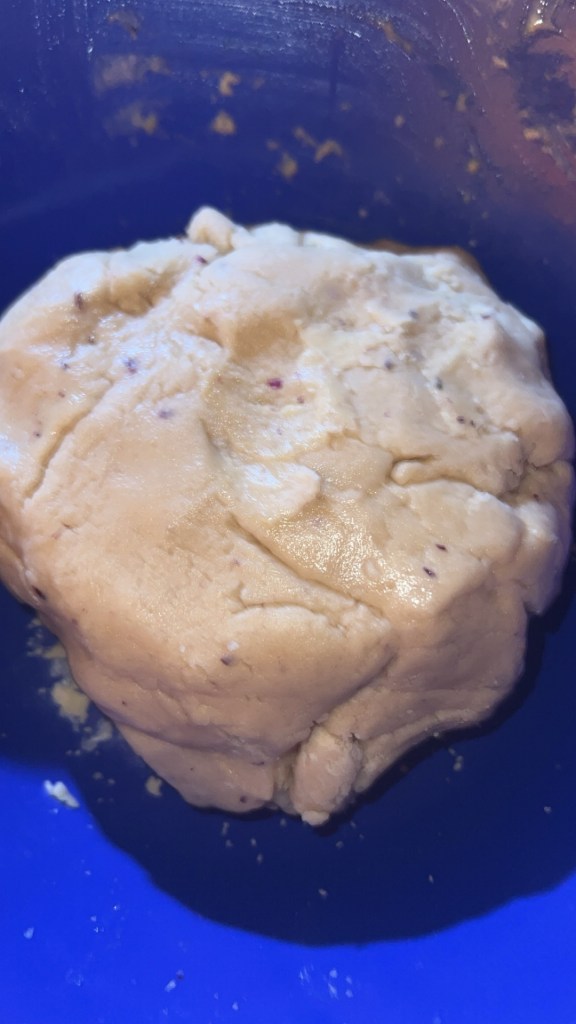
• Add flour slowly during mixing until a dough forms.

Formed dough after mixing with hands a little after the mixer.

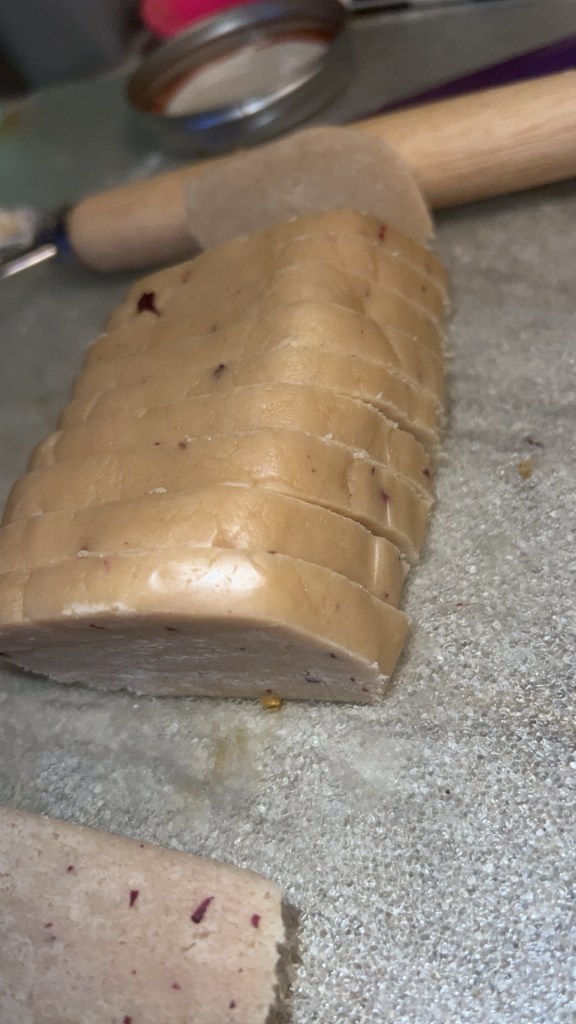
• Using a scale, divide the dough in half. Shape the dough into loaf shape or whatever shape you want to cut your cookies into. Put the dough into plastic bags, then chill in the fridge for at least an hour.

Loaf shaped dough ready for the fridge.

• Preheat the oven to 350℉. Place parchment paper on a cookie sheet.

• Take out the chilled dough loaves and use a large knife to cut into 1/2-1 inch thick slices.

• Transfer the slices to the baking sheet.

• Bake one sheet at time for 15 minutes or until the cookies are just becoming golden brown at the bottom edges. They will still be very light. Let the cookies cool before plating.

Mom’s Gingerbread Molasses Cookies

Mom’s Gingerbread Molasses Cookies (makes 24 cookies) but vegan!

This cookie was a staple growing up. We’ve almost lost the recipe multiple times so in an effort to immortalize the best family Christmas cookie, I had to share!

1 cup sugar

½ cup vegan butter softened

1/3 cup molasses

1 vegan egg

2 teaspoons grated orange peel

2 cups all purpose flour (I used organic 365 brand)

1 ½ teaspoons baking soda

1 teaspoon cinnamon

½ teaspoon ginger

¼ teaspoon salt

¼ teaspoon cloves

Buttery Decorator Icing

½ cup vegan butter, softened

½ cup shortening

1 teaspoon vanilla

4 cups powered sugar

2 to 4 tablespoons soy milk

Bake in oven for 10 minutes, 350 degrees Fahrenheit. Each step requires the use of a mixer.

In a mixing bowl, start combining the butter and sugar for the dough.

Add molasses, vegan egg to mixture.

Add orange rinds.

Mix dry ingredients and eliminate clumps of flour. Slowly add dry ingredients to mixing bowl of wet ingredients until dough is formed.

Place the sticky dough in a ball in plastic wrap and leave in the fridge for one hour.

While your dough chills, start whipping the butter and shortening until fluffy and white for the frosting.

Add approximately 4 cups of powdered sugar. I used a bag which had slightly less than 4 cups.

Add vanilla. Add soy milk as needed until texture is whipped. Set aside.

Preheat oven.

Sprinkle flour on flat surface or cutting board. Roll out gingerbread. Cut shapes as desired.

Line a cookie sheet with baking paper. Place cookie cuts on top. Leave about an inch of space between each cookie.

Cook for ten minutes. Let cool for three on sheet before moving. Move to cooling rack.

Once cool to the touch, spread the icing on top. Decorate with sprinkles as desired.

Yum yum. 💚🎄🌱✨ Just like mom used to make.

Vegan Béchamel

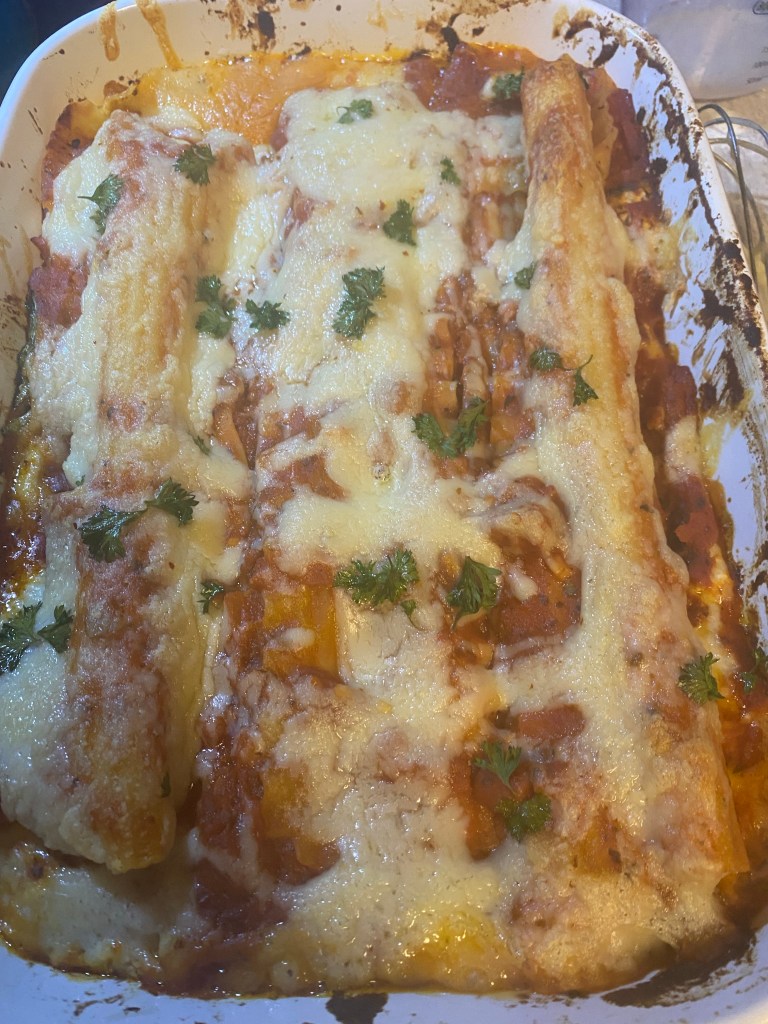
Lasagna topped with vegan Béchamel sauce.

As a French American, I love getting back to my roots for cooking. This French inspired vegan Béchamel sauce is perfect for all of your gratin dishes or to top your lasagna. Adding this to my vegan lasagna has made the ingredients needed simpler, as I don’t need to buy as much vegan ricotta and mozzarella to fill an entire dish.

You will need:

1/4 cup butter (I used Earth Balance)

1/4 cup flour

4 cups soy milk

1 tsp onion powder

1 tsp garlic powder

Optional:

1/4 cup vegan mozzarella

The process:

Melt butter over medium heat. Stir in flour slowly. Whisk together until smooth. Slowly add 4 cups soy milk. Add vegan mozzarella and whisk until melted. Bring heat to low for 4 minutes, stirring frequently.

Voila! Top your favorite dish and bake until perfection.

Béchamel after being cooked in the oven a top a vegan lasagna.

Vegan Beef Mushroom Stroganoff

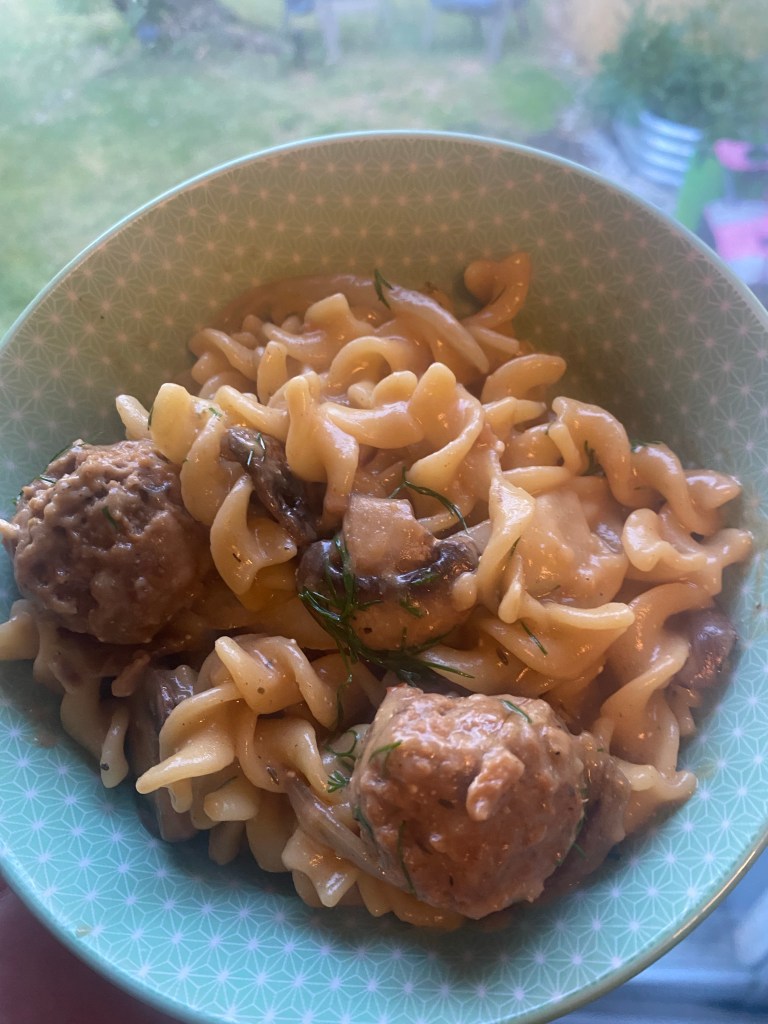
This creamy, full-flavor stroganoff is now on my regular dinner rotations. I absolutely love this savory, hearty meal.

Vegan Beef Mushroom Stroganoff

You will need:

1 generous tablespoon Vegemite

1 generous tablespoon veggie bouillon

3 cups water

1 table spoon vegan Worcestershire’s sauce (I use 365 from Whole Foods)

1 tablespoon Soy sauce

1 table spoon Dijon mustard

1 tablespoon Smoked Paprika

1 tablespoon Thyme

1/4cup Flour

1/2 tub vegan Sour Cream (I used Tofutti brand)

2 cups apprx. Sliced Mushrooms

1/2 Onion, sliced longways

Optional: frozen Beyond Meatballs

Splash of Wine or alcohol of choice

1 stem of fresh Dill

1 bag of Fusilli Pasta

The process:

If you are opting for the frozen meatballs, begin thawing them with a little olive oil over medium heat, stirring occasionally.

Mix water with Vegemite and broth and bring to a boil in sauce pan.

Add Worcestershire’s sauce, Dijon Mustard and Dry Seasonings. Stir well.

Add flour, stirring until thoroughly mixed.

Mix in sour cream until smooth.

Let simmer for 15 minutes.

Sauté onions and mushrooms without oil, flipping mushrooms until browned. Add alcohol of choice and let evaporate over heat (I used whiskey on hand, but you can use white wine).

Add broth mixture to pan with meatballs. Cook another 25 minutes.

Cook pasta as directed, then drain and add to broth and meatball mixture. Let cool.

Stir in mushroom and onion mixture. Sprinkle fresh dill on top before serving.

Oh my goodness was this ever tasty. I hope you enjoy this rich, creamy comfort food. ✨

The Best Vegan Spanikopita

Vegan Spanikopita I made for a morning staff meeting… big hit!

It’s 2022 so I felt it was time to update my Spanikopita recipe. I decided to give the fancy shapes a rest and just go back to basics… the results were incredibly tasty! There is no exact science to this. Feel free to modify quantities.

You will need:

500g of fresh spinach

150g Violife feta, crumbled

170g Follow Your Heart feta crumbles

(Your choice on type of Vegan feta cheese; I personally love the taste and texture of combining two particular kinds)

2 vegan eggs (I used Follow Your Heart)

115g vegan butter, melted

1 box frozen phyllo dough, thawed at room temperature

21g fresh chives, chopped

21g fresh dill, chopped

Optional: 1/2 lemon, squeezed

I used the largest tub of spinach they sell at Whole Foods and the full packets of fresh chives and dill. I provided ingredient measurements for guidance but truly I just eye balled everything. Don’t be afraid to just get in there!

The process:

I cooked down chopped fresh chives and dill with spinach in skillet.

Let the greens cool for a few minutes. Mix in your feta and vegan egg. Optional step: squeeze half a lemon over mixture.

Brush your melted butter on the pan.

Lay a Phyllo sheet along the bottom. Brush butter. Add another layer. Repeat layer, butter, layer for about 4 or 5 layers.

Add your filling mixture spreading evenly among dough.

Then top with a few more layers of dough and butter. I let these lay messily over the sides and tuck them under all of the layers when I’m done, giving it a nice crust.

Score all the way through, cutting pieces prior to cooking. Cutting after the dough is crusty can be difficult.

I was able to premake this the night before, covering tightly in my fridge overnight.

I popped it in oven this morning for 75 minutes at 375 degrees. 💚

Apparently I am to make this for every morning meeting henceforth. 😂 I hope you and your family enjoy it as much as we do!

Everything Sourdough Discard Cheese Crackers

Compassion begins on your plate! 💚✨ Everything Sourdough Discard Crackers using Vegan Cheese

Everything Sourdough Discard Crackers

One of the best things about maintaining a sourdough starter at home is making a variety of flavorful food without using any animal products completely from scratch.

The Magic: ✨

190-200g Sourdough Discard

2 Tablespoons oil or butter

1/2 tablespoon flour

1/3 cup vegan cheese of choice

1/2 tablespoon dried chives

Sprinkled salt and everything seasoning to taste

Directions: ✨

Preheat oven to 325 degrees.

Mix discard with oil, flour, cheese, and chives.

Spread out evenly on parchment paper lined cookie sheet as thin as possible.

Sprinkle top with sea salt and everything seasoning till desired.

Place cookie sheet on center rack for 10 minutes.

Score as desired. (I make simple squares pressing down with a long edge of a dough scraper.)

Place back in oven and cook for 30 more minutes or until it has started to crisp.

Let cool… break apart squares, and serve! Enjoy!

Vegan Cheese Sticks

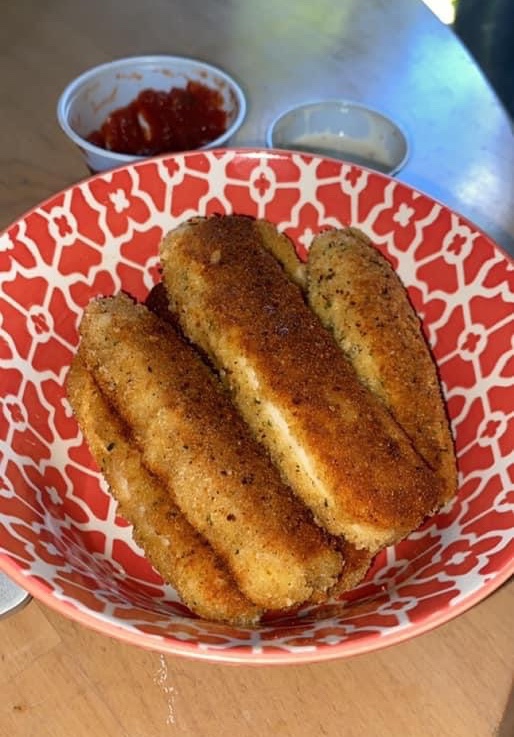
Being able to order an appetizer of cheese sticks is a staple in dairy-obsessed America, and is one of those hard things vegans feel they need to give up… well, no more!!

I have seriously perfected the vegan cheese stick using Miyoko’s Fresh Mozz cashew cheese product.

My best friend said these taste just like she remembers from TGIFridays. You ready for this goodness?

You Will Need:

Just Egg, Soy or Almond Milk unsweetened, Organic Flour, Italian Bread Crumbs, Garlic Powder, Miyoko’s Mozz.

My Process:

I cut and freeze the Miyoko’s cheese to make it firmer for about 10 minutes.

Then I dip it in a mixture of just egg and soy milk (1:2 ratio whipped together), then toss in a cup of organic flour mixed with a little garlic powder. Make sure it’s coated completely.

I put it in the freezer for a few minutes so the coating stays together better.

Then I dip it into the egg mixture one more time and roll it in Italian bread crumbs, completely covering the stick.

I fried these with a little olive oil. 🙌🏼

Get ready for your dreams to come true. 🥳🤩 Enjoy! Tell me how it turned out in the comments. ✨

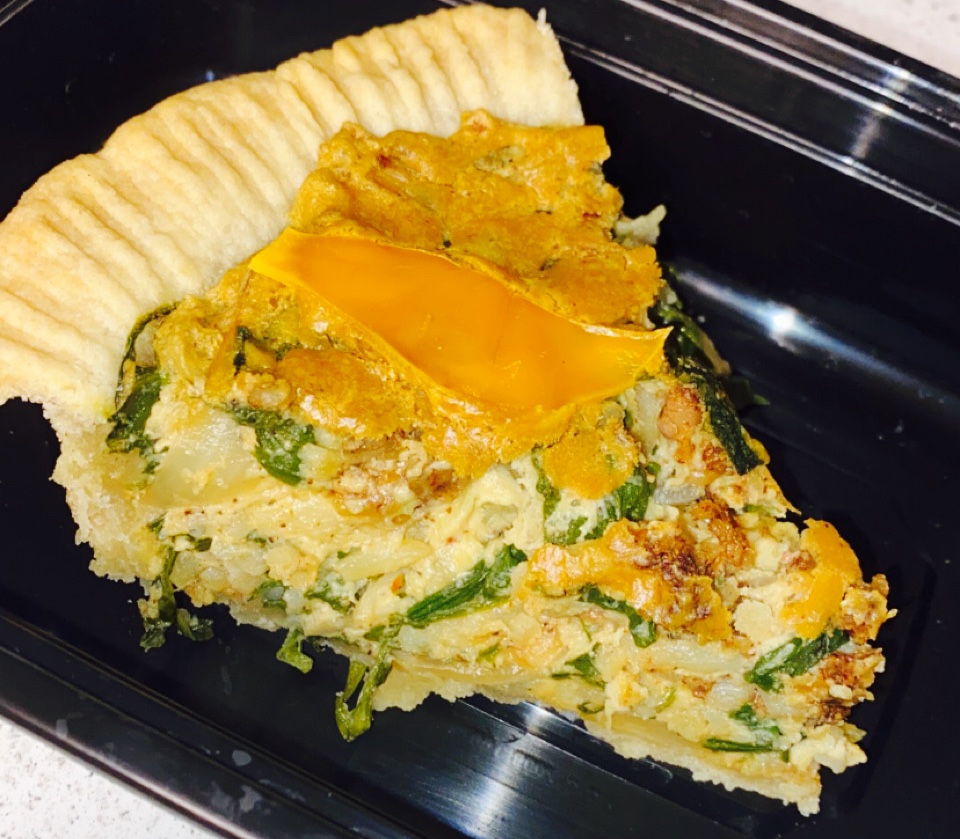
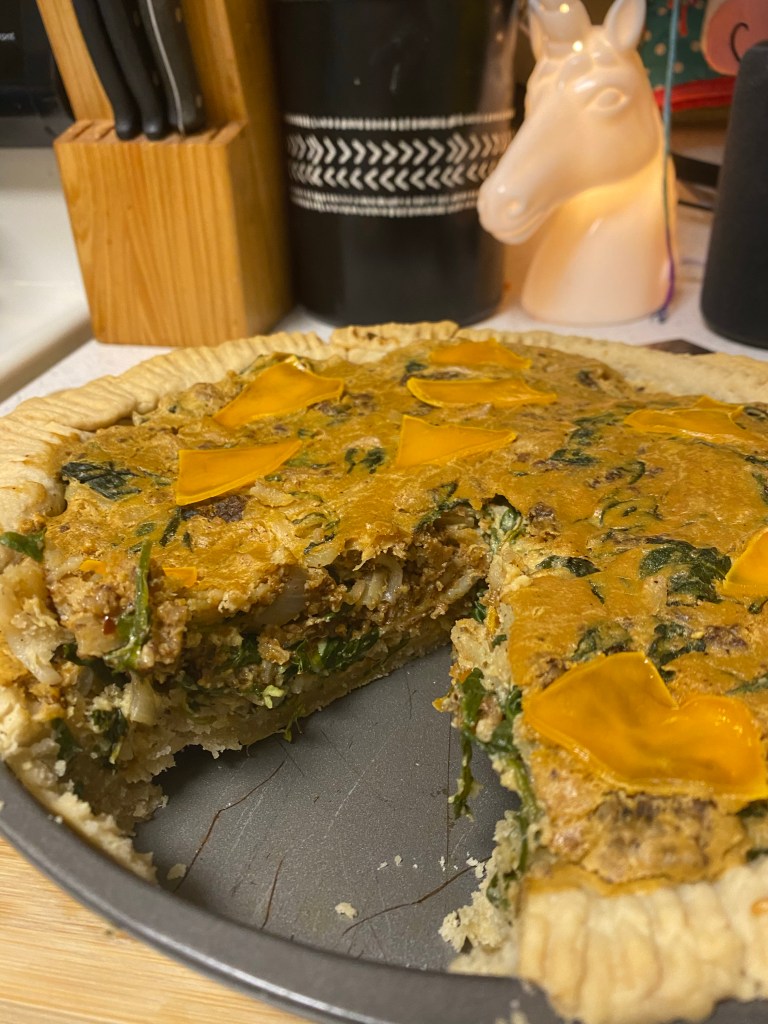
Vegan Breakfast Quiche

This vegan dish has the perfect flaky crust and savory flavors you’d expect from a breakfast quiche.

Crust ingredients:

⁃ 1 vegan egg (2 tbs of Follow Your Heart powder with 1/2 cup ice water, whisked)

⁃ 2 1/2 tablespoons ice water

⁃ 1 1/2 cups all-purpose flour

⁃ 1/2 teaspoon sea salt

⁃ 10 tablespoons vegan butter (I used Miyoko’s Oat Milk Butter)

Filling:

– 1 Yellow Onion, chopped into cubes

– 3 VeganEggs (6 level Tbsp Follow Your Heart VeganEgg whisked with 1 1/2 cups ice cold water)

– 1 cup homemade cashew cheese (cashews blended with nutritional yeast, veggie bouillon, veggie broth, garlic, and hot water)

– 1 tbsp vegan butter

– pinch red pepper flakes

– 1 tsp pepper

– 1/8 tsp cayenne pepper

– 1 cup of Hashbrowns (I used dehydrated shredded potatoes, salted to taste)

– 1 10 oz package fresh spinach

– Tbsp chopped fresh garlic

• Optional: vegan meat of your choice or vegan bac’n bits. (I personally used sautéed Chorizo bits from Nutcase Vegan Meats.) Top quiche with additional cheese if you like.

Directions:

Preheat oven to 400 degrees

Whisk salt and flour

Add vegan egg

Add butter

Knead until dough consistency.

Roll out on floured cutting board until it is the size of your pie pan.

Work dough into pie pan, pinching the ends to form a crust around the edge.

Finish with fork impressions on edge.

Freeze for 25 minutes.

Bake for 10 minutes at 400 degrees.

If crust bubbles up, pierce with fork.

Sautée onions until soft. Add hashbrowns with vegan butter until desired browning.

Pack the pan with spinach only allowing to remove excess water for one to two minutes tops.

Whisk vegan egg with additional water. Add garlic, onion, pepper, red pepper flakes, hashbrowns and spinach. Mix well.

Slightly stir in homemade vegan cheese and chorizo. I left clumps together and it turned out amazing.

Pour into crust.

Turn down oven to 325 degrees.

Cook for 55 minutes.

Voila! Enjoy!

For tips on making your own homemade cashew cheese, check out the full video on how it’s made.