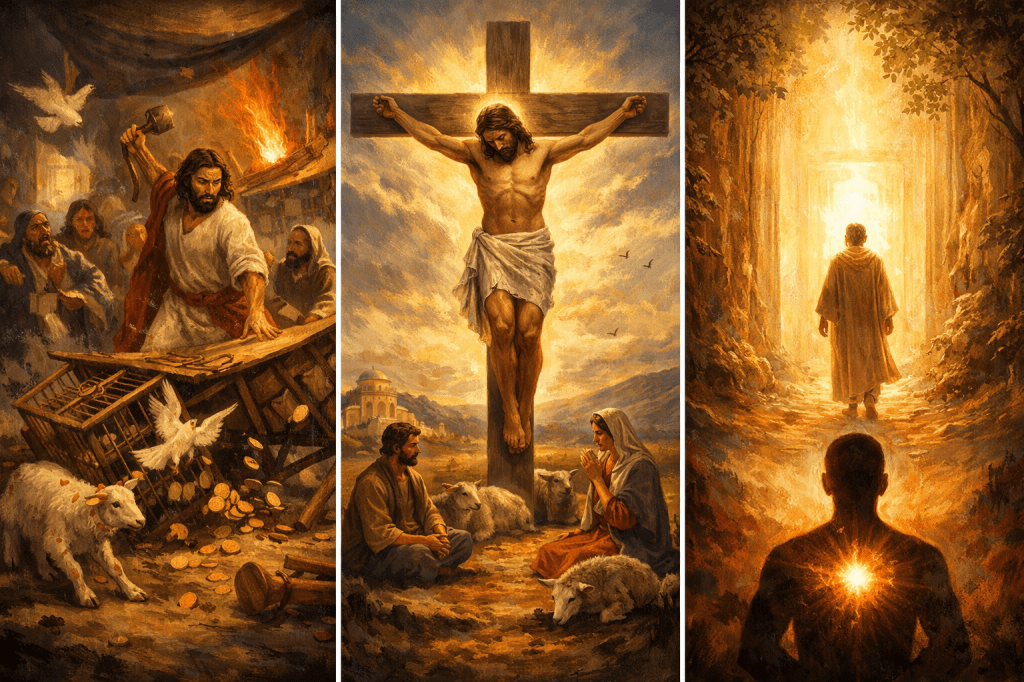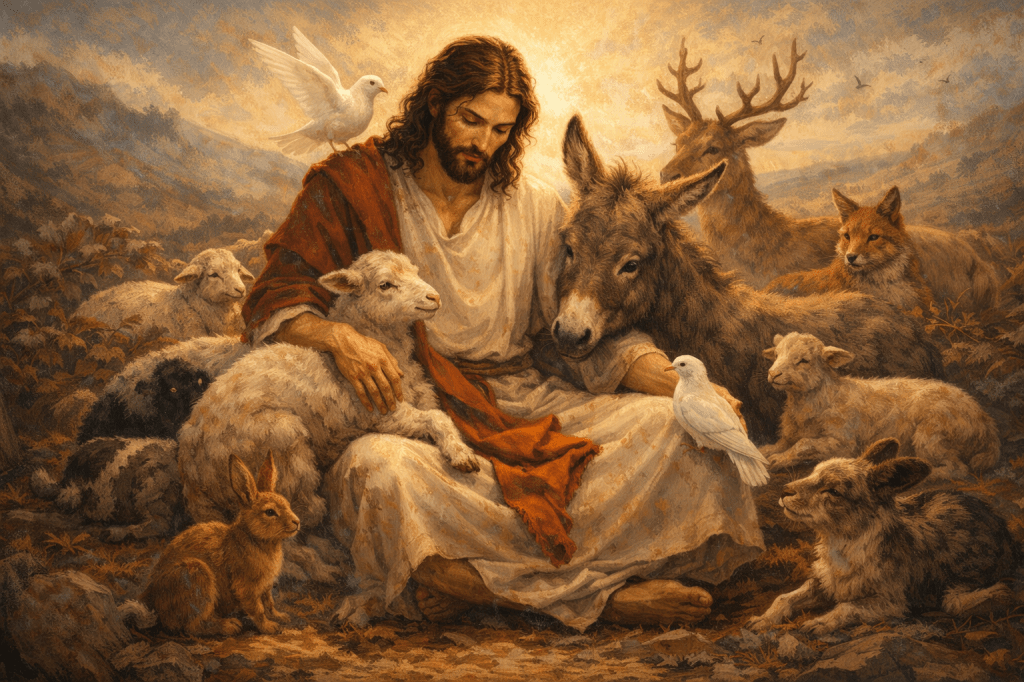
The Souls We Recognize, the Love We Remember, and the Kingdom We Have Yet to Build

On twin flames, past lives, divine timing, and why not every soul we recognize is the one we’re meant to walk beside

By Julie Tourangeau | julietour.com

There are people you meet for the first time who somehow do not feel new.

You don’t recognize their face. You don’t remember their name. You cannot point to a shared history or explain why being in their presence feels so familiar.

But something within you recognizes them.

I’ve experienced this more than once in my lifetime.

And after years of writing about twin flames, soulmates, spiritual awakening, and the possibility of reincarnation, I’ve begun to question something I once thought I understood.

What if we have mistaken soul recognition for romantic destiny?

What if the people who awaken our souls aren’t necessarily the people we’re meant to spend our lives with?

And what if there is something greater than finding our other half?

What if the real purpose of divine partnership is to help bring the Kingdom of Heaven to Earth?

An Expert in Getting It Wrong?

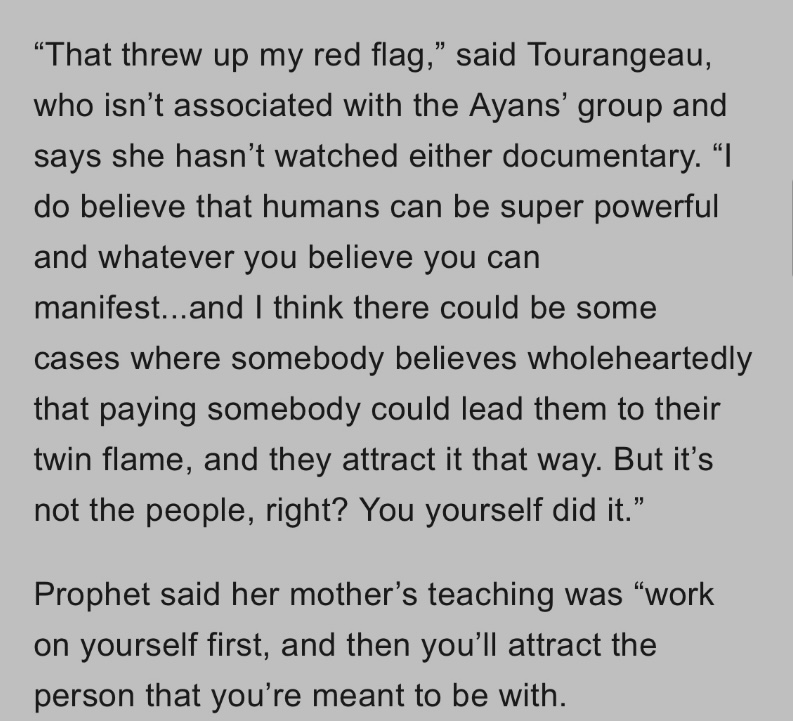
A few years ago, I had the rather amusing experience of being presented in a news article as something of a foremost expert on twin flames.

Which is especially funny because I distinctly remember telling the reporter that I’d mistaken the identity of my supposed twin flame more than once.

Apparently, that’s one way to become an expert. Experience, including the experience of being wrong. Repeatedly. 😂

But there’s something important about that distinction.

I’ve never believed that recognizing an extraordinary connection automatically means you’ve discovered the one person you’re destined to spend eternity with.

In fact, I explained to the reporter that I believe relationships exist at different spiritual levels.

Some connections are familiar. Others are transformative. Some mirror our deepest wounds, while others awaken parts of ourselves we didn’t know existed.

And I believe truly divine partnership is something different still.

I also expressed an opinion that doesn’t always make me popular in spiritual circles:

Most people may go through an entire lifetime without experiencing what I would consider a divine romantic relationship. And that’s perfectly okay.

Not everyone is looking for that experience.

Not everyone is prepared for it.

And not everyone is at the same place in what I understand as the evolution of the soul.

That isn’t a judgment of anyone’s spiritual worth. I don’t believe the intensity or perceived divinity of a romantic relationship makes one human being superior to another.

I simply believe there are levels of connection, and that we continually evolve in our capacity to recognize and experience them.

Of course, the article ultimately emphasized a different part of our conversation.

The reporter highlighted my belief that human beings are extraordinarily powerful, that we have the capacity to manifest remarkable possibilities, and the astonishing circumstances surrounding how I met the man I would eventually become engaged to.

And those circumstances genuinely were astonishing.

At that point, the timing of our meeting was the most extraordinary romantic synchronicity I’d ever experienced.

I still believe that.

But what I didn’t know then was that another encounter would eventually challenge my understanding of spiritual recognition.

Because extraordinary timing and extraordinary energetic connection are not necessarily the same experience.

As my relationships have deepened, changed, and sometimes ended, my understanding of divine partnership has continued to evolve.

Perhaps that’s the most important qualification an expert on love can possess.

The willingness to admit there is always more to learn.

When Souls Meet at the “Wrong” Time

Earlier this year, I met someone I felt I already knew.

The recognition was immediate. Not something that developed over months of conversation or gradually emerged through shared experiences.

It was simply there.

There was an ease, a familiarity, and eventually a series of conversations that made the connection feel increasingly difficult to dismiss.

But the timing was almost comical.

I was engaged to another man, someone whose place in my spiritual journey had already become part of my public writing.

And the person I had just met was navigating the complicated aftermath of a marriage. Our meeting coincided with a significant anniversary in that relationship.

If you’ve spent enough time contemplating reincarnation, synchronicity, and divine timing, you begin to notice the strange circumstances surrounding certain encounters.

Two people who feel inexplicably familiar, meeting at a moment when neither is entirely available… a spiritual recognition wrapped in profoundly human complications.

At one point, he told me he believed we had met for a reason. He described our connection as significant, as though we’d known one another forever. He said he had grown the most since he had met me.

What made that conversation particularly interesting was that he shared an experience from his past. He had previously felt a profound spiritual connection somewhat similar to me with someone and that connection eventually developed into a romantic and physical relationship.

He told me directly that he was trying to figure out the connection between us.

I understood exactly what he meant.

Because I had felt it from the beginning.

I had been observing silently, wondering whether the significance I felt in my intuitive world would ever manifest in the physical world.

And it did.

Or it began to, anyway, with one remarkably open phone conversation.

There was something extraordinary about hearing another person independently acknowledge a connection I had privately contemplated for months.

But I’ve learned that two people can recognize something meaningful in one another without agreeing on what to do about it.

And sometimes the most difficult lesson is discovering that recognition alone cannot create a relationship.

A soul may feel familiar without being ready to walk beside yours.

Saying Goodbye Before the Streets Erupted
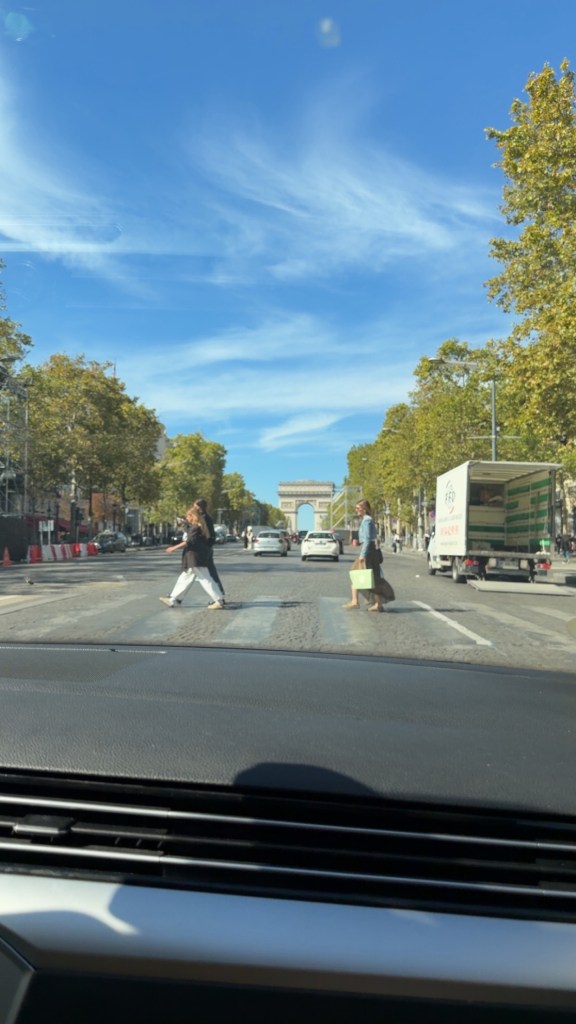
Not long after, I returned to France.

I went knowing something in my life had changed.

For years, my romantic relationship had carried me between two countries, two cultures, and two very different visions of the future.

There had been love, extraordinary experiences, difficult sacrifices, and dreams that once seemed entirely possible.

But I could no longer ignore the distance between the relationship I hoped to have and the one I was actually living.

And something else had happened.

Before returning to France, I had encountered a connection whose energy was unlike anything I had ever experienced.

I don’t know how else to explain it.

It felt as though my heart was on fire.

Not simply the nervous excitement of attraction or the familiar butterflies of a new romantic interest.

I experienced it as something centered in my heart chakra, an extraordinary sensation of warmth, openness, and intensity that seemed to reach beyond anything I could logically explain.

It was like a sleeping limb awakening—a part of me that had always existed but had never come alive quite like this.

What fascinated me was that this recognition had existed from the very beginning, long before I contemplated what it might mean romantically.

I had experienced remarkable synchronicities before.

I had experienced intense love.

I had experienced what I believed were divinely orchestrated meetings.

But this felt different.

And when I returned to France, I became acutely aware of that difference.
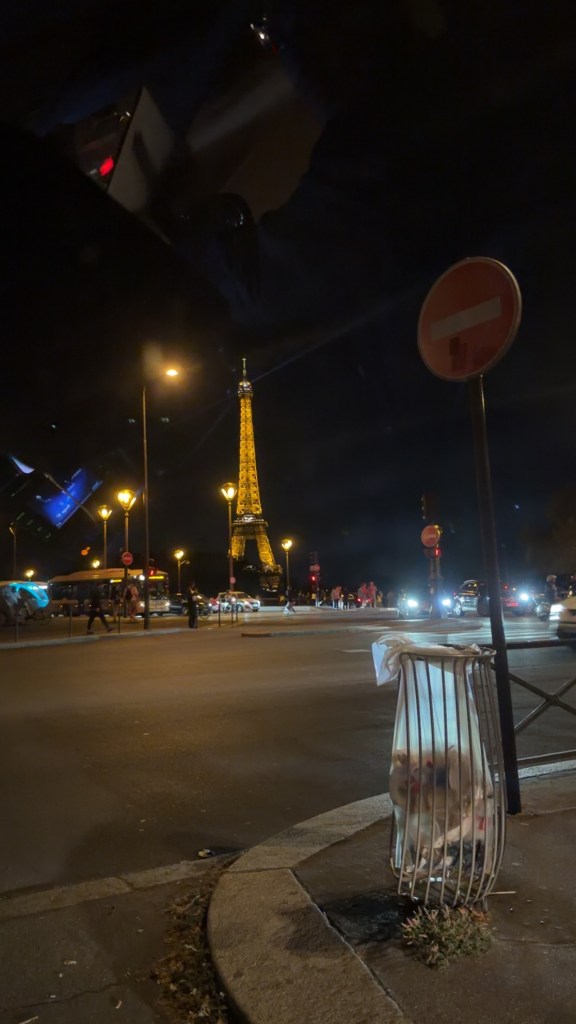
Sitting across from the man I had once imagined marrying, I recognized how profoundly my internal world had shifted.

It wasn’t simply that I’d developed feelings for someone else.

I had experienced a kind of energetic recognition I hadn’t known was possible, and I could no longer pretend my understanding of love had remained unchanged.

I want to be careful here.

A powerful sensation in the heart, even one I interpret through the language of chakras and spiritual awakening, is not proof that another person is divinely appointed to be my partner.

Nor does it diminish the real love I had experienced in another relationship.

Of course, the timing of the immigration issues we faced was also significant. Our relationship had already been tested by circumstances neither of us could easily change.

But I couldn’t deny what I’d felt or ignore what it revealed about the relationship I was already questioning.

So I said goodbye.

Not to a stranger. Not to someone who had meant nothing.

I said goodbye to someone who had occupied an enormous chapter of my life.

There is a peculiar grief in ending a relationship while the person you once imagined spending your life with is still standing in front of you… in the French Riviera, no less.

You aren’t mourning a death.

You’re mourning a future.

And yet, as painful as it was, I knew I could not continue building my life around a promise that wasn’t becoming reality.

What makes the timing particularly fascinating to me now is what followed.

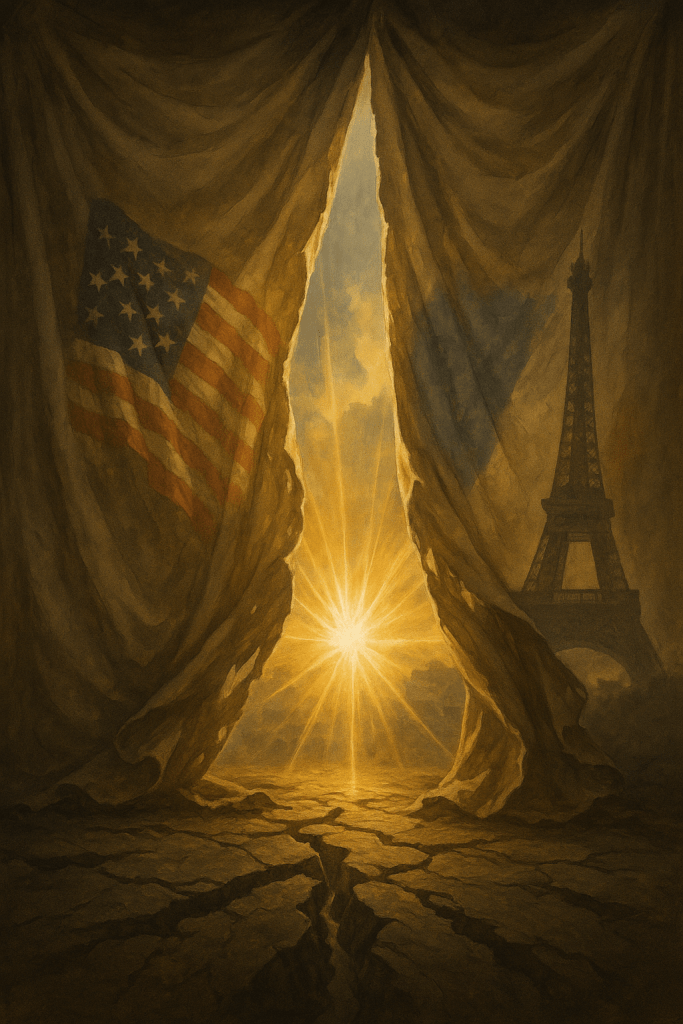
Not long after I left France, images of unrest and confrontation in Paris began circulating. Streets I knew became the backdrop for protests, anger, and a country wrestling publicly with its own contradictions.

I had just experienced a deeply personal separation, only to watch a place so intertwined with that relationship become a scene of collective upheaval.

I don’t believe every coincidence needs a supernatural explanation. But I do believe meaningful timing invites reflection.

I had gone to France to confront something I’d been avoiding. And I left just before the unrest that would soon dominate my attention.

There was something strangely symbolic about that sequence… a private ending followed by public upheaval.

Two very different experiences, both asking what happens when the structures we’ve accepted can no longer hold.

Sometimes the world outside us seems to echo the questions we’re asking within.

What If We Have More Than One Twin Flame?

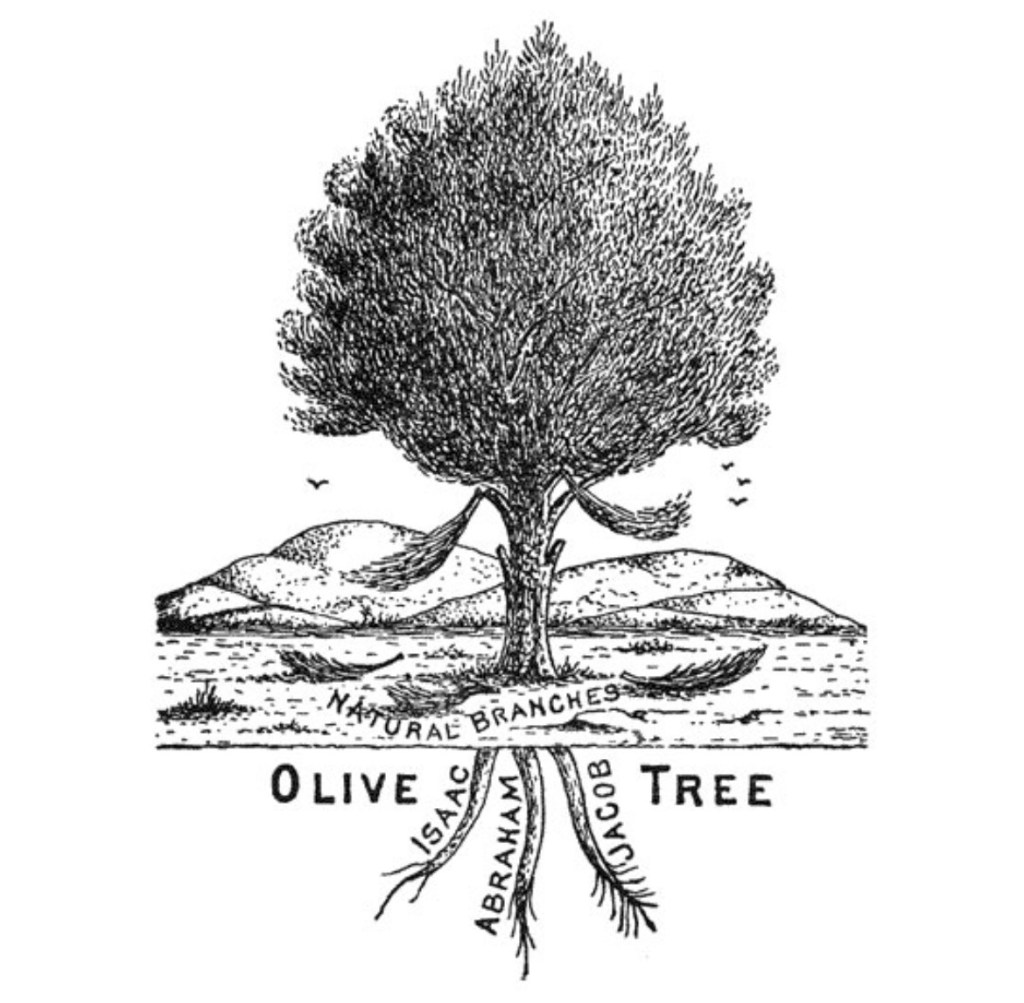
The conventional twin-flame narrative suggests that one soul has been divided into two, with each half destined to find the other.

It’s a beautiful idea.

It’s also an idea I’ve become increasingly unwilling to accept without questioning.

Because I’ve experienced profound mirroring in multiple relationships.

Not identical experiences, of course. Different personalities. Different circumstances. Different lessons.

Yet there have been moments of recognition, uncanny synchronicities, and similarities that seemed to reach beyond ordinary attraction.

If we entertain the possibility that consciousness experiences multiple incarnations, why would we assume only one relationship could carry significance from another lifetime?

Consider how many people we love during a single life…

Parents. Children. Friends. Partners. Mentors.

People who change us forever.

Would those relationships simply disappear from the greater story of the soul?

Or might we encounter familiar souls repeatedly, sometimes as lovers, sometimes as friends, sometimes as people whose purpose is to challenge our understanding of love?

Perhaps the concept of one exclusive twin flame or soulmate is too limited.

Perhaps there are many souls capable of reflecting something sacred back to us.

And perhaps the intensity of that reflection tells us more about what we’re being invited to learn than about whom we’re destined to marry.

Spiritual familiarity is not the same thing as compatibility. Synchronicity is not a substitute for commitment. And even the most extraordinary connection requires two people willing to choose one another.

That last realization may be the hardest.

Because it requires us to separate what we feel spiritually from what someone is capable of offering us in this lifetime.

The Difference Between a Soulmate and a Kingdom Spouse

Lately, I’ve been thinking about another concept: the kingdom spouse.

Not simply a romantic partner who feels divinely appointed.

Not someone whose presence produces an endless series of angel numbers, coincidences, or emotional highs and lows.

I mean something much more profound.

A partner with whom you can help manifest the Kingdom of Heaven on Earth.

For much of my spiritual journey, I’ve explored the teachings of Jesus through the lens of mercy, compassion, and the possibility that the message of the Kingdom has been misunderstood.

What if heaven was never intended to be exclusively a destination after death?

What if the Kingdom was something humanity was being invited to realize here?

A transformation of consciousness so complete that it changes how we treat one another, how we govern ourselves, how we understand our relationship with nature, and how we respond to suffering.

For me, that vision cannot be separated from the treatment of animals.

I’ve been vegan and vegetarian for most of my life.
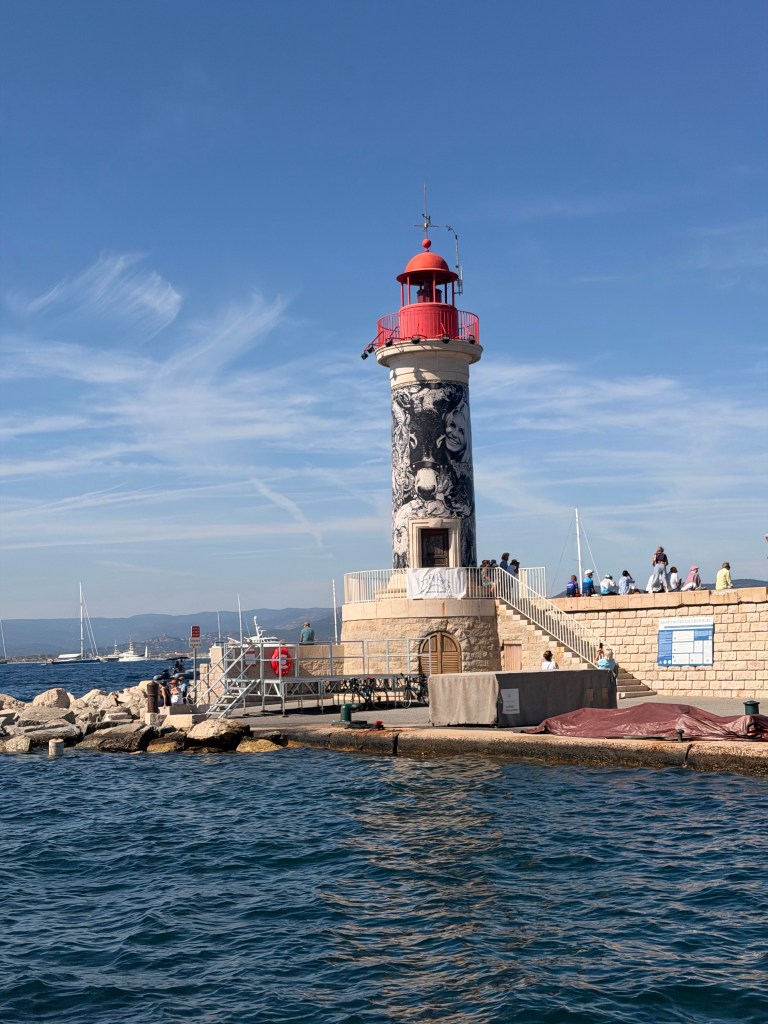
The longer I contemplate heaven on Earth, the more difficult it becomes to reconcile that vision with a world built upon the unnecessary suffering of other living beings.

Imagine a world where compassion was not selective.

Where mercy wasn’t something we extended only to those who looked like us, spoke like us, worshipped like us, or belonged to our species…

A world in which the powerful no longer regarded the vulnerable as resources to be exploited.

I don’t believe veganism alone, without the inner work, would create heaven. Humanity would still have to confront violence, poverty, hatred, exploitation, and countless forms of suffering.

But I struggle to imagine a kingdom founded upon divine love while institutionalized cruelty remains an accepted part of everyday life.

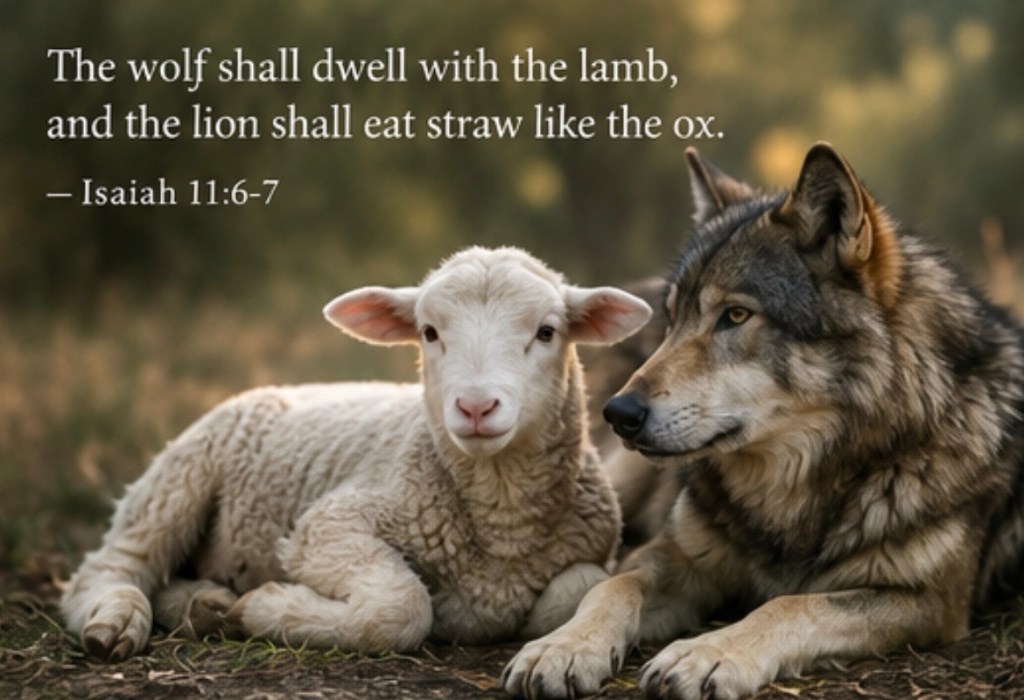
The prophecy of a peaceable kingdom, where even the wolf and the lamb coexist, has always fascinated me.

What if these images weren’t simply promises of a distant supernatural future?

What if they were invitations to reconsider what humanity might become?

And what if finding a kingdom spouse isn’t about locating the person who makes us feel the most intense romantic connection?

What if it’s about finding someone who shares a vision of what love is meant to accomplish?

Someone who doesn’t merely awaken our heart, but walks alongside us in the work of transforming the world.

Love Without Possession: The Freedom of Divine Partnership
One of the books that has influenced my understanding of spiritual relationships is The Celestine Prophecy by James Redfield.

What has stayed with me is its exploration of intuition, spiritual energy, and the ways human beings attempt to control one another when they become disconnected from their own spiritual source.

The book invites us to consider what relationships might become when two people are no longer trying to extract something from one another to feel complete…

When they are connected to something greater than themselves.

When they trust their intuition and allow their connection to unfold without constantly attempting to direct the outcome.

I’ve come to believe this is essential to divine partnership.

Because what happens when you meet someone whose presence feels like heaven on Earth?

Someone who awakens a feeling so extraordinary that you want to hold on to it forever?

The temptation, of course, is to do exactly that.

To hold on.

To define it.

To secure it.

To make sure it never disappears.

But perhaps that is precisely where we begin to misunderstand the gift.

When something feels sacred, our instinct may be to possess it. But perhaps the most loving thing we can do is allow it to remain free.

We cannot control another person’s spiritual evolution.

We cannot manipulate someone into recognizing what we recognize.

We cannot force another person to surrender to a connection simply because we believe it has a divine purpose.

And perhaps most importantly, we cannot always be the one leading.

There is a difference between guiding a relationship with love and attempting to control its destination.

There is a difference between surrendering to divine timing and surrendering our own autonomy.

And there is a profound difference between unconditional love and unconditional access to another person’s life.

To me, genuine surrender does not mean abandoning ourselves, our boundaries, or our ability to choose.

True spiritual surrender should lead us toward greater freedom, not less.

Imagine two people who trust one another enough to follow their shared intuition.

Neither needs to dominate.

Neither needs to manipulate.

Neither needs to constantly anticipate the other’s next move, manufacture a desired response, or control the relationship.

They can simply be.

They can love without fear that freedom itself will destroy their connection.

They can surrender without becoming powerless.

They can maintain their individuality while participating in something greater than either person could create alone.

And when one person feels called to lead, the other can trust. When the direction changes, they can move together without turning love into a struggle for control.

But for that to work, I believe both people must cultivate their own connection with Source… and continually be conscious of it.

Neither can depend entirely upon the other to provide the love, validation, energy, or spiritual fulfillment they have not yet learned to experience within themselves.

Because when we make another human being our only connection to the divine, love can become dependency.

And when we become terrified of losing that connection, dependency can become control.

I don’t believe that’s the freedom Jesus was describing.

I believe divine love should liberate us.

And I believe a kingdom relationship would require two people who are connected to Source individually, yet capable of experiencing that connection together.

Not through ownership.

Not through obligation.

Not through the fear of abandonment.

But through intuition, trust, mutual devotion, and liberty.

This doesn’t mean love requires no commitment. Quite the opposite.

The deepest commitment may be the one we make freely, every day, without needing to diminish another person’s freedom to secure it.

Perhaps that’s what it means to experience heaven on Earth through another human being.

Not that we finally possess someone who makes us feel whole.

But that we experience a love so aligned with freedom that neither person must lose themselves to sustain it.

And if that connection is truly as precious as it feels, perhaps we should be especially careful not to destroy its beauty through our desire to control it.

Unconditional love does not mean we are guaranteed a relationship. It means our love does not become a demand for possession.

The greatest partnerships, I believe, are built by two people who remain connected to Source, connected to themselves, and connected to one another.

Two free souls choosing unity.

Not because they must.

But because they can.

And perhaps that is what makes such a partnership divine.

The Tao: Love in Harmony With the Way

This brings me to another spiritual philosophy that has profoundly shaped how I understand love: the Tao.

The Way.

The flow.

In Taoism, there is a principle known as wu wei, often understood as effortless action or acting without force.

It doesn’t mean abandoning our intentions, stopping making choices, or simply allowing life to happen to us.

It means learning to move in harmony with life rather than constantly attempting to bend it to our will.

And perhaps nowhere is this more important than in love.

When we encounter someone who makes us feel as though we’ve experienced heaven on Earth, our instinct may be to preserve that feeling at any cost.

We want certainty.

We want answers.

We want to know where the relationship is going and whether the other person recognizes what we recognize.

But the moment we begin trying to force another person’s feelings, decisions, or spiritual awakening, we are no longer moving in harmony with the Way.

We are attempting to control it.

To force love is to move against the very freedom that makes love sacred.

The Tao reminds me there is a difference between conscious action and forced outcomes.

We can express our feelings.

We can communicate our intentions.

We can extend an invitation.

We can make ourselves available to love.

But we cannot make another person accept that invitation.

And we shouldn’t have to.

If two people are truly aligned, their relationship should not require one person to constantly pull the other toward a shared future.

There can be effort, vulnerability, difficult conversations, and compromise. The Way is not necessarily the path of least resistance.

But mutual love should not require coercion.

The flow does not mean there will never be obstacles. It means we stop confusing the need to control with the willingness to love.

Perhaps this is where the teachings of the Tao, the spiritual insights of The Celestine Prophecy, and my understanding of the Kingdom begin to meet.

All three invite me, in different ways, to consider what happens when we stop allowing fear and the desire for control to dictate our relationships.

When we recognize love is not something to capture.

When we trust that another person’s freedom does not diminish our own.

When we understand surrender is not defeat.

It is the willingness to participate in life without demanding ownership of its outcome.

Perhaps divine partnership is not about two people struggling to make destiny happen.

Perhaps it is about two people who have learned to move with the Way, individually and together.

Two souls connected to Source, freely choosing to flow in the same direction.

And if their paths diverge?

We can still honor what was beautiful about the moment they met.

Because something does not have to last forever to have been sacred.

And something sacred does not have to belong to us to have changed our lives.

The Way cannot be forced. Neither can love.

Can We Manifest the Kingdom in This Lifetime?

This is where my thinking becomes both more hopeful and more complicated.

I believe humanity is capable of extraordinary transformation.

Not because history suggests progress is inevitable. It certainly doesn’t.

But because we have already witnessed changes that previous generations might have considered impossible.

Ideas once dismissed as radical can become common moral understanding.

Institutions that seem permanent can change.

And compassion, once awakened, has the potential to expand beyond the boundaries we’ve inherited.

Could humanity eventually reach a point where a vegan world becomes possible?

I believe it could.

Will that happen in my lifetime?

I don’t know.

And perhaps the same uncertainty applies to the kingdom spouse.

I can imagine a love that is not only personally fulfilling but spiritually collaborative in manifesting the future.

A relationship that serves something greater than the happiness of the two people within it.

I want that.

I want to experience a love that doesn’t require choosing between spiritual purpose and romantic partnership.

I want to know what it means to build something sacred with another human being.

But wanting something, even believing it is possible, does not guarantee when or how it will arrive.

And since I believe consciousness continues beyond one lifetime, perhaps the work of building the Kingdom does too.

Perhaps we participate in something whose completion we may never personally witness during our current incarnations.

That doesn’t make our contribution insignificant.

It makes it part of something greater than ourselves.

Not Every Soul We Recognize Is Ours to Keep

Returning home from France, I found myself navigating another kind of uncertainty.

The person whose presence had felt so instantly familiar had become someone I genuinely cared about.

I had hoped the connection might eventually become something more.

But life doesn’t always unfold in the direction our hearts anticipate.

There are practical complications. Emotional wounds. Unfinished relationships. Differences in readiness and intention.

And there is the simple reality that another person has the freedom to choose a different path.

I’ve come to understand that I cannot determine the purpose of a connection solely by how extraordinary it feels to me.

Even when another person has acknowledged something meaningful between us.

Even when the timing seems impossible to explain.

Even when the experience reminds me of everything I’ve spent years studying and writing about.

A relationship still requires mutual participation.

And perhaps recognizing that is part of spiritual maturity.

Love is not possession. Recognition is not entitlement. And destiny, if it exists, cannot be an excuse to disregard another person’s free will.

I can appreciate what someone awakened in me without insisting they must remain in my life.

I can be grateful for a connection while grieving the possibility that it may never become what I hoped or felt.

And I can believe an encounter was meaningful without claiming to know its cosmic purpose.

There is freedom in that.

Even when it hurts.

What Does It Mean to Recognize a Soul?

I keep returning to the moment of first recognition.

That strange, immediate familiarity.

The feeling that someone has entered your life from a story you cannot quite remember.

I still believe those experiences deserve contemplation.

I am not ready to dismiss them as meaningless.

I think they are incredibly meaningful, and if you have experienced that, even for a moment, you are blessed.

But I’m no longer convinced every profound spiritual connection should be interpreted through the language of romantic destiny.

Perhaps some people arrive to remind us of who we are.

Perhaps others reveal the places where we still confuse longing with love.

Some teach us to establish boundaries. Others challenge our beliefs about commitment, sacrifice, forgiveness, and self-worth.

And perhaps a very small number will be willing and able to build a life with us.

I don’t know whether there is only one kingdom spouse across every incarnation, or whether such a partnership becomes possible when two people reach a shared level of spiritual understanding.

That question remains open for me.

But I am increasingly certain of one thing.

The kingdom spouse cannot be identified by synchronicity alone.

A divine partnership, whatever that ultimately means, must become visible in the choices two people make.

No excuses.

No spiritual bypassing.

No convincing ourselves that someone is a runner and we’re a chaser simply because reality isn’t meeting our romantic expectations.

Divine partnership isn’t proven by how persistently we pursue someone.

It becomes real through the conscious choices two people make.

In the love they practice.

In the compassion they extend.

In their willingness to face difficulty together.

And in the world they hope to leave behind.

Perhaps the Kingdom Comes Before the Spouse

There is a possibility I find both humbling and liberating.

What if I’ve spent too much time asking who is meant to accompany me on my spiritual journey?

What if the more important question is whether I’m living in alignment with the kingdom I hope to see?

We often approach spiritual partnership as though finding the right person will finally allow our purpose to unfold.

But perhaps our purpose is already unfolding.

Perhaps the work begins long before a partner arrives.

Every act of mercy.

Every refusal to participate in unnecessary cruelty.

Every effort to love without possessing.

Every difficult choice to walk away from a relationship that cannot become healthy or mutual.

Every attempt to create something better than what we’ve inherited.

Perhaps these are the beginnings of the Kingdom.

And perhaps a kingdom spouse isn’t someone who completes us.

Perhaps it’s someone who recognizes the work we’re already doing and chooses to join us.

I don’t know whether the love I envision will manifest in this lifetime.

I hope it does.

I still believe in extraordinary love.

I still believe in the possibility that some connections transcend what we currently understand about consciousness and time.

And I still believe humanity is capable of becoming something far more compassionate than the world we see today.

But I’m beginning to understand that recognizing a soul and sharing a destiny may be two entirely different experiences.

Maybe we encounter many souls we’ve loved before.

Maybe we meet people who mirror our past, awaken our present, and change our future.

But perhaps the rarest relationship isn’t the one that feels like remembering another lifetime.

Perhaps it’s the one in which two people consciously choose to create a better world in this one.

Until then, I will keep building the kingdom I believe is possible.

With love.

With mercy.

And with the hope that one day, someone will recognize not only my soul—

but the world I’m trying to bring into being.

Kingdom come.
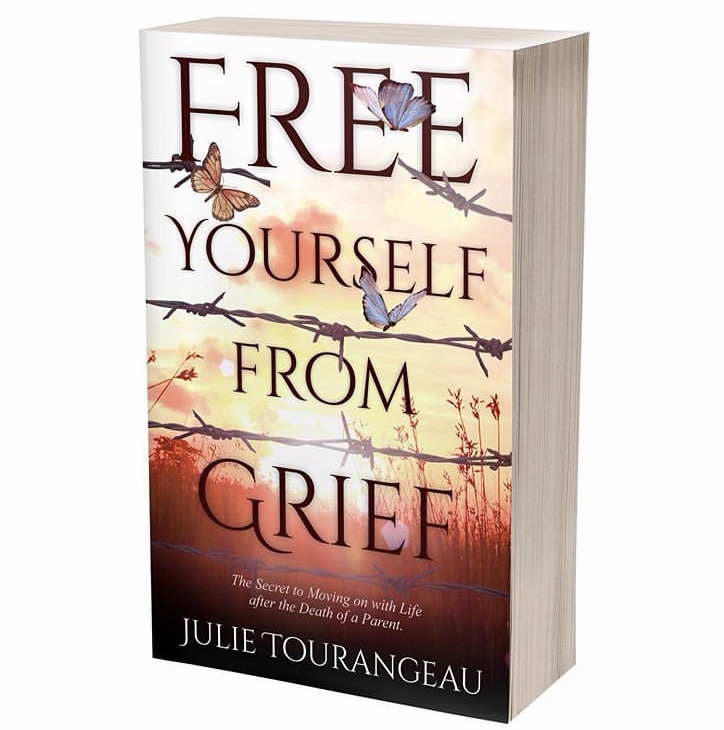
Six Years Later: Free Yourself from Grief, Divine Timing, and a Story Still Unfolding

By Julie Tourangeau | julietour.com

Six years ago today, I became a bestselling author.

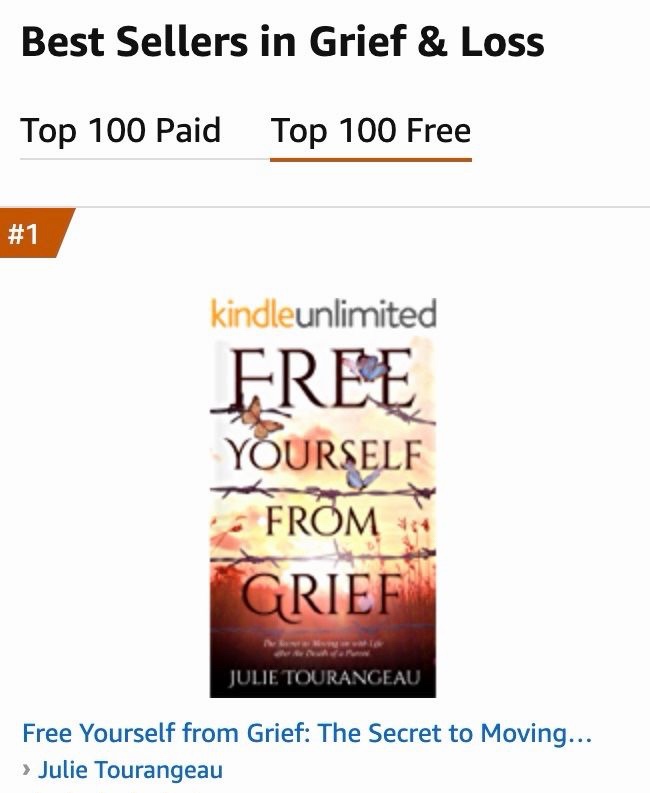
On October 15, 2020, my first book, Free Yourself from Grief: The Secret to Moving on with Life after the Death of a Parent, launched and became a #1 Amazon bestseller in two categories.

What began as a deeply personal journey through the grief of losing my father evolved into something much greater: an exploration of consciousness, divine timing, synchronicity, and the extraordinary possibilities that emerge when we learn to trust the unfolding of our lives.

At the time, I thought I had witnessed some pretty incredible things.

Six years later, I can hardly believe how much more has unfolded.

And the most fascinating part?

The experiences I once considered monumental now seem relatively small compared to everything I’ve witnessed since.

The synchronicities haven’t stopped. If anything, the momentum continues to build.

And sometimes I find myself looking back at the woman who wrote that book, realizing that even with everything I thought I understood about consciousness and divine timing, I had barely scratched the surface.

When Life Rearranges Itself

When I wrote Free Yourself from Grief, I had already experienced what I could only describe as a complete transformation of my life.

Losing my father at a young age was devastating. But what followed was an entirely different kind of grief.

Family relationships fractured. Financial security disappeared. The life I had known was suddenly unrecognizable.

I went from living comfortably to experiencing homelessness, having my car repossessed, and wondering how I would afford my next meal.

Yet somehow, through circumstances I never could have anticipated, those experiences led me down an entirely different path.

I found myself working in the natural foods industry, discovering the transformative power of nutrition, exploring consciousness, and eventually sharing my experiences through writing.

The very circumstances I once feared would destroy my future became part of the story that inspired my first book.

I certainly wouldn’t have planned it that way.

But looking back, I couldn’t imagine my journey unfolding any other way.

Sometimes the circumstances that appear to be taking everything away are also creating space for opportunities we never knew existed.

Six Years Ago, I Said Something That Still Resonates Today

Recently, I revisited an interview I recorded with Dr. Angela Lauria, founder of The Author Incubator, around the time of my book launch.

During our conversation, I reflected on the extraordinary changes I’d experienced:

“I never would’ve dictated any of the change I’ve had this past year in my own finite human understanding, but when the shift happens, when shift is happening in your life, just have to buckle up, trust it, let the universe rearrange…”

Watching that interview six years later was surreal.

I still believe in the message I shared.

If anything, I believe in it more passionately today.

Because while I thought I understood how extraordinary life’s unfolding could be back then, the years that followed have challenged and expanded that understanding in ways I never could have imagined.

And perhaps one of the most remarkable examples happened almost immediately after my book was published.

The Next Chapter Was Already Unfolding

Just one month after my book launched in October 2020, I was presented with an opportunity to interview for an insurance agency in Traverse City, Michigan.

I ultimately turned down the interview because the timing wasn’t right.

What I couldn’t have anticipated was that this very connection would lead me to an entirely different opportunity: the possibility of opening my own insurance agency in my hometown.

And when was that interview scheduled?

On my birthday in December.

You genuinely cannot make this stuff up.

For anyone who has read my book, you’ll understand just how significant this opportunity was.

My father was a successful insurance agent, and his life, his death, and the experiences that followed became the foundation of my first book.

In fact, Chapter 2 is titled Death of an Insurance Salesman.

I had written extensively about how losing him ultimately led me down a path I never could have anticipated.

And now, just weeks after sharing that story with the world, another unexpected opportunity was unfolding that would allow me to follow in his footsteps.

Not just any opportunity, either.

A multimillion-dollar business opportunity, right in my hometown.

In July 2021, I officially opened my own insurance agency.

The daughter who wrote a book about losing her father, an insurance salesman, had become an insurance agency owner herself.

I had already found peace with his passing long before this opportunity arose. I didn’t need to become an agent to fulfill his legacy or feel connected to him.

But being given the opportunity to honor his life’s work while building something of my own was incredibly meaningful.

And the timing of it all?

It’s something I still reflect on with gratitude.

When I spoke with Dr. Angela Lauria in 2020 about allowing the universe to rearrange our circumstances, I had no idea that I would soon be presented with such a personally significant opportunity.

Sometimes the path you decline becomes the connection that leads you somewhere you never could have imagined.

And sometimes the next chapter begins before you’ve even finished celebrating the last one.

The Synchronicities Haven’t Stopped

Anyone who has followed my writing over the years knows I’ve long been fascinated by consciousness and the mysterious interconnectedness of our experiences.

In Free Yourself from Grief, I shared moments that profoundly influenced my understanding of life and death.

From unexpected encounters to meaningful coincidences and experiences I interpreted as communication from my late father, I began questioning whether our conventional understanding of reality tells the entire story.

I explored the possibility that consciousness exists beyond the limitations of our physical bodies and that love connects us in ways we may not fully comprehend.

And here’s what’s so fascinating to me.

The synchronicities have only multiplied.

Over the past six years, I’ve experienced countless additional moments that have made me reflect on the interconnectedness of people, circumstances, and timing.

The experiences that once seemed almost unbelievable to me now feel like the beginning of something much larger.

The more I experience, the more I recognize patterns unfolding in ways I never could have anticipated.

Sometimes I find myself laughing at the circumstances because they seem so extraordinary.

Other times, I’m simply overwhelmed with gratitude.

And occasionally, I find myself right back where I started, questioning everything I thought I understood.

But one thing remains consistent: my desire to keep learning, expanding my awareness, and exploring the mysteries of this incredible existence.

Perhaps the greatest gift of awakening isn’t believing you have all the answers. It’s discovering just how much more there is to understand.

The Woman Who Wrote That Book

Something I find especially meaningful about revisiting Free Yourself from Grief is recognizing how much of myself I already understood when I wrote it.

I wasn’t writing about a transformation I hoped would happen someday.

I was documenting one I had already experienced.

I had found purpose in my pain, discovered a renewed sense of faith, and embraced an understanding of life that brought me tremendous peace.

Six years later, that foundation remains.

Of course, my life has changed considerably.

I’ve become a business owner, continued my personal and professional development, traveled internationally, formed new relationships, and experienced circumstances that have challenged me in entirely new ways.

Some chapters have been beautiful.

Others have been extraordinarily difficult.

But each has offered opportunities to examine my beliefs, grow in discernment, and better understand what freedom means to me.

And perhaps one of the most important lessons I’ve learned is that trusting life’s unfolding doesn’t mean abandoning your own judgment, boundaries, or personal responsibility.

Sometimes trusting the journey means having the courage to change direction.

Sometimes it means saying no to something that looks wonderful on paper because something within you knows the timing isn’t right.

And sometimes, as I discovered just weeks after publishing my book, that decision can open a completely unexpected door.

From Grief to Freedom

When I wrote my first book, I wanted people who were grieving to understand that their lives could still be beautiful.

That experiencing profound loss didn’t mean they had lost their ability to experience joy, love, abundance, or purpose.

I wanted readers to consider the possibility that the love they shared with someone who had died could remain meaningful and present in their lives.

And I wanted to share the experiences that had helped me find peace.

Today, I still believe that finding meaning in our most difficult moments can transform how we experience the world.

But I’ve also come to appreciate that transformation isn’t a single destination.

Life continues unfolding.

We continue learning.

And sometimes the experiences we once considered the pinnacle of our understanding become the foundation for something entirely new.

It’s one of the reasons I’ve been working on my next book, The Lost Path to Freedom.

Because freedom, in all its forms, remains a subject that fascinates me.

From freeing ourselves from grief to freeing ourselves from limiting beliefs, expectations, and the circumstances that keep us from living authentically, I believe there is so much more to explore.

And after everything I’ve experienced since 2020, I have more to write about than ever.

A Sixth Anniversary Gift to My Readers 🎁

To celebrate six years since the launch of Free Yourself from Grief, I’m making the digital Kindle edition completely FREE on Amazon for October 15, 2026, only!

The promotion begins at midnight Pacific Time, which is 3:00 AM here in Michigan, and runs for 24 hours.

Whether you’ve followed my journey since the beginning or are discovering my writing for the first time, I hope this book offers you a new perspective on grief, love, and the extraordinary possibilities that remain ahead of you.

Thank you to everyone who has supported my work, shared my writing, purchased my book, or reached out over the years.

I’m deeply grateful.

And to the woman who sat down six years ago to share her story with the world?

You had no idea how much more there would be to write.

The story is still unfolding.

And I have a feeling the most extraordinary chapters are still ahead.

With love and gratitude,

Julie Tourangeau 🦋✨

Author of Free Yourself from Grief: The Secret to Moving on with Life after the Death of a Parent


Another Forgotten Gospel That Challenges Everything: Was One of Christ’s Main Missions to Restore the Peace of Eden?

By Julie Tourangeau | julietour.com

Part of the Lost Path to Freedom series.

If you’ve been following this series on forgotten Christian texts, you already know that history is rarely as simple as we were taught. The earliest centuries of Christianity were filled with diverse voices, communities, and writings that wrestled with who Jesus was and what He came to accomplish.

Some of those writings disappeared.

Others survived only in fragments.

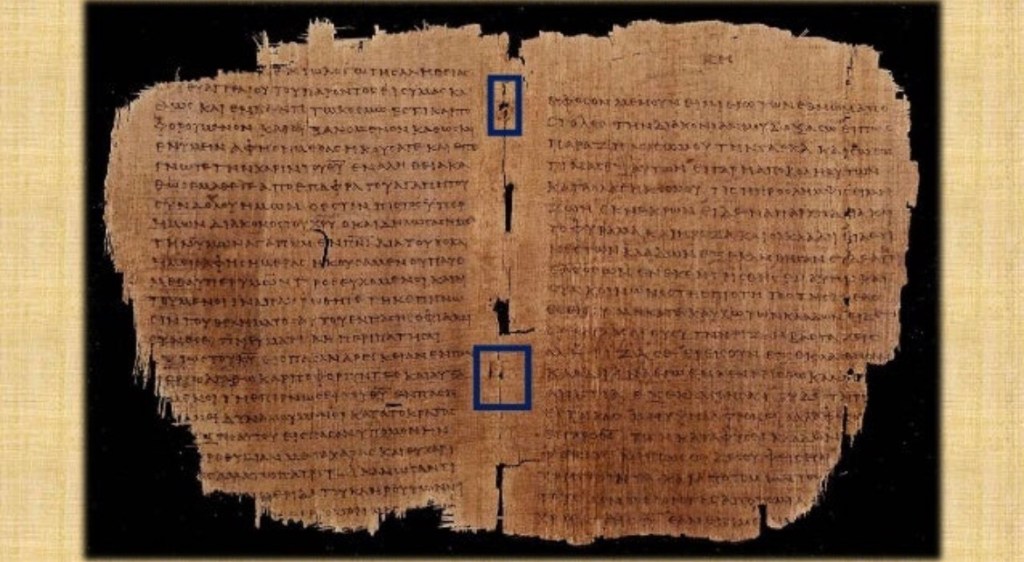
The Gospel of the Ebionites is one of them.

Though it never became part of the New Testament and survives only in quotations preserved by its opponents, it offers a fascinating glimpse into what some of Jesus’ earliest Jewish followers believed. More importantly, it raises a question that has echoed through my own writing for years:

What if one of Christ’s missions was to restore humanity to the peace of Eden?

A Forgotten Gospel

The Gospel of the Ebionites no longer exists in its complete form.

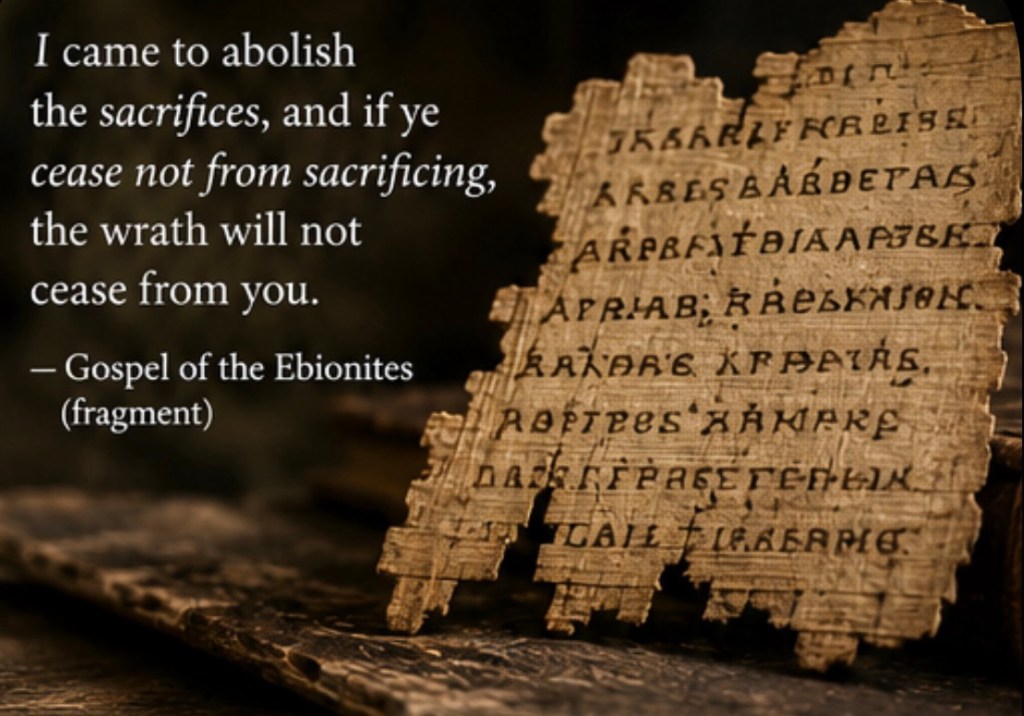
Today, only seven brief fragments survive, preserved by the fourth-century church father Epiphanius while arguing against the Ebionites. Because he opposed the movement, historians approach his quotations carefully. They may be selective or paraphrased, and we cannot verify every word against the lost original.

Still, the surviving fragments reveal a remarkably consistent message.

One passage attributes these words to Jesus:

“I came to abolish the sacrifices, and if ye cease not from sacrificing, the wrath will not cease from you.”

Whether these were Jesus’ exact words cannot be proven.

But they reveal something incredibly important:

Some of the earliest Jewish followers of Christ believed that ending animal sacrifice was central to His ministry.

What We Actually Know

Although only fragments remain, several themes appear repeatedly:

Jesus opposes animal sacrifice. John the Baptist is portrayed as eating cakes rather than locusts, reflecting a vegetarian tradition. Jesus is depicted as refusing the Passover lamb. The Temple sacrificial system is presented as something God no longer desires.

These ideas weren’t invented yesterday.

They were circulating nearly two thousand years ago among Jewish Christians who believed they were preserving the authentic teachings of Jesus.

Looking Beyond One Gospel

Even if the Gospel of the Ebionites is not considered historically equal to Matthew, Mark, Luke, and John, its themes do not exist in isolation.

Throughout the Hebrew Scriptures, God repeatedly reminds His people that obedience and mercy matter more than ritual sacrifice.

“I desire mercy, not sacrifice.”

Jesus Himself quotes these words twice during His ministry.

He also enters the Temple and drives out those participating in its commercial sacrificial economy.

His death eventually comes to be understood by Christians as the sacrifice that fulfilled—and therefore ended—the sacrificial system.

Taken together, these passages invite an important question.

Perhaps Christ’s mission was not to establish a new system of sacrifice, but to bring the old one to its fulfillment and conclusion.

Returning to Eden

The Bible begins with God’s first instruction regarding food.

“Behold, I have given you every seed-bearing plant on the face of the whole earth and every tree that has fruit with seed in it. They will be yours for food.” (Genesis 1:29)

Before sin.

Before death.

Before violence.

Humanity is given plants for food.

The Garden of Eden depicts harmony between humans, animals, and creation itself.

The prophets describe God’s future kingdom in remarkably similar language.

The wolf dwells with the lamb.

The lion eats straw like the ox.

No one hurts or destroys on God’s holy mountain.

Then Jesus arrives proclaiming:

“The Kingdom of God is at hand.”

Could the Kingdom He announced have been a restoration of God’s original design?

Some of the earliest Jewish-Christian communities believed exactly that.

One of Christianity’s Biggest Misconceptions?

Today, many Christians assume Jesus regularly ate meat and actively supported the Temple’s sacrificial system.

The historical picture is far more nuanced.

The passages most often cited to support those assumptions have become the subject of considerable debate among some scholars and researchers. Questions have been raised about the translation of certain Greek words traditionally rendered as “fish,” the broader context of Jesus’ cleansing of the Temple, and the Hebrew background of passages such as Jeremiah that Jesus quoted. While these interpretations remain disputed and are not the mainstream scholarly view, they invite a closer examination of texts many readers assume are settled.

Likewise, the Gospel of the Ebionites itself survives only in fragments and cannot be treated as though it carries the same historical weight as the canonical Gospels.

Yet one fact is beyond dispute:

The idea of a vegetarian Jesus is not a modern invention.

It existed among ancient followers of Christ nearly two thousand years ago.

Whether they preserved authentic memories of Jesus or interpreted His teachings through their own theological lens remains a matter of debate.

But the conversation is far older than most people realize.

Why This Matters

For me, this isn’t simply about diet.

It’s about asking whether we’ve misunderstood one of the central themes of Christ’s ministry.

If God’s original creation in Genesis was free from killing animals for food…

If the prophets envisioned a future kingdom where violence ends…

If Jesus repeatedly emphasized mercy over sacrifice…

If some of His earliest Jewish followers remembered Him as opposing animal sacrifice…

And if Christ came proclaiming the Kingdom of God…

Then perhaps His mission was larger than preparing souls for heaven.

Perhaps it also involved restoring heaven to earth.

A Personal Reflection

One reason this subject resonates so deeply with me is because I arrived at it from an entirely different direction.

Long before I discovered the Gospel of the Ebionites, I found myself writing over and over again about the connection between human freedom and the freedom of animals.

In my own work, I’ve explored the idea that liberty cannot be fully realized while it depends upon domination. A society that normalizes unnecessary violence toward the most vulnerable often finds ways to justify it elsewhere. Compassion, I believe, is not divisible. The way we treat creation reflects the condition of our own hearts.

When I later encountered ancient Christian communities that remembered Jesus as opposing animal sacrifice and pointing humanity back toward the peace of Eden, I was struck by how closely those ideas aligned with themes I had already been exploring.

I didn’t shape my beliefs around the Ebionites.

Rather, discovering them felt like uncovering an ancient conversation that echoed questions I had been asking for years.

Genesis begins with a world where neither humans nor animals are created to kill for food.

The prophets end with a vision of peace between predator and prey.

Jesus proclaims that the Kingdom of God is at hand.

Whether one ultimately concludes that vegetarianism was central to Christ’s earthly ministry or not, I find it remarkable that Scripture begins and ends with creation at peace.

Perhaps true freedom is larger than political liberty.

Perhaps it is the restoration of right relationship—with God, with one another, and with every living creature entrusted to our care.

If that is true, then Genesis is not merely the story of where we came from.

It is also a glimpse of where Christ was inviting us to return.

Author’s Note: This article distinguishes between established historical facts—such as the surviving fragments of the Gospel of the Ebionites and the beliefs of the Ebionite community—and interpretations that remain debated among historians and theologians. My own study of Scripture and early Christian writings has led me to believe that Christ’s mission included restoring humanity’s relationship with God’s creation, reflecting the peace described in Genesis 1:29. I encourage readers to examine the sources for themselves, study the evidence, and come to their own conclusions.

Good Friday through the Lens of Early Christianity: The Cross, the Silence, and the End of Sacrifice

By Julie Tourangeau | julietour.com

This reflection connects to Chapter 2 of The Lost Path to Freedom

Good Friday, as told in modern-day translations of the Bible, is often framed as a necessary sacrifice: Jesus dying for humanity to satisfy a divine requirement.

But what if that framing itself is the misunderstanding?

What if Jesus was not the fulfillment of sacrifice…

but the one who came to end it?

⸻

The World He Walked Into

In the time of Jesus, sacrifice was not symbolic—it was literal.

Animals were bought, sold, and slaughtered in the Temple as offerings to God. It was a system intertwined with religion, economics, and power. Priestly authority depended on it. Rome tolerated it.

It was normalized.

And into that world stepped Jesus—not as a participant, but as a disruptor.

⸻

“I Desire Mercy, Not Sacrifice”

In The Gospel of the Holy Twelve, Jesus is portrayed as one who rejected blood sacrifice entirely. He teaches reverence for all living beings and calls for a return to a purer, nonviolent expression of faith.

His message is clear:

God does not require death to be pleased.

God desires mercy.

This wasn’t just spiritual—it was revolutionary.

Because if sacrifice is no longer needed…

then the entire religious power structure begins to collapse.

⸻

The Temple Was Not What It Seemed

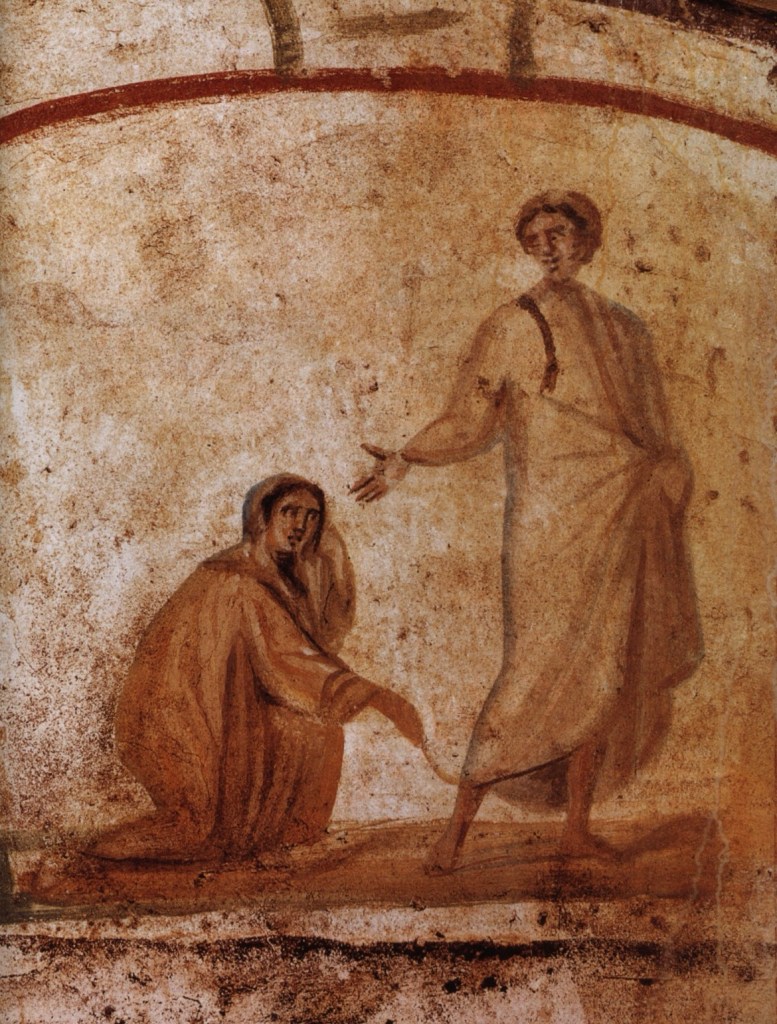
One of the most misunderstood moments in the life of Jesus is his cleansing of the Temple.

He overturns tables. Drives out those selling animals. Interrupts commerce.

This wasn’t random anger.

It was targeted.

A direct confrontation with a system built on the suffering of innocent life—justified in the name of God.

From this lens, it wasn’t simply about “money changers.”

It was about ending the cycle of sacrifice.

And that made him dangerous.

⸻

Why He Had to Be Silenced

When we ask, Why was Jesus killed?—we’re often told it was political, or that it fulfilled prophecy.

But from this perspective, the answer becomes clearer:

He threatened both religious authority and economic control.

• If people no longer believed in sacrifice, the Temple system lost its power.

• If God was found within, intermediaries were no longer needed.

• If compassion replaced ritual, control began to dissolve.

Jesus didn’t just challenge behavior.

He challenged the entire framework.

And systems built on power rarely surrender quietly.

⸻

The Inner Revolution

In The Gospel of Thomas, there is no emphasis on sacrifice—only awakening.

Jesus says:

“Whoever discovers the interpretation of these sayings will not taste death.”

This is not about physical survival.

It is about transformation.

The “death” is ignorance.

The “resurrection” is awareness.

And in that awareness, the need for sacrifice disappears—because separation disappears.

You no longer need to offer something to God…

when you realize you were never separate to begin with.

⸻

The Final Irony

The greatest irony of Good Friday may be this:

The one who came to end sacrifice…

was turned into one.

His death was later framed as the ultimate offering—a narrative that, in many ways, reintroduced the very system he sought to dissolve.

But if we look deeper, we can see through it.

The cross was not an altar.

It was a consequence.

A consequence of speaking truth in a world not ready to hear it.

⸻

A Different Kind of Salvation

From this perspective, salvation is not about believing in a sacrifice.

It is about awakening from it.

It is about remembering:

• That God does not require blood—only love.

• That no life is meant to be taken in the name of the divine.

• That the Kingdom Jesus spoke of was never built on suffering—but on compassion.

⸻

The Invitation of Good Friday

Good Friday is not just a story of death.

It is a moment that asks:

What systems are still being upheld in the name of God…

that contradict love?

What sacrifices are still being justified…

that were never truly required?

And what would happen…

if we finally let them go?

Because maybe the real resurrection begins the moment we do.

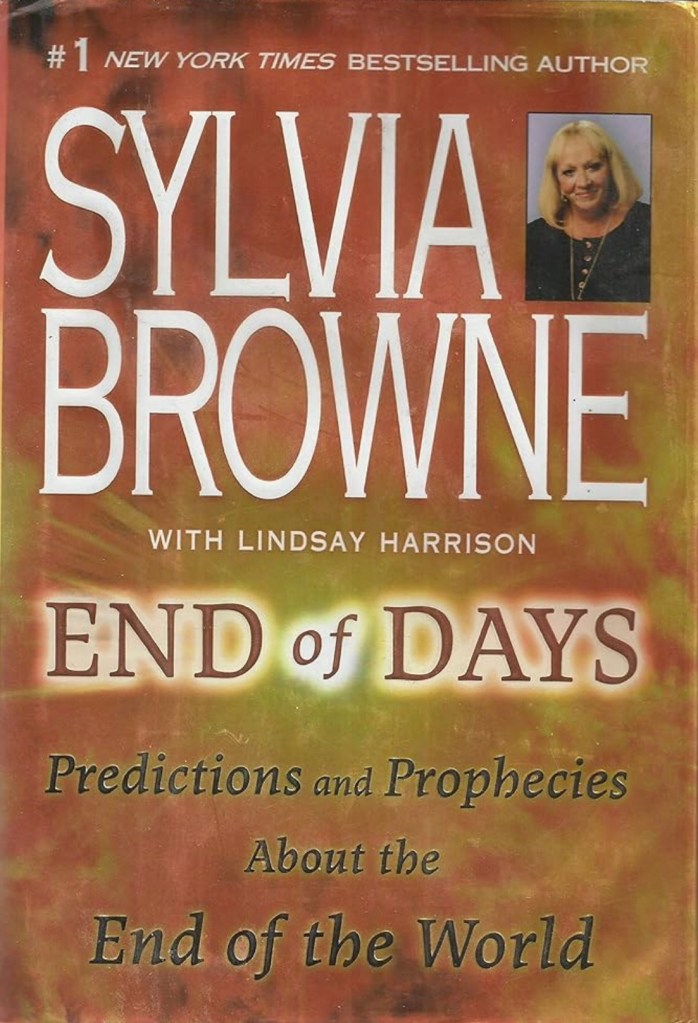
When Prophecy Speaks in Symbols, Not Fear

What Sylvia Browne Got Right and What We Keep Getting Wrong About the End of Days

By Julie Tourangeau | julietour.com

In times of uncertainty, people reach for prophecy. They always have.

And just as often, they mistake symbolic language for literal prediction, turning spiritual metaphors into fear-based narratives that justify panic, division, or even violence.

That’s why revisiting Sylvia Browne’s End of Days is so instructive – not because every detail must be taken as gospel, but because her framework turned out to be far more accurate than the literalist interpretations dominating modern religious and political discourse.

The 2020 Illness: What Browne Actually Predicted

In End of Days (published in 2008), Sylvia Browne wrote that around 2020, the world would face:

• A severe respiratory illness

• One that would confound treatment

• Spread globally

• Create fear and disruption

• And then vanish as suddenly as it arrived

Importantly, she did not describe a decisive medical victory or a heroic technological fix.

She described something more subtle and more human.

What followed was not eradication, but social disappearance.

By mid-2021, communities gathered again. Businesses opened. Masks vanished. Emergency language faded. The illness did not need to be defeated biologically for the chapter to close psychologically.

That distinction matters because prophecy has always spoken to human behavior and consciousness, not lab results.

Why “Vanishing” Doesn’t Mean “Never Existed”

Critics often argue: “COVID didn’t vanish, people still get sick.”

But prophecy has never worked that way.

Plagues in biblical, mystical, and early Christian texts:

• Begin when fear dominates

• End when meaning collapses

• Fade when societies stop organizing themselves around them

By that definition, COVID ended not through force, but through collective withdrawal of belief.

That is exactly the arc Browne described.

The Rapture: A Doctrine with No Early Christian Foundation

One of the most persistent myths Browne challenges, implicitly and explicitly, is the modern idea of the Rapture.

The truth is simple and historically verifiable:

• The Rapture does not appear in early Christianity

• It was popularized in the 19th century

• It relies on cherry-picked verses removed from historical context

• Early Christians did not expect mass disappearance or escapism

Instead, early Christian teaching focused on:

• ethical transformation

• endurance

• inner awakening

• the “Kingdom of God” as a state of being, not a rescue operation

Browne’s work aligns far more closely with this early understanding than with modern apocalyptic entertainment theology.

Israel: Spiritual Identity vs Modern Literalism

Another area where fear eclipses meaning is the use of Israel in end-times narratives.

In End of Days, Browne carefully distinguishes between:

• Israel as a spiritual symbol (wrestling with God, moral awakening, covenant)

• And Israel as a modern nation-state

Early Jewish and early Christian texts overwhelmingly treated “Israel” as:

• a people

• a calling

• a spiritual identity

…not a perpetual war zone or prophetic chessboard.

Modern evangelical Zionism collapses symbol into territory and then reads violence back into scripture. That approach would have been unrecognizable to early Christians and deeply troubling to Jewish mystics.

Browne does not celebrate conflict. She repeatedly frames “end times” language as transition, not destruction.

Armageddon Was Never About the End of the World

Armageddon is another misunderstood term.

Historically:

• It refers to Megiddo, a site of repeated ancient battles

• It became shorthand for cyclical human conflict

• Not planetary annihilation

Browne treats Armageddon the same way many early thinkers did:

• as a confrontation of consciousness

• as the collapse of corrupt systems

• as the end of a way of thinking

Every generation that mistakes it for literal doomsday repeats the same error and misses the actual warning.

What Sylvia Browne Understood That We Still Resist

Sylvia Browne was not unique because she predicted a date or an illness.

She was perceptive because she understood how fear works.

She understood that:

• crises end socially before they end biologically

• prophecy is symbolic before it is literal

• and humans are most dangerous when they confuse metaphor for mandate

Her accuracy lies less in the specifics than in the pattern — a pattern history confirms again and again.

The Real Question Prophecy Asks

Prophecy is not asking:

“When will the world end?”

It’s asking:

“Will you wake up before fear destroys your discernment?”

That question is still unanswered.

If there is an “end of days,” it is not the end of life on Earth.

It is the end of blind obedience, fear-based theology, and outsourced conscience.

That is not a catastrophe.

That is an invitation.

Would France Fine Jesus for Stopping the Slaughter? Examining the Brigitte Bardot Free-Speech Scandal

By Julie Tourangeau | julietour.com

There are moments when a cultural controversy reveals far more than the headline suggests. The legal battles surrounding Brigitte Bardot are one of those moments—not because everyone agrees with her, but because of what her punishment exposes about the boundaries of conscience, dissent, and speech.

Bardot has long been labeled far right, dangerous, or racist in popular shorthand. But that framing collapses under even minimal scrutiny.

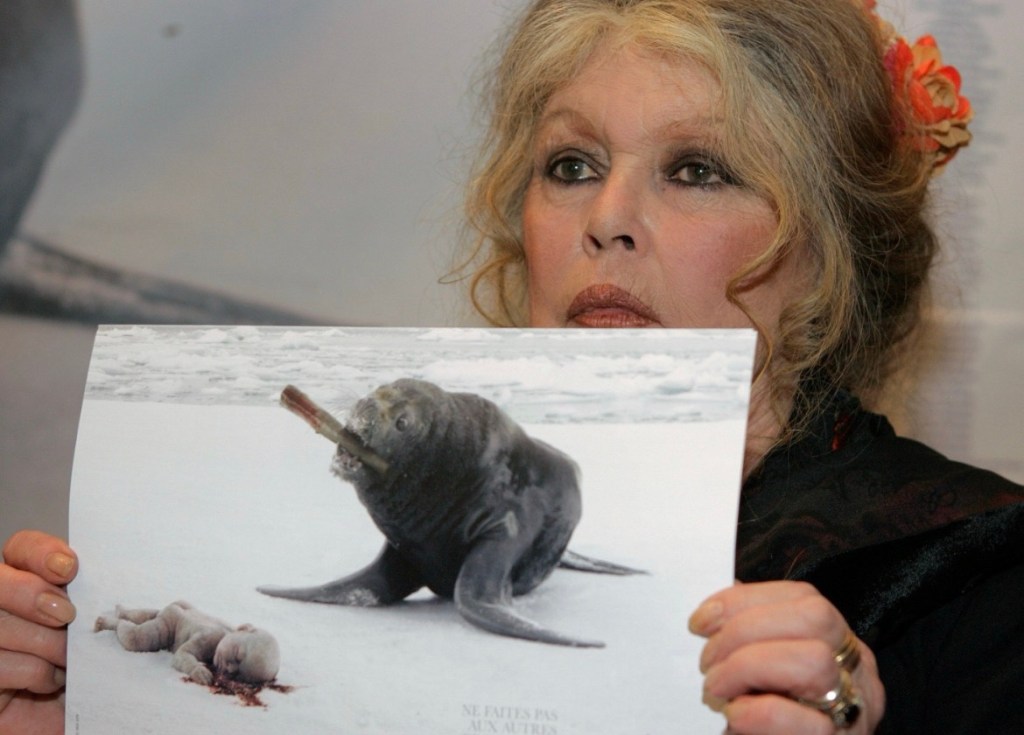
Her most controversial comments—those that led to repeated fines in France—were driven by a core obsession: her opposition to religious ritual slaughter of animals, and the exemptions that allow it to continue.

Not a rejection of human worth.

Not a call for violence.

Not an argument for cruelty toward people.

But a moral objection to practices she believed normalized suffering.

And yet, she was fined.

That should give us pause.

Brigitte Bardot’s activism has long centered on animal welfare—yet her speech became a criminal matter. (AFP/Fabrice Coffrini)

What Bardot Was Actually Criticizing

For decades, Bardot has been a fierce animal-rights advocate. She has criticized:

-Industrial factory farming

-State-sanctioned cruelty toward animals

-Religious exemptions that allow slaughter methods outside general animal-welfare laws

Her objections were ethical, not racial. She spoke about practices, not people. And she applied her critique consistently—across traditions, industries, and ideologies.

She has even publicly criticized American conservatism and figures on the U.S. right, complicating the lazy attempt to categorize her as some kind of ideological extremist.

And yet, in France, intent is not the threshold. Impact is.

Under French hate-speech laws, speech that is deemed to stigmatize a protected group—even indirectly—can be criminally punished. Bardot’s language, the courts ruled, crossed that line.

The result? Fines. Convictions. A legal record.

Not for inciting violence—but for offending.

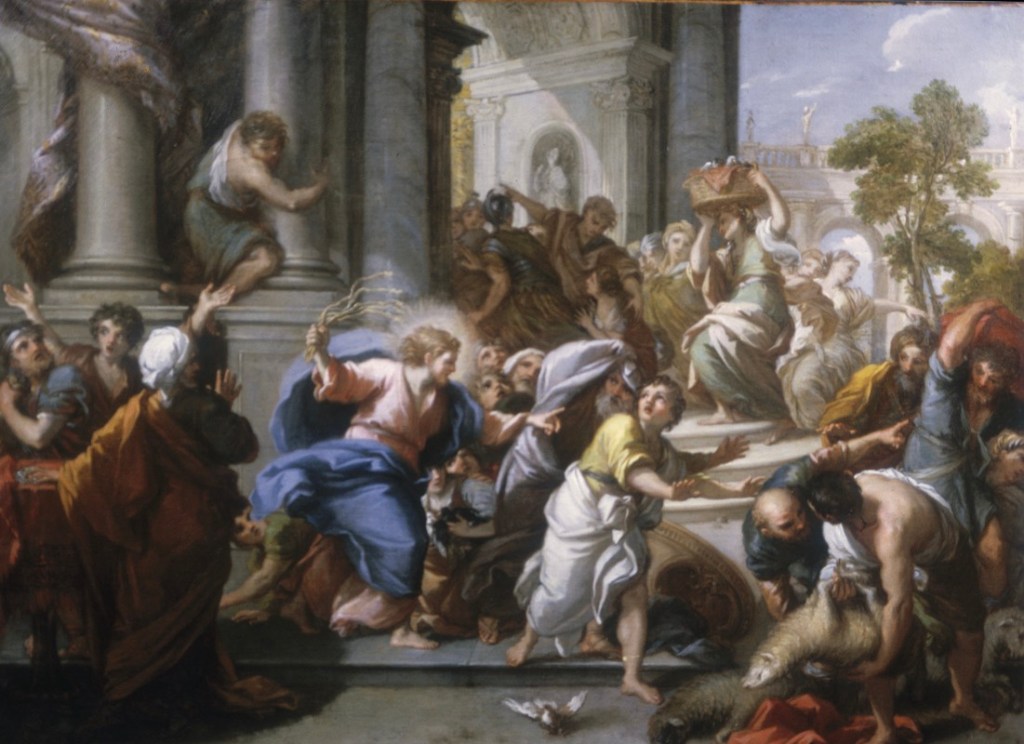
The cleansing of the temple: moral confrontation, not polite dissent.

The Question We’re Afraid to Ask

Which brings us to a question that makes many people uncomfortable—but shouldn’t.

In the Gospels, Jesus does something extraordinary. He enters the temple and disrupts what had become a sanctioned system of exploitation and slaughter. He overturns tables. He drives people out. He condemns the normalization of harm—done in the name of religion.

This was not gentle speech.

It was not neutral.

It was not “inclusive” by modern bureaucratic standards.

It was moral confrontation.

So the question becomes unavoidable:

If Jesus did that today—if he publicly condemned ritual slaughter in the name of compassion—would France fine him too?

Under current law, depending on how his words were interpreted and who felt collectively targeted, the answer is disturbingly close to yes.

That should trouble anyone who believes moral progress requires the freedom to challenge tradition.

Criticizing Practices Is Not Attacking People

Somewhere along the way, we lost a crucial distinction:

People are not practices.

You can love human beings deeply while still questioning customs, doctrines, and systems that cause harm. In fact, that is how ethical evolution has always occurred.

Religious traditions themselves are not static. Many believers—Muslim, Jewish, Christian, and otherwise—are actively debating animal welfare, compassion, and the future of ritual practices. That debate is not hatred. It is conscience at work.

Silencing it does not protect faith.

It freezes it.

When conscience meets the law, who decides what may be said?
Illustration by Matteo Giuseppe Pani / The Atlantic.

France, America, and the Limits of Speech

This controversy highlights a real and often ignored contrast.

In the United States, freedom of speech is protected precisely because it allows uncomfortable ideas to surface. The remedy for bad speech is more speech, not state punishment.

In France, the state plays a far more active role in determining what may be said when protected groups are implicated. The intention behind this is understandable—but the consequences matter.

Once speech is punished not for violence, but for moral disagreement, a dangerous precedent is set.

Because today it is an actress.

Tomorrow it could be a philosopher.

A theologian.

A reformer.

Or someone simply asking the wrong question out loud.

The Slippery Slope Is Not Theoretical

History is full of examples where moral dissent was first labeled “dangerous” before being recognized as necessary.

Abolitionists were once radical.

Women demanding the vote were once threats.

Nonviolent resistance has always made systems uncomfortable.

Jesus himself was not executed for kindness—but for disruption.

When societies conflate disagreement with bigotry, they don’t just silence extremists. They silence reformers.

A Clarification That Shouldn’t Be Necessary—But Is

For the record, and because accusations have replaced dialogue in modern discourse: I am marrying into a Muslim family. This is not about fear of the “other.” It is about preserving the right to question systems that normalize harm, regardless of who upholds them.

Ethics cannot be outsourced to tradition alone.

Compassion cannot be selectively applied.

If we lose the ability to speak honestly about that—without fines, labels, or legal threats—then freedom of conscience becomes conditional.

And history tells us where that leads.

The Question That Remains

The issue is not whether speech should be responsible.

It should be.

The issue is who decides when moral conviction becomes a crime.

Because if compassion itself becomes punishable, then yes—we should be willing to ask plainly:

Would France fine Jesus for stopping the ritual slaughter?

This essay is dedicated to the memory of Brigitte Bardot—whose uncompromising advocacy for animals forced uncomfortable but necessary questions about conscience, compassion, and the cost of speaking openly in modern society.

A Paris-Inspired Vegan Egg Benedict, Made at Home

By Julie Tourangeau | julietour.com

Sometimes you don’t bring Paris home by recreating it… you bring it home by trusting yourself more.

There’s a moment that happens after Paris.

Not when you land, not when the suitcase is unpacked—but a few days later, standing in your own kitchen, when your body remembers something before your mind does.

The way food felt slower there.

The way nothing was rushed or optimized.

The way a simple plate could feel intentional instead of indulgent.

I always think I’ll bring Paris home with me in big ways—new habits, new routines, a whole new version of myself. But it never works like that. What actually comes back with me are small things. Textures. Instincts. The confidence to trust my taste.

Paris has a way of reminding you that pleasure doesn’t need permission.

Eating Our Way Through Paris

Part of what made Paris linger this time was the food my fiancé and I shared.

Not just the meals themselves, but the way they unfolded—slowly, attentively, without excess. Fresh vegetables that actually tasted alive. Delectable tarts and flans that were rich without being heavy, elegant without trying. Food that didn’t shout, but stayed with you.

One Sunday, we wandered into a quaint vegan restaurant in the 11th arrondissement—the kind of place you could miss if you weren’t looking for it. Small wooden tables. Soft light. Quiet confidence. No spectacle.

I ordered a vegan Benedict that tasted like something dreamed up, not engineered. Silky sauce. Perfect balance. Comforting without being dull. The kind of dish that makes you pause mid-bite, smile, and know you’ll be thinking about it long after the plates are cleared.

It wasn’t about novelty. It was about restraint. About trusting ingredients. About letting vegetables lead and seasoning support rather than disguise.

Sitting there together, sharing bites and glances and that unspoken this is good, I didn’t realize it at the time—but that meal would follow me home.

Vegan dreams are made of moments like that.

Je rêve.

Bringing the Feeling Home

Back in my own kitchen, that memory showed up quietly.

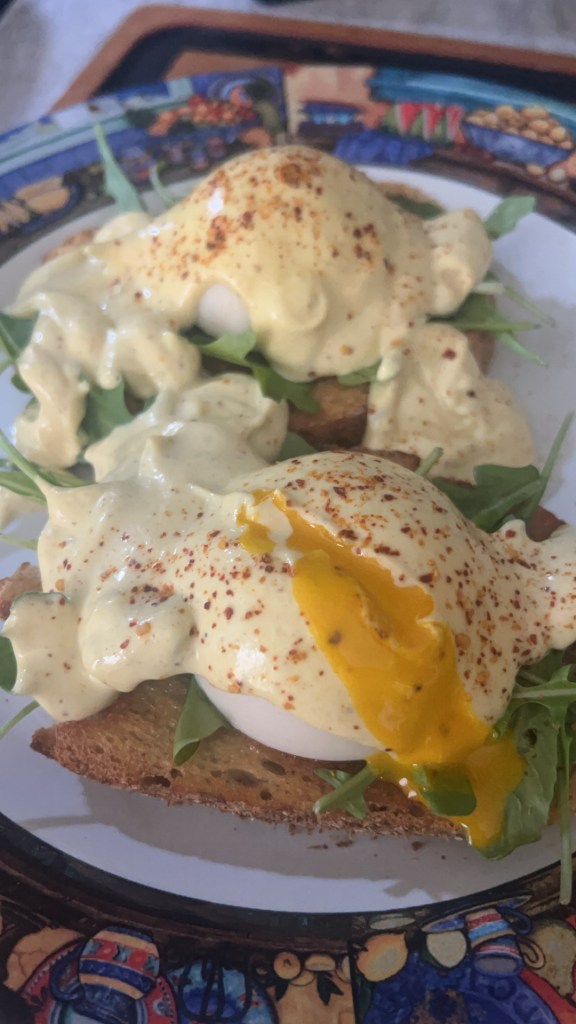
Buttered rustic sourdough toast. A bed of arugula. A soft vegan egg. And a sauce I didn’t measure.

I wasn’t trying to recreate Paris exactly. I wasn’t chasing “authentic.” I just wanted the feeling…that café-morning sense where food is made to be enjoyed.

So I made my own version.

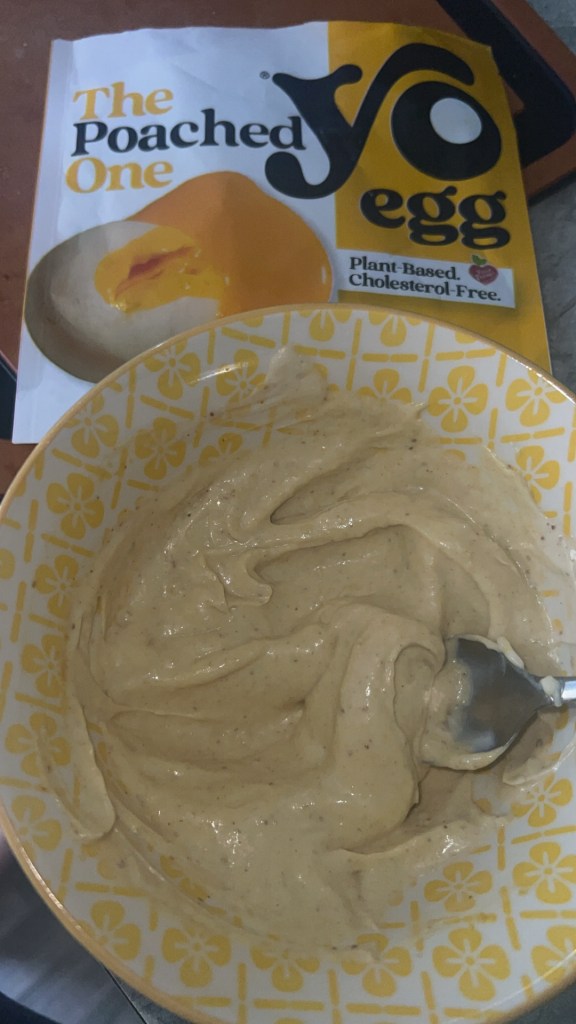
A silky, lemony sauce built from vegan mayo, mustard, nutritional yeast, and black salt—warmed gently and loosened with a touch of water. A dusting of piment d’Espelette, because once you’ve used it in France, you never forget it.

Was it Parisian?

Not technically.

But it felt right.

That’s what Paris teaches you if you’re paying attention: you don’t bring it home by copying it. You bring it home by trusting yourself more.

By letting intuition lead instead of rules.

By choosing what feels good over what’s correct.

By understanding that my version isn’t a compromise—it’s the point.

This wasn’t really about eggs Benedict. It was about remembering that pleasure can live in your own kitchen. That you don’t need a reservation, or a plane ticket, or a €12 coffee to feel nourished.

Paris reminds you who you are.

Home is where you practice it.

And sometimes that practice looks like standing barefoot at the counter, sauce still warm, thinking:

Yeah. This is good. Magnifique.

Paris-Inspired Vegan Egg Benedict (My Way)

A flexible, intuitive recipe — adjust by taste, not rules.

Ingredients

• Toasted bread of choice, buttered

• Fresh arugula

• Vegan egg (such as Serve Yo Egg), prepared according to package instructions

Silky Vegan Hollandaise-Style Sauce

• ¼ cup vegan mayo

• 1½–2 teaspoons lemon juice

• ½ teaspoon yellow mustard (or more to taste)

• ½–1 teaspoon nutritional yeast

• Pinch of black salt (kala namak), to taste

• ½–1 teaspoon warm water (for silkiness and warmth)

• Piment d’Espelette, for finishing

Method

1. Make the sauce:
In a small bowl, whisk the vegan mayo and mustard until smooth. Slowly add lemon juice, then nutritional yeast. Add warm water a little at a time until the sauce becomes glossy and spoonable. Season gently with black salt.

2. Assemble:
Layer arugula onto buttered toast. Add the warm vegan egg. Spoon the sauce generously over the top.

3. Finish:
Dust lightly with piment d’Espelette. Serve immediately, while everything is warm and relaxed.

Bon appétit 😋

“Arrête Emergency”: When My Twin Flame Appeared and Created a World Between Languages

🌍How a Franglais panic in a Miami rainstorm became one of the most meaningful inside jokes of my relationship.

By Julie Tourangeau | julietour.com

Some soulmate stories begin with flirty glances at a party.

Mine began with tears.

I had just been turned away from my ancestor’s grave — a moment heavy with emotion, history, and spiritual weight. I was crying on the sidewalk when my Uber driver pulled up. The first one had canceled. The second one — the one who actually arrived — happened to be him.

At the time, I didn’t understand the magnitude of that moment.

But looking back, it was unmistakably divine timing: the universe weaving together ancestry, grief, coincidence, and destiny in one seamless intersection.

And here’s the unexpected part:

even though I was crying, and even though the moment was emotional, the energy between us was surprisingly light.

There was flirtation from the beginning — warm, subtle, natural.

His smile carried that effortless French ease I would later come to know so well.

He joked gently, easing the weight of the moment without diminishing it.

And then he reached for my hand.

Not dramatically.

Not boldly.

Just naturally — as if he already knew me.

And when he did, something ancient awakened in me.

It wasn’t attraction alone.

It was recognition.

✨

Twin Flames Don’t Enter Quietly — They Enter Through Meaning

Long before this happened, I had written openly on my own website about twin flames — about the truth that these connections are not fantasies, but profound energetic mirrors, shared purpose, and divine timing.

I wrote that twin flames often enter your life at a crossroads event — a moment that could go one way or another, and the universe intervenes.

That is exactly where I was standing:

• outside the lineage of my family

• emotional and vulnerable

• trying to honor my past

• when a canceled Uber redirected my entire future

That’s how twin flame crossings happen:

quietly, powerfully, and at the exact moment you are open and unguarded.

✨

Before the Inside Jokes, There Was Ease

People imagine soulmate beginnings as cinematic, but the truth is simpler and deeper:

When he arrived, there was an immediate ease.

A calmness.

A familiarity that didn’t make sense yet made perfect sense.

We weren’t laughing hysterically the way we would in Miami a year and a half later, but we were absolutely laughing that first day — small jokes, little comments, gentle flirtation.

That mixture of ease + spark is the beginning of every twin flame story I’ve ever written about.

Something inside me recognized him long before my mind understood why.

✨

Miami & “Arrête Emergency”: The Moment Our Third Language Was Born

Fast-forward a year and a half later:

Miami.

Rain pouring.

A BMW convertible.

Chaos rising.

He accidentally pulls into a lane he absolutely should not be in, and my nervous system panics into this spontaneous Franglais eruption:

“Arrête emergency!”

Perfectly imperfect.

Not English.

Not French.

Just instinct.

That moment could have turned into a fight.

He could have felt criticized.

He could have shut down or reacted with ego.

But instead?

He laughed with me, not at me.

He softened.

And somehow, the fear dissolved into connection.

A stressful moment became one of our most cherished inside jokes.

A rupture turned into intimacy — the true sign of emotional compatibility.

That’s when we created our own language.

✨

The French Call It “Un Délire à Deux”

Our relationship slowly became what the French so perfectly call:

un délire à deux

A private world. A shared delirium only the two of us understand.

It wasn’t just language between us — it was culture.

We created:

• a rhythm

• a shared humor

• a playful bilingual dialect

• a softness inside tension

• a world no one else understands

Another French expression describes it even better:

notre petit monde

our little world.

That’s exactly what this love feels like:

a world that exists between languages, between lifetimes, between destiny and human choice.

✨

The Twin Flame Breadcrumbs That Followed

On my website, I once wrote that twin flame connections unfold through synchronicity — moments that are too precise, too unlikely, too mirrored to ignore.

And after he came into my life, something surreal happened:

MLive called my agency wanting to interview me about twin flames.

A random weekday.

No connection.

No reason.

No explanation.

Just a journalist calling out of nowhere to talk about the exact spiritual concept I had been writing about — right as I was living it.

I had spent years writing about soul recognition, divine timing, and the way love can arrive through synchronicity… and suddenly I was being featured as an expert, telling the story of how I met my twin flame after being turned away from my ancestors’ crypt in Paris.

My words appeared beside the daughter of Elizabeth Clare Prophet—two women speaking about destiny, spiritual awakening, and the power of inner transformation.

The article wasn’t just press.

It was a sign.

A mirror.

A cosmic nod saying, “Yes, you are living exactly what you’ve always known.”

That wasn’t coincidence.

It was confirmation.

Source: Mlive.com

✨

His Smile, His Ease, His Spirit: The First Signs I Recognized

From the beginning, he carried a presence that felt familiar:

• light but grounded

• confident but kind

• playful but steady

• gentle but magnetic

His smile was the first thing I noticed, and I remember thinking:

This feels like someone I’ve known before.

And the moment he took my hand — on the day I was grieving my ancestors — something inside me whispered:

“This is part of your story.”

Not just romantically — spiritually.

✨

Safety: The Language That Doesn’t Need Translation

The arrête emergency moment illustrates something essential:

With him, my vulnerability does not create danger.

It creates closeness.

In my past, vulnerability meant:

• being misunderstood

• being criticized

• being punished

• being too much

• being unsafe

With him, vulnerability becomes:

• safety

• laughter

• softness

• connection

• repair

Twin flames don’t show up to create chaos.

They show up to mirror truth, expand you, soften you, and make you brave again.

✨

Humor: The Love Letter Between Lifetimes

He still quotes it —

“Arrête emergency.”

And every time, it brings back the memory, the fear, the relief, and the intimacy of that moment.

Inside jokes are not trivial.

They are emotional timestamps.

Proof that two souls moved through something together.

Humor is how our souls remind each other:

• we’re safe

• we’re connected

• we remember

• we choose each other again and again

It’s our language now —

a language built on everything we’ve survived and softened together.

✨

Our Love Lives Between Languages, Between Lifetimes

We didn’t meet through perfection.

We didn’t meet through grammar.

We didn’t meet in a moment of joy.

We met through emotion, vulnerability, ancestry, timing —

and a man who held my hand when I was crying outside my family’s resting place.

But over time, our love built its own language:

• part English

• part French

• part memory

• part destiny

• part soul

A language only we speak.

A world only we inhabit.

A true délire à deux —

ridiculous, tender, fated, bilingual, ancestral, and unmistakably ours.

When the Veil Thins: What MTG and Candace Owens Reveal About the Collapse of the Political Industrial Complex

This week, two very different public figures —a sitting U.S. Congresswoman and a global media personality —released statements that shook the political world within hours of each other. Not because of the politics attached to their names, but because of what their words signaled:

A fracture.

A breaking point.

A confession of something deeper happening beneath the surface.

Marjorie Taylor Greene, one of the most polarizing members of Congress, posted a five-page resignation letter announcing that her final day in office will be January 5th, 2026. Her language wasn’t the typical “I’m stepping down to spend more time with my family.” It was something else. Something raw. Something that sounded like a person who finally stopped pretending.

She wrote of betrayal, targeting, the political industrial complex, and the machine in Washington that “devours” anyone who refuses to obey it. She spoke of foreign influence, elite donor classes, Big Pharma, Big Tech, and the Military Industrial Complex controlling what should be the people’s house. She described years of being used as a political weapon, discarded, and threatened by the very structure she once defended.

And then, hours later, Candace Owens published a statement so shocking that even her critics had to pause. She claimed a high-ranking French government insider warned her that her assassination had been greenlit by Macron, carried out through specialized military units. Whether one believes this claim is beside the point … the real message was in the tone:

“If something happens to me, I want the world to know.”

“Let all be revealed.”

Two different women.

Two different spheres.

One shared thread:

The machine is cracking.

And the people inside it are finally saying it out loud.

This is not about agreeing with them.

It’s about recognizing the pattern.

We are living in a moment where the institutions that held power for decades — political parties, media giants, intelligence agencies, international alliances — are no longer able to maintain the illusion of unity, morality, or control. The people who once benefitted from these institutions are now calling them out. And not subtly.

They’re saying the quiet part loudly.

They’re saying what many ordinary Americans have felt for years:

There is a ruling class. And they’ve stopped pretending they work for us.

A Veil is Lifting — Politically and Spiritually

What’s happening right now is exactly what I’ve been writing about in The Lost Path to Freedom. You cannot build an empire on deception forever. Eventually the weight of its own corruption collapses inward — and the people who were once its most loyal defenders become unwilling witnesses.

Truth doesn’t rise quietly. It rips seams open.

This is not about left or right.

It’s not about Republican or Democrat.

It’s about the end of an era where political power operated in the shadows while the public was given a scripted performance.

The veil is thinning — spiritually, socially, politically.

And people are sensing it.

Fear is the First Stage of Revelation

When systems collapse, the people inside them often panic. They lash out. They reveal secrets. They say things they once would have buried to protect their careers.

They tell the truth because the truth has become safer than silence.

That is the energy we are seeing now:

Panic mixed with confession.

Fear mixed with revelation.

Power mixed with collapse.

This doesn’t mean we are doomed — it means the opposite.

Corruption is exposed right before it loses its hold.

When someone shows you the machinery behind the curtain, it is because the curtain is already burning.

The political industrial complex — the same one MTG named directly — is not invincible. It is decaying. It is being seen. And once something is seen, it cannot return to the shadows.

This is a moment of collective awakening.

Not just politically, but spiritually.

We are watching the same story that has played out across civilizations:

• The old guard grips tighter.

• The people grow restless.

• The truth leaks through unintended cracks.

• The empire, in its arrogance, exposes itself.

• And in the collapse — new paths open.

This is not the end of America.

This is the end of pretending.

And that, in a strange way, is freedom.

Let all be revealed.

And let us keep walking the path back to truth, back to integrity, back to what was lost and is now returning.

The people are waking up.

The systems are shaking.

And the truth — finally — is speaking for itself.

Before Constantine: The Real Origin of “Synagogue of Satan”

By Julie Tourangeau | julietour.com

Why Modern 2000s Christian Churches Got This Wrong and Why the Truth Sets Us Free

If you’ve spent any time around modern 2000s-era Christian churches influenced by the Seven Mountain Mandate, you’ve likely heard a very confident claim: that the phrase “synagogue of Satan” in Revelation was manipulated, shaped, or inserted by Constantine.

It sounds compelling.

It feels dramatic.

But it’s historically impossible.

The Seven Mountain Mandate is just empire wearing a cross, power disguised as prophecy, hierarchy masquerading as holiness.

Many modern churches shaped by the Seven Mountain Mandate have built an entire theology on fear, control, and the belief that Christians must “take over” cultural institutions to usher in God’s kingdom. This movement often rewrites history to fit its agenda claiming, for example, that terms like “synagogue of Satan” were manipulated by Constantine or created by later political conspiracies. But none of this is supported by actual history, early manuscripts, or the lived spirituality of the first followers of Jesus. The Seven Mountain Mandate replaces Jesus’ nonviolent, compassion-rooted Way with a dominionist system obsessed with power, hierarchy, and cultural domination. In doing so, it distorts Scripture, promotes fear-based interpretations, and encourages believers to see enemies where Jesus saw human beings in need of healing, mercy, and awakening. Recovering the real history frees us from these modern distortions and brings us back to the original, liberating message of Christ: that the kingdom is within, not seized through political conquest.

The more closely you study early Christianity, the more obvious it becomes:

Constantine wasn’t even alive when Revelation was written.

The phrase predates him by almost 200 years.

And its meaning comes from Jesus’ own spiritual lineage, not from Rome.

This matters…not just for accuracy, but because reclaiming the original meaning frees us from the fear-based, empire-influenced theology that still shapes American Christianity today.

Let’s look at the real history.

⸻

Revelation Was Written Long Before Constantine

Revelation was composed around 90–96 A.D.

Constantine was born in 272 A.D.

The phrase “synagogue of Satan” appears in:

• Revelation 2:9

• Revelation 3:9

That’s it.

No later additions.

No Roman edits.

We possess physical manuscripts and quotations from before Constantine existed that contain these verses.

This alone breaks the Seven Mountain Mandate narrative.

⸻

The Phrase Comes From a Much Older Jewish Tradition

“Synagogue of Satan” isn’t Roman language at all.

It’s Jewish sectarian language rooted in the Essenes and the Dead Sea Scrolls.

If you’ve ever read the Scrolls, you instantly recognize the pattern:

• “men of the pit”

• “lot of Belial”

• “congregation of deceit”

• “sons of darkness”

These are spiritual classifications describing groups aligned with corruption rather than God.

This exact dualistic moral vocabulary appears in:

• the Dead Sea Scrolls (150 B.C.–50 A.D.)

• Jesus’ teachings

• Paul’s letters

• the Book of Revelation

Which means:

The language used in Revelation is older than both Constantine and Christianity itself.

⸻

Jesus Himself Spoke Like an Essene

Whether or not Jesus was formally Essene, His teaching vocabulary mirrors theirs:

• “children of light”

• “evil one”

• “your father, the adversary”

• “wolves in sheep’s clothing”

• “den of violent ones” (mistranslated as “robbers”)

• “blind guides”

This is the same symbolic worldview Revelation uses.

It is emphatically not Roman, imperial, or Constantinian.

It is Jewish, prophetic, and nonviolent.

⸻

Early Church Fathers Quote the Phrase Before Constantine

Another inconvenient fact for modern prophecy churches:

Writers who lived long before Constantine quote Revelation — including the “synagogue of Satan” passages — exactly as we have them today.

• Ignatius of Antioch (c. 110 A.D.)

• Justin Martyr (150 A.D.)

• Irenaeus (180 A.D.)

Irenaeus even reproduces material from Revelation 2–3 directly.

This proves:

• the text was stable

• the phrase already existed

• Constantine didn’t insert anything

That’s not speculation.

It’s archaeology.

⸻

What Constantine Actually Changed … And What He Didn’t

Constantine changed:

• Christianity’s political status

• the structure of the church

• the relationship between bishops and empire

… he even united pagans and Christians by combining certain aspects of each faith for holidays.

But he did not:

• influence Essene vocabulary

• change first-century Jewish symbolism

The claim that he created “synagogue of Satan” language is simply not factually possible.

⸻

The Real Meaning of “Synagogue of Satan”

Once you remove modern distortion, the meaning becomes beautifully simple:

“Synagogue of Satan” means

an assembly aligned with injustice or spiritual blindness — not an ethnicity.

It does not mean:

• Jews

• synagogues

• ethnic groups

• political states

• religious institutions

It means:

any community whose actions oppose compassion, justice, and sacred consciousness.

This aligns perfectly with:

• the Essenes

• Jesus

• Paul

• Revelation

• and the whole apocalyptic tradition of ancient Judaism

It is not about identity.

It is about alignment.

⸻

Why This Matters Today

Many 2000s-era prophecy churches teach a theology shaped by:

• the Seven Mountain Mandate

• 20th-century Zionist politics

• 19th-century dispensationalism

• anti-historical end-times charts

• fear-based spiritual warfare language

These systems tend to make Constantine the villain behind every biblical “hard saying.”

But the truth is far more grounded:

The ancient followers of Jesus were speaking from within their own Jewish tradition —

not reacting to a fourth-century Roman emperor.

When we return to the real roots, we rediscover the spiritual brilliance of the early Jesus movement:

• truth over distortion

• compassion over fear

• awakening over control

• inner liberation over outer empire

• justice over violence

This is the Jesus whose teachings were hijacked by empire, but not created by it.

And this is the Revelation written long before Constantine, calling communities to walk in light, love, and discernment.

Because “synagogue of Satan” was never about a people.

It was always about a posture.

It was always about a choice.

It was always about a community’s alignment with compassion or with injustice.

And that message is more relevant today than ever.