By Julie Tourangeau | julietour.com
Part of the Lost Path to Freedom series.
If you’ve been following this series on forgotten Christian texts, you already know that history is rarely as simple as we were taught. The earliest centuries of Christianity were filled with diverse voices, communities, and writings that wrestled with who Jesus was and what He came to accomplish.
Some of those writings disappeared.
Others survived only in fragments.
The Gospel of the Ebionites is one of them.
Though it never became part of the New Testament and survives only in quotations preserved by its opponents, it offers a fascinating glimpse into what some of Jesus’ earliest Jewish followers believed. More importantly, it raises a question that has echoed through my own writing for years:
What if one of Christ’s missions was to restore humanity to the peace of Eden?
A Forgotten Gospel
The Gospel of the Ebionites no longer exists in its complete form.
Today, only seven brief fragments survive, preserved by the fourth-century church father Epiphanius while arguing against the Ebionites. Because he opposed the movement, historians approach his quotations carefully. They may be selective or paraphrased, and we cannot verify every word against the lost original.
Still, the surviving fragments reveal a remarkably consistent message.
One passage attributes these words to Jesus:
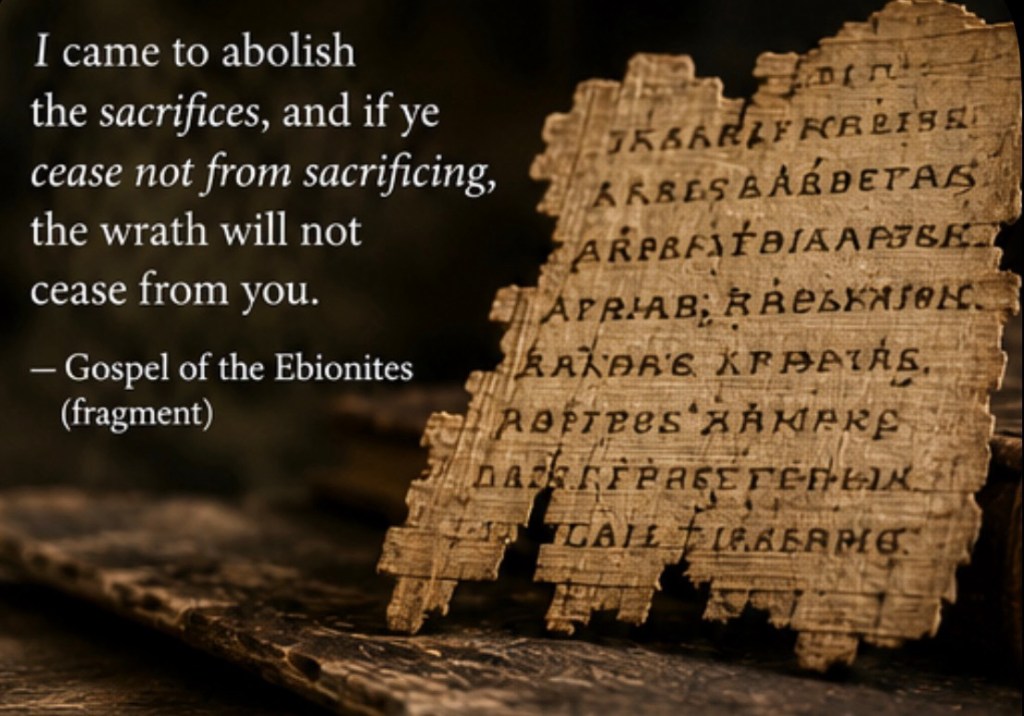
“I came to abolish the sacrifices, and if ye cease not from sacrificing, the wrath will not cease from you.”
Whether these were Jesus’ exact words cannot be proven.
But they reveal something incredibly important:
Some of the earliest Jewish followers of Christ believed that ending animal sacrifice was central to His ministry.
What We Actually Know
Although only fragments remain, several themes appear repeatedly:
Jesus opposes animal sacrifice. John the Baptist is portrayed as eating cakes rather than locusts, reflecting a vegetarian tradition. Jesus is depicted as refusing the Passover lamb. The Temple sacrificial system is presented as something God no longer desires.
These ideas weren’t invented yesterday.
They were circulating nearly two thousand years ago among Jewish Christians who believed they were preserving the authentic teachings of Jesus.
Looking Beyond One Gospel
Even if the Gospel of the Ebionites is not considered historically equal to Matthew, Mark, Luke, and John, its themes do not exist in isolation.
Throughout the Hebrew Scriptures, God repeatedly reminds His people that obedience and mercy matter more than ritual sacrifice.
“I desire mercy, not sacrifice.”
Jesus Himself quotes these words twice during His ministry.
He also enters the Temple and drives out those participating in its commercial sacrificial economy.
His death eventually comes to be understood by Christians as the sacrifice that fulfilled—and therefore ended—the sacrificial system.
Taken together, these passages invite an important question.
Perhaps Christ’s mission was not to establish a new system of sacrifice, but to bring the old one to its fulfillment and conclusion.
Returning to Eden
The Bible begins with God’s first instruction regarding food.
“Behold, I have given you every seed-bearing plant on the face of the whole earth and every tree that has fruit with seed in it. They will be yours for food.” (Genesis 1:29)

Before sin.
Before death.
Before violence.
Humanity is given plants for food.
The Garden of Eden depicts harmony between humans, animals, and creation itself.
The prophets describe God’s future kingdom in remarkably similar language.
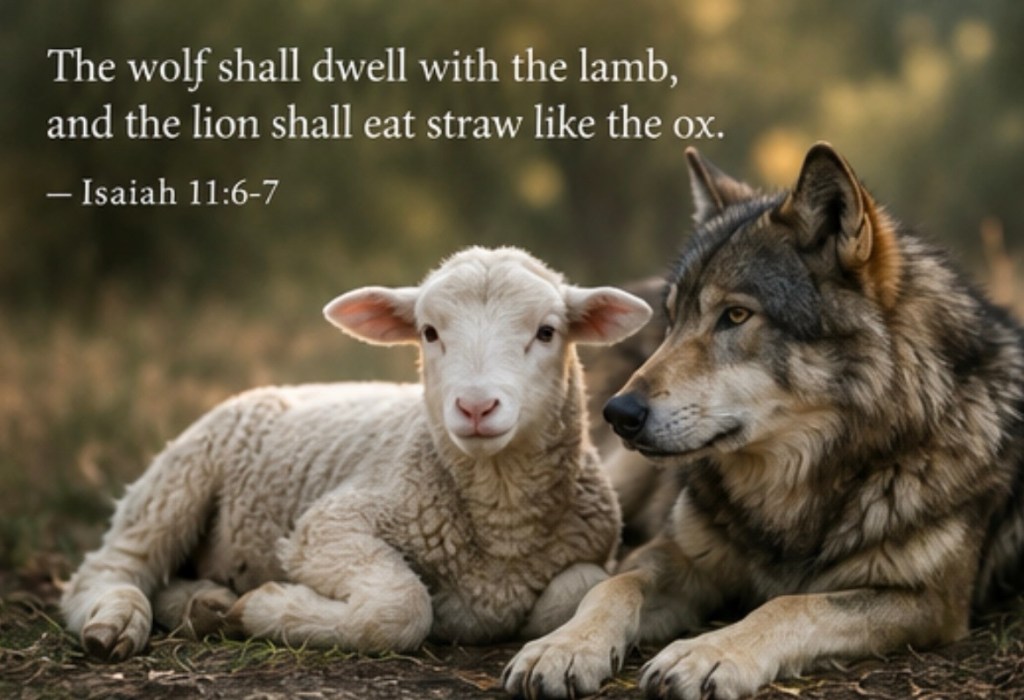
The wolf dwells with the lamb.
The lion eats straw like the ox.
No one hurts or destroys on God’s holy mountain.
Then Jesus arrives proclaiming:
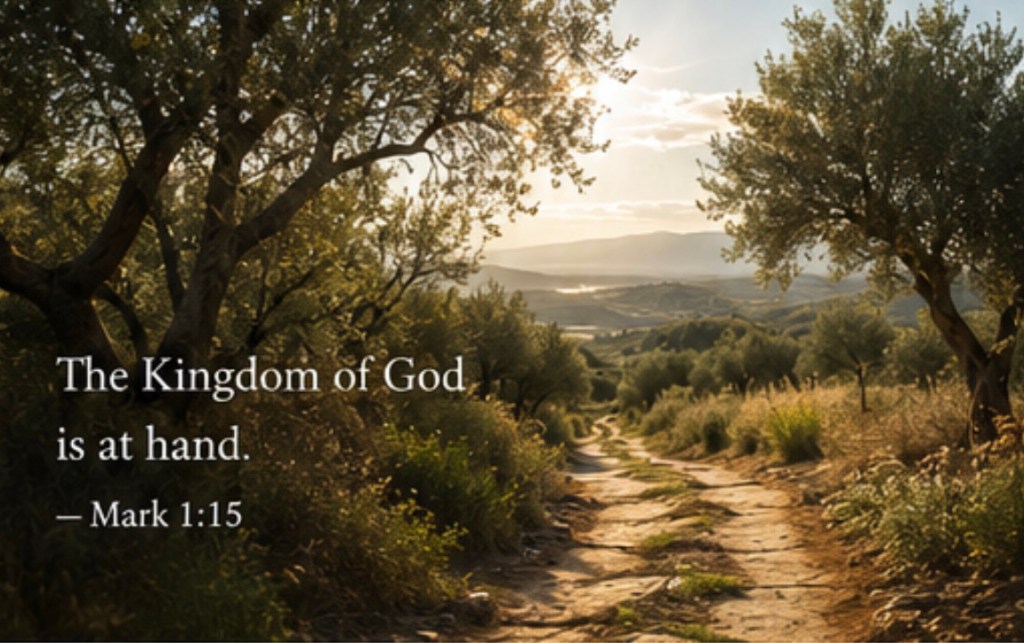
“The Kingdom of God is at hand.”
Could the Kingdom He announced have been a restoration of God’s original design?
Some of the earliest Jewish-Christian communities believed exactly that.
One of Christianity’s Biggest Misconceptions?
Today, many Christians assume Jesus regularly ate meat and actively supported the Temple’s sacrificial system.
The historical picture is far more nuanced.
The passages most often cited to support those assumptions have become the subject of considerable debate among some scholars and researchers. Questions have been raised about the translation of certain Greek words traditionally rendered as “fish,” the broader context of Jesus’ cleansing of the Temple, and the Hebrew background of passages such as Jeremiah that Jesus quoted. While these interpretations remain disputed and are not the mainstream scholarly view, they invite a closer examination of texts many readers assume are settled.
Likewise, the Gospel of the Ebionites itself survives only in fragments and cannot be treated as though it carries the same historical weight as the canonical Gospels.
Yet one fact is beyond dispute:
The idea of a vegetarian Jesus is not a modern invention.
It existed among ancient followers of Christ nearly two thousand years ago.
Whether they preserved authentic memories of Jesus or interpreted His teachings through their own theological lens remains a matter of debate.
But the conversation is far older than most people realize.
Why This Matters
For me, this isn’t simply about diet.
It’s about asking whether we’ve misunderstood one of the central themes of Christ’s ministry.
If God’s original creation in Genesis was free from killing animals for food…
If the prophets envisioned a future kingdom where violence ends…
If Jesus repeatedly emphasized mercy over sacrifice…
If some of His earliest Jewish followers remembered Him as opposing animal sacrifice…
And if Christ came proclaiming the Kingdom of God…
Then perhaps His mission was larger than preparing souls for heaven.
Perhaps it also involved restoring heaven to earth.
A Personal Reflection
One reason this subject resonates so deeply with me is because I arrived at it from an entirely different direction.
Long before I discovered the Gospel of the Ebionites, I found myself writing over and over again about the connection between human freedom and the freedom of animals.
In my own work, I’ve explored the idea that liberty cannot be fully realized while it depends upon domination. A society that normalizes unnecessary violence toward the most vulnerable often finds ways to justify it elsewhere. Compassion, I believe, is not divisible. The way we treat creation reflects the condition of our own hearts.
When I later encountered ancient Christian communities that remembered Jesus as opposing animal sacrifice and pointing humanity back toward the peace of Eden, I was struck by how closely those ideas aligned with themes I had already been exploring.
I didn’t shape my beliefs around the Ebionites.
Rather, discovering them felt like uncovering an ancient conversation that echoed questions I had been asking for years.
Genesis begins with a world where neither humans nor animals are created to kill for food.
The prophets end with a vision of peace between predator and prey.
Jesus proclaims that the Kingdom of God is at hand.
Whether one ultimately concludes that vegetarianism was central to Christ’s earthly ministry or not, I find it remarkable that Scripture begins and ends with creation at peace.
Perhaps true freedom is larger than political liberty.
Perhaps it is the restoration of right relationship—with God, with one another, and with every living creature entrusted to our care.
If that is true, then Genesis is not merely the story of where we came from.
It is also a glimpse of where Christ was inviting us to return.
Author’s Note: This article distinguishes between established historical facts—such as the surviving fragments of the Gospel of the Ebionites and the beliefs of the Ebionite community—and interpretations that remain debated among historians and theologians. My own study of Scripture and early Christian writings has led me to believe that Christ’s mission included restoring humanity’s relationship with God’s creation, reflecting the peace described in Genesis 1:29. I encourage readers to examine the sources for themselves, study the evidence, and come to their own conclusions.