On twin flames, past lives, divine timing, and why not every soul we recognize is the one we’re meant to walk beside
By Julie Tourangeau | julietour.com
There are people you meet for the first time who somehow do not feel new.
You don’t recognize their face. You don’t remember their name. You cannot point to a shared history or explain why being in their presence feels so familiar.
But something within you recognizes them.
I’ve experienced this more than once in my lifetime.
And after years of writing about twin flames, soulmates, spiritual awakening, and the possibility of reincarnation, I’ve begun to question something I once thought I understood.
What if we have mistaken soul recognition for romantic destiny?
What if the people who awaken our souls aren’t necessarily the people we’re meant to spend our lives with?
And what if there is something greater than finding our other half?
What if the real purpose of divine partnership is to help bring the Kingdom of Heaven to Earth?
An Expert in Getting It Wrong?
A few years ago, I had the rather amusing experience of being presented in a news article as something of a foremost expert on twin flames.
Which is especially funny because I distinctly remember telling the reporter that I’d mistaken the identity of my supposed twin flame more than once.
Apparently, that’s one way to become an expert. Experience, including the experience of being wrong. Repeatedly. 😂
But there’s something important about that distinction.
I’ve never believed that recognizing an extraordinary connection automatically means you’ve discovered the one person you’re destined to spend eternity with.
In fact, I explained to the reporter that I believe relationships exist at different spiritual levels.
Some connections are familiar. Others are transformative. Some mirror our deepest wounds, while others awaken parts of ourselves we didn’t know existed.
And I believe truly divine partnership is something different still.
I also expressed an opinion that doesn’t always make me popular in spiritual circles:
Most people may go through an entire lifetime without experiencing what I would consider a divine romantic relationship. And that’s perfectly okay.
Not everyone is looking for that experience.
Not everyone is prepared for it.
And not everyone is at the same place in what I understand as the evolution of the soul.
That isn’t a judgment of anyone’s spiritual worth. I don’t believe the intensity or perceived divinity of a romantic relationship makes one human being superior to another.
I simply believe there are levels of connection, and that we continually evolve in our capacity to recognize and experience them.
Of course, the article ultimately emphasized a different part of our conversation.
The reporter highlighted my belief that human beings are extraordinarily powerful, that we have the capacity to manifest remarkable possibilities, and the astonishing circumstances surrounding how I met the man I would eventually become engaged to.
And those circumstances genuinely were astonishing.
At that point, the timing of our meeting was the most extraordinary romantic synchronicity I’d ever experienced.
I still believe that.
But what I didn’t know then was that another encounter would eventually challenge my understanding of spiritual recognition.
Because extraordinary timing and extraordinary energetic connection are not necessarily the same experience.
As my relationships have deepened, changed, and sometimes ended, my understanding of divine partnership has continued to evolve.
Perhaps that’s the most important qualification an expert on love can possess.
The willingness to admit there is always more to learn.
When Souls Meet at the “Wrong” Time
Earlier this year, I met someone I felt I already knew.
The recognition was immediate. Not something that developed over months of conversation or gradually emerged through shared experiences.
It was simply there.
There was an ease, a familiarity, and eventually a series of conversations that made the connection feel increasingly difficult to dismiss.
But the timing was almost comical.
I was engaged to another man, someone whose place in my spiritual journey had already become part of my public writing.
And the person I had just met was navigating the complicated aftermath of a marriage. Our meeting coincided with a significant anniversary in that relationship.
If you’ve spent enough time contemplating reincarnation, synchronicity, and divine timing, you begin to notice the strange circumstances surrounding certain encounters.
Two people who feel inexplicably familiar, meeting at a moment when neither is entirely available… a spiritual recognition wrapped in profoundly human complications.
At one point, he told me he believed we had met for a reason. He described our connection as significant, as though we’d known one another forever. He said he had grown the most since he had met me.
What made that conversation particularly interesting was that he shared an experience from his past. He had previously felt a profound spiritual connection somewhat similar to me with someone and that connection eventually developed into a romantic and physical relationship.
He told me directly that he was trying to figure out the connection between us.
I understood exactly what he meant.
Because I had felt it from the beginning.
I had been observing silently, wondering whether the significance I felt in my intuitive world would ever manifest in the physical world.
And it did.
Or it began to, anyway, with one remarkably open phone conversation.
There was something extraordinary about hearing another person independently acknowledge a connection I had privately contemplated for months.
But I’ve learned that two people can recognize something meaningful in one another without agreeing on what to do about it.
And sometimes the most difficult lesson is discovering that recognition alone cannot create a relationship.
A soul may feel familiar without being ready to walk beside yours.
Saying Goodbye Before the Streets Erupted
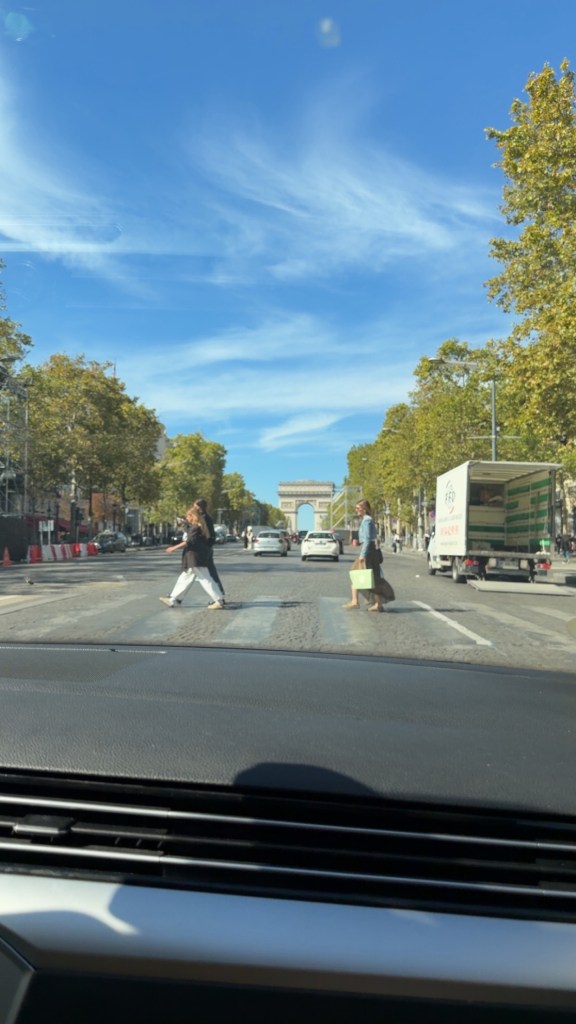
Not long after, I returned to France.
I went knowing something in my life had changed.
For years, my romantic relationship had carried me between two countries, two cultures, and two very different visions of the future.
There had been love, extraordinary experiences, difficult sacrifices, and dreams that once seemed entirely possible.
But I could no longer ignore the distance between the relationship I hoped to have and the one I was actually living.
And something else had happened.
Before returning to France, I had encountered a connection whose energy was unlike anything I had ever experienced.
I don’t know how else to explain it.
It felt as though my heart was on fire.
Not simply the nervous excitement of attraction or the familiar butterflies of a new romantic interest.
I experienced it as something centered in my heart chakra, an extraordinary sensation of warmth, openness, and intensity that seemed to reach beyond anything I could logically explain.
It was like a sleeping limb awakening—a part of me that had always existed but had never come alive quite like this.
What fascinated me was that this recognition had existed from the very beginning, long before I contemplated what it might mean romantically.
I had experienced remarkable synchronicities before.
I had experienced intense love.
I had experienced what I believed were divinely orchestrated meetings.
But this felt different.
And when I returned to France, I became acutely aware of that difference.
Sitting across from the man I had once imagined marrying, I recognized how profoundly my internal world had shifted.
It wasn’t simply that I’d developed feelings for someone else.
I had experienced a kind of energetic recognition I hadn’t known was possible, and I could no longer pretend my understanding of love had remained unchanged.
I want to be careful here.
A powerful sensation in the heart, even one I interpret through the language of chakras and spiritual awakening, is not proof that another person is divinely appointed to be my partner.
Nor does it diminish the real love I had experienced in another relationship.
Of course, the timing of the immigration issues we faced was also significant. Our relationship had already been tested by circumstances neither of us could easily change.
But I couldn’t deny what I’d felt or ignore what it revealed about the relationship I was already questioning.
So I said goodbye.
Not to a stranger. Not to someone who had meant nothing.
I said goodbye to someone who had occupied an enormous chapter of my life.
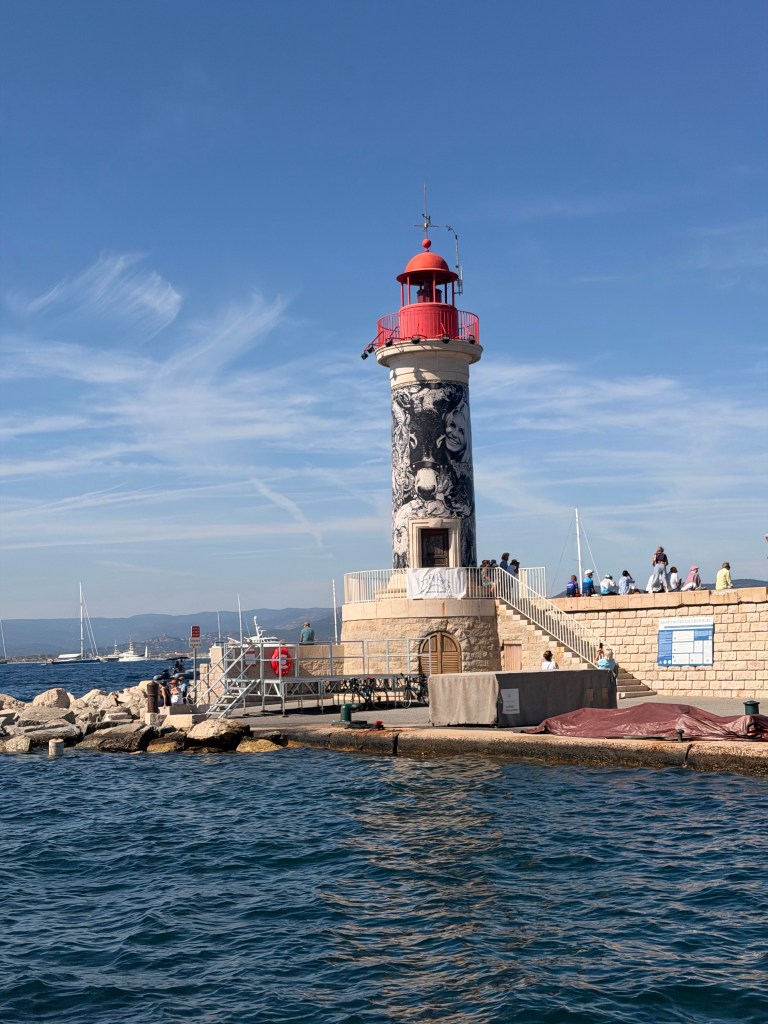
There is a peculiar grief in ending a relationship while the person you once imagined spending your life with is still standing in front of you… in the French Riviera, no less.
You aren’t mourning a death.
You’re mourning a future.
And yet, as painful as it was, I knew I could not continue building my life around a promise that wasn’t becoming reality.
What makes the timing particularly fascinating to me now is what followed.
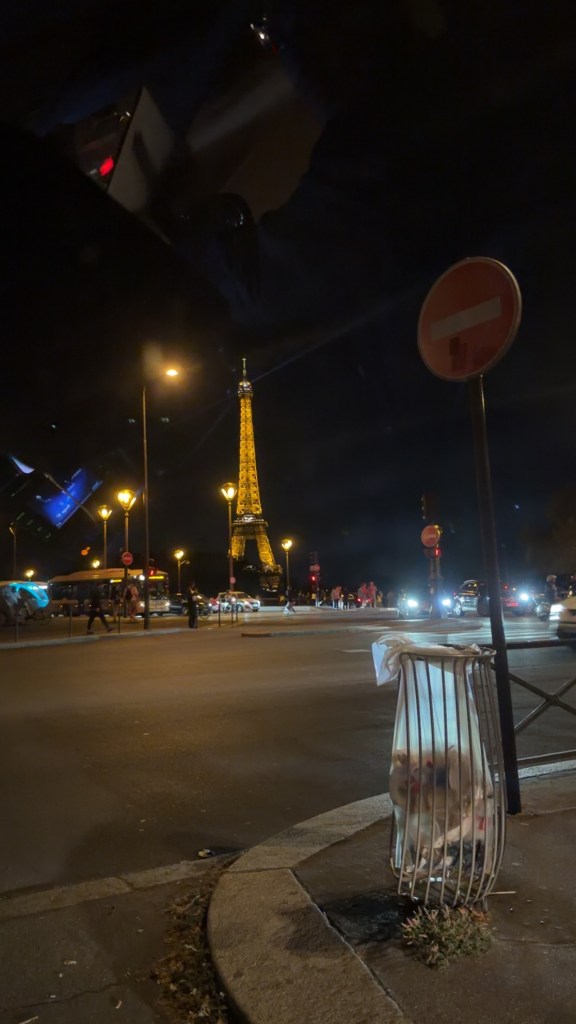
Not long after I left France, images of unrest and confrontation in Paris began circulating. Streets I knew became the backdrop for protests, anger, and a country wrestling publicly with its own contradictions.
I had just experienced a deeply personal separation, only to watch a place so intertwined with that relationship become a scene of collective upheaval.
I don’t believe every coincidence needs a supernatural explanation. But I do believe meaningful timing invites reflection.
I had gone to France to confront something I’d been avoiding. And I left just before the unrest that would soon dominate my attention.
There was something strangely symbolic about that sequence… a private ending followed by public upheaval.
Two very different experiences, both asking what happens when the structures we’ve accepted can no longer hold.
Sometimes the world outside us seems to echo the questions we’re asking within.
What If We Have More Than One Twin Flame?
The conventional twin-flame narrative suggests that one soul has been divided into two, with each half destined to find the other.
It’s a beautiful idea.
It’s also an idea I’ve become increasingly unwilling to accept without questioning.
Because I’ve experienced profound mirroring in multiple relationships.
Not identical experiences, of course. Different personalities. Different circumstances. Different lessons.
Yet there have been moments of recognition, uncanny synchronicities, and similarities that seemed to reach beyond ordinary attraction.
If we entertain the possibility that consciousness experiences multiple incarnations, why would we assume only one relationship could carry significance from another lifetime?
Consider how many people we love during a single life…
Parents. Children. Friends. Partners. Mentors.
People who change us forever.
Would those relationships simply disappear from the greater story of the soul?
Or might we encounter familiar souls repeatedly, sometimes as lovers, sometimes as friends, sometimes as people whose purpose is to challenge our understanding of love?
Perhaps the concept of one exclusive twin flame or soulmate is too limited.
Perhaps there are many souls capable of reflecting something sacred back to us.
And perhaps the intensity of that reflection tells us more about what we’re being invited to learn than about whom we’re destined to marry.
Spiritual familiarity is not the same thing as compatibility. Synchronicity is not a substitute for commitment. And even the most extraordinary connection requires two people willing to choose one another.
That last realization may be the hardest.
Because it requires us to separate what we feel spiritually from what someone is capable of offering us in this lifetime.
The Difference Between a Soulmate and a Kingdom Spouse
Lately, I’ve been thinking about another concept: the kingdom spouse.
Not simply a romantic partner who feels divinely appointed.
Not someone whose presence produces an endless series of angel numbers, coincidences, or emotional highs and lows.
I mean something much more profound.
A partner with whom you can help manifest the Kingdom of Heaven on Earth.
For much of my spiritual journey, I’ve explored the teachings of Jesus through the lens of mercy, compassion, and the possibility that the message of the Kingdom has been misunderstood.
What if heaven was never intended to be exclusively a destination after death?
What if the Kingdom was something humanity was being invited to realize here?
A transformation of consciousness so complete that it changes how we treat one another, how we govern ourselves, how we understand our relationship with nature, and how we respond to suffering.
For me, that vision cannot be separated from the treatment of animals.
I’ve been vegan and vegetarian for most of my life.
The longer I contemplate heaven on Earth, the more difficult it becomes to reconcile that vision with a world built upon the unnecessary suffering of other living beings.
Imagine a world where compassion was not selective.
Where mercy wasn’t something we extended only to those who looked like us, spoke like us, worshipped like us, or belonged to our species…
A world in which the powerful no longer regarded the vulnerable as resources to be exploited.
I don’t believe veganism alone, without the inner work, would create heaven. Humanity would still have to confront violence, poverty, hatred, exploitation, and countless forms of suffering.
But I struggle to imagine a kingdom founded upon divine love while institutionalized cruelty remains an accepted part of everyday life.
The prophecy of a peaceable kingdom, where even the wolf and the lamb coexist, has always fascinated me.
What if these images weren’t simply promises of a distant supernatural future?
What if they were invitations to reconsider what humanity might become?
And what if finding a kingdom spouse isn’t about locating the person who makes us feel the most intense romantic connection?
What if it’s about finding someone who shares a vision of what love is meant to accomplish?
Someone who doesn’t merely awaken our heart, but walks alongside us in the work of transforming the world.
Love Without Possession: The Freedom of Divine Partnership
One of the books that has influenced my understanding of spiritual relationships is The Celestine Prophecy by James Redfield.
What has stayed with me is its exploration of intuition, spiritual energy, and the ways human beings attempt to control one another when they become disconnected from their own spiritual source.
The book invites us to consider what relationships might become when two people are no longer trying to extract something from one another to feel complete…
When they are connected to something greater than themselves.
When they trust their intuition and allow their connection to unfold without constantly attempting to direct the outcome.
I’ve come to believe this is essential to divine partnership.
Because what happens when you meet someone whose presence feels like heaven on Earth?
Someone who awakens a feeling so extraordinary that you want to hold on to it forever?
The temptation, of course, is to do exactly that.
To hold on.
To define it.
To secure it.
To make sure it never disappears.
But perhaps that is precisely where we begin to misunderstand the gift.
When something feels sacred, our instinct may be to possess it. But perhaps the most loving thing we can do is allow it to remain free.
We cannot control another person’s spiritual evolution.
We cannot manipulate someone into recognizing what we recognize.
We cannot force another person to surrender to a connection simply because we believe it has a divine purpose.
And perhaps most importantly, we cannot always be the one leading.
There is a difference between guiding a relationship with love and attempting to control its destination.
There is a difference between surrendering to divine timing and surrendering our own autonomy.
And there is a profound difference between unconditional love and unconditional access to another person’s life.
To me, genuine surrender does not mean abandoning ourselves, our boundaries, or our ability to choose.
True spiritual surrender should lead us toward greater freedom, not less.
Imagine two people who trust one another enough to follow their shared intuition.
Neither needs to dominate.
Neither needs to manipulate.
Neither needs to constantly anticipate the other’s next move, manufacture a desired response, or control the relationship.
They can simply be.
They can love without fear that freedom itself will destroy their connection.
They can surrender without becoming powerless.
They can maintain their individuality while participating in something greater than either person could create alone.
And when one person feels called to lead, the other can trust. When the direction changes, they can move together without turning love into a struggle for control.
But for that to work, I believe both people must cultivate their own connection with Source… and continually be conscious of it.
Neither can depend entirely upon the other to provide the love, validation, energy, or spiritual fulfillment they have not yet learned to experience within themselves.
Because when we make another human being our only connection to the divine, love can become dependency.
And when we become terrified of losing that connection, dependency can become control.
I don’t believe that’s the freedom Jesus was describing.
I believe divine love should liberate us.
And I believe a kingdom relationship would require two people who are connected to Source individually, yet capable of experiencing that connection together.
Not through ownership.
Not through obligation.
Not through the fear of abandonment.
But through intuition, trust, mutual devotion, and liberty.
This doesn’t mean love requires no commitment. Quite the opposite.
The deepest commitment may be the one we make freely, every day, without needing to diminish another person’s freedom to secure it.
Perhaps that’s what it means to experience heaven on Earth through another human being.
Not that we finally possess someone who makes us feel whole.
But that we experience a love so aligned with freedom that neither person must lose themselves to sustain it.
And if that connection is truly as precious as it feels, perhaps we should be especially careful not to destroy its beauty through our desire to control it.
Unconditional love does not mean we are guaranteed a relationship. It means our love does not become a demand for possession.
The greatest partnerships, I believe, are built by two people who remain connected to Source, connected to themselves, and connected to one another.
Two free souls choosing unity.
Not because they must.
But because they can.
And perhaps that is what makes such a partnership divine.
The Tao: Love in Harmony With the Way

This brings me to another spiritual philosophy that has profoundly shaped how I understand love: the Tao.
The Way.
The flow.
In Taoism, there is a principle known as wu wei, often understood as effortless action or acting without force.
It doesn’t mean abandoning our intentions, stopping making choices, or simply allowing life to happen to us.
It means learning to move in harmony with life rather than constantly attempting to bend it to our will.
And perhaps nowhere is this more important than in love.
When we encounter someone who makes us feel as though we’ve experienced heaven on Earth, our instinct may be to preserve that feeling at any cost.
We want certainty.
We want answers.
We want to know where the relationship is going and whether the other person recognizes what we recognize.
But the moment we begin trying to force another person’s feelings, decisions, or spiritual awakening, we are no longer moving in harmony with the Way.
We are attempting to control it.
To force love is to move against the very freedom that makes love sacred.
The Tao reminds me there is a difference between conscious action and forced outcomes.
We can express our feelings.
We can communicate our intentions.
We can extend an invitation.
We can make ourselves available to love.
But we cannot make another person accept that invitation.
And we shouldn’t have to.
If two people are truly aligned, their relationship should not require one person to constantly pull the other toward a shared future.
There can be effort, vulnerability, difficult conversations, and compromise. The Way is not necessarily the path of least resistance.
But mutual love should not require coercion.
The flow does not mean there will never be obstacles. It means we stop confusing the need to control with the willingness to love.
Perhaps this is where the teachings of the Tao, the spiritual insights of The Celestine Prophecy, and my understanding of the Kingdom begin to meet.
All three invite me, in different ways, to consider what happens when we stop allowing fear and the desire for control to dictate our relationships.
When we recognize love is not something to capture.
When we trust that another person’s freedom does not diminish our own.
When we understand surrender is not defeat.
It is the willingness to participate in life without demanding ownership of its outcome.
Perhaps divine partnership is not about two people struggling to make destiny happen.
Perhaps it is about two people who have learned to move with the Way, individually and together.
Two souls connected to Source, freely choosing to flow in the same direction.
And if their paths diverge?
We can still honor what was beautiful about the moment they met.
Because something does not have to last forever to have been sacred.
And something sacred does not have to belong to us to have changed our lives.
The Way cannot be forced. Neither can love.
Can We Manifest the Kingdom in This Lifetime?
This is where my thinking becomes both more hopeful and more complicated.
I believe humanity is capable of extraordinary transformation.
Not because history suggests progress is inevitable. It certainly doesn’t.
But because we have already witnessed changes that previous generations might have considered impossible.
Ideas once dismissed as radical can become common moral understanding.
Institutions that seem permanent can change.
And compassion, once awakened, has the potential to expand beyond the boundaries we’ve inherited.
Could humanity eventually reach a point where a vegan world becomes possible?
I believe it could.
Will that happen in my lifetime?
I don’t know.
And perhaps the same uncertainty applies to the kingdom spouse.
I can imagine a love that is not only personally fulfilling but spiritually collaborative in manifesting the future.
A relationship that serves something greater than the happiness of the two people within it.
I want that.
I want to experience a love that doesn’t require choosing between spiritual purpose and romantic partnership.
I want to know what it means to build something sacred with another human being.
But wanting something, even believing it is possible, does not guarantee when or how it will arrive.
And since I believe consciousness continues beyond one lifetime, perhaps the work of building the Kingdom does too.
Perhaps we participate in something whose completion we may never personally witness during our current incarnations.
That doesn’t make our contribution insignificant.
It makes it part of something greater than ourselves.
Not Every Soul We Recognize Is Ours to Keep
Returning home from France, I found myself navigating another kind of uncertainty.
The person whose presence had felt so instantly familiar had become someone I genuinely cared about.
I had hoped the connection might eventually become something more.
But life doesn’t always unfold in the direction our hearts anticipate.
There are practical complications. Emotional wounds. Unfinished relationships. Differences in readiness and intention.
And there is the simple reality that another person has the freedom to choose a different path.
I’ve come to understand that I cannot determine the purpose of a connection solely by how extraordinary it feels to me.
Even when another person has acknowledged something meaningful between us.
Even when the timing seems impossible to explain.
Even when the experience reminds me of everything I’ve spent years studying and writing about.
A relationship still requires mutual participation.
And perhaps recognizing that is part of spiritual maturity.
Love is not possession. Recognition is not entitlement. And destiny, if it exists, cannot be an excuse to disregard another person’s free will.
I can appreciate what someone awakened in me without insisting they must remain in my life.
I can be grateful for a connection while grieving the possibility that it may never become what I hoped or felt.
And I can believe an encounter was meaningful without claiming to know its cosmic purpose.
There is freedom in that.
Even when it hurts.
What Does It Mean to Recognize a Soul?
I keep returning to the moment of first recognition.
That strange, immediate familiarity.
The feeling that someone has entered your life from a story you cannot quite remember.
I still believe those experiences deserve contemplation.
I am not ready to dismiss them as meaningless.
I think they are incredibly meaningful, and if you have experienced that, even for a moment, you are blessed.
But I’m no longer convinced every profound spiritual connection should be interpreted through the language of romantic destiny.
Perhaps some people arrive to remind us of who we are.
Perhaps others reveal the places where we still confuse longing with love.
Some teach us to establish boundaries. Others challenge our beliefs about commitment, sacrifice, forgiveness, and self-worth.
And perhaps a very small number will be willing and able to build a life with us.
I don’t know whether there is only one kingdom spouse across every incarnation, or whether such a partnership becomes possible when two people reach a shared level of spiritual understanding.
That question remains open for me.
But I am increasingly certain of one thing.
The kingdom spouse cannot be identified by synchronicity alone.
A divine partnership, whatever that ultimately means, must become visible in the choices two people make.
No excuses.
No spiritual bypassing.
No convincing ourselves that someone is a runner and we’re a chaser simply because reality isn’t meeting our romantic expectations.
Divine partnership isn’t proven by how persistently we pursue someone.
It becomes real through the conscious choices two people make.
In the love they practice.
In the compassion they extend.
In their willingness to face difficulty together.
And in the world they hope to leave behind.
Perhaps the Kingdom Comes Before the Spouse
There is a possibility I find both humbling and liberating.
What if I’ve spent too much time asking who is meant to accompany me on my spiritual journey?
What if the more important question is whether I’m living in alignment with the kingdom I hope to see?
We often approach spiritual partnership as though finding the right person will finally allow our purpose to unfold.
But perhaps our purpose is already unfolding.
Perhaps the work begins long before a partner arrives.
Every act of mercy.
Every refusal to participate in unnecessary cruelty.
Every effort to love without possessing.
Every difficult choice to walk away from a relationship that cannot become healthy or mutual.
Every attempt to create something better than what we’ve inherited.
Perhaps these are the beginnings of the Kingdom.
And perhaps a kingdom spouse isn’t someone who completes us.
Perhaps it’s someone who recognizes the work we’re already doing and chooses to join us.
I don’t know whether the love I envision will manifest in this lifetime.
I hope it does.
I still believe in extraordinary love.
I still believe in the possibility that some connections transcend what we currently understand about consciousness and time.
And I still believe humanity is capable of becoming something far more compassionate than the world we see today.
But I’m beginning to understand that recognizing a soul and sharing a destiny may be two entirely different experiences.
Maybe we encounter many souls we’ve loved before.
Maybe we meet people who mirror our past, awaken our present, and change our future.
But perhaps the rarest relationship isn’t the one that feels like remembering another lifetime.
Perhaps it’s the one in which two people consciously choose to create a better world in this one.
Until then, I will keep building the kingdom I believe is possible.
With love.
With mercy.
And with the hope that one day, someone will recognize not only my soul—
but the world I’m trying to bring into being.
Kingdom come.
 Online dating can bring about high expectations for romance while usually delivering something more between a booty call and a wedding date. It’s really like a box of chocolates, and no matter how direct your profile is, or how clear your conversation is, you never really know what kind of date you are going to get. With that said, I do believe online dating has potential for something amazing. The biggest piece to grasp of online dating is maintaining inner peace amidst uncertainty. I wanted to share some tools I’ve learned as a sensitive person myself to bring peace throughout the process.


