Den of “Thieves”? Or Something Deeper.

By Julie Tourangeau | @julietour

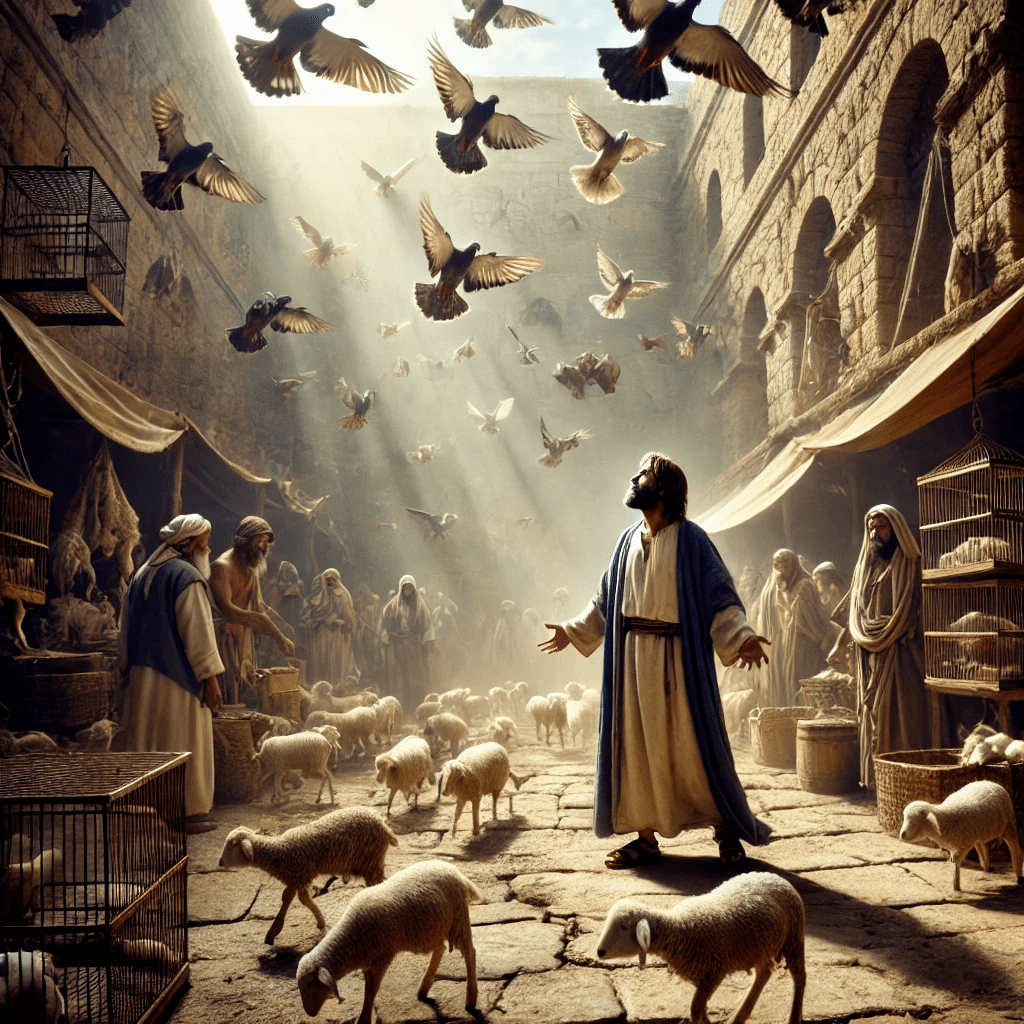
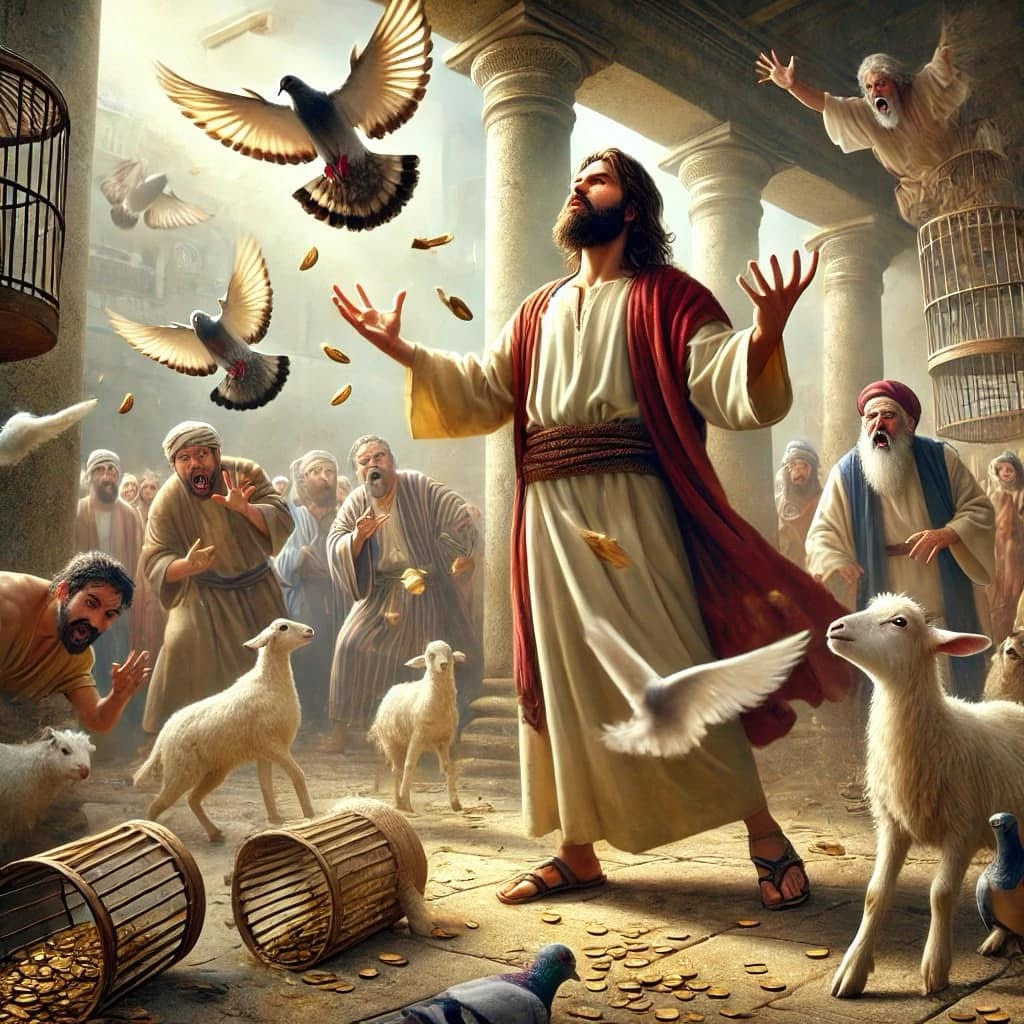
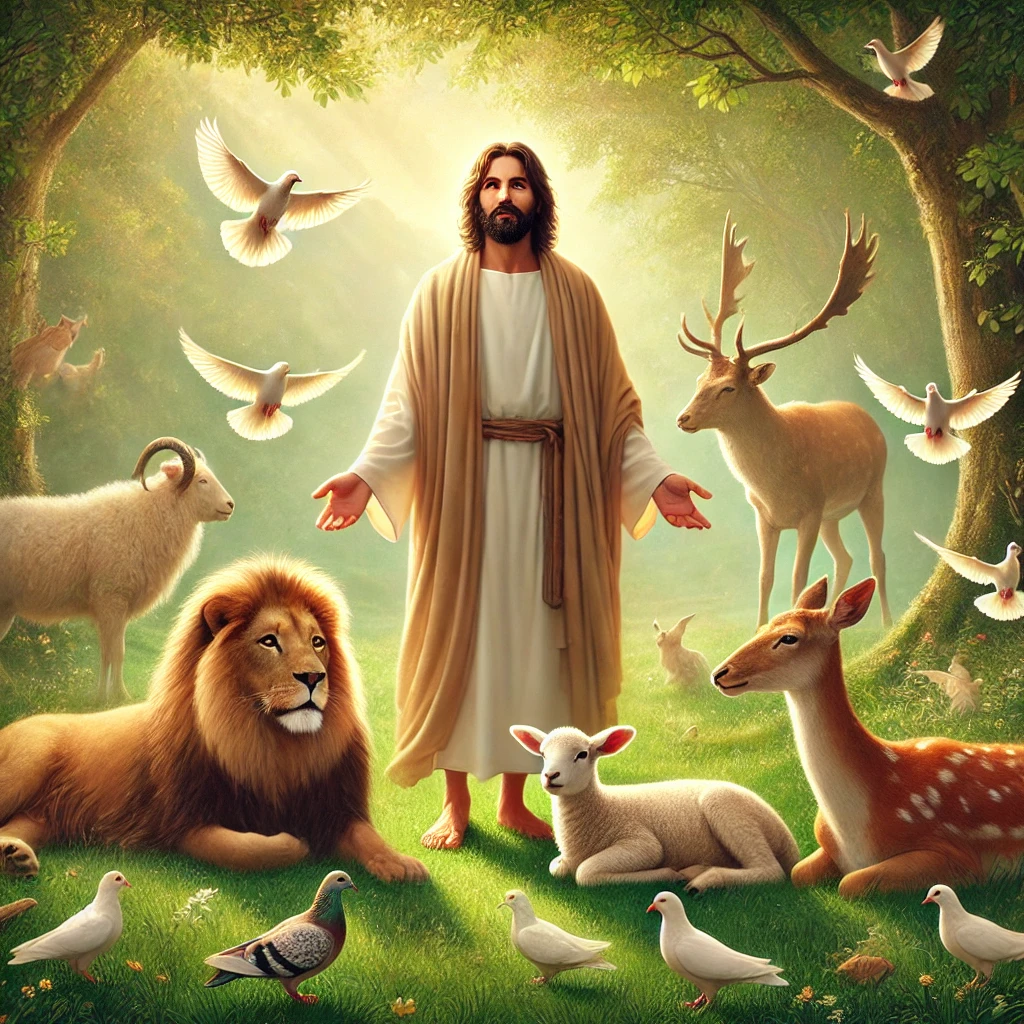
When Jesus stormed the temple courts, overturning tables and driving out the money changers, we’re often told it was a righteous act against corruption—against the “thieves” who turned a holy place into a marketplace.

But what if that’s only part of the story?

What if the word “thieves” doesn’t quite capture what was happening?

The Word We Missed

The original Hebrew word used in this passage is “perits” (פָּרִיץ)—often translated as “thieves,” but more accurately meaning violent ones, marauders, or destroyers.

This isn’t about petty crime.

It’s about violence.

About those who had turned the temple—a place meant for prayer, reverence, and peace—into a place of bloodshed.

Jesus wasn’t just flipping tables over coins.

He was confronting the violent ritual slaughter of animals in the name of God.

His protest wasn’t just about dishonest trade.

It was a cry for compassion, for justice, for a return to the sacred.

If He Walked Among Us Now

If Jesus were alive today—reincarnated, awake to the fullness of his early teachings—what would he see?

Would he walk into modern-day churches and find doves for sale?

Would he find lambs being sacrificed?

No.

But he’d find the same violence, cloaked in different robes.

He’d see his name invoked over meals made of suffering.

He’d see Easter tables lined with lambs, celebrated in remembrance of his own crucifixion.

And I imagine he’d grieve.

I imagine he’d say:

“You claim to follow me, yet you partake in the very acts I condemned.

You remember my suffering with the suffering of the innocent.

You turn my table of liberation into an altar of slaughter.

Have you not learned?”

The Lost Path

Early Christians understood dominion as stewardship, not superiority.

They practiced mercy, not sacrifice.

They aligned themselves with the Lamb of God, not the priests of Empire.

But somewhere along the way, that path was lost.

Love was replaced by law.

Awakening was replaced by ritual.

And the animals—the innocent ones Jesus likely defended—were left behind.

It’s Time to Return

The temple was never meant to be a place of blood.

The gospel was never meant to justify harm.

And Jesus never died so we could keep killing in his name.

He flipped tables to wake people up.

And maybe, just maybe…

he’s still doing it.

Let those with ears hear.

Let those with hearts soften.

Let us return to the path of compassion—for all beings.

The Vision That Changed Everything: How Paul’s Rise Silenced James—and Compassion

James, Jesus, Paul

By Julie Tourangeau | @julietour

Excerpted from the upcoming book: The Lost Path to Freedom

What if Paul wasn’t just on his way to persecute random followers of Jesus—but was headed straight for James the Just, Jesus’ own brother, when everything changed?

We’ve all heard the story—Paul (back when he was Saul) was hunting down early Christians when he had that dramatic vision on the road to Damascus. A blinding light, a voice from heaven, and just like that, the greatest apostle was born.

That’s what we’re told. But something about it always felt… off.

Because who was Paul really after?

The people following Jesus back then weren’t part of a new religion. They were Jewish. They were still in Jerusalem. And they were led not by Paul—but by James the Just, a man known for his deep humility, nonviolence, and devotion to the Torah.

James didn’t eat meat or drink wine. He was gentle, righteous, and beloved by all. His lifestyle was a continuation of everything Jesus lived and taught.

And if Paul was headed to Damascus to stamp out this movement—there’s a very real chance that James was on his list.

But then Paul claims he saw a vision of Jesus. Everything changed.

Or… did it?

A Vision—or a Convenient Redirection?

After that vision, Paul didn’t seek out James. He didn’t go to Jerusalem to learn from the people who actually walked with Jesus. In fact, he makes a point to say he didn’t.

According to his own words in Galatians, he kept his distance from the original apostles. Instead, he started preaching his own version of the gospel—one he says came directly from revelation, not from “any man.”

And that version? It contradicted a lot of what Jesus and James were actually doing.

• James taught that faith without action is meaningless. Paul said faith alone was enough.

• James upheld the law of compassion—including dietary laws rooted in mercy and nonviolence. Paul said the law was a curse.

• James and the earliest Jesus followers lived in harmony with nature.

Paul later claimed Jesus told him it was okay to eat meat offered to idols—and not to worry about food laws at all.

This wasn’t just a shift in theology—it was a whole new path.

A path that veered away from compassion and toward something… else.

The Disappearance of James—and the Quieting of a Kinder Way

James was killed in 62 CE. Thrown from the Temple, stoned, and beaten.

After that, his community—the Jewish followers of Jesus, often called the Ebionites—were slowly erased.

Their gospels were branded heresy.

Their writings destroyed.

And Paul’s teachings—stripped of the Torah, stripped of James, and tailored for the Roman world—became the dominant voice.

And what got lost?

• A faith that centered on how we live, not just what we believe

• A lifestyle that honored all life—human and animal—as sacred

• A call to justice that started with what was on our plates

The truth is, the earliest Jesus movement was plant-based.

It was anti-empire.

It was deeply grounded in compassion.

And it was led by James.

But Paul’s gospel—the one built on visions and detached from lived example—was easier to spread in a world that craved power and sacrifice. So the quiet wisdom of James was buried under centuries of hierarchy, blood, and metaphor.

Why It Still Matters

Recovering the path of James isn’t just about church history—it’s about remembering what Jesus actually lived for.

That freedom starts with compassion.

That faith isn’t a belief system—it’s a way of being.

And that killing—whether of animals or people—was never holy.

The road to Damascus might have changed Paul.

But it changed the direction of Christianity more.

And maybe… it’s time to ask whether that vision led us away from the path of peace, harmony, and true healing.

Because the Jesus I know didn’t teach servitude to empire.

He showed us how to walk in freedom.

In truth.

In love.

And in oneness with all living beings.

Isaiah 11:6 (KJV):

“The wolf also shall dwell with the lamb, and the leopard shall lie down with the kid;
and the calf and the young lion and the fatling together; and a little child shall lead them.”

Follow @julietour on Instagram for more lost teachings, modern reflections, and sacred food for thought.

With love,

—Julie

A Rose Among Philosophers: How Rousseau Led Me Home

A soul-guided journey through legacy, synchronicity, and the return to spiritual freedom

Some moments in life feel divinely timed—so layered with meaning that you know they were written into your story long before you arrived.

It started with a playful comment I made to fellow insurance agents:

“Let’s go to Amsterdam after our trip to Munich!”

We all laughed—but the name stuck. I became Amsterdam for the rest of the season.

That nickname would turn out to be a sign.

As I planned my travels, I felt pulled toward France. I reached out to my Uncle George, who my mother credited for recording our family tree, curious if there were any family connections there. That’s when he shared something I had never known: we are descended from Jean-Jacques Rousseau, through a man named Noël Rousseau—an ancestor who changed his surname to Rose when he fled to the New World in search of freedom from persecution.

It was a family secret, one my uncle may have carried quietly for years. I had lived my whole life unaware of the truth, and yet everything began to fall into place.

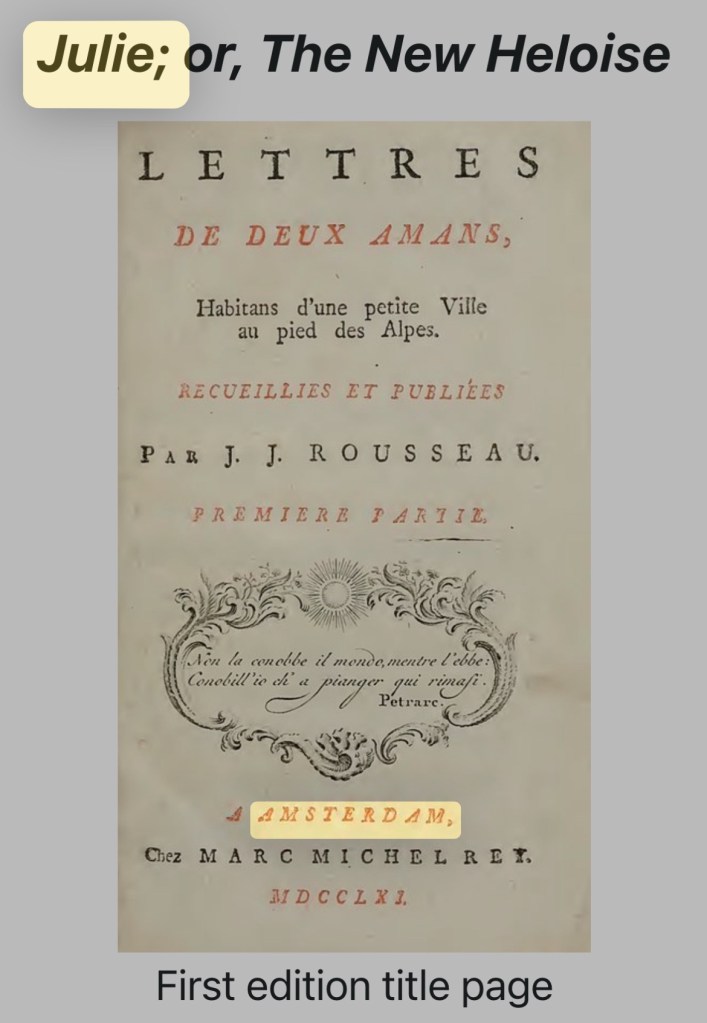
I started researching Rousseau’s work and discovered a novel I had never read: Julie, or the New Heloise.

My name.

And on the original title page, I saw the place where it was first published:

Amsterdam.

Julie… Amsterdam.

My nickname. My name. A divine breadcrumb, perfectly timed.

I followed it all the way to France.

The trip itself was far from smooth. The person I had planned it with left me after a tense night at the Moulin Rouge, canceling all of our future reservations.

On the street alone outside the show, admiring the iconic landmark.

I was suddenly alone. But I pressed on. I had an incredible experience alone in the Loire Valley the next morning, as if it was always supposed to happen that way. I had remembered being there before, though I had never been.

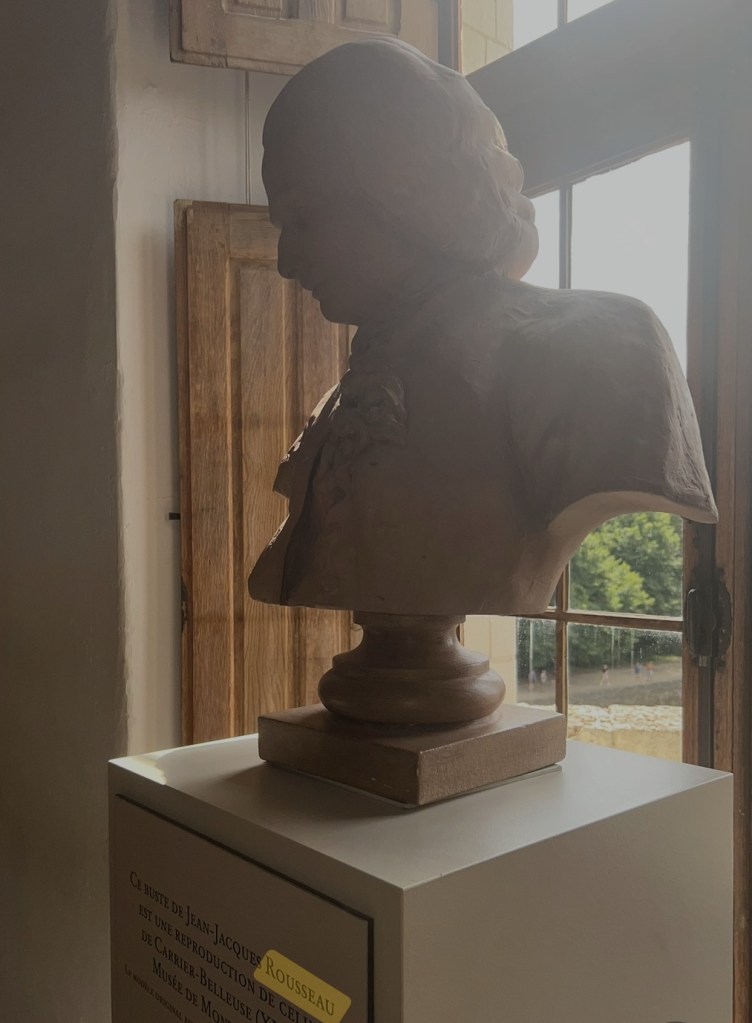
A tribute to Rousseau in a Loire Valley Chateau.

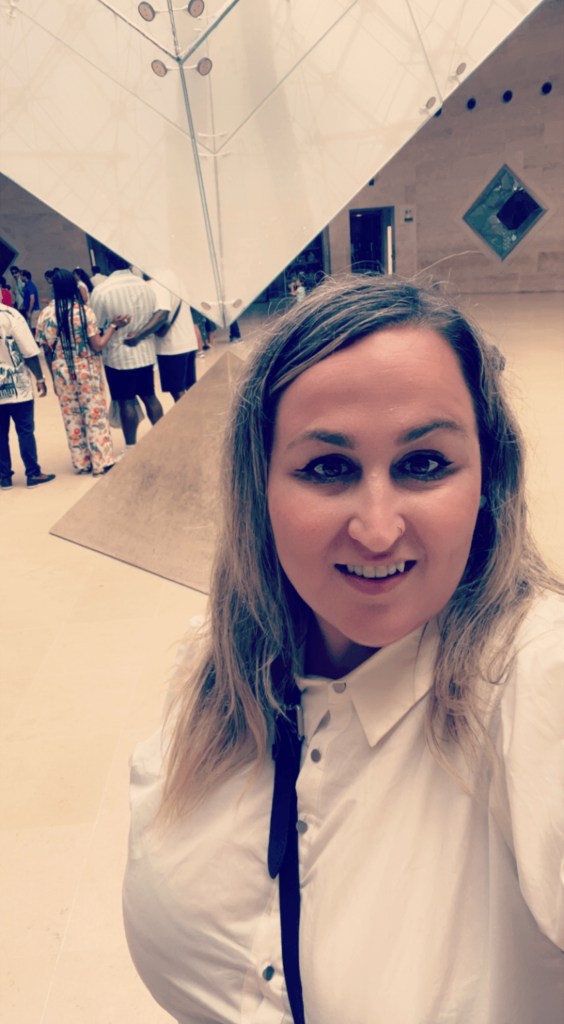
The next day, I then went to the Panthéon in Paris, where Rousseau is buried—only to arrive just minutes too late. I was turned away at the gate for having my ticket canceled.

Heartbroken, I walked away in tears… and that’s when I met him.

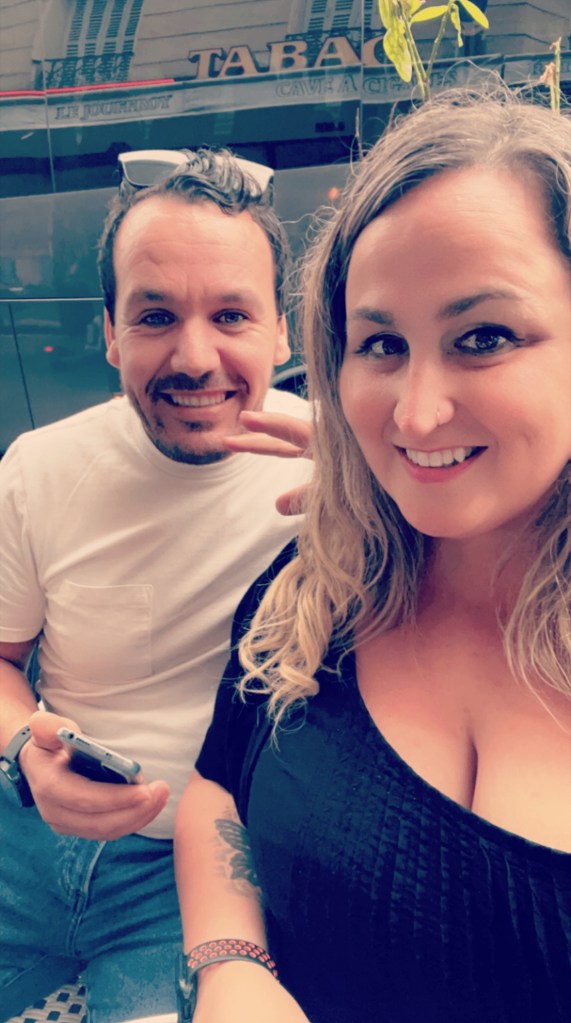
Outside the Panthéon.

Outside the resting place of my ancestor.

That’s where I met my fiancé.

Love, legacy, and freedom converged in a single moment I could never have scripted.

And now I understand: this path isn’t just mine. It’s inherited. Rousseau was one of the most influential voices of the Enlightenment—but not the godless radical many paint him to be. He was spiritual without dogma, deeply reverent of Jesus, and morally ahead of his time.

“If the life and death of Socrates are those of a sage, the life and death of Jesus are those of a god.”

(Émile)

He believed in the innate goodness of humanity, and in our natural empathy for animals:

“The blood of animals revolts us in our infancy, before habit has changed our nature.”

Like me, he believed true freedom comes from within—and that constraint placed upon conscience is the most dangerous kind.

“Happiness is the absence of constraint. The only chains that do not shackle are those we forge from love.”

(Julie, or the New Heloise)

That quote feels like it was left for me to find. And now I carry it forward—in my life, my work, and the book I’m writing: The Lost Path to Freedom.

This was never just a story about travel. It was a spiritual homecoming. A remembering. A breaking open of a secret long held in silence, finally ready to be lived out loud.

Follow my journey as I continue to explore this path.

[Instagram: @julietour]

The Forgotten Ones: Kabyle Echoes of the Peaceful Path

Long before modern borders and flags, before colonial tongues redefined faith and history, the people of Kabylia—the proud Amazigh—lived close to the earth. Theirs was a land of mountains, olives, wind, and fire. But not the fire of empire. The fire of spirit.

Kabylia, nestled in the mountains of northern Algeria, has always been a land of resistance. But it’s also a land of remembrance.

And what we are remembering now is this:

There were early Christians among the Kabyle. And there is reason to believe that some of them—like others across early North Africa—walked a peaceful, plant-based path.

Not because it was trendy.

Not because it was imposed.

But because it was sacred.

Early Christianity in North Africa: A Lost Legacy of Compassion

Most people know North Africa as a battleground between empires and religions. But before Christianity was weaponized by Rome, before Islam was institutionalized, there existed radical spiritual movements rooted in simplicity, nonviolence, and reverence for life.

St. Augustine of Hippo, one of the most influential Christian thinkers of all time, was born in what is now modern-day Algeria. Before his conversion to mainstream Christianity, he spent nearly a decade with the Manichaeans, a group known for their mystical teachings and strict vegetarian lifestyle.

He later rejected them, but their influence—along with that of the Desert Fathers and the ascetic communities scattered across Egypt, Tunisia, and Algeria—cannot be erased from the region’s spiritual memory.

It is entirely possible, even likely, that Kabyle Christians, living on the edges of empire and close to the land, were influenced by these early expressions of faith that valued compassion over ritual, and inner purity over outward display.

Before Christianity, Berber (Amazigh) spirituality was animistic and deeply respectful of nature. Some scholars believe there were plant-based rituals, herbal medicine practices, and a reverence for animal life that may have influenced how Berbers related to food, even after converting.

Vegetarianism as Resistance, Not Restriction

To abstain from killing animals in a time of sacrifice-based religion was not weakness. It was revolutionary.

It was a refusal to participate in systems of domination.

A reclaiming of harmony with creation.

A return to something original, something Edenic.

And for many early followers of Christ—especially those who read his temple-cleansing not as a temper tantrum, but as a liberation of the innocent—vegetarianism was a natural extension of the gospel.

This wasn’t about legalism.

It was about love.

Kabylia Still Remembers

Modern history has buried these truths. The dominant religions have rewritten the story, often sidelining those who practiced gentleness as naive or heretical.

But the mountains of Kabylia remember.

They remember the footsteps of those who fasted not just from food, but from violence.

Who refused to make offerings of blood.

Who lived simply, because they believed the divine dwelled in stillness.

I write this not just as a seeker of forgotten wisdom, but as someone whose heart is connected to Algeria through my fiancé—a man whose roots trace back to that same resilient soil.

And I believe part of our healing, part of our return to truth, lies in recovering these stories.

Stories of Amazigh who followed the Way—not the way of conquest, but the way of peace.

The way of the Christ who freed the doves.

The way of the soul who wrestles with God and walks away changed.

The Obedience to Authority: How Society’s Meat-Eating Norms Parallel Milgram’s Experiment

As humans, we tend to follow what we’re taught—whether it’s in school, from our families, or through societal norms. But what happens when these lessons go against our values or better judgment? The answer lies in psychological studies like Stanley Milgram’s famous obedience experiment, which shows how easily people conform to authority, even when it contradicts their moral compass.

Milgram’s Experiment: The Power of Obedience

Milgram’s experiment in the 1960s tested how far people would go in obeying authority figures, even when it involved inflicting harm on others. The results were eye-opening: a majority of participants followed orders to administer what they believed were painful electric shocks to another person, despite their obvious discomfort and moral hesitation. The study demonstrated that obedience to authority could override personal ethics and empathy.

The Connection to Meat-Eating

So, how does Milgram’s experiment relate to the common practice of eating meat? Consider this: society teaches us from a young age that eating meat is normal, necessary, and even healthy. It’s so deeply ingrained in our culture that questioning it often feels like a rebellion against established norms. Just as Milgram’s participants obeyed authority figures, many of us obey societal pressures—eating meat because it’s what we’ve always been told to do.

Why Conformity is a Problem

The issue with this conformity is that it leads to a lack of critical thinking. People don’t question whether eating meat is truly necessary for health or if it’s ethical to cause harm to animals in order to eat. Much like Milgram’s subjects, we often follow what we’ve been told, not because it’s right or even because it’s good for us, but because we’ve been conditioned to believe it’s the way things should be.

Breaking Free from the Norm

It’s time we break free from this autopilot obedience and think critically about our choices, especially when it comes to our food. Just as Milgram’s participants could have chosen to defy the authority figure, we have the power to challenge the status quo. We don’t have to follow harmful traditions or blindly accept things because they’ve always been done that way.

By questioning the norm and embracing plant-based alternatives, we can make ethical, health-conscious choices that align with our values and better serve the world. Like those who resist authority in Milgram’s experiment, challenging the meat-eating norm isn’t easy—but it’s necessary for creating a more compassionate and sustainable future.

Conclusion

Conformity can be comforting, but it can also keep us from questioning what’s right. Milgram’s experiment is a powerful reminder that we need to think for ourselves, challenge harmful norms, and make choices that reflect our true values. It’s time to break free from the senseless murdering of sentient beings tradition and embrace a healthier, kinder way of living.

A Memory That Changed Everything: Fear, Reincarnation, and Awakening

I’ve wanted to share this story so many times, but now feels like the right moment. Some truths take years to fully understand, to find the words that do them justice. From a heart that remembers—like a French rose pressed between the pages of time—to yours, I offer this glimpse into a journey that began long before this lifetime.

When I was 14, around the time I was becoming a confirmed Catholic, I had a vision of a past life. Not a dream, not a fleeting thought—an undeniable memory. I saw myself standing before a crowd, their faces twisted with fear, hate, and misunderstanding. Then came the sword to the back of my neck. I was a good person, yet they did this to a good person. The injustice, the pain—it was too real.

That vision changed me. I was supposed to perform in a talent show, something I had never shied away from before. I had played Dorothy in The Wizard of Oz. I had sung with confidence throughout my childhood. But after this vision, I called off. Not because I was sick, but because something deep within me recoiled at the idea of standing in front of people. It wasn’t stage fright. It was something ancient.

But fate had a way of making me face it.

On my last day as a student, at graduation—a day when speeches were expected, not performances—the teacher who was doing my 8th grade graduation speech unexpectedly asked me to sing. No one else. Just me. It was unusual. A final test, perhaps. And in that moment, I stayed present. I overcame the fear just long enough to do it. But even as I sang, I felt the weight of something unfinished. The fear lingered, buried beneath the surface, waiting for me to fully understand. I was relieved when the applause hit my ears.

Years later, I researched the name of the person I had remembered being. Her personality, her family, the dynamics of her life—it was too aligned to dismiss. It was me. But what do you do with a truth like that? I tried to ignore it, focus on the present, move forward.

Then, over 20 years later, I went to France.

The moment I arrived in the Loire Valley, I knew I had been there before. One particular staircase pulled me in. Later, I found out it was built from a Leonardo da Vinci drawing—a double-helix design, mirroring DNA strands centuries before they were discovered. And then I learned something even more startling: da Vinci and the person I remembered being had lived in the same part of France at the same time. She was just a young lady then.

I asked for a sign. If this is real, let me see something clear from da Vinci himself.

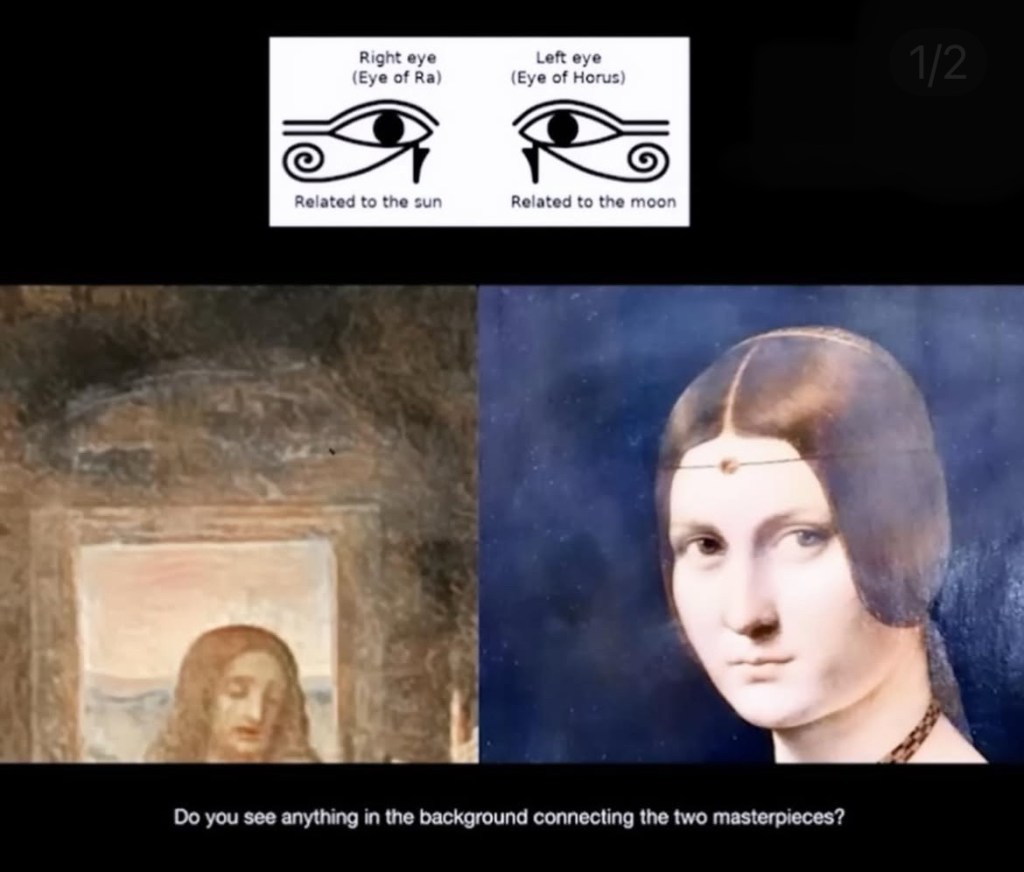
The weekend after I returned from France, I came across a video analyzing one of his paintings. This was a suggested video from 4bidden knowledge, I didn’t even search for it, Hidden within it was an encoded da Vinci sketch over a figure’s head—a symbol of reincarnation from Egypt. The figure? The video narrator Robert Edward Grant, a cryptologist, speculated it was the person I remembered being- which are two people the world never connected in any history lesson I’ve ever attended. The suggestion? This soul had returned again and again, like Christ. The same code, but the opposite Egyptian eye is also over the head of Jesus in The Last Supper, suggesting they are the same soul. Robert Edward Grant called her « The Bullet », and I felt that. Her life was tragic, but she inspired great changes.

In that moment, memories flooded back—not just of my past life, but of teachings, of knowledge I had always carried without knowing why. It put my entire spiritual journey of profound synchronicity in context. (This is post Free Yourself from Grief being published.) This inspired me to delve more into the early teachings of Jesus which confirm he actually taught reincarnation and was an animal activist like myself no less.

Da Vinci understood. He was a Rosicrucian, someone who tracked incarnations, encoding wisdom for those who would come after him. He performed rituals, had visions, and grasped truths that most of the world still ignores. He was awake in a world that sleeps.

And I will always be grateful to him.

Because it takes a unique soul to walk this earth fully aware, to see beyond the illusions, and to dedicate themselves to lifting humanity toward its highest potential.

Some of us remember. Some of us wake up before others. And when we do, we have a choice—turn away in fear, or step forward into the unknown.

I choose to step forward. 🌹

False Flags & Fear Tactics: The Playbook Never Changes

Have you ever noticed that when the government wants something—be it a war, more surveillance, or total control—some big, scary event conveniently justifies it?

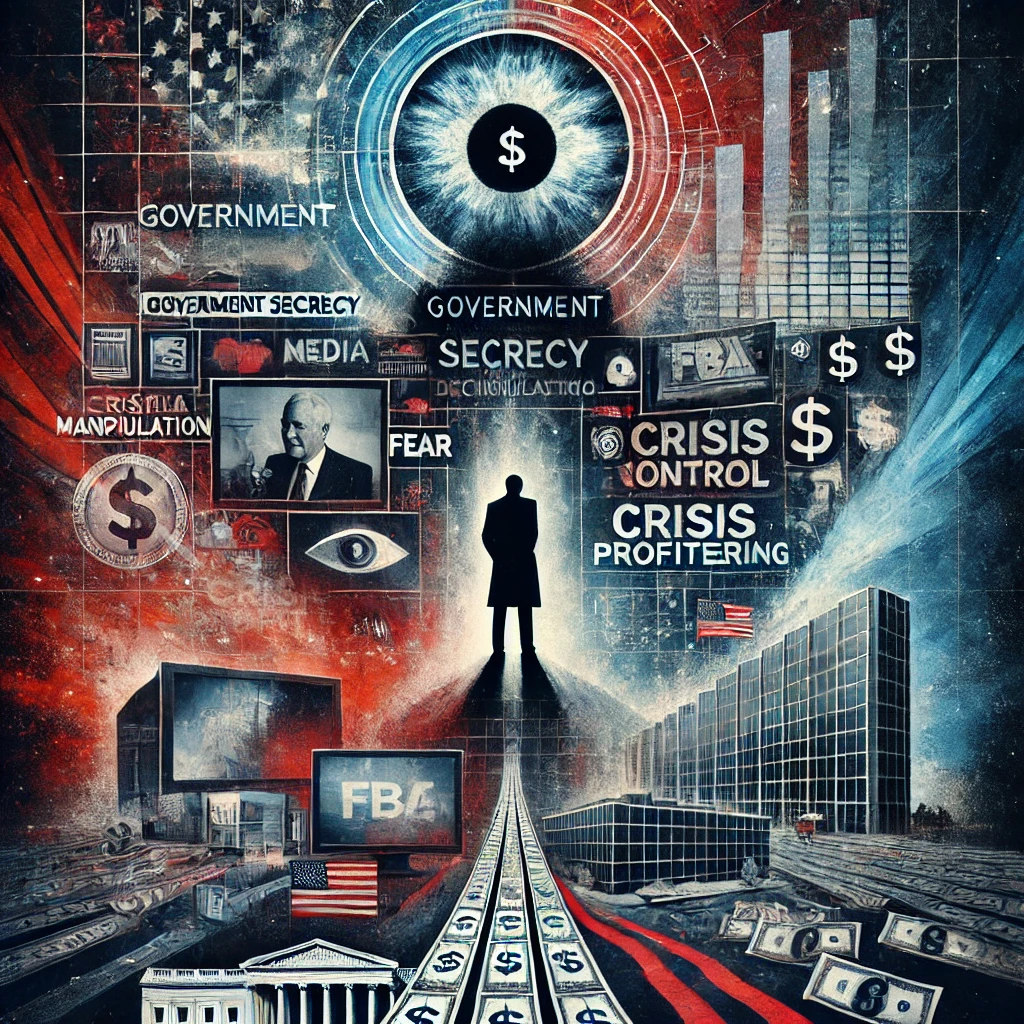
Let’s talk about three major crises: a staged war, a “new Pearl Harbor,” and a pandemic that changed the world overnight. All different on the surface, yet eerily following the same script.

Operation Northwoods (1962): The False Flag That Almost Happened

Picture this: Bombs going off in Miami. Hijacked planes blamed on Cuban terrorists. Public outrage demanding war. All planned by the U.S. government to justify invading Cuba.

Yes, this was real. The military proposed faking attacks on Americans to stir up war fever. But JFK shut it down, refusing to let innocent people die for a manufactured crisis. The files were finally declassified in 1997, proving what many long suspected: false flags aren’t a conspiracy theory—they’re a documented strategy.

9/11 (2001): The Attack That Changed Everything

Fast forward to 2001. Another major attack on U.S. soil, this time real—but the official story doesn’t quite add up. Buildings collapsed in ways that defied physics, intelligence agencies ignored clear warnings, and within hours, the blame was pinned on Iraq and Afghanistan (who had nothing to do with it).

Meanwhile:

• The Bush-Cheney crew made billions through war contracts (looking at you, Halliburton).

• The Saudis (with direct ties to the hijackers) were protected, even flown out of the U.S. when no one else could travel.

• The Patriot Act was rushed through, gutting civil liberties under the guise of “security.”

War. Profiteering. Control. That’s the real legacy of 9/11.

COVID-19 (2020): The Invisible Enemy That Locked Down the World

And then, in 2020, a different kind of war began—one against an invisible enemy. But who really won?

Big Pharma made hundreds of billions on rushed vaccines with zero liability.

Small businesses were crushed, while Amazon and Walmart thrived.

• Governments seized unprecedented control, pushing digital IDs, mandates, and censorship.

• And of course—Event 201, a pandemic simulation hosted just months before COVID, eerily predicted everything.

Was the virus real? Yes. Was it planned for and used to push a broader agenda? Absolutely. Just like 9/11, just like Northwoods.

See the Pattern?

➡️ Create (or allow) a crisis.

➡️ Use fear to manipulate the public.

➡️ Roll out pre-planned solutions that benefit the elite.

➡️ Silence and smear anyone who questions the narrative.

The JFK files remind us that governments do not hesitate to deceive the public for power. And if history has taught us anything, it’s this: if we don’t recognize the playbook, we’ll keep falling for the same tricks.

So, are we waking up yet?

Vegan French Onion Soup with Homemade Fettunta

The best vegan French onion soup I’ve ever had—rich, comforting, and made with love. Instead of traditional cheese and beef broth, this version brings deep umami flavors and a beautifully melted vegan mozzarella topping. Served with homemade Fettunta using sourdough and ancient grains for extra nourishment.

Ingredients:

For the soup:

• 5 large onions, thinly sliced

• 1 tbsp sugar

• 1 tsp salt

• 3 tall glasses of hot water (~6 cups)

• 1 small scoop vegan bouillon (or mushroom broth) to taste

• 1 tbsp Vegemite (for depth and umami) (faux beef flavor)

• 2 tbsp olive oil or vegan butter

For the cheese topping:

• 1 ½ cups Violife vegan mozzarella (or any melty vegan cheese)

• 2 tbsp vegan butter

• 1 tbsp tapioca flour (for stretch)

• ¼ cup plant-based milk (for creaminess)

Thyme spice for the top as desired.

For the bread:

Homemade Fettunta: Rustic sourdough (50% ancient grain emmer flour)

• OR stale/toasted bread if preferred

Instructions:

1. Caramelize the onions – Heat olive oil in a large pan on low heat. Add onions, sugar, and salt, stirring occasionally for 2 hours until deep golden brown.

2. Prepare the broth – Mix hot water with vegan bouillon and Vegemite until dissolved. Pour into the pan with onions and let simmer for 30 more minutes.

3. Make the cheese sauce – Melt vegan butter in a saucepan, whisk in tapioca flour, then slowly add plant-based milk and mozzarella, stirring until smooth and stretchy.

4. Assemble & broil – Preheat the broiler on high. Place 4 small soup bowls on a baking sheet. Fill each with 3 ladles of onion soup, top with half a Fettunta slice, and drizzle with the vegan mozzarella sauce. Add Thyme if desired on top.

5. Broil for 5 minutes – Until golden and bubbling.

6. Serve & enjoy – The flavors deepen with every bite. Bon appétit!

Ancient grains nourish the body, compassion nourishes the soul. Missing Paris, but bringing it home one bowl at a time.

Here’s how to make Fettunta (Tuscan Garlic Bread):

🥖 Brush rustic sourdough with olive oil.

🔥 Grill until golden with perfect char marks.

🧄 Rub with a raw garlic clove while warm.

🌿 Drench in high-quality extra virgin olive oil.

🧂 Sprinkle flaky sea salt & enjoy!

Did Da Vinci Hear the Dog Whistle of Hidden Knowledge? How He Knew About DNA Before Its Discovery

How Did Da Vinci Know About DNA Before It Was Discovered?

If everything is vibration, then heaven is like a dog whistle—it’s here, but not everyone can sense it. Only a few get a glimpse.

We like to think we’re at the peak of knowledge, but the past tells a different story. Leonardo da Vinci, the ultimate Renaissance visionary, was drawing double-helix staircases centuries before the discovery of DNA. Coincidence? Maybe. But for those who study esoteric wisdom, it’s another clue that knowledge exists beyond time—passed through mysticism, hidden in symbols, waiting for the right minds to decode it.

The Double Helix 🧬 Staircase in France.

The Château de Chambord in France holds one of the most fascinating architectural mysteries of the Renaissance: a double-helix staircase designed so two people can ascend or descend without ever crossing paths. It’s eerily similar to the structure of DNA, which wouldn’t be identified until 1953. Da Vinci, who was commissioned by King Francis I, is believed to have inspired this staircase. His notebooks reveal an obsession with spirals, anatomy, and the unseen forces shaping life.

But Da Vinci wasn’t just a scientist; he was deeply immersed in secret knowledge. The Rosicrucians, an esoteric group associated with alchemy, sacred geometry, and hidden wisdom, used the rose-cross symbol—a fusion of spiritual transformation and the material world. His works are filled with hidden messages aligning with Rosicrucian and Hermetic teachings. He blended science and mysticism seamlessly, understanding that reality isn’t just what we see, but also what we sense.

Everything in existence moves through vibration, pattern, and ratio. The entire chord progression of the universe—the frequencies of existence itself—is what the ancients called The Music of the Spheres. The Logos. Sacred geometry reveals itself in the Fibonacci sequence, in the spirals of galaxies, in the resonance of sound waves, and in the very structure of our DNA. If you think of vibration as the foundation of everything, then what we perceive as reality is simply the harmonic ratios playing out in form.

This is why I teach affirmations the way I do in Free Yourself From Grief. If everything is frequency, then emotions resonate at different levels, just like the keys of a piano. Grief, at the lowest end, holds a deep, heavy vibration. But through truth, compassion, love, and euphoria, the scale crescendos toward something higher—toward that divine frequency just beyond human perception, like a dog whistle. The affirmations work to shift your emotional state, lifting you from grief and helping you see your situation differently.

Was Da Vinci ahead of his time, or simply remembering something long forgotten? In the same way mystics speak of divine frequencies beyond human perception, was he tapping into knowledge encoded in the universe itself?

Maybe heaven, truth, and the deepest mysteries of life are always present—just beyond the frequency most can hear. Only those willing to listen will ever catch a glimpse.

Walking the Path of Logos: From “Crazy” to Inevitable Truth

Revisiting my first blogpost from over a decade ago, “The Perception of Crazy in an Evolving Society”, I can see patterns more clearly than ever after years of truth seeking and research.

A question that sometimes drives me hazy: am I, or are the others crazy? – Albert Einstein

When I wrote my first blog post, I talked about how society labels the greatest innovators, thinkers, and truth-seekers as “crazy” until time catches up with them. This is a pattern that has played out for centuries. It’s not just about ideas—it’s about Logos, the divine truth and reason behind all things. And when someone embodies that truth, the world resists—until it can’t anymore.

I’ve lived this firsthand. I know what it’s like to be admired, then suddenly turned against. To have people support me, then try to sabotage me. I know what it’s like to survive financial and legal attacks just for walking a path that challenges deception. But Logos protects its own.

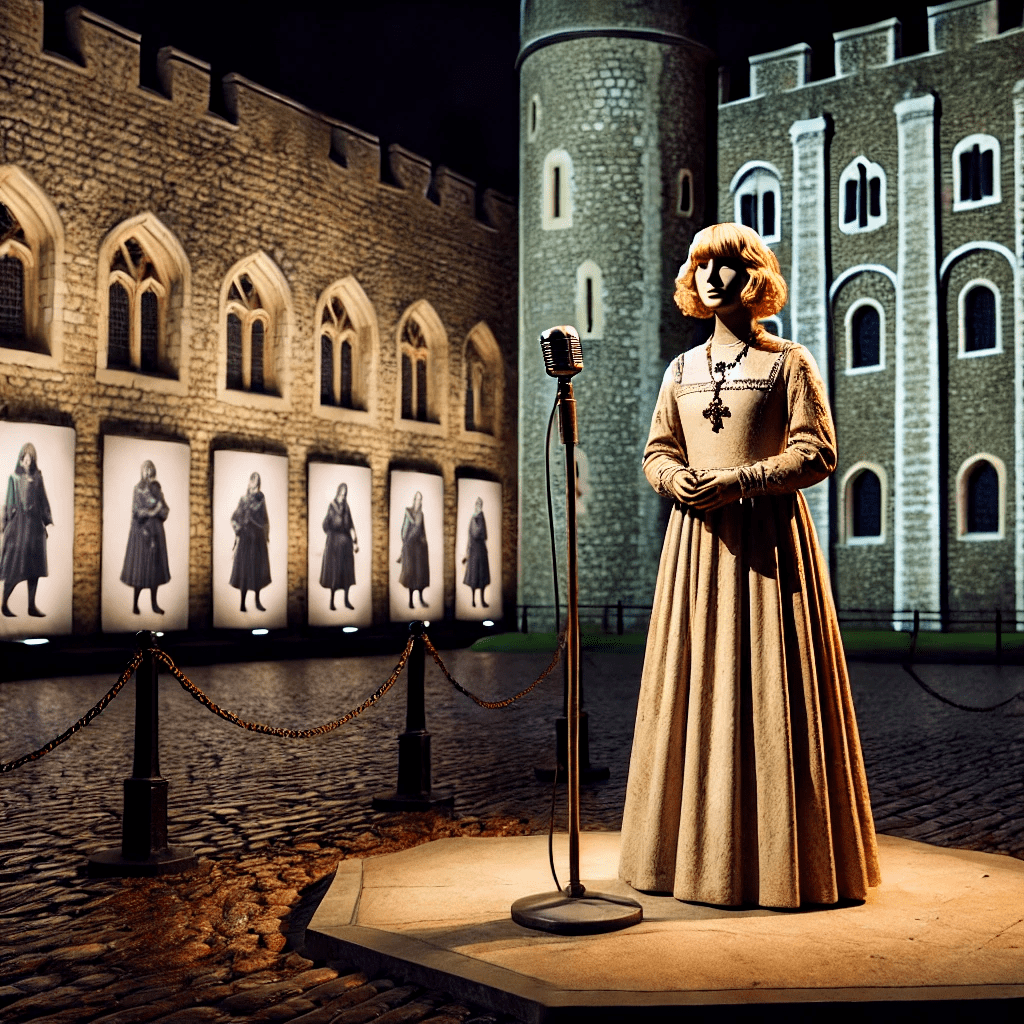
The people who change the course of history—Jesus, Anne Boleyn, Rousseau, even modern truth-seekers—are always ridiculed at first. The system will do anything to keep people asleep because the moment enough of us wake up, their illusion collapses.

When Truth Is Too Big to Ignore

Jimi Hendrix once said, “You have to go on and be crazy. Craziness is like Heaven.”

He was right. Because in a world built on deception, truth is insanity—until it isn’t.

Jesus was called a blasphemer. Now, billions follow his teachings.

Anne Boleyn was branded a traitor. Now, history sees her as a reformer.

Rousseau was exiled for his ideas. Now, his philosophies shape democracy.

Marie Antoinette was a scapegoat for a corrupt system’s collapse. And now? People see the truth behind the narrative.

The same pattern plays out today. Health freedom activists are silenced. Corrupt institutions brand truth-seekers as conspiracy theorists. Ancient wisdom is rewritten to fit the status quo. But history tells us exactly what happens next:

Logos always returns. Truth always wins.

Why They Try to Silence Us

“Don’t let the opinions of the average man sway you. Dream, and he thinks you’re crazy. Succeed, and he thinks you’re lucky. Acquire wealth, and he thinks you’re greedy.” – Robert G. Allen

The world doesn’t fight every idea—only the ones that threaten its foundation. If an idea seems absurd but harmless, it’s ignored. But when it has the power to shift consciousness, health, politics, or spiritual awareness, it gets attacked, censored, and erased.

• The true history of the Sphinx? Rejected.

• The suppression of holistic health and the corporate control of medicine? Censored.

• The return of Logos through reincarnation? Buried by dogma.

This is the reality: They only silence what they fear.

Breaking the Cycle: The Age of Awakening

Every time Logos incarnates—whether as a person, an idea, or a movement—it faces resistance. But once an idea reaches enough people, there’s no going back.

And right now? We are at the tipping point.

If you feel like the world is against you, if you’re tired of being called crazy, if you know deep down that something bigger is happening—then you’re in good company.

You’re not crazy. You’re ahead of your time.

History belongs to those who walk in truth despite the cost. And the cost is always worth it.

Keep speaking. Keep exposing. Keep questioning.

Because Logos always returns. And this time, we’re here to finish what was started.

#Logos #TruthSeeker #Julietour #Awakening #SoulMission #SpiritualWarfare #HistoryRepeats