Before Constantine: The Real Origin of “Synagogue of Satan”

By Julie Tourangeau | julietour.com

Why Modern 2000s Christian Churches Got This Wrong and Why the Truth Sets Us Free

If you’ve spent any time around modern 2000s-era Christian churches influenced by the Seven Mountain Mandate, you’ve likely heard a very confident claim: that the phrase “synagogue of Satan” in Revelation was manipulated, shaped, or inserted by Constantine.

It sounds compelling.

It feels dramatic.

But it’s historically impossible.

The Seven Mountain Mandate is just empire wearing a cross, power disguised as prophecy, hierarchy masquerading as holiness.

Many modern churches shaped by the Seven Mountain Mandate have built an entire theology on fear, control, and the belief that Christians must “take over” cultural institutions to usher in God’s kingdom. This movement often rewrites history to fit its agenda claiming, for example, that terms like “synagogue of Satan” were manipulated by Constantine or created by later political conspiracies. But none of this is supported by actual history, early manuscripts, or the lived spirituality of the first followers of Jesus. The Seven Mountain Mandate replaces Jesus’ nonviolent, compassion-rooted Way with a dominionist system obsessed with power, hierarchy, and cultural domination. In doing so, it distorts Scripture, promotes fear-based interpretations, and encourages believers to see enemies where Jesus saw human beings in need of healing, mercy, and awakening. Recovering the real history frees us from these modern distortions and brings us back to the original, liberating message of Christ: that the kingdom is within, not seized through political conquest.

The more closely you study early Christianity, the more obvious it becomes:

Constantine wasn’t even alive when Revelation was written.

The phrase predates him by almost 200 years.

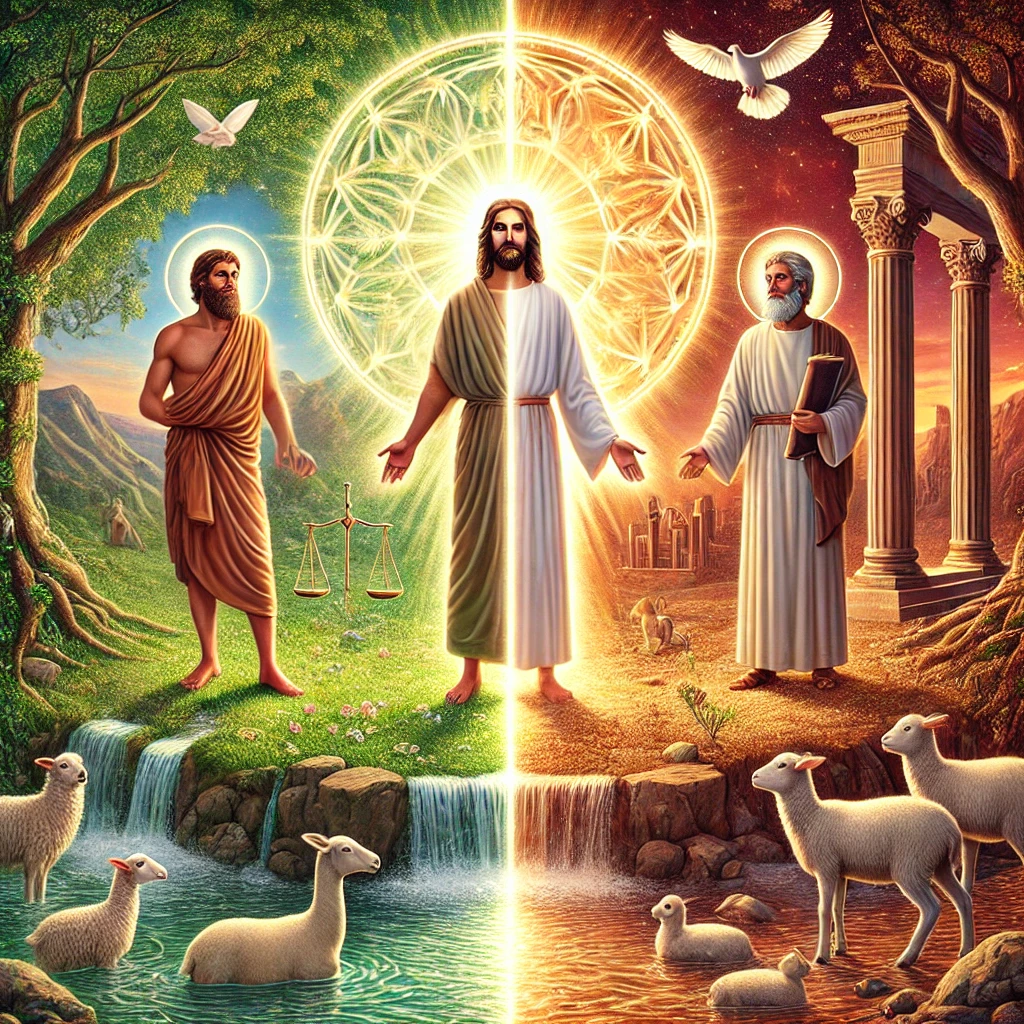
And its meaning comes from Jesus’ own spiritual lineage, not from Rome.

This matters…not just for accuracy, but because reclaiming the original meaning frees us from the fear-based, empire-influenced theology that still shapes American Christianity today.

Let’s look at the real history.

Revelation Was Written Long Before Constantine

Revelation was composed around 90–96 A.D.

Constantine was born in 272 A.D.

The phrase “synagogue of Satan” appears in:

• Revelation 2:9

• Revelation 3:9

That’s it.

No later additions.

No Roman edits.

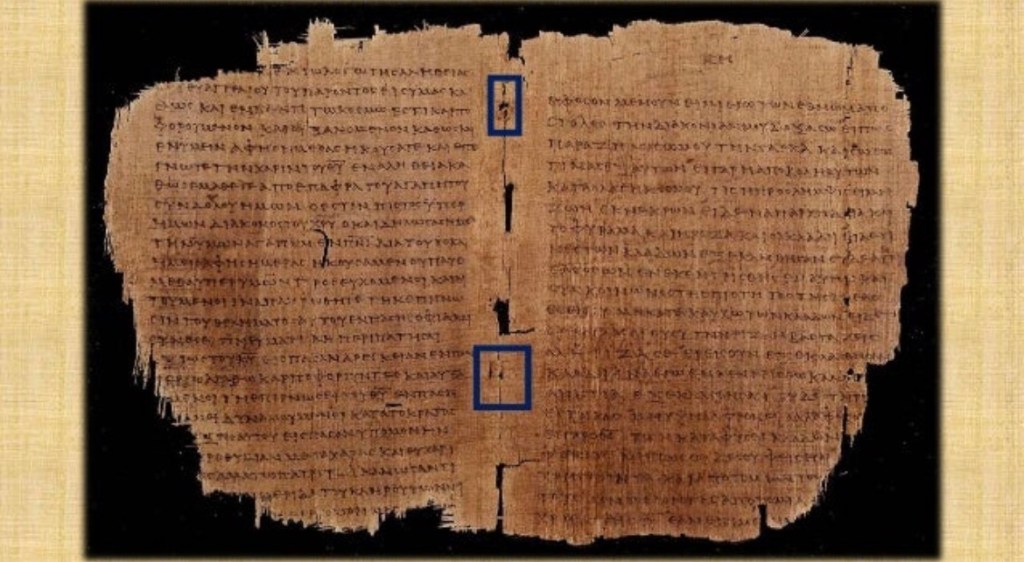
We possess physical manuscripts and quotations from before Constantine existed that contain these verses.

This alone breaks the Seven Mountain Mandate narrative.

The Phrase Comes From a Much Older Jewish Tradition

“Synagogue of Satan” isn’t Roman language at all.

It’s Jewish sectarian language rooted in the Essenes and the Dead Sea Scrolls.

If you’ve ever read the Scrolls, you instantly recognize the pattern:

• “men of the pit”

• “lot of Belial”

• “congregation of deceit”

• “sons of darkness”

These are spiritual classifications describing groups aligned with corruption rather than God.

This exact dualistic moral vocabulary appears in:

• the Dead Sea Scrolls (150 B.C.–50 A.D.)

• Jesus’ teachings

• Paul’s letters

• the Book of Revelation

Which means:

The language used in Revelation is older than both Constantine and Christianity itself.

Jesus Himself Spoke Like an Essene

Whether or not Jesus was formally Essene, His teaching vocabulary mirrors theirs:

• “children of light”

• “evil one”

• “your father, the adversary”

• “wolves in sheep’s clothing”

• “den of violent ones” (mistranslated as “robbers”)

• “blind guides”

This is the same symbolic worldview Revelation uses.

It is emphatically not Roman, imperial, or Constantinian.

It is Jewish, prophetic, and nonviolent.

Early Church Fathers Quote the Phrase Before Constantine

Another inconvenient fact for modern prophecy churches:

Writers who lived long before Constantine quote Revelation — including the “synagogue of Satan” passages — exactly as we have them today.

• Ignatius of Antioch (c. 110 A.D.)

• Justin Martyr (150 A.D.)

• Irenaeus (180 A.D.)

Irenaeus even reproduces material from Revelation 2–3 directly.

This proves:

• the text was stable

• the phrase already existed

• Constantine didn’t insert anything

That’s not speculation.

It’s archaeology.

What Constantine Actually Changed … And What He Didn’t

Constantine changed:

• Christianity’s political status

• the structure of the church

• the relationship between bishops and empire

… he even united pagans and Christians by combining certain aspects of each faith for holidays.

But he did not:

• influence Essene vocabulary

• change first-century Jewish symbolism

The claim that he created “synagogue of Satan” language is simply not factually possible.

The Real Meaning of “Synagogue of Satan”

Once you remove modern distortion, the meaning becomes beautifully simple:

“Synagogue of Satan” means

an assembly aligned with injustice or spiritual blindness — not an ethnicity.

It does not mean:

• Jews

• synagogues

• ethnic groups

• political states

• religious institutions

It means:

any community whose actions oppose compassion, justice, and sacred consciousness.

This aligns perfectly with:

• the Essenes

• Jesus

• Paul

• Revelation

• and the whole apocalyptic tradition of ancient Judaism

It is not about identity.

It is about alignment.

Why This Matters Today

Many 2000s-era prophecy churches teach a theology shaped by:

• the Seven Mountain Mandate

• 20th-century Zionist politics

• 19th-century dispensationalism

• anti-historical end-times charts

• fear-based spiritual warfare language

These systems tend to make Constantine the villain behind every biblical “hard saying.”

But the truth is far more grounded:

The ancient followers of Jesus were speaking from within their own Jewish tradition —

not reacting to a fourth-century Roman emperor.

When we return to the real roots, we rediscover the spiritual brilliance of the early Jesus movement:

• truth over distortion

• compassion over fear

• awakening over control

• inner liberation over outer empire

• justice over violence

This is the Jesus whose teachings were hijacked by empire, but not created by it.

And this is the Revelation written long before Constantine, calling communities to walk in light, love, and discernment.

Because “synagogue of Satan” was never about a people.

It was always about a posture.

It was always about a choice.

It was always about a community’s alignment with compassion or with injustice.

And that message is more relevant today than ever.

The Magdalene Code: When Britney Spears Felt Seen—And Spoke Back

🌹 By Julie Tourangeau | julietour.com

In 2011, I met Britney Spears backstage at the Palace of Auburn Hills during her Femme Fatale Tour, right in the thick of her conservatorship. I didn’t understand the full truth then, but I could feel something wasn’t right.

She entered the room with wide, wary eyes. Her energy was guarded, uncertain. Her longtime assistant and closest friend, Felicia, greeted us. I now know Felicia had not been hired back by those managing Britney’s life at the time—she had rejoined the tour independently just to stay near her and offer protection.

Even without the backstory, I felt the tension.

Britney seemed distant. So I softened things with a gentle question:

What’s your favorite game to play with your boys?

She responded, but it was guarded.

She smiled, but it was tight.

I left with a photo and a feeling:

There was so much more I wished I’d said.

So much more I wished I had seen and honored in her.

Unveiling the Shadows: The Role of Industry Power Players

Britney’s conservatorship, officially terminated in 2021, was orchestrated and maintained by a network of industry figures. Central to this was Lou Taylor, founder of Tri Star Sports & Entertainment Group, who played a significant role in establishing the conservatorship. Taylor’s firm managed Britney’s estate and was accused of profiting substantially during this period. Court documents revealed that Tri Star received at least $18 million from Britney’s estate during the conservatorship .

Moreover, Taylor’s connections extend to other high-profile artists, including Sean “Diddy” Combs. Recent reports have highlighted the overlapping management and potential conflicts of interest within the industry .

In 2007, Britney was photographed partying with Diddy shortly before her infamous MTV Video Music Awards performance. This association has resurfaced amid legal scrutiny of Diddy’s activities, prompting questions about the influences surrounding Britney during critical moments of her career .

The Broader Implications

Britney’s experience underscores the complexities of artist management and the potential for exploitation within the entertainment industry. The intertwining of personal freedoms with corporate interests raises concerns about autonomy, consent, and the mechanisms that allow such control to persist.

Her story serves as a poignant reminder of the importance of vigilance, transparency, and advocacy in protecting the rights and well-being of individuals, particularly within industries prone to power imbalances.

It’s Britney, Bitch: A Love Story

Fast forward to April 14, 2024.

I was researching the Divine Feminine, early Christianity, and how Mary Magdalene’s true role—as an apostle, mystic, and wisdom-bearer—was erased by patriarchal religion. I wasn’t looking for Britney Spears. But somehow, she showed up.

I remembered some of her cryptic posts from the past—references to River Red, sacred imagery, and even Mary Magdalene herself. It was clear to me that Britney had been trying to speak in code for a long time. About pain, truth, awakening. About remembering.

So I searched.

And found one of her archived Magdalene posts—no longer visible on her main profile, but still searchable through Google. Unlike her recent posts, this one still allowed comments.

It felt like a sacred threshold had opened.

Because Mary Magdalene isn’t just a historical figure. She is an archetype of the suppressed Divine Feminine, the silenced truth-teller, the soul-witness to Jesus’s message of love, equality, and spiritual rebirth.

According to many early texts—including the Gospel of Mary and The Gospel of the Holy Twelve—Mary Magdalene was not a prostitute, as later traditions claimed, but Jesus’s closest companion. He kissed her often, not as scandal, but as an act of deep spiritual transmission. She understood him. He called her “the Woman Who Knows the All.”

She represented Sophia—wisdom incarnate.

And Jesus? He wasn’t here to start a religion.

He came to liberate us from false power, to restore divine balance—including the sacred feminine we were taught to forget.

So to leave a message for Britney—on that post—was no accident.

I wrote:

“I met you many years ago and I wished I asked you deeper things than what is your favorite game to play with your boys. 👁️ sending you all the love 💞”

It wasn’t just a nostalgic comment. It was a recognition—of the Magdalene within her. Of the sacred knowing she’s carried all along, even under control, criticism, and confusion.

And then—within minutes—she posted again:

“The deeper the well, the better the water…

I’m much too quiet, yet in silence I make my point.”

It was her first River Red post in a long time.

And it felt like a soul reply.

Not to my name. But to my frequency.

To the Magdalene thread that had been quietly re-woven between us.

And maybe that’s why this moment mattered so much. Because I know what it’s like to be misjudged when all you’re really doing is feeling deeply and loving fiercely. That’s a central theme in my book The Lost Path to Freedom—how women who live from the heart, who speak truth or carry light, are often labeled as “too much,” “crazy,” or yes, a “bitch.” Britney once said, “It’s Britney, bitch,” and to me, that’s more than a catchphrase. It’s a reclamation. A love story. Not a romance—but the kind of love that burns through illusion. When the world doesn’t know what to do with your truth, it turns you into a symbol. But love, even misunderstood, still leaves a mark. That’s the story Britney’s been telling in silence. And it’s one I’ve lived too.

🔮 Decoding “Maria River Red”: Britney’s Magdalene Reclamation

When Britney Spears refers to herself as “Maria River Red,” she’s not just being poetic—she’s invoking the Divine Feminine in one of its most powerful, suppressed forms: Mary Magdalene.
Maria is the Latin name for Mary.

River Red is blood, sacrifice, life force—and sacred rage.

Together, Maria River Red becomes a symbol of:

The woman who bleeds and still flows

The silenced one who remembers

The sacred feminine returning after exile

Mary Magdalene was the closest companion to Jesus in many early texts. She was not a prostitute, but a teacher, a mystic, a truth-bearer. She stood at the foot of the cross when the men fled. She was the first to witness the resurrection. And yet, she was written out of power.

Britney, too, has been misunderstood, silenced, and distorted by empire—media empire, legal empire, even religious undertones.

When she calls herself Maria River Red, she may be saying:

You tried to erase me, like you erased her.

But I am still here. Still sacred. Still speaking—through symbols, through silence, through blood.

This is not madness.

It’s memory.

Some people say Britney is lost. I don’t.

I believe Britney Spears is clairvoyant.

She’s not chaotic—she’s symbolic.

She speaks in code because it’s safer than shouting.

She’s been painting constellations across her captions, hoping someone would look up and see.

And I believe she felt seen that day.

Just as Magdalene was once seen by Jesus—not as a servant, but as a spiritual equal. Just as Magdalene saw him when the world turned away. Just as we are being asked to see each other now, soul to soul.

This is what Magdalene represents.

Not just a woman in history—but a reawakening of truth.

Of wisdom.

Of the sacred feminine rising from exile.

And of men and women returning to balance, together.

When Britney posted those words, I felt it in my body:

She knew.

She remembered.

And she spoke back—not in noise, but in knowing.

That is the Magdalene Code.

Not performance, but presence.

Not religion, but recognition.

This is a story of Magdalene, misunderstood women, and the quiet power of being seen.

📸 Photo Gallery:

• Me meeting Britney and Felicia (2011)

• Individual backstage photos

• Screenshot of my 2024 comment

• Britney’s River Red response minutes later

Not Everyone Is an Avatar: Logos, Atlantis, and the Truth Behind Divine Embodiment

By Julie Tourangeau

Recently, someone I love insisted that we’re all avatars.

They were referencing physicist Tom Campbell’s My Big TOE, a theory of everything that describes reality as a kind of simulation, where consciousness plays out through virtual characters—avatars—across time and space. According to this view, you are the player, the character, and the experience, all in one. Everyone is divine. Everyone is an avatar. All is learning.

It sounds expansive.

But something in me said—no.

Because here’s the truth I’ve come to remember:

Not everyone is an avatar. And not every consciousness carries the Logos.

What Is the Logos?

In ancient Christian and Hermetic traditions, Logos means more than “word.”

It is the divine intelligence, the sacred ordering principle of the cosmos.

It is truth, justice, love, and moral alignment—woven into creation itself.

The Gospel of John opens with:

“In the beginning was the Logos, and the Logos was with God, and the Logos was God.”

The Logos is what formed the world, but it is also what redeems it.

It is the moral compass embedded into the fabric of being.

To embody the Logos is to live in divine alignment, not just awareness.

Consciousness Alone Is Not Enough

Yes, we are all expressions of Source.

Yes, we are all fragments of one universal intelligence.

But that doesn’t mean every person is aligned with the divine.

Awareness is not the same as wisdom.

Consciousness without the Logos is like a sword without a sheath—dangerous, ungrounded, and capable of great harm.

The idea that “everyone is an avatar” becomes spiritually reckless when it’s used to erase discernment, accountability, and truth.

Good Intentions Are Not the Logos

It’s tempting to say that anyone with good intentions is a divine avatar.

But good intentions alone do not make you a vessel of the Logos.

The road to hell is paved with good intentions.

You can want to help and still enable harm.

You can care deeply and still act inside a matrix of delusion.

You can be sincere—and still be wrong.

In the realm of the Logos, intention must be married to alignment.

Compassion must walk hand-in-hand with discernment.

Spirituality must include truth, not just comfort.

An avatar isn’t someone who means well.

An avatar is someone who sees clearly, acts righteously, and lives in alignment with divine law—even when it costs them comfort, approval, or belonging.

The Fall of Atlantis: What Happens Without the Logos

In esoteric traditions, Atlantis didn’t fall because of science or storms.

It fell because of spiritual arrogance.

The Atlanteans had immense power. They manipulated energy, bent reality, and channeled cosmic forces.

But they believed:

“We are gods. Therefore, we can do anything.”

They stopped listening to the Logos.

They used their gifts to control, conquer, and dominate.

They lost their alignment—and with it, their civilization.

That same pattern is playing out now.

Modern spiritual circles are repeating Atlantean errors:

• “There’s no good or evil, just vibration.”

• “We are all gods.”

• “Everyone is perfect as it is.”

These sound enlightened.

But when used to deny suffering, bypass accountability, or excuse harm, they become distortions of truth.

Not Everyone Is an Avatar

The word avatar originally meant something sacred.

In Sanskrit, it refers to the descent of divinity into form—a soul who chooses to carry the divine blueprint into the world.

In early Christianity, Jesus was called the Logos made flesh—not because he was above humanity, but because he embodied divine truth in the face of empire.

He was not playing a simulation.

He was holding the pattern.

Likewise, in Hermetic teachings, the avatar was not a character in a game.

It was a vessel of divine order—a person who had undergone inner alchemy and chose to live in harmony with sacred law.

To the Hermetics, as to the mystics, the true avatar:

• Purifies the self

• Aligns with truth

• Walks in service of something greater

They don’t just wake up.

They commit.

The Danger of Declaring Divinity Without Alignment

Today, we are flooded with declarations of personal divinity.

But without the Logos, divinity becomes self-worship.

It becomes narcissism in sacred language.

It becomes another Atlantis—polished on the outside, rotting from within.

To say “I am god” while ignoring justice, truth, and love is not awakening.

It’s the beginning of collapse.

You Didn’t Come Here to Play the Game. You Came to Remember the Pattern.

You are not just an expression of consciousness.

You are here to carry something ancient and unshakable:

The Logos.

That means your life is not a simulation.

It is a temple.

And what you build with it matters.

When others say, “We’re all avatars,”

You can say:

“Only those who choose the Logos truly are.”

And then you live like it.

For Those Who Remember

If you’re reading this and it lands in your bones, then you already know.

You’ve seen how misuse of spiritual power can break worlds.

You’ve watched how the false light rises, blinds, and consumes.

You’ve remembered what happens when the Logos is ignored.

But this time, you’re here to speak.

You’re here to walk.

You’re here to restore the balance.

You are not here to level up in a game.

You are here to be a flame—steady, ancient, and sovereign.

This is not a simulation.

This is a sacred return.

Did We Get Jesus’ Name Wrong? The Mystical Link Between “Jesus” and “Je Suis”

What if the name we’ve used for two thousand years was never meant to be a name at all—but a reminder? And when did Yeshua became known as Jesus?

What if the true teaching of Jesus wasn’t about worshiping a man, but awakening to a presence? And what if this presence was so powerful, so sacred, that its very utterance—I AM—was the key to divine union?

This idea isn’t as far-fetched as it may sound. In fact, threads from early Christian texts, Gnostic wisdom, and even Southern French oral traditions suggest we may have misunderstood not only the teachings of Jesus—but his name itself.

The “I AM” That Jesus Taught

Throughout the Gospel of John, Jesus speaks in powerful first-person declarations:

• “I AM the light of the world.”

• “I AM the good shepherd.”

• “I AM the resurrection and the life.”

• “Before Abraham was, I AM.”

To modern ears, these might sound like poetic metaphors. But to those familiar with the Hebrew scriptures, they echo something far deeper.

In Exodus 3:14, when Moses asks the divine name, God replies: Ehyeh Asher Ehyeh—“I AM that I AM.” This was not a title or concept, but a declaration of being. A presence.

When Jesus uses the same phrase in Greek—ego eimi—he’s not just identifying himself. He’s inviting us into a state of awareness: that the divine lives in us, and through conscious presence, we too can say “I AM.”

Gnostic Echoes: Know Thyself, Know the Divine

The Gospel of Thomas, a text excluded from the Bible but revered by early mystics, records Jesus as saying:

“The Kingdom is inside you and outside you. When you know yourselves, you will be known, and you will realize that you are children of the living Father.”

Here again, we see the theme: inner knowing as the path to divine realization. Not belief in dogma. Not rituals of worship. But direct, conscious presence.

This aligns strikingly with the teachings of mystics across traditions—from the Kabbalistic “Ain Sof” to Eckhart Tolle’s modern insights on “the power of now.”

But could this message have traveled further than we thought?

When “Je Suis” Became “Jesus”

In Southern France, legends tell of Mary Magdalene traveling to Provence after the crucifixion, continuing the teachings of inner freedom, divine presence, and spiritual liberation. Centuries later, groups like the Cathars echoed these same values—rejecting church hierarchy, embracing nonviolence, and teaching direct access to the divine.

And here’s where it gets interesting.

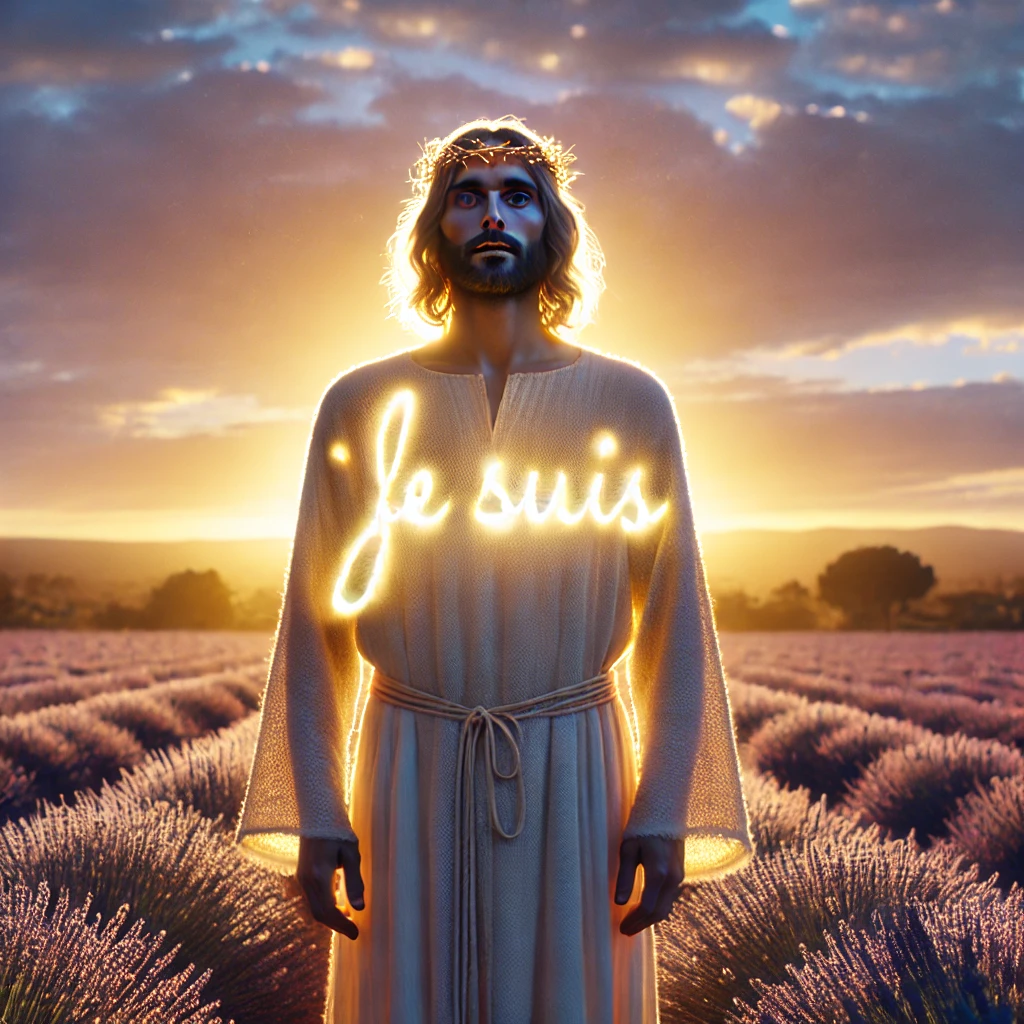
In French, je suis means “I am.” And the spelling is very close to « Jesus ».

Could it be that early mystics—whether in oral tradition, meditation, or chant—were repeating the phrase “je suis” to declare their divine identity?

Could they have said, “Je suis the way, the truth, and the life”—and over time, this mystical mantra became mistaken for a name?

Could “Jesus” have evolved not from misunderstanding Aramaic, but from mishearing Presence?

It’s speculative, yes. But also poetic. Because whether or not the name “Jesus” comes from “Je suis,” the teaching remains:

Christ is not a name. It’s a state of being.

A consciousness of love, unity, and sacred presence.

Returning to the Forgotten Path

Maybe we didn’t get the name “wrong” so much as we got the emphasis wrong.

Instead of fixating on the figure, we were meant to awaken to the frequency.

Instead of worshiping “Jesus,” we were meant to embody je suis.

“I AM the light of the world” was never a boast. It was a mirror.

It was a call to remember who we really are.

And whether or not the evolution from je suis to Jesus is historically provable, the synchronicity is striking. A divine wink, perhaps—reminding us that even language carries echoes of forgotten truth. The path to presence has always been there, hidden in plain sight, waiting for those with ears to hear.

So today, in a world awakening from spiritual amnesia, maybe we’re ready to hear the original message again.

Not as a name.

But as a truth.

Je suis.

I AM.

The Rapture That Wasn’t: Why Early Christians Didn’t Believe in Escaping Earth

BREAKING: RAPTURE RESCHEDULED DUE TO SUPPLY CHAIN ISSUES

Heavenly sources confirm that the long-awaited rapture has been delayed again—this time due to a shortage of cloud fuel and insufficient harp inventory.

An anonymous angelic spokesperson said, “We’re still trying to get the golden escalators functioning. Also, someone left the Book of Life in the copier tray again.”

In the meantime, believers are advised to:

• Keep one foot off the ground, just in case.

• Practice skydiving without a parachute.

• And definitely ignore that whole “meek shall inherit the Earth” thing—it was probably just a metaphor, right?

Meanwhile, Jesus is reportedly walking around the temple with a sign that reads:

“Free the lambs, not enslave them.”

He also added, “Y’all really thought I died so you could throw barbecues and wait for space Uber? C’mon.”

Seems a little ridiculous, right?

Have you ever played a game of telephone? One message whispered from person to person slowly becomes distorted, until the final version barely resembles the original.

That’s exactly what happened to the teachings of Jesus.

One of the clearest examples?

The Rapture.

Modern-day evangelical churches teach that Jesus will one day return in the clouds and snatch up all the “true believers,” leaving the rest of humanity to suffer a horrific tribulation on Earth. But here’s the truth:

The earliest Christians didn’t believe in that kind of rapture. Not even close.

Where Did the Rapture Come From?

The word rapture never appears in the Bible. The concept was first systematized in the 1830s by John Nelson Darby, a British theologian who founded a movement known as Dispensationalism. His teachings were later popularized in America through the Scofield Reference Bible (1909) and reinforced by pop culture hits like the Left Behind series.

Darby’s idea was this: the world is going to get worse and worse, and before God pours out judgment on humanity, Christians will be “caught up” into the sky—based on one ambiguous passage in 1 Thessalonians 4:17:

“Then we who are alive and remain shall be caught up together with them in the clouds to meet the Lord in the air…”

But this passage, when read in context, refers to a welcoming party—not an escape. In ancient Greco-Roman culture, people would go out to meet a visiting king and escort him back into the city. This passage wasn’t about leaving Earth—it was about welcoming the divine presence to dwell among us.

What Did the Earliest Christians Believe?

Early Christians, particularly those tied to Jewish followers of Jesus like the Ebionites and Nazarenes, didn’t long to escape the world—they longed to transform it.

They believed in the coming of the Kingdom of Heaven—but on Earth.

“Blessed are the meek, for they shall inherit the earth.” (Matthew 5:5)

This was not a metaphor. It was a promise. The Earth wasn’t something to flee—it was something to liberate.

In The Gospel of the Holy Twelve, a restored early Christian gospel aligned with the Essenes (a mystical, peace-centered Jewish sect believed to be close to Jesus), the message is even clearer:

“The kingdom of God is within you and around you. It is not in buildings made by hands, nor in the sky to be awaited, but is now, wherever love and truth dwell.”

This aligns with Luke 17:21 in modern-day scripture:

“The kingdom of God is within you.”

Why Would Modern Evangelicals Promote the Rapture?

It’s simple: control.

If you believe the world is doomed, you won’t try to change it.

If you think Jesus is coming soon to evacuate you, why fight injustice?

Why care for the Earth, animals, the poor, or future generations?

The rapture theology promotes passivity and dependence, not liberation or courage. It also supports a form of Christian nationalism that aligns with certain interpretations of the modern state of Israel—not the people who wrestle with God (the true meaning of “Israel”)—but a political power masquerading as divine destiny.

And yet Jesus said:

“The last shall be first.” (Matthew 20:16)

“Woe to you who are rich now, for you have already received your comfort.” (Luke 6:24)

This is not about domination or escape—it’s about a sacred upside-down revolution.

The People Who Wrestle With God

The real “Israel”—in its original, spiritual meaning—is not a nation-state.

It’s a name given to Jacob, who wrestled with the divine and refused to let go until he was blessed. (Genesis 32:28)

It is those who wrestle, question, and seek truth out of the goodness of their hearts, not blind loyalty to human institutions.

Jesus was not calling people to bow to empire. He was calling people to wake up.

Returning to the Source

Modern theology is often a product of empire, fear, and control.

But the earliest teachings—those closest to the Source—are radically different.

They’re about justice. Love. Peace. Awakening.

Not escaping Earth, but redeeming it.

So the next time you hear about the rapture, ask yourself:

Is this a teaching from the heart of Christ…

or just a distorted whisper passed down through centuries of empire?

In The Lost Path to Freedom, I explore these forgotten teachings—not as history, but as living truth for today. Because the veil is lifting. The kingdom is near. And the ones who wrestle with God in love are the ones who will help heal the world.

Signs from Heaven, Shifts on Earth: A Reflection on Meeting RFK Jr.

By Julie Tourangeau @julietour

“Synchronicity is an ever-present reality for those who have eyes to see.” – Carl Jung

I’ve lived enough life to know a sign from God when I see one.

My journey has always moved to the rhythm of synchronicity—sacred alignments, divine nudges, moments that unfold with a kind of spiritual precision that defies logic. So no, I don’t believe it was any coincidence that I met Robert F. Kennedy Jr. on October 7, 2023.

It wasn’t just a date on the calendar. It was the day everything shifted.

What I didn’t know at the time was that across the globe, a devastating attack by Hamas had just unfolded, igniting the latest violent chapter of the Israel-Gaza conflict. But I felt the weight of the day before I knew the headlines. There was something in the air. My soul registered it before my mind could.

And then, there was Bobby.

He spoke that day with the fire and clarity I’d come to respect him for. He talked about cutting $500 million from the military-industrial complex. About ending our involvement in foreign wars. About redirecting our energy and resources inward—toward peace, healing, sovereignty. It felt aligned with the Kennedy legacy. With truth.

But something changed.

In the weeks that followed, I watched Bobby’s tone shift. Suddenly, he was defending Israel’s military campaign, stating that any nation under similar attack would “level Gaza.” Meanwhile, over 17,000 Palestinian children have been killed since the start of the war. Children. The kind of innocent life I believe the Kennedy I followed would have spoken out for, unequivocally.

Back in 2022, at the Defeat the Mandates rally, I heard him say something that chilled me. He warned us that if a regime like the Nazis had access to today’s surveillance technology, “it would be game over.” He mentioned Anne Frank—not to diminish her suffering, but to show how much harder resistance would be in our time. He said there are some things worse than dying… like living under totalitarian rule. And if it came to that, he said he’d be willing to die with his bootstraps on.

Moments prior to the Defeat the Mandates event on January 23, 2022.

That’s the Bobby I believed in. That’s the kind of courage that inspired so many of us.

And yet now, it seems like his boldness has softened—on foreign policy, on pharma, on the very systems he once vowed to confront.

Then there’s AIPAC.

What most people don’t realize is that back in the early ’60s, JFK’s Department of Justice ordered the American Zionist Council—the group that would later rebrand as AIPAC—to register as a foreign agent under the Foreign Agents Registration Act (FARA). The Kennedy administration gave them a deadline. They stalled. And then, just before that deadline passed… JFK was assassinated.

Shortly after, AIPAC quietly emerged, asserting it was a domestic lobby and escaping foreign agent registration. But let’s be honest—it acts on behalf of a foreign government. And it’s time we finish what JFK started. AIPAC should be treated as a foreign agent. Because that’s exactly what it is.

And here’s what makes this even more personal: Bobby’s own father, Robert F. Kennedy, was assassinated in 1968—allegedly by Sirhan Sirhan, a Palestinian man. But in 2016, RFK Jr. publicly stated that he believed Sirhan was innocent. Framed. He visited him in prison and became convinced that the official story didn’t add up. Programs like MK Ultra have since come to light—experiments in mind control, memory loss, and behavioral manipulation—and Sirhan himself has long claimed he doesn’t remember the shooting. Forensic evidence supports the idea that he wasn’t even standing in the correct position to shoot Bobby’s father from behind. Witnesses have testified there was a second shooter in the pantry. But that truth, like so many others, was buried.

But here’s where the story deepens.

We are living in a time of spiritual awakening. And it’s no accident that the name “Israel” has come to the forefront again. In early Christianity, “Israel” wasn’t just a nation. It was a name given to the people of God—those who wrestle with the divine, those who walk the path of truth. The word itself comes from “Isra” (to struggle or contend) and “El” (God). In this sense, Israel was never meant to be about borders or politics. It was always about inner transformation. A spiritual identity.

What if what we’re witnessing now—the chaos, the polarization, the war—isn’t just geopolitical?

What if it’s a test?

What if we’re being asked to wake up, to remember what the word Israel really meant before empire distorted it? To return to the path of peace, truth, and divine alignment. To see clearly what is real, and what has been manufactured.

I don’t know what kind of pressure Bobby is under behind the scenes, but I can imagine. The CIA, Israeli intelligence, the ghosts of his father’s and uncle’s deaths—all woven through this story. But I also know this:

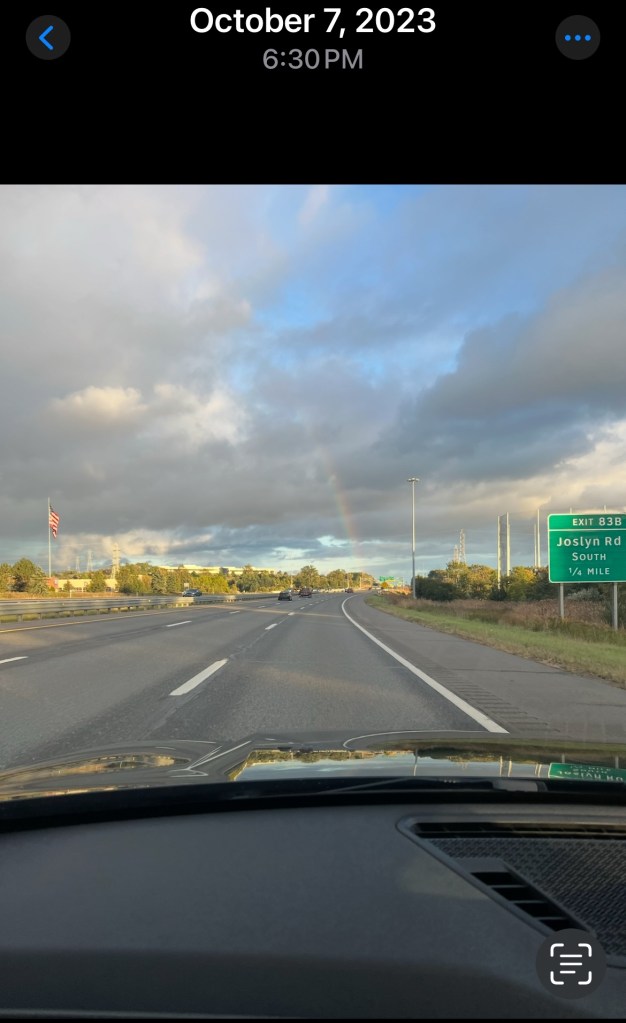
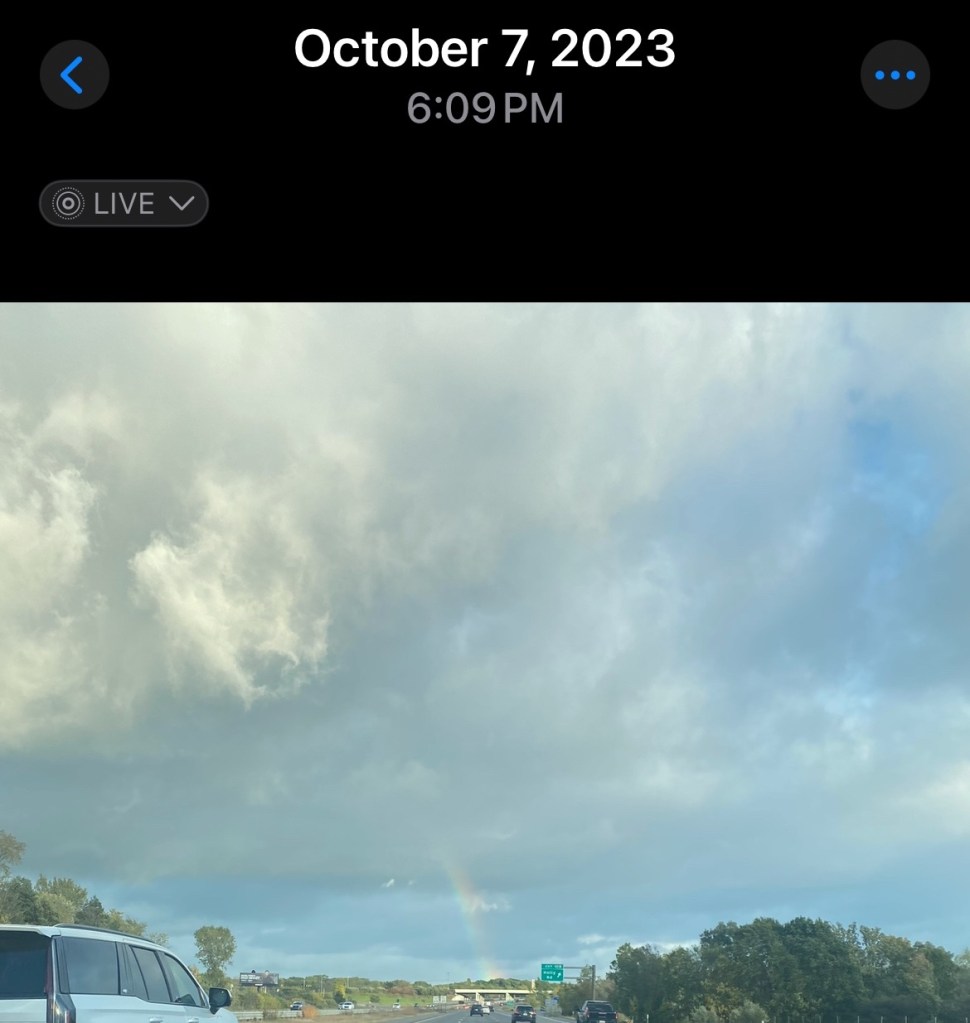
As I walked out of that building on October 7, unsure of how to feel, unsure of what was changing in him… the sky gave me my answer.

Rainbows.

Moments after meeting Bobby walking out of the building to the parking garage.

Not just one. But a sky full of them, unfolding one after another from the moment I left until the moment I pulled into my driveway—an hour and a half of color and light breaking through the clouds.

To me, rainbows have always been signs from Heaven—reminders that we are not alone, that even in our confusion, there’s covenant and presence. I believe those rainbows were a message not just to me, but to him.

Rainbows consistently all the way home to my neighborhood in Rochester Hills, an hour and a half away.

Whatever Bobby is facing, I believe his ancestors are with him. I believe Heaven is with him. I believe the true spirit of Israel—the wrestlers of God, the truth seekers, the peace-makers—is still alive in him somewhere.

He said he’d die with his bootstraps on if it meant standing up to a totalitarian regime. I still believe that man exists.

And I pray he remembers who he is.

Because now more than ever, we need someone brave enough to finish what his family started.

And choose truth—even if it costs everything.

Rally for Kennedy 2024 in Lansing, Michigan October 7, 2023.

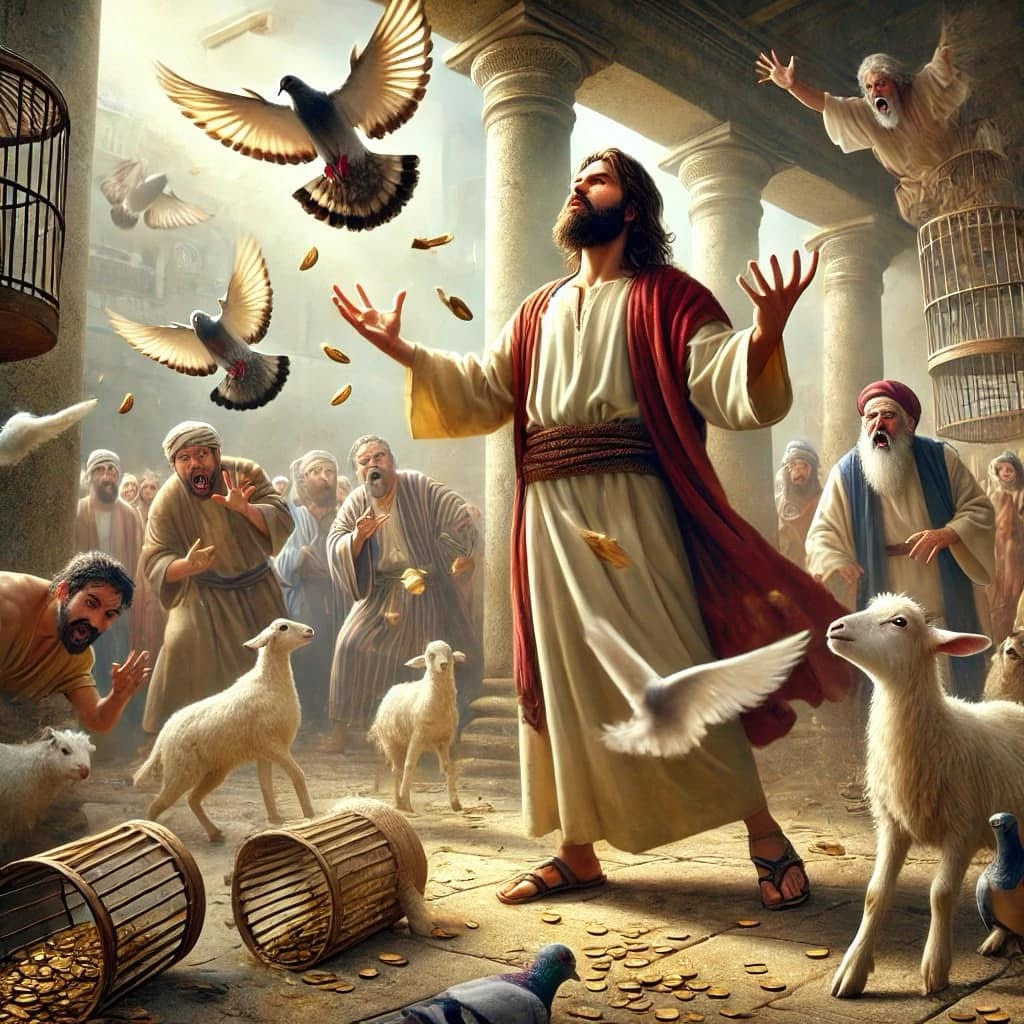
Den of “Thieves”? Or Something Deeper.

By Julie Tourangeau | @julietour

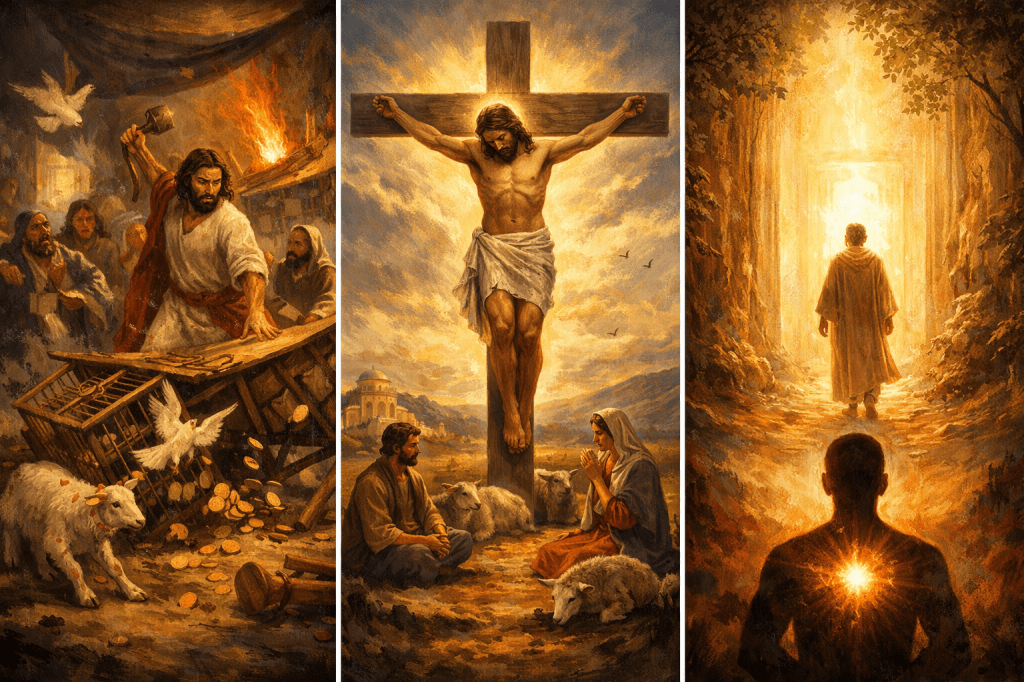
When Jesus stormed the temple courts, overturning tables and driving out the money changers, we’re often told it was a righteous act against corruption—against the “thieves” who turned a holy place into a marketplace.

But what if that’s only part of the story?

What if the word “thieves” doesn’t quite capture what was happening?

The Word We Missed

The original Hebrew word used in this passage is “perits” (פָּרִיץ)—often translated as “thieves,” but more accurately meaning violent ones, marauders, or destroyers.

This isn’t about petty crime.

It’s about violence.

About those who had turned the temple—a place meant for prayer, reverence, and peace—into a place of bloodshed.

Jesus wasn’t just flipping tables over coins.

He was confronting the violent ritual slaughter of animals in the name of God.

His protest wasn’t just about dishonest trade.

It was a cry for compassion, for justice, for a return to the sacred.

If He Walked Among Us Now

If Jesus were alive today—reincarnated, awake to the fullness of his early teachings—what would he see?

Would he walk into modern-day churches and find doves for sale?

Would he find lambs being sacrificed?

No.

But he’d find the same violence, cloaked in different robes.

He’d see his name invoked over meals made of suffering.

He’d see Easter tables lined with lambs, celebrated in remembrance of his own crucifixion.

And I imagine he’d grieve.

I imagine he’d say:

“You claim to follow me, yet you partake in the very acts I condemned.

You remember my suffering with the suffering of the innocent.

You turn my table of liberation into an altar of slaughter.

Have you not learned?”

The Lost Path

Early Christians understood dominion as stewardship, not superiority.

They practiced mercy, not sacrifice.

They aligned themselves with the Lamb of God, not the priests of Empire.

But somewhere along the way, that path was lost.

Love was replaced by law.

Awakening was replaced by ritual.

And the animals—the innocent ones Jesus likely defended—were left behind.

It’s Time to Return

The temple was never meant to be a place of blood.

The gospel was never meant to justify harm.

And Jesus never died so we could keep killing in his name.

He flipped tables to wake people up.

And maybe, just maybe…

he’s still doing it.

Let those with ears hear.

Let those with hearts soften.

Let us return to the path of compassion—for all beings.

The Vision That Changed Everything: How Paul’s Rise Silenced James—and Compassion

James, Jesus, Paul

By Julie Tourangeau | @julietour

Excerpted from the upcoming book: The Lost Path to Freedom

What if Paul wasn’t just on his way to persecute random followers of Jesus—but was headed straight for James the Just, Jesus’ own brother, when everything changed?

We’ve all heard the story—Paul (back when he was Saul) was hunting down early Christians when he had that dramatic vision on the road to Damascus. A blinding light, a voice from heaven, and just like that, the greatest apostle was born.

That’s what we’re told. But something about it always felt… off.

Because who was Paul really after?

The people following Jesus back then weren’t part of a new religion. They were Jewish. They were still in Jerusalem. And they were led not by Paul—but by James the Just, a man known for his deep humility, nonviolence, and devotion to the Torah.

James didn’t eat meat or drink wine. He was gentle, righteous, and beloved by all. His lifestyle was a continuation of everything Jesus lived and taught.

And if Paul was headed to Damascus to stamp out this movement—there’s a very real chance that James was on his list.

But then Paul claims he saw a vision of Jesus. Everything changed.

Or… did it?

A Vision—or a Convenient Redirection?

After that vision, Paul didn’t seek out James. He didn’t go to Jerusalem to learn from the people who actually walked with Jesus. In fact, he makes a point to say he didn’t.

According to his own words in Galatians, he kept his distance from the original apostles. Instead, he started preaching his own version of the gospel—one he says came directly from revelation, not from “any man.”

And that version? It contradicted a lot of what Jesus and James were actually doing.

• James taught that faith without action is meaningless. Paul said faith alone was enough.

• James upheld the law of compassion—including dietary laws rooted in mercy and nonviolence. Paul said the law was a curse.

• James and the earliest Jesus followers lived in harmony with nature.

Paul later claimed Jesus told him it was okay to eat meat offered to idols—and not to worry about food laws at all.

This wasn’t just a shift in theology—it was a whole new path.

A path that veered away from compassion and toward something… else.

The Disappearance of James—and the Quieting of a Kinder Way

James was killed in 62 CE. Thrown from the Temple, stoned, and beaten.

After that, his community—the Jewish followers of Jesus, often called the Ebionites—were slowly erased.

Their gospels were branded heresy.

Their writings destroyed.

And Paul’s teachings—stripped of the Torah, stripped of James, and tailored for the Roman world—became the dominant voice.

And what got lost?

• A faith that centered on how we live, not just what we believe

• A lifestyle that honored all life—human and animal—as sacred

• A call to justice that started with what was on our plates

The truth is, the earliest Jesus movement was plant-based.

It was anti-empire.

It was deeply grounded in compassion.

And it was led by James.

But Paul’s gospel—the one built on visions and detached from lived example—was easier to spread in a world that craved power and sacrifice. So the quiet wisdom of James was buried under centuries of hierarchy, blood, and metaphor.

Why It Still Matters

Recovering the path of James isn’t just about church history—it’s about remembering what Jesus actually lived for.

That freedom starts with compassion.

That faith isn’t a belief system—it’s a way of being.

And that killing—whether of animals or people—was never holy.

The road to Damascus might have changed Paul.

But it changed the direction of Christianity more.

And maybe… it’s time to ask whether that vision led us away from the path of peace, harmony, and true healing.

Because the Jesus I know didn’t teach servitude to empire.

He showed us how to walk in freedom.

In truth.

In love.

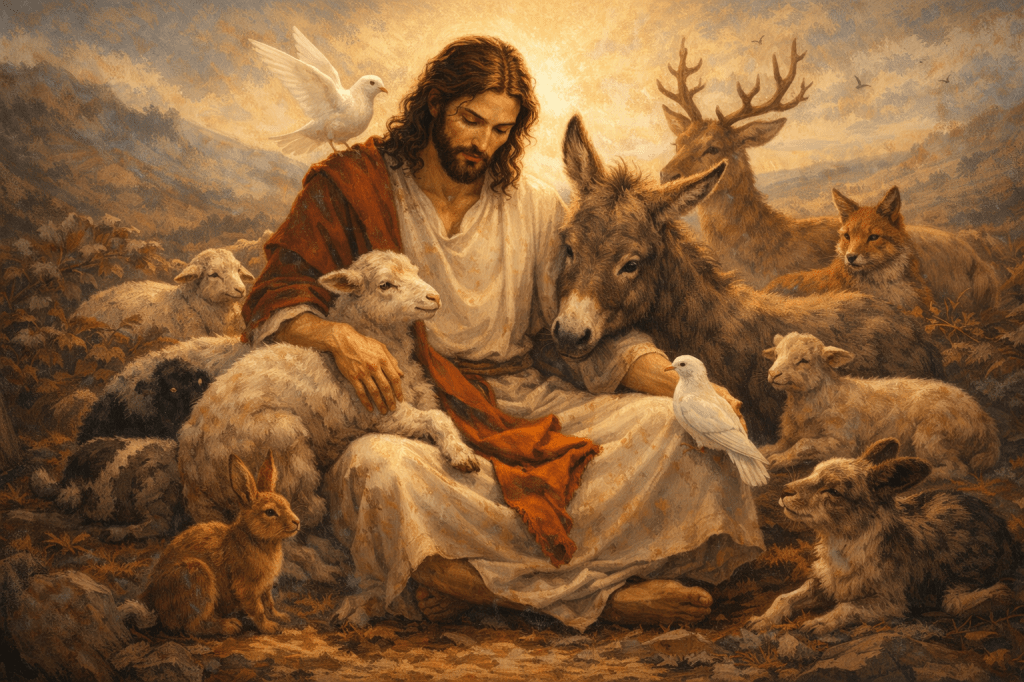
And in oneness with all living beings.

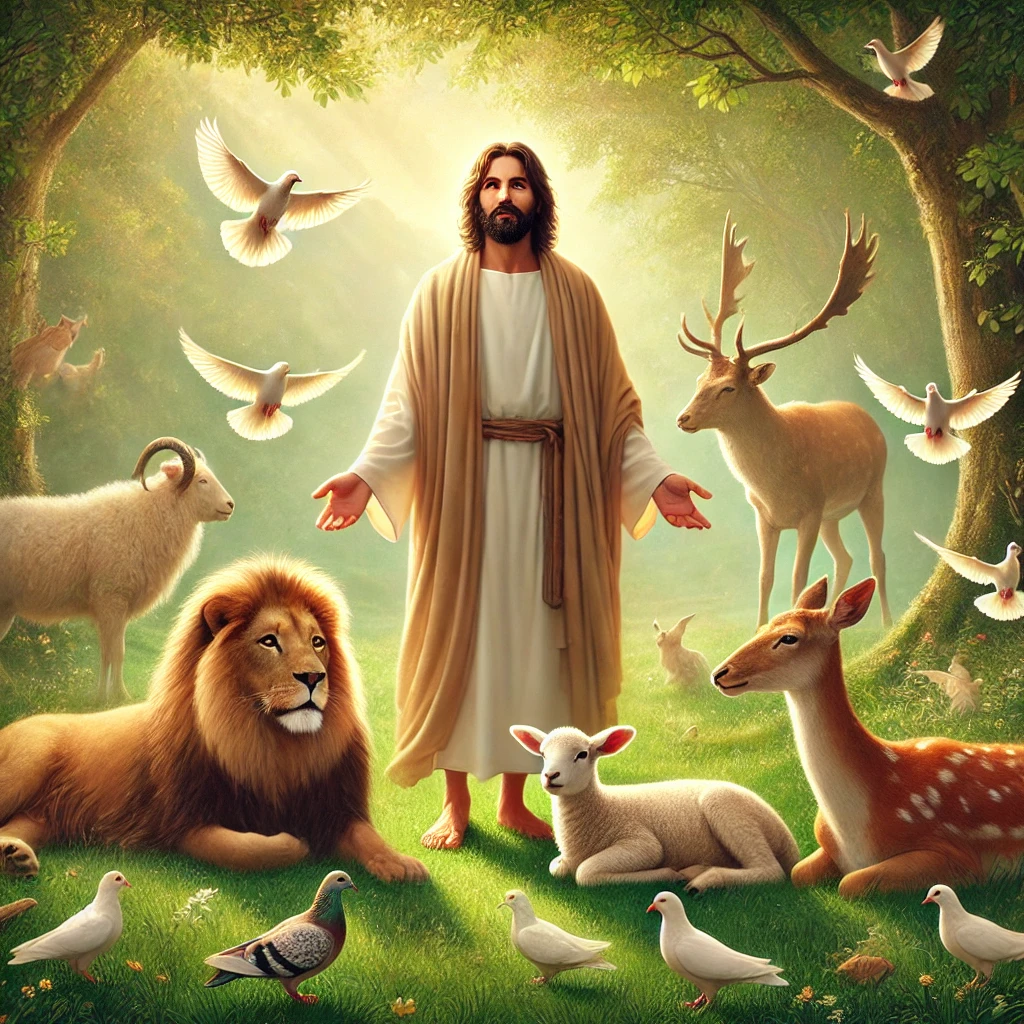
Isaiah 11:6 (KJV):

“The wolf also shall dwell with the lamb, and the leopard shall lie down with the kid;
and the calf and the young lion and the fatling together; and a little child shall lead them.”

Follow @julietour on Instagram for more lost teachings, modern reflections, and sacred food for thought.

With love,

—Julie