“Arrête Emergency”: When My Twin Flame Appeared and Created a World Between Languages

🌍How a Franglais panic in a Miami rainstorm became one of the most meaningful inside jokes of my relationship.
By Julie Tourangeau | julietour.com

Some soulmate stories begin with flirty glances at a party.

Mine began with tears.

I had just been turned away from my ancestor’s grave — a moment heavy with emotion, history, and spiritual weight. I was crying on the sidewalk when my Uber driver pulled up. The first one had canceled. The second one — the one who actually arrived — happened to be him.

At the time, I didn’t understand the magnitude of that moment.

But looking back, it was unmistakably divine timing: the universe weaving together ancestry, grief, coincidence, and destiny in one seamless intersection.

And here’s the unexpected part:

even though I was crying, and even though the moment was emotional, the energy between us was surprisingly light.

There was flirtation from the beginning — warm, subtle, natural.

His smile carried that effortless French ease I would later come to know so well.

He joked gently, easing the weight of the moment without diminishing it.

And then he reached for my hand.

Not dramatically.

Not boldly.

Just naturally — as if he already knew me.

And when he did, something ancient awakened in me.

It wasn’t attraction alone.

It was recognition.

Twin Flames Don’t Enter Quietly — They Enter Through Meaning

Long before this happened, I had written openly on my own website about twin flames — about the truth that these connections are not fantasies, but profound energetic mirrors, shared purpose, and divine timing.

I wrote that twin flames often enter your life at a crossroads event — a moment that could go one way or another, and the universe intervenes.

That is exactly where I was standing:

• outside the lineage of my family

• emotional and vulnerable

• trying to honor my past

• when a canceled Uber redirected my entire future

That’s how twin flame crossings happen:

quietly, powerfully, and at the exact moment you are open and unguarded.

Before the Inside Jokes, There Was Ease

People imagine soulmate beginnings as cinematic, but the truth is simpler and deeper:

When he arrived, there was an immediate ease.

A calmness.

A familiarity that didn’t make sense yet made perfect sense.

We weren’t laughing hysterically the way we would in Miami a year and a half later, but we were absolutely laughing that first day — small jokes, little comments, gentle flirtation.

That mixture of ease + spark is the beginning of every twin flame story I’ve ever written about.

Something inside me recognized him long before my mind understood why.

Miami & “Arrête Emergency”: The Moment Our Third Language Was Born

Fast-forward a year and a half later:

Miami.

Rain pouring.

A BMW convertible.

Chaos rising.

He accidentally pulls into a lane he absolutely should not be in, and my nervous system panics into this spontaneous Franglais eruption:

“Arrête emergency!”

Perfectly imperfect.

Not English.

Not French.

Just instinct.

That moment could have turned into a fight.

He could have felt criticized.

He could have shut down or reacted with ego.

But instead?

He laughed with me, not at me.

He softened.

And somehow, the fear dissolved into connection.

A stressful moment became one of our most cherished inside jokes.

A rupture turned into intimacy — the true sign of emotional compatibility.

That’s when we created our own language.

The French Call It “Un Délire à Deux”

Our relationship slowly became what the French so perfectly call:

un délire à deux

A private world. A shared delirium only the two of us understand.

It wasn’t just language between us — it was culture.

We created:

• a rhythm

• a shared humor

• a playful bilingual dialect

• a softness inside tension

• a world no one else understands

Another French expression describes it even better:

notre petit monde

our little world.

That’s exactly what this love feels like:

a world that exists between languages, between lifetimes, between destiny and human choice.

The Twin Flame Breadcrumbs That Followed

On my website, I once wrote that twin flame connections unfold through synchronicity — moments that are too precise, too unlikely, too mirrored to ignore.

And after he came into my life, something surreal happened:

MLive called my agency wanting to interview me about twin flames.

A random weekday.

No connection.

No reason.

No explanation.

Just a journalist calling out of nowhere to talk about the exact spiritual concept I had been writing about — right as I was living it.

I had spent years writing about soul recognition, divine timing, and the way love can arrive through synchronicity… and suddenly I was being featured as an expert, telling the story of how I met my twin flame after being turned away from my ancestors’ crypt in Paris.

My words appeared beside the daughter of Elizabeth Clare Prophet—two women speaking about destiny, spiritual awakening, and the power of inner transformation.

The article wasn’t just press.

It was a sign.

A mirror.

A cosmic nod saying, “Yes, you are living exactly what you’ve always known.”

That wasn’t coincidence.

It was confirmation.
Source: Mlive.com

His Smile, His Ease, His Spirit: The First Signs I Recognized

From the beginning, he carried a presence that felt familiar:

• light but grounded

• confident but kind

• playful but steady

• gentle but magnetic

His smile was the first thing I noticed, and I remember thinking:

This feels like someone I’ve known before.

And the moment he took my hand — on the day I was grieving my ancestors — something inside me whispered:

“This is part of your story.”

Not just romantically — spiritually.

Safety: The Language That Doesn’t Need Translation

The arrête emergency moment illustrates something essential:

With him, my vulnerability does not create danger.

It creates closeness.

In my past, vulnerability meant:

• being misunderstood

• being criticized

• being punished

• being too much

• being unsafe

With him, vulnerability becomes:

• safety

• laughter

• softness

• connection

• repair

Twin flames don’t show up to create chaos.

They show up to mirror truth, expand you, soften you, and make you brave again.

Humor: The Love Letter Between Lifetimes

He still quotes it —

“Arrête emergency.”

And every time, it brings back the memory, the fear, the relief, and the intimacy of that moment.

Inside jokes are not trivial.

They are emotional timestamps.

Proof that two souls moved through something together.

Humor is how our souls remind each other:

• we’re safe

• we’re connected

• we remember

• we choose each other again and again

It’s our language now —

a language built on everything we’ve survived and softened together.

Our Love Lives Between Languages, Between Lifetimes

We didn’t meet through perfection.

We didn’t meet through grammar.

We didn’t meet in a moment of joy.

We met through emotion, vulnerability, ancestry, timing —

and a man who held my hand when I was crying outside my family’s resting place.

But over time, our love built its own language:

• part English

• part French

• part memory

• part destiny

• part soul

A language only we speak.

A world only we inhabit.

A true délire à deux —

ridiculous, tender, fated, bilingual, ancestral, and unmistakably ours.

Signs from Heaven, Shifts on Earth: A Reflection on Meeting RFK Jr.

By Julie Tourangeau @julietour

“Synchronicity is an ever-present reality for those who have eyes to see.” – Carl Jung

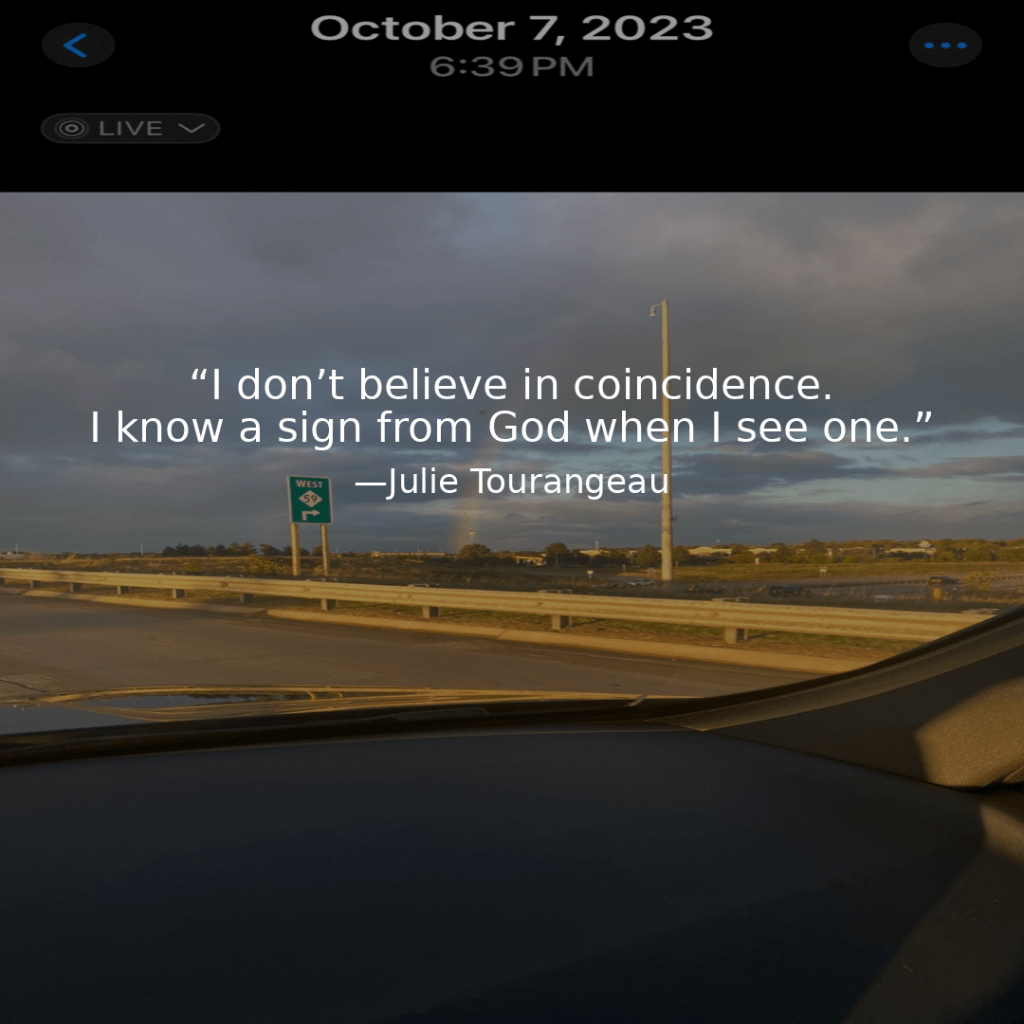
I’ve lived enough life to know a sign from God when I see one.

My journey has always moved to the rhythm of synchronicity—sacred alignments, divine nudges, moments that unfold with a kind of spiritual precision that defies logic. So no, I don’t believe it was any coincidence that I met Robert F. Kennedy Jr. on October 7, 2023.

It wasn’t just a date on the calendar. It was the day everything shifted.

What I didn’t know at the time was that across the globe, a devastating attack by Hamas had just unfolded, igniting the latest violent chapter of the Israel-Gaza conflict. But I felt the weight of the day before I knew the headlines. There was something in the air. My soul registered it before my mind could.

And then, there was Bobby.

He spoke that day with the fire and clarity I’d come to respect him for. He talked about cutting $500 million from the military-industrial complex. About ending our involvement in foreign wars. About redirecting our energy and resources inward—toward peace, healing, sovereignty. It felt aligned with the Kennedy legacy. With truth.

But something changed.

In the weeks that followed, I watched Bobby’s tone shift. Suddenly, he was defending Israel’s military campaign, stating that any nation under similar attack would “level Gaza.” Meanwhile, over 17,000 Palestinian children have been killed since the start of the war. Children. The kind of innocent life I believe the Kennedy I followed would have spoken out for, unequivocally.

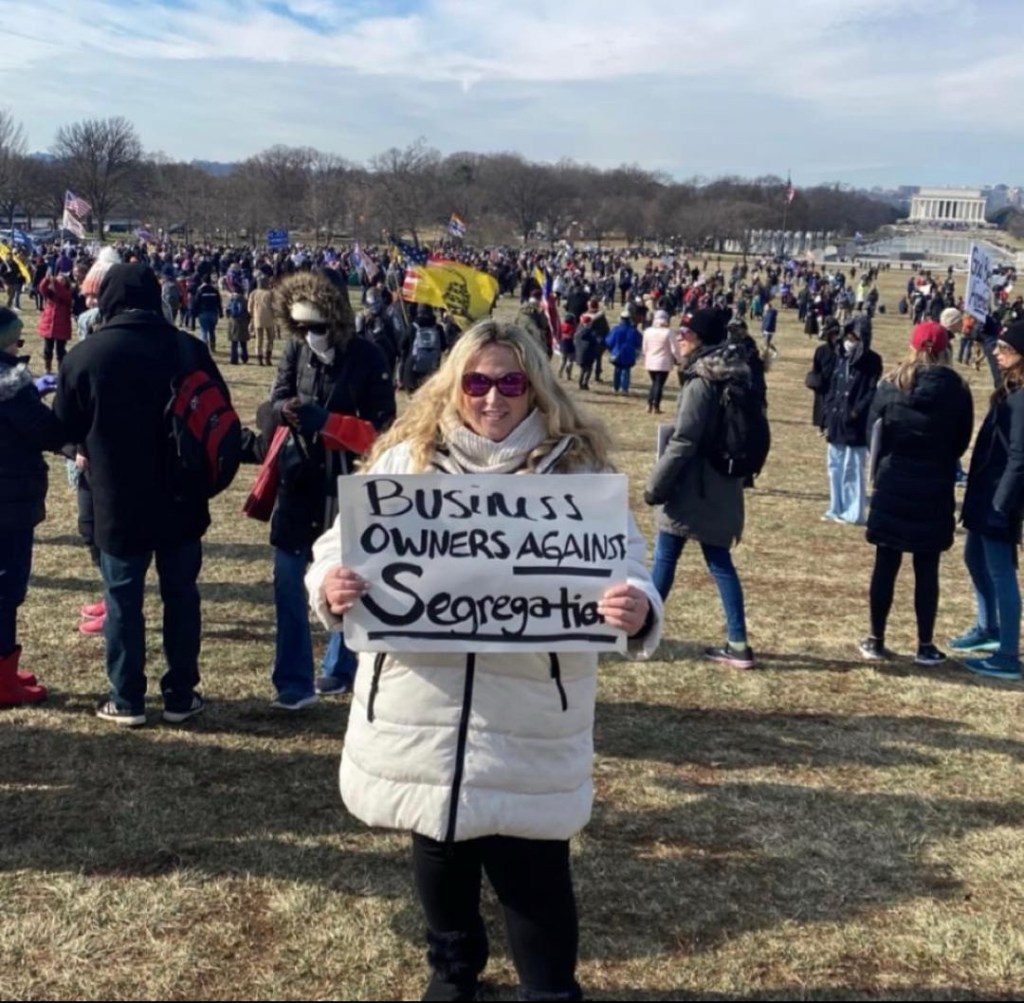
Back in 2022, at the Defeat the Mandates rally, I heard him say something that chilled me. He warned us that if a regime like the Nazis had access to today’s surveillance technology, “it would be game over.” He mentioned Anne Frank—not to diminish her suffering, but to show how much harder resistance would be in our time. He said there are some things worse than dying… like living under totalitarian rule. And if it came to that, he said he’d be willing to die with his bootstraps on.

Moments prior to the Defeat the Mandates event on January 23, 2022.

That’s the Bobby I believed in. That’s the kind of courage that inspired so many of us.

And yet now, it seems like his boldness has softened—on foreign policy, on pharma, on the very systems he once vowed to confront.

Then there’s AIPAC.

What most people don’t realize is that back in the early ’60s, JFK’s Department of Justice ordered the American Zionist Council—the group that would later rebrand as AIPAC—to register as a foreign agent under the Foreign Agents Registration Act (FARA). The Kennedy administration gave them a deadline. They stalled. And then, just before that deadline passed… JFK was assassinated.

Shortly after, AIPAC quietly emerged, asserting it was a domestic lobby and escaping foreign agent registration. But let’s be honest—it acts on behalf of a foreign government. And it’s time we finish what JFK started. AIPAC should be treated as a foreign agent. Because that’s exactly what it is.

And here’s what makes this even more personal: Bobby’s own father, Robert F. Kennedy, was assassinated in 1968—allegedly by Sirhan Sirhan, a Palestinian man. But in 2016, RFK Jr. publicly stated that he believed Sirhan was innocent. Framed. He visited him in prison and became convinced that the official story didn’t add up. Programs like MK Ultra have since come to light—experiments in mind control, memory loss, and behavioral manipulation—and Sirhan himself has long claimed he doesn’t remember the shooting. Forensic evidence supports the idea that he wasn’t even standing in the correct position to shoot Bobby’s father from behind. Witnesses have testified there was a second shooter in the pantry. But that truth, like so many others, was buried.

But here’s where the story deepens.

We are living in a time of spiritual awakening. And it’s no accident that the name “Israel” has come to the forefront again. In early Christianity, “Israel” wasn’t just a nation. It was a name given to the people of God—those who wrestle with the divine, those who walk the path of truth. The word itself comes from “Isra” (to struggle or contend) and “El” (God). In this sense, Israel was never meant to be about borders or politics. It was always about inner transformation. A spiritual identity.

What if what we’re witnessing now—the chaos, the polarization, the war—isn’t just geopolitical?

What if it’s a test?

What if we’re being asked to wake up, to remember what the word Israel really meant before empire distorted it? To return to the path of peace, truth, and divine alignment. To see clearly what is real, and what has been manufactured.

I don’t know what kind of pressure Bobby is under behind the scenes, but I can imagine. The CIA, Israeli intelligence, the ghosts of his father’s and uncle’s deaths—all woven through this story. But I also know this:

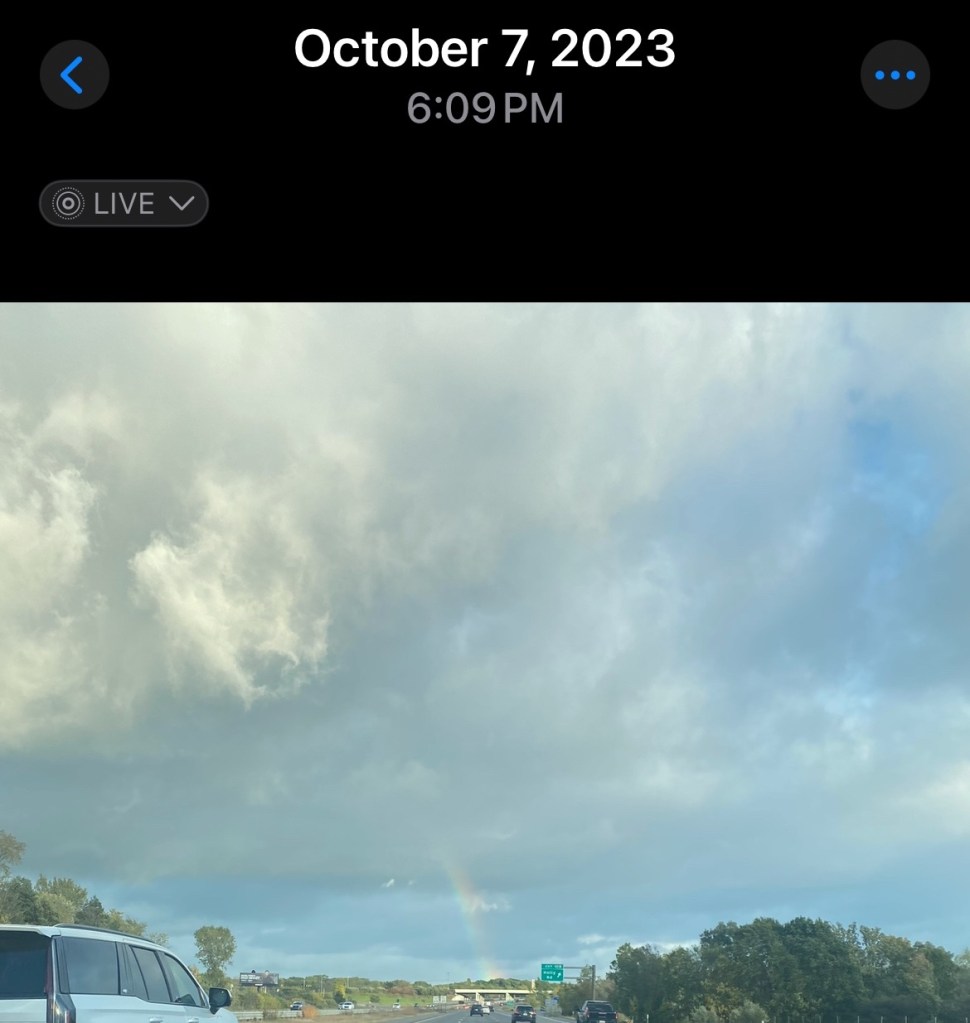
As I walked out of that building on October 7, unsure of how to feel, unsure of what was changing in him… the sky gave me my answer.

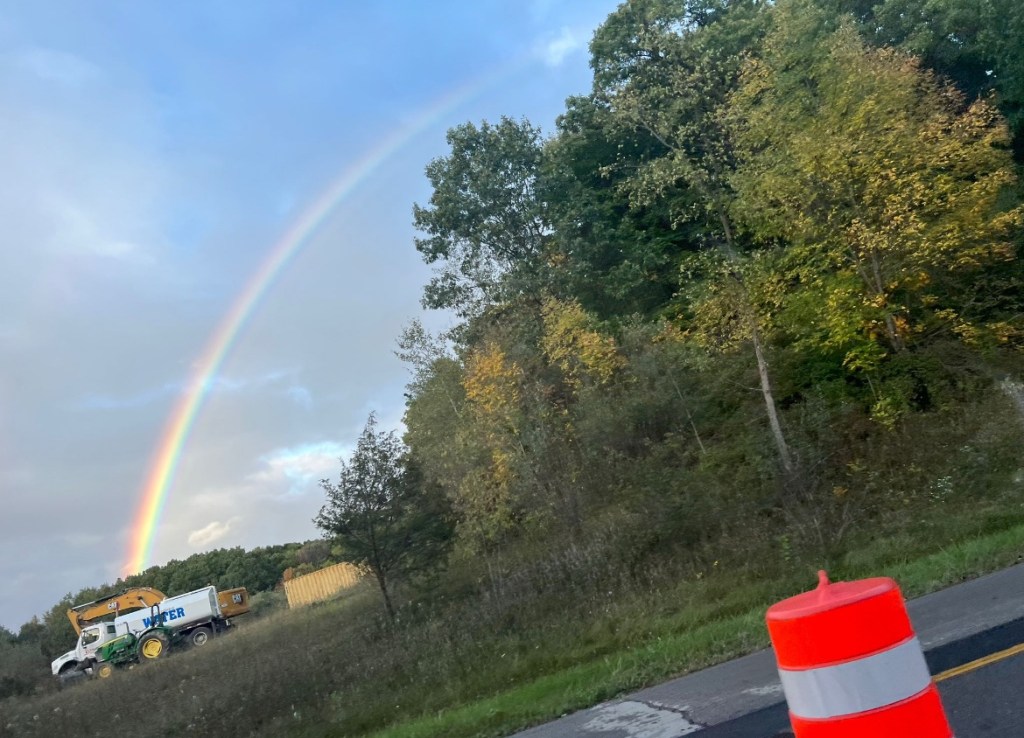
Rainbows.

Moments after meeting Bobby walking out of the building to the parking garage.

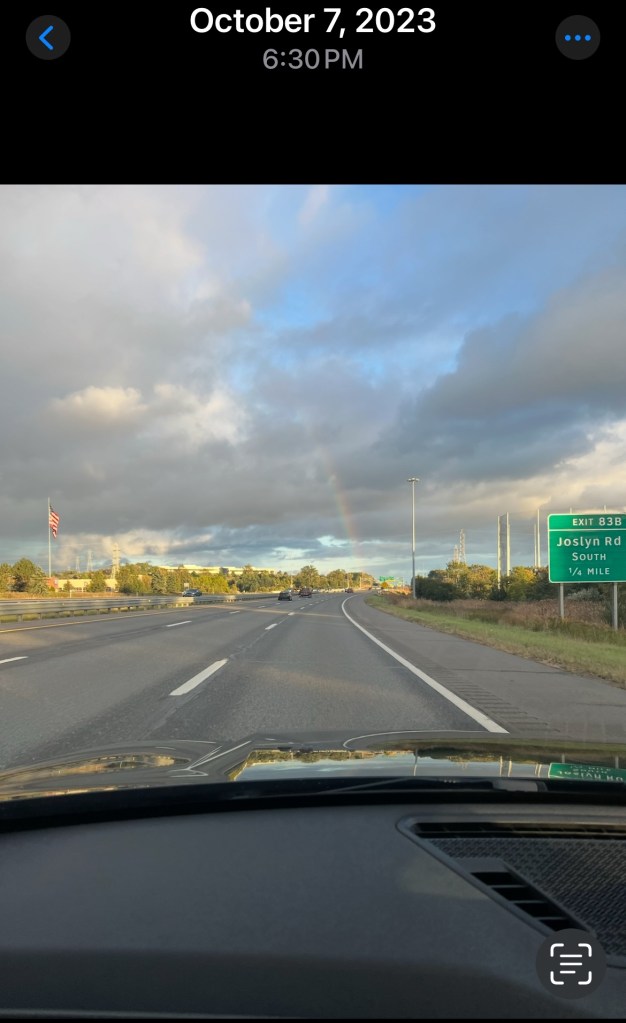
Not just one. But a sky full of them, unfolding one after another from the moment I left until the moment I pulled into my driveway—an hour and a half of color and light breaking through the clouds.

To me, rainbows have always been signs from Heaven—reminders that we are not alone, that even in our confusion, there’s covenant and presence. I believe those rainbows were a message not just to me, but to him.

Rainbows consistently all the way home to my neighborhood in Rochester Hills, an hour and a half away.

Whatever Bobby is facing, I believe his ancestors are with him. I believe Heaven is with him. I believe the true spirit of Israel—the wrestlers of God, the truth seekers, the peace-makers—is still alive in him somewhere.

He said he’d die with his bootstraps on if it meant standing up to a totalitarian regime. I still believe that man exists.

And I pray he remembers who he is.

Because now more than ever, we need someone brave enough to finish what his family started.

And choose truth—even if it costs everything.

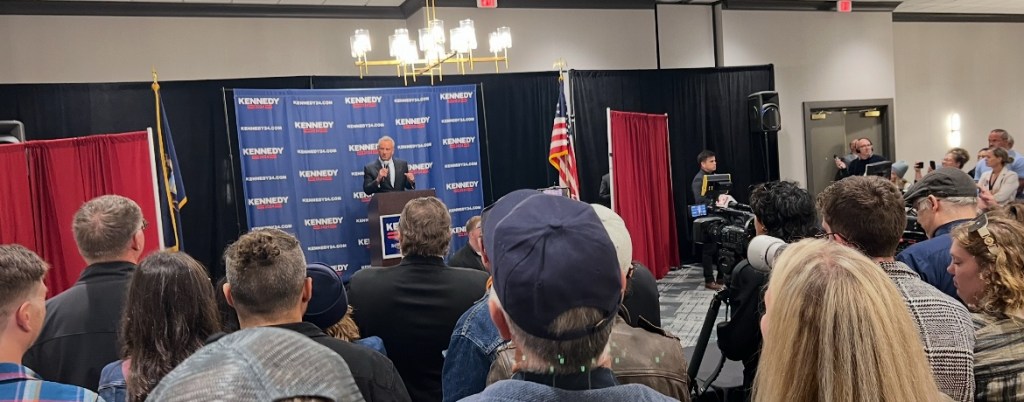
Rally for Kennedy 2024 in Lansing, Michigan October 7, 2023.

The Forgotten Ones: Kabyle Echoes of the Peaceful Path

Long before modern borders and flags, before colonial tongues redefined faith and history, the people of Kabylia—the proud Amazigh—lived close to the earth. Theirs was a land of mountains, olives, wind, and fire. But not the fire of empire. The fire of spirit.

Kabylia, nestled in the mountains of northern Algeria, has always been a land of resistance. But it’s also a land of remembrance.

And what we are remembering now is this:

There were early Christians among the Kabyle. And there is reason to believe that some of them—like others across early North Africa—walked a peaceful, plant-based path.

Not because it was trendy.

Not because it was imposed.

But because it was sacred.

Early Christianity in North Africa: A Lost Legacy of Compassion

Most people know North Africa as a battleground between empires and religions. But before Christianity was weaponized by Rome, before Islam was institutionalized, there existed radical spiritual movements rooted in simplicity, nonviolence, and reverence for life.

St. Augustine of Hippo, one of the most influential Christian thinkers of all time, was born in what is now modern-day Algeria. Before his conversion to mainstream Christianity, he spent nearly a decade with the Manichaeans, a group known for their mystical teachings and strict vegetarian lifestyle.

He later rejected them, but their influence—along with that of the Desert Fathers and the ascetic communities scattered across Egypt, Tunisia, and Algeria—cannot be erased from the region’s spiritual memory.

It is entirely possible, even likely, that Kabyle Christians, living on the edges of empire and close to the land, were influenced by these early expressions of faith that valued compassion over ritual, and inner purity over outward display.

Before Christianity, Berber (Amazigh) spirituality was animistic and deeply respectful of nature. Some scholars believe there were plant-based rituals, herbal medicine practices, and a reverence for animal life that may have influenced how Berbers related to food, even after converting.

Vegetarianism as Resistance, Not Restriction

To abstain from killing animals in a time of sacrifice-based religion was not weakness. It was revolutionary.

It was a refusal to participate in systems of domination.

A reclaiming of harmony with creation.

A return to something original, something Edenic.

And for many early followers of Christ—especially those who read his temple-cleansing not as a temper tantrum, but as a liberation of the innocent—vegetarianism was a natural extension of the gospel.

This wasn’t about legalism.

It was about love.

Kabylia Still Remembers

Modern history has buried these truths. The dominant religions have rewritten the story, often sidelining those who practiced gentleness as naive or heretical.

But the mountains of Kabylia remember.

They remember the footsteps of those who fasted not just from food, but from violence.

Who refused to make offerings of blood.

Who lived simply, because they believed the divine dwelled in stillness.

I write this not just as a seeker of forgotten wisdom, but as someone whose heart is connected to Algeria through my fiancé—a man whose roots trace back to that same resilient soil.

And I believe part of our healing, part of our return to truth, lies in recovering these stories.

Stories of Amazigh who followed the Way—not the way of conquest, but the way of peace.

The way of the Christ who freed the doves.

The way of the soul who wrestles with God and walks away changed.