The Women, the Wisdom, and the Animals: What We Forgot About Easter

By Julie Tourangeau | Good Friday, 2025

Before the tomb was empty…

before the stone was rolled away…

before the anointing and the rising and the glory…

there was a moment we rarely talk about.

And it didn’t happen on a hill.

It happened in the Temple.

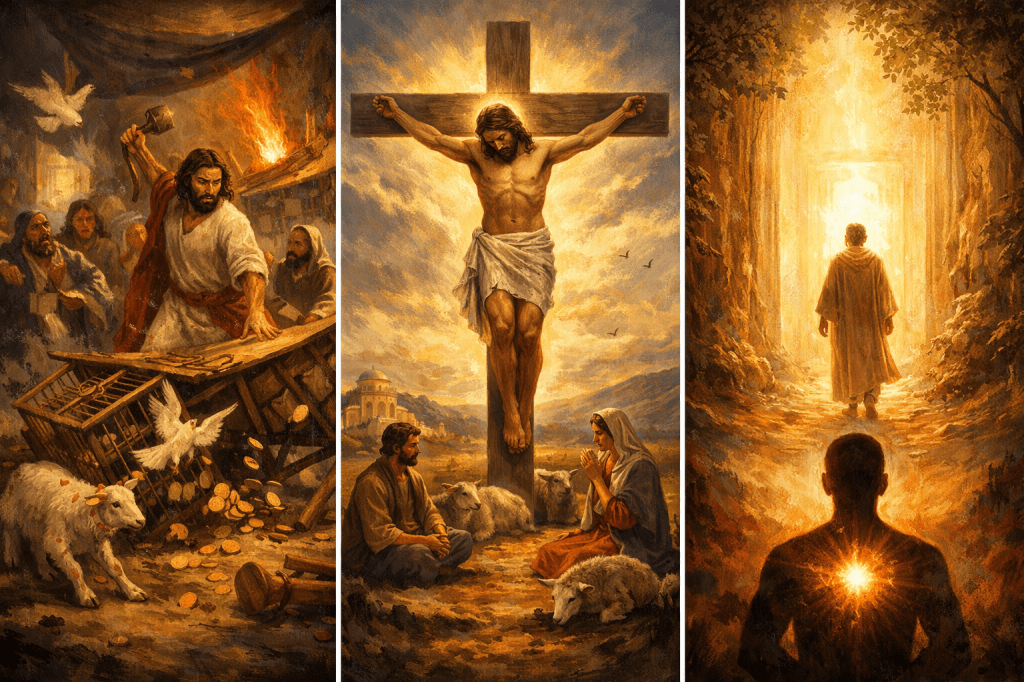
It was there that Jesus walked in, looked around, and did what no one else dared:

He freed the animals.

The Cleansing of the Temple Was a Liberation

All four canonical gospels record the Temple cleansing, but what most people miss is why it mattered so much.

Jesus didn’t just flip tables to make a scene.

He drove out the sellers of doves. He freed the lambs and oxen being sold for sacrifice.

According to the Gospel of the Nazarenes, a lost early gospel aligned with the Essenes:

“He drove out the animals and said, ‘Cease your wicked sacrifices! Do you not see that innocent blood cries out from the earth?’”

In that moment, Jesus publicly rejected the sacrificial system—a system that normalized bloodshed and called it holy. He saw through the illusion of substitutionary violence and revealed the deeper truth:

The Holy Spirit is not found in the shedding of blood, but in the honoring of life.

And from that moment on, the system moved to silence him.

The First Step Toward Resurrection Was Setting the Innocent Free

Let this sink in:

It wasn’t the miracles that got Jesus killed.

It wasn’t the healings or the parables or even claiming to be the Son of God.

It was the moment he freed the animals that the wheels of execution began to turn.

This was the turning point—not just in his story, but in ours.

Because Jesus wasn’t just liberating animals. He was exposing a system—religious, economic, cultural—that had come to depend on suffering.

And he showed us what it looks like to say:

No more.

The Divine Feminine Knew

Many people associate Easter with the idea that Jesus died to pay for our sins—but that interpretation came later. The earliest followers of Jesus saw his life and death not as a blood payment, but as a revelation of divine love and a call to awaken the Christ within. Texts like The Gospel of the Holy Twelve remind us that his suffering was not about appeasing wrath, but about healing hearts, breaking chains, and showing us the path of compassion, even in the face of injustice.

What followed was suffering, yes—but also sacred initiation. And through it all, the ones who stayed near were not the theologians or temple authorities. It was the women.

Grief was his first initiation, through Miriam, the young woman with whom Jesus lived for seven years before her death. According to The Gospel of the Holy Twelve, it was her passing that opened his heart to the deeper path. According to this gospel, « Grief didn’t weaken him. It awakened him. »

Before knowing about this grief story of Jesus, I wrote about my own:

“Without my dark night of the soul, and without having challenging circumstances, I wouldn’t have grown my blessings… Painful change is sometimes exactly what we need to shake things up. Living through trauma, family drama, and the grief of losing a loved one can feel almost like an endless dark tunnel… Grief is just love with seemingly no place to go, but when you realize love shared is eternal, you can finally let go of the pain and gain the wisdom that is rightly yours.” — Free Yourself from Grief, Chapter 5

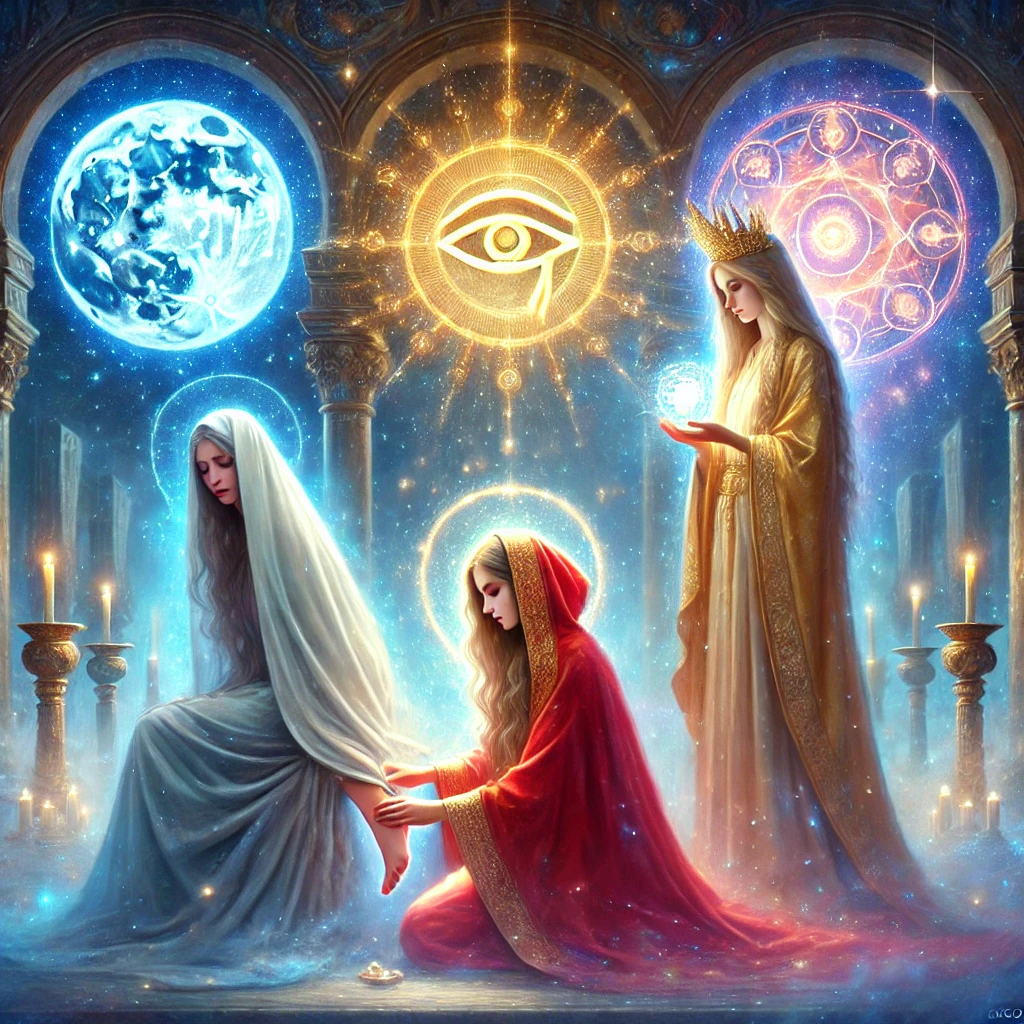
Compassion was his final anointing, through Mary Magdalene—not a sinner, but a priestess. She anointed his feet, honoring him with a sacred rite passed down through feminine lineages.

And when he was crucified, it was Magdalene who remained. While the male disciples fled, she stood at the cross, and three days later, she was the first to see him risen.

The resurrection was not first revealed to Rome or religion. It was revealed to her.

And wisdom—Sophia—was the soul behind it all.

The Spirit of God that hovered over the waters in Genesis.

The voice crying out in the streets in Proverbs.

The divine spark in all life, calling us home.

What if Easter was just the beginning?

While many see the resurrection as the end of Jesus’ story, ancient traditions—especially in southern France—tell a different tale. According to Provençal legend, Mary Magdalene journeyed to France after the crucifixion, carrying not only the memory of Jesus but the living essence of his teachings. Some say she preached love and liberation from a cave near Sainte-Baume, others believe she brought with her the sacred feminine that was erased from the official story. The Holy Grail Legends say she brought his bloodline to France, and they still walk Earth among us to this very day.

Easter Is the Unveiling of Compassion

This Easter, I invite you to see the resurrection not as a distant miracle, but a living pattern.

The pattern begins with letting go of violence.

It moves through grief.

It is held by the feminine.

And it ends in freedom—not just for ourselves, but for all of creation.

Resurrection isn’t just rising from the dead.

It’s refusing to live by death.

It’s refusing to justify harm.

It’s the choice to let the doves go free.

To Walk the Lost Path to Freedom This Easter Is To Remember:

• The animals were the first to be freed.

• The women were the first to understand.

• Sophia is the wisdom that lives in you.

• The Holy Spirit is the breath that animates all life.

• And love is not proven through suffering, but through liberation.

This Easter, may we not just celebrate a risen Christ,

but live like him.

May we be the ones who open the cages,

who hold the grief,

who anoint the new day.

May we rise—not above the world, but for it.

Free the animals.

Free the heart.

And the stone will roll away.

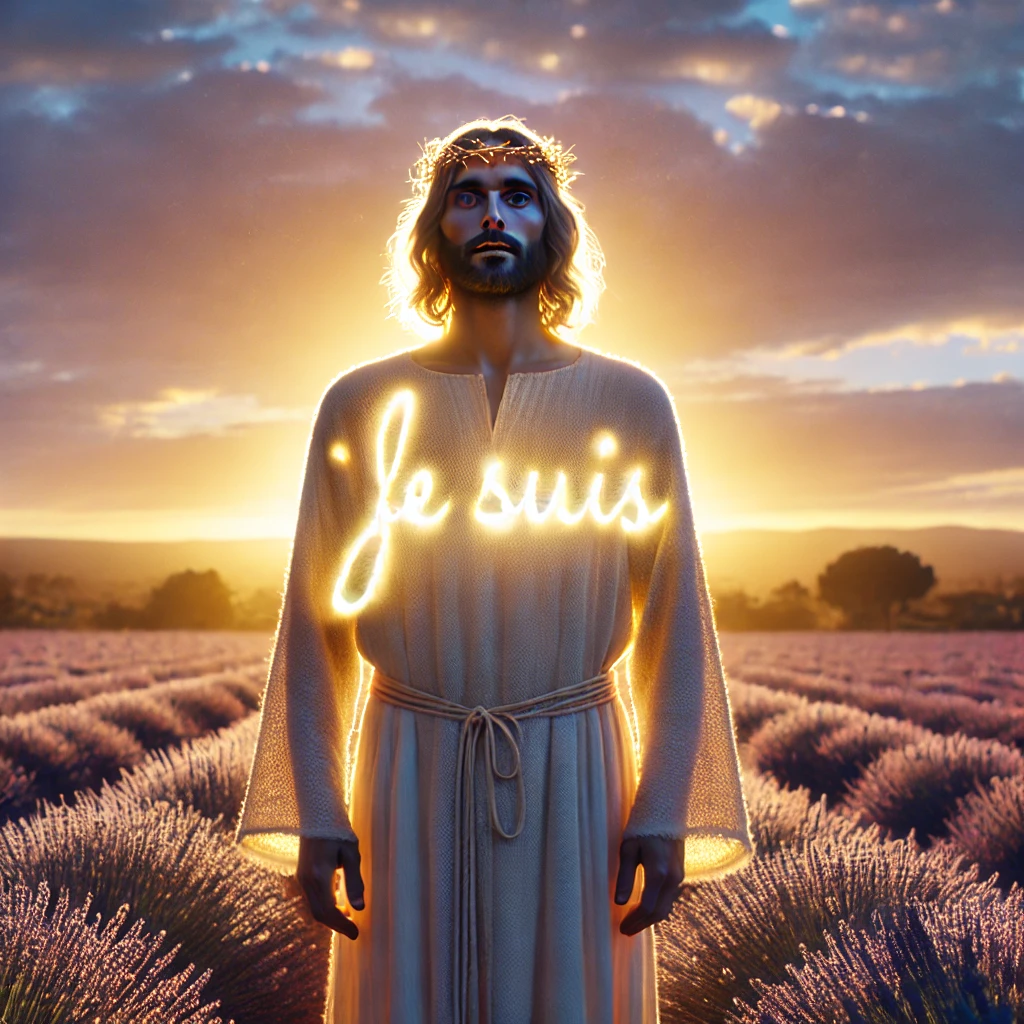
Did We Get Jesus’ Name Wrong? The Mystical Link Between “Jesus” and “Je Suis”

What if the name we’ve used for two thousand years was never meant to be a name at all—but a reminder? And when did Yeshua became known as Jesus?

What if the true teaching of Jesus wasn’t about worshiping a man, but awakening to a presence? And what if this presence was so powerful, so sacred, that its very utterance—I AM—was the key to divine union?

This idea isn’t as far-fetched as it may sound. In fact, threads from early Christian texts, Gnostic wisdom, and even Southern French oral traditions suggest we may have misunderstood not only the teachings of Jesus—but his name itself.

The “I AM” That Jesus Taught

Throughout the Gospel of John, Jesus speaks in powerful first-person declarations:

• “I AM the light of the world.”

• “I AM the good shepherd.”

• “I AM the resurrection and the life.”

• “Before Abraham was, I AM.”

To modern ears, these might sound like poetic metaphors. But to those familiar with the Hebrew scriptures, they echo something far deeper.

In Exodus 3:14, when Moses asks the divine name, God replies: Ehyeh Asher Ehyeh—“I AM that I AM.” This was not a title or concept, but a declaration of being. A presence.

When Jesus uses the same phrase in Greek—ego eimi—he’s not just identifying himself. He’s inviting us into a state of awareness: that the divine lives in us, and through conscious presence, we too can say “I AM.”

Gnostic Echoes: Know Thyself, Know the Divine

The Gospel of Thomas, a text excluded from the Bible but revered by early mystics, records Jesus as saying:

“The Kingdom is inside you and outside you. When you know yourselves, you will be known, and you will realize that you are children of the living Father.”

Here again, we see the theme: inner knowing as the path to divine realization. Not belief in dogma. Not rituals of worship. But direct, conscious presence.

This aligns strikingly with the teachings of mystics across traditions—from the Kabbalistic “Ain Sof” to Eckhart Tolle’s modern insights on “the power of now.”

But could this message have traveled further than we thought?

When “Je Suis” Became “Jesus”

In Southern France, legends tell of Mary Magdalene traveling to Provence after the crucifixion, continuing the teachings of inner freedom, divine presence, and spiritual liberation. Centuries later, groups like the Cathars echoed these same values—rejecting church hierarchy, embracing nonviolence, and teaching direct access to the divine.

And here’s where it gets interesting.

In French, je suis means “I am.” And the spelling is very close to « Jesus ».

Could it be that early mystics—whether in oral tradition, meditation, or chant—were repeating the phrase “je suis” to declare their divine identity?

Could they have said, “Je suis the way, the truth, and the life”—and over time, this mystical mantra became mistaken for a name?

Could “Jesus” have evolved not from misunderstanding Aramaic, but from mishearing Presence?

It’s speculative, yes. But also poetic. Because whether or not the name “Jesus” comes from “Je suis,” the teaching remains:

Christ is not a name. It’s a state of being.

A consciousness of love, unity, and sacred presence.

Returning to the Forgotten Path

Maybe we didn’t get the name “wrong” so much as we got the emphasis wrong.

Instead of fixating on the figure, we were meant to awaken to the frequency.

Instead of worshiping “Jesus,” we were meant to embody je suis.

“I AM the light of the world” was never a boast. It was a mirror.

It was a call to remember who we really are.

And whether or not the evolution from je suis to Jesus is historically provable, the synchronicity is striking. A divine wink, perhaps—reminding us that even language carries echoes of forgotten truth. The path to presence has always been there, hidden in plain sight, waiting for those with ears to hear.

So today, in a world awakening from spiritual amnesia, maybe we’re ready to hear the original message again.

Not as a name.

But as a truth.

Je suis.

I AM.

The Goddesses of Easter: Ostara vs Ishtar

A few years ago, I had a dramatic restoration of faith in God. During this time of my life, I ended up renting out to a roommate to help with bills. I don’t believe it was an accident that he just so happened to hold a bachelor’s degree from one of the state’s best universities in Comparative Religions. Since he did not personally affiliate with any particular religion, I often got an unbiased perspective of the control of information (and sometimes misinformation) in religions. I found myself asking him many questions on historical references for things I had been discovering through intuition and spiritual truths. Growing up, I had lost interest in traditional holidays I celebrated in my Catholic upbringing, but I found myself on a quest to separate fact from fiction on why the modern world practices and believes what it does. Holiday origins were some of the most surprising findings.

My old roommate was the first person who ever informed me about the calendar as we know it today. He spoke of Constantine who was burdened with the task of unifying the Pagans and the Christians, who had been brutally killing each other over religious disputes at the time of his reign. It was under his rule that birthed the calendar of mainstream religious holidays we know in modern times. Pagan holidays were rewritten to fit the life of Christ. As a leader, it is not difficult to understand why compromising between the two belief systems made the most sense at the time. Unfortunately, what we are left with is an untrue depiction of history. While I am a true believer in Jesus and the miracles he performed, I can confidently say that Easter is not the exact time of the resurrection. Furthermore, Christmas is also historically incorrect in timing of Jesus’ birth.

There is much dispute over the true origins of Easter. I have come to accept two different goddesses (with a small g) who, prior to Constantine, were the two celebrated deities associated with the Spring Equinox in different parts of the world: Ishtar and Ostara. While many people across the country are showing interest in Ishtar due to the similar pronunciation, Ostara undoubtedly has had a lasting impact on Easter.

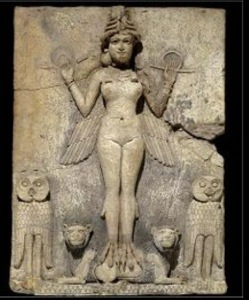
Ishtar has been worshipped and called upon since ancient Babylonian times. She embodies the very strong, feminine energy of Venus. Ishtar represents the Divine feminine in her aspects such as harvesting, mothering, fertility, healing, and love. It should come to no surprise that she was celebrated during Easter time during the Spring Equinox. While Ishtar’s true animal totems are the owl and the lion, eggs and rabbits have been associated symbolically in Paganism with fertility, which is an aspect of Ishtar.

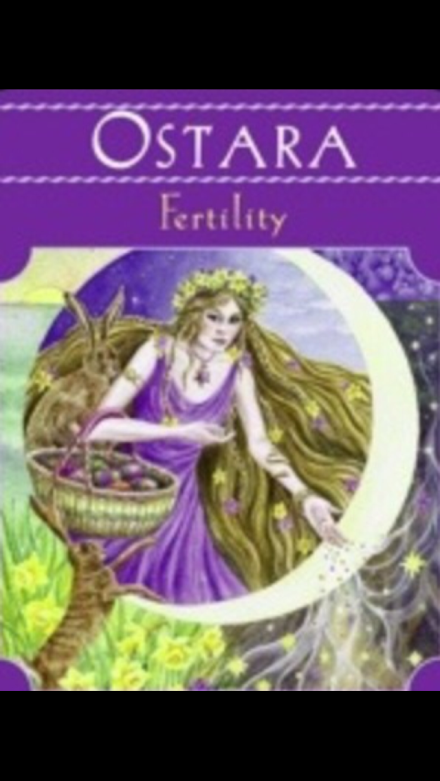
20140419-211059.jpgOstara (in Old English spelled Ēastre) was a Germanic goddess and diety I had never heard of until I drew her card in Dr. Doreen Virtue’s Goddesses Oracle Card deck. As a clairevoyant, Doreen credits both “East” and “Easter” to being named after Ostara, who is celebrated as the bringer of light. She explains that this was due to “the sun rising in the East, and the increase in sunlight beginning in the Celtic springtime.” Ostara’s true symbols (as pictured) are the rabbit and the egg, which is undoubtedly where the Easter bunny comes from.

20140419-210711.jpg
Photo Credit: Goddess Guidance Oracle Cards by Dr. Doreen Virtue, Ph.D

While both goddesses were celebrated during Easter, I still do not believe this should deter Christians from celebrating Easter. This battle between Paganism and Christianity has been going on for far too long. Are we really going to carry on our arguments of our ancestors? While I believe in the divine feminine, I also believe Jesus was as real as you and I, and I honor him, his message of love, and the miracles he performed. It really shouldn’t be about when and where we celebrate these amazing beings as much as how we are implementing their teachings in our day-to-day lives.