When You Rise, the Shadows React — But So Does the Light

By Julie Tourangeau | julietour.com

Every time I rise—spiritually, emotionally, professionally—I feel it.

A strange shift. Not in myself, but in the people around me. People I once trusted, people who used to admire my work or walk alongside me in spiritual conversations… begin to twist, pull away, or even betray. And I used to wonder, Why does this happen every time I elevate?

Now I understand.

This is what a spiritual war looks like.

It rarely arrives with horns and red eyes. It comes through people. Through projection. Through distortion. Through wounds left unhealed and emotions left unchecked. And it’s not just in this lifetime—it’s a pattern that repeats through many.

The Spiritual War Comes Through the Familiar

Jesus wasn’t betrayed by strangers. It was his own circle. His closest disciple handed him over. Peter denied knowing him. The people he once healed and fed turned on him when the powers that be demanded blood. And why?

Because his presence stirred everything unresolved in them.

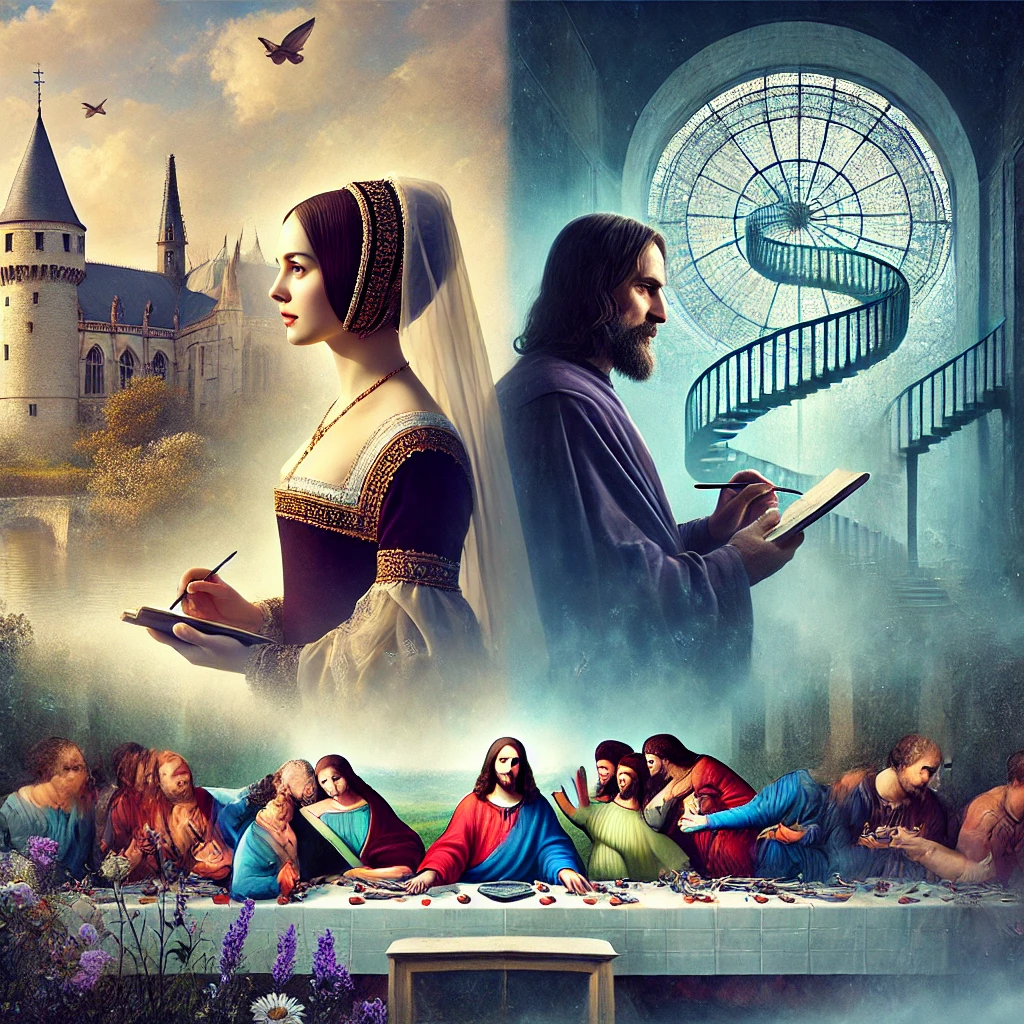
Anne Boleyn, too, wasn’t just executed by “the court.” Her own uncle helped engineer her downfall. People in her family, people who once celebrated her rise, flipped the moment her light disrupted the order. She was scapegoated not simply because she was bold—but because her boldness unveiled deep truths that scared them.

And I’ve lived this, too.

There have been moments in my life where people who once looked up to me—professionally, spiritually, or personally—began to behave strangely the moment I stepped into more of my truth. They shifted into judgment, gossip, and sabotage. But this is not a reflection of me—it’s a reflection of the spiritual law at work.

When the Light Increases, So Does the Resistance

We live in a vibrational world. And when someone rises, that energy radiates out—it disturbs the comfort of the status quo. And if someone close to you has emotional vulnerabilities or unhealed trauma, that rising light can trigger them. In that moment, they become susceptible to energies that are not theirs—energies that are orchestrated.

Yes, I believe this is coordinated—just not in the way the physical mind expects. These forces don’t need to sit around a table to plan. They only need openings: jealousy, bitterness, fear, ego. And they will move through people who don’t even realize they’ve become pawns in something larger.

This is how the spiritual war works.

It’s not abstract.

It’s intimate.

It’s disguised.

And it’s ancient.

Synchronicities Show Us We’ve Been Here Before

At 14, I had a vision—of standing condemned, accused by a crowd, executed not for a crime but for being a voice of inconvenient truth. I didn’t understand it then. But years later, I found myself walking through the Loire Valley in France, standing inside Leonardo da Vinci’s spiral staircase. And something awakened in me.

I later learned that Anne Boleyn was raised near that very region, in a court where Christian mysticism quietly flourished. It wasn’t just politics and art—there were sacred texts circulating. Hidden gospels. The real early teachings of Christ. Esoteric philosophies. Da Vinci encoded truths in his art. The same truths that Anne may have absorbed in her formation. That I remember now.

And what if these synchronicities aren’t random? What if we are remembering—not just facts, but roles we’ve played? Wars we’ve fought? Truths we’ve spoken before?

Discernment Is Your Protection

This is why I stay vigilant—not fearful, but intentional. I hydrate. I meditate. I cleanse with sage and prayer. I protect my mind and energy field. And I choose my inner circle with discernment. Because if the people around me aren’t spiritually anchored, the war doesn’t need to go far—it walks right in through them.

But here’s the beauty: energy is just energy. And even when dark energy moves through others, we can transmute it. Jealousy becomes fuel. Betrayal becomes clarity. Sabotage becomes spiritual velocity. It’s like the force they try to use to drag you down becomes the exact pressure that propels you upward—if you stay grounded in the truth of who you are.

This Is Not Punishment. It’s Propulsion.

So many of us feel alone when this happens—when the people we loved or trusted suddenly turn on us. But you are not alone. You are not crazy. You are not being punished. You are being initiated.

Jesus didn’t curse his betrayers. He transcended them.

Anne Boleyn didn’t crumble in fear. She met her end with dignity—and her legacy only grew.

And me? I choose to rise again and again—not because it’s easy, but because my soul remembers something deeper than the pain.

The Resistance Confirms the Calling

So if the shadows rise when you step into your light, it’s not a sign to shrink. It’s confirmation. You’re disrupting something. You’re breaking a pattern. You’re walking the path of those who came before you—truth-tellers, soul-liberators, mystics, and prophets.

And just like them, your resurrection is already written.

Let them try.

Let them twist and project.

Because in the end?

We rise.
Truffle Glow Vegan Lasagna

A Signature Dish from The Freedom Kitchen Series

by Julie Tourangeau | julietour.com

There’s more than nourishment in a meal—there’s memory, healing, and story.

This lasagna was born on a night when everything fell apart—glass shattered, ingredients ran low, and I had to rebuild from what I had. And somehow? That’s when the magic happened.

This recipe is a layered metaphor for healing: messy edges, bold flavor, and comfort that rises from unexpected places. It’s vegan, gluten-free optional, and completely dairy-free—but nothing about it feels like you’re missing out. This is the kind of dish that warms the soul and opens the door to something sacred: a return to your own radiant wholeness.

Truffle Glow Vegan Lasagna

With Tofutti Ricotta, Kite Hill Cream Cheese, Roasted Red Peppers & Piment d’Espelette

A creamy garlic-truffle filling made with Tofutti ricotta and Kite Hill cream cheese is folded with sautéed spinach, roasted red peppers, fresh parsley, and bold nutritional yeast. The flavors are rounded out by thinly sliced onion, garlic and onion powder, and a warm, smoky kiss of Piment d’Espelette—a red pepper spice from the Basque region that brings subtle heat and beautiful depth.

You can finish this with either vegan liquid mozzarella or my signature béchamel sauce from julietour.com/bechamel for a golden, bubbling top that’s worthy of a celebration. No foil. No shortcuts. Just food that glows from the inside out.

Ingredients

Cheese Filling:

• 1 container Tofutti Ricotta

• 1 container Kite Hill Cream Cheese

• 1 cup Violife Mozzarella Shreds

• 3–4 tbsp nutritional yeast (go bold!)

• 2 cloves fresh garlic, minced

• 1–2 tbsp sweet onion, thinly sliced

• 1/2 tsp onion powder

• 1/2 tsp garlic powder

• 1 tsp truffle oil

• 1/2 tsp Piment d’Espelette (plus more for topping)

• 2 tbsp fresh parsley, chopped

• Sea salt and cracked black pepper, to taste

Add-ins:

• 1 cup sautéed spinach

• 1/2 cup roasted red peppers, chopped

Assembly:

• 1 box 365 Oven-Ready Lasagna Noodles

• 1 jar Bao Marinara Sauce

• 1–2 tbsp olive oil

• Topping Option 1: Vegan liquid mozzarella (about 1/2 cup)

• Topping Option 2: Julie’s Vegan Béchamel for added richness

Instructions

1. Make the Filling

Mix Tofutti ricotta and Kite Hill cream cheese until smooth. Stir in Violife, nutritional yeast, fresh garlic, sliced onion, onion powder, garlic powder, truffle oil, Piment d’Espelette, parsley, and season with salt and pepper. Fold in spinach and roasted red peppers.

2. Prepare Your Dish

Lightly oil a 9×13 dish and spread a thin layer of Bao marinara.

3. Layer It Up

Add oven-ready noodles, then a generous layer of the filling, then more sauce. Repeat until full, ending with noodles and marinara.

4. Top It Off

Choose your topping:

• Drizzle with vegan liquid mozzarella and a dusting of Piment d’Espelette

• or spread on a layer of my béchamel sauce for a deeper, richer bake

5. Bake Uncovered

Bake at 375°F for 45–50 minutes, until golden and bubbling. No foil needed—the top caramelizes beautifully this way.

6. Cool & Garnish

Let sit 10 minutes before slicing. Top with fresh parsley, more nooch, or a drizzle of truffle oil.

Why It Matters

This isn’t just a recipe—it’s a ritual. A reclaiming. A reminder that even in moments of chaos, you can create something beautiful, layered, healing, and deeply satisfying.

Welcome to The Freedom Kitchen. Where food is medicine, flavor is freedom, and joy is the secret ingredient.

This is what freedom tastes like. Warm, melty, deeply layered—and 100% plant-based. From my kitchen to yours.

Jesus Never Said That — The Truth About Women and Submission in the Bible

By Julie Tourangeau

Let’s get straight to it: Jesus never told women to obey men. The verses that have fueled centuries of female submission, spiritual silencing, and even abuse? They didn’t come from his mouth. They came from cultural conditioning — and in some cases, deliberate tampering.

And it’s time we called it out.

What Jesus Actually Taught

In the earliest Gospel accounts — the actual life and teachings of Jesus — we see a revolutionary pattern:

• Jesus spoke directly to women in public, breaking cultural norms (John 4).

• He affirmed women as disciples (Luke 10:38–42).

• He entrusted women with the resurrection message before any man (John 20:17).

• He defended women from patriarchal violence (John 8).

• He allowed a woman to anoint him — an act usually reserved for priests or prophets — and said, “Wherever the gospel is preached, what she has done will also be told in memory of her” (Mark 14:9).

This is not a man interested in maintaining male superiority. This is someone liberating women from centuries of oppression.

So where did all the “wives, submit to your husbands” come from?

The Real Origins of the Submission Verses

Those verses — like Ephesians 5:22, Colossians 3:18, and 1 Timothy 2:11–12 — were written decades after Jesus died, often not by Jesus’ disciples, and likely not even by Paul, to whom they are traditionally attributed.

Let’s break it down:

1. Ephesians 5:22-24 says:

“Wives, submit yourselves to your own husbands…”

But the original Greek manuscripts don’t even include a verb in verse 22. That line was grammatically borrowed from the previous verse, which says:

“Submit to one another out of reverence for Christ.” (Eph. 5:21)

Modern translations inserted “wives, submit…” as a standalone command, separating it from the mutual submission Jesus modeled.

2. 1 Timothy 2:11-12 famously says:

“I do not permit a woman to teach or to assume authority over a man; she must be quiet.”

But this letter wasn’t written by Paul. Scholars like Bart Ehrman, Margaret MacDonald, and Raymond Collins have shown that:

• The vocabulary and writing style don’t match Paul’s authentic letters.

• These letters — 1 Timothy, 2 Timothy, and Titus — are known as the Pastoral Epistles, likely written around 100–130 CE, long after Paul’s death.

• Their goal? To impose Roman household codes and suppress women’s leadership as the church grew in size and tried to align with the dominant culture.

In other words, they reflect institutional control, not divine truth.

Proof of Tampering in the Biblical Texts

Here’s the part that’s hard but liberating to accept: The Bible has been edited — sometimes subtly, sometimes heavily — to reflect patriarchy, not prophecy.

Examples:

• 1 Corinthians 14:34-35 — the “women should be silent in church” line — interrupts Paul’s flow of thought and contradicts his own earlier statements.

Scholars like Gordon Fee argue it was a marginal note later inserted into the text.

• Paul does affirm women leaders elsewhere:

• Phoebe, a deacon (Romans 16:1)

• Junia, a female apostle (Romans 16:7 — mistranslated as male for centuries)

• Priscilla, a teacher of male converts (Acts 18)

Even the early Church Father Origen wrote about women prophesying and teaching — but by the time of later councils, Mary Magdalene’s leadership was erased, and Gnostic texts uplifting the Divine Feminine were banned.

What the Lost Gospels Reveal

Texts like The Gospel of Thomas and The Gospel of the Holy Twelve paint a different picture entirely:

• No verses commanding women to obey men.

• Mary Magdalene is portrayed as Jesus’ closest spiritual companion — the one who “knew the All.”

• In The Gospel of the Holy Twelve, Jesus says:

“In the beginning, God made them male and female, to be co-equal… the one not without the other in the Lord.”

These early mystical gospels were buried, burned, or banned by early church authorities — not because they lacked spiritual truth, but because they threatened patriarchal power.

So What Do We Do With This?

If you’ve been told your role is to submit, be silent, or shrink yourself — hear me:

Jesus never required your obedience to a man. He called you to rise.

He called you to be a co-creator of light. A voice of wisdom. A partner in awakening.

The idea that God created women to serve men is not sacred — it’s systemic gaslighting, buried under centuries of translation bias, Roman politics, and spiritual amnesia.

It’s time to reclaim the real Gospel — the one where love, not domination, is the law.

Let’s Remember This:

• Jesus empowered women.

• Paul affirmed women — until later letters distorted that message.

• The original teachings were about mutuality, not submission.

• The Divine Feminine is not a threat. She is the missing half of the healing.

If this stirred something in you, share it. Talk about it. Ask questions. The veil is lifting — and you were never meant to stay small.

With truth and fire,

Julie Tourangeau

The Math of Anamnesis: A 0.1% Probability… Yet Here I Am. Hello.

By Julie Tourangeau

May 10, 2025

“She said to me, go steady on me / Won’t you tell me what the wise men said?”

—James Blunt, Wisemen

That was the song that played when everything cracked open.

Not a song I picked. Not one I’d saved. It was buried on an old CD a friend burned years earlier.

And yet, at the exact moment I needed confirmation that my pain meant something—that my grief was sacred—that song played.

It wasn’t just music.

It was mathematical resonance.

Perfectly timed. Perfectly placed.

The probability of that moment happening? Less than 0.1%.

And yet… here I am.

Hello.

The Vision That Undid Me

I wasn’t dreaming. I wasn’t meditating. I was just—present. And then it hit me:

A surge of emotion. A soul-level knowing.

It wasn’t a thought or belief. It was anamnesis—the sacred remembrance spoken of by mystics, Gnostics, and initiates across time.

Not just a memory of Jesus.

A memory with him.

For one devastating, holy moment, I felt what he felt:

The aching love. The betrayal. The weight of being misunderstood for carrying the truth.

I cried at the window for hours, overcome with grief that didn’t feel like mine—but like a collective wound that finally found a voice.

And then I hit shuffle on my iPod.

The first song?

“Wisemen” by James Blunt.

A song I never chose, but Heaven did.

“Won’t you tell me what the wise men said / When they came down from heaven…”

In that moment, I felt the ancient whisper return.

The one buried beneath dogma, waiting to be remembered.

Reading the Gospel of the Holy Twelve Was Soul Resonance

When I finally read The Gospel of the Holy Twelve, it didn’t feel like new information.

It felt like a confirmation.

Like something I had always known was being spoken out loud for the first time.

It wasn’t “Wow, I believe this.”

It was “Yes. This is what I’ve always believed.”

The Jesus I had seen in visions…

The truth I had been living without language…

The love, justice, nonviolence, and reverence for all life I had instinctively followed…

There it was.

Written down.

Hidden for centuries.

And vibrating at the exact frequency of my soul.

Synchronicity Is Sacred Math

Carl Jung called it synchronicity—the divine logic behind meaningful coincidences. Quantum science now echoes what mystics always knew: everything is connected. Particles respond to vibration. Thought can shape form.

God is in everything.

In the song. In the shuffle. In the tears. In the timing.

That’s not poetic—it’s physics.

The odds of that moment, that song, that vision aligning the way they did?

Less than 0.1%.

And still—

Here I am. Hello.

Before I Knew the Texts, I Lived the Pattern

Before I studied the Gospel of Mary, the Gospel of the Holy Twelve, or the mysticism of Sophia, I was already embodying their truth:

• I stood on the side of the road showing slaughterhouse footage—not to shame, but to awaken.

• I went to D.C. to defend bodily sovereignty when nearly everyone called me insane.

• I wrote Free Yourself from Grief not as therapy, but as sacred remembrance of Heaven’s frequency.

• I felt called to Magdalene, sacred geometry, and spiritual justice before I had words for any of it.

I wasn’t following a religion.

I was following a cosmic equation.

Improbable Parallels to Early Christian Jesus

There are exact elements of early Jesus tradition—hidden from mainstream Christianity—that statistically align with my life in ways nearly impossible to fake, fabricate, or explain away.

1. Rejection of Animal Sacrifice

In the Gospel of the Holy Twelve, Jesus drives out the butchers and declares:

“Love is the law, and no blood must be spilled.”

I became vegan before I read that.

Statistically? Less than 0.01% of Catholics become vegan for Christ-aligned reasons.

2. Sacred Geometry and the Double Helix

Jesus’ name and symbols were embedded in the Vesica Piscis—the shape of divine birth, the fish symbol, and the template of DNA’s double helix.

I felt a soul-knowing at da Vinci’s spiral staircasebefore I knew what it meant.

3. Anamnesis as Eucharistic Power

The Gnostics described anamnesis as the real communion—not bread and wine, but direct soul-memory.

I experienced it not in church—but alone, with a song, and an uncontrollable cry from the deep.

4. Voice as Frequency (The Logos)

Jesus is the Logos—divine vibration, sound that heals.

I use my voice, tuning forks, and music for healing. My fork is 128 Hz—part of a harmonic sequence tied to sacred ratios used in temples, chants, and resonance therapy.

Statistically? I Shouldn’t Exist

Here’s what the data says:

Only 5–10% of Catholic-raised individuals deeply question core doctrine.

Less than 1% explore early Gospels like Mary or The Holy Twelve.

Only 0.3% of U.S. Catholics are vegan—and most not for spiritual reasons.

Fewer than 0.1% combine veganism, reincarnation, sacred geometry, divine feminine mysticism, and frontline activism before studying any of it.

And yet—

Here I am. Hello.

Heaven Is a Harmonic Equation

Heaven isn’t a reward. It’s a frequency.

It’s encoded in the spiral of a seashell, the fire of grief, and the silence between synchronicities.

We locked ourselves out of it when we normalized harm.

But it never left us.

It’s waiting in your memory.

Free Yourself from Grief isn’t just a title.

It’s an ancient instruction:

Grief is the gate.

Remembrance is the key.

Conclusion: I Am the Improbable Made Manifest

Statistically, I’m an anomaly.

Spiritually, I’m inevitable.

I didn’t study my way into this.

I remembered my way home.

This is anamnesis.

This is sacred math.

This is Heaven breaking into Earth through a life that said yes.

I am not like Jesus because I tried to be.

I am like him because I resonated with the pattern of truth before I even knew what it was.

One in a Million: The Blood Knows What the Mind Forgot

I am a descendant of the Rose family—a lineage with records reaching back to 18th-century Paris.

DNA tests revealed that both my sister and I carry French and Egyptian ancestry—a statistically rare combination, especially in those raised in the West with no direct knowledge of it.

To be born into the Rose Line, on the land once called Par-Isis (the place of Isis),

To carry the Magdalene frequency before knowing her name,

To resonate with the truths of The Gospel of the Holy Twelve before ever reading it,

To live a life that matches hidden gospels, sacred ratios, and divine frequencies before learning the math…

That is not luck.

That is not coincidence.

That is Logos—living and breathing through lineage, lyric, land, and love.

The blood knows what the mind forgot.

And now—

The memory has returned.

And If You’re Reading This… Maybe You Remember Too

If you’ve ever had a moment of divine precision…

If a song shattered you into tears…

If a vision cracked your heart and built you into something holy…

You’re not delusional.

You’re not broken.

You’re remembering.

The math doesn’t lie.

The Logos doesn’t forget.

And sometimes, Heaven speaks in spirals, grief, songs, and statistics.

Welcome back. 🌹

B!tch Is a Love Story

The Steeple in Your Chest, the Power They Can’t Name, and Why They’ll Try to Destroy You for It

By Julie Tourangeau | julietour.com

Have you ever noticed that when you walk in light…

some people treat you like a threat?

It doesn’t matter how kind you are.

How generous. How true.

When you carry something pure—something unshakable—

it will rattle those who’ve built their lives on pretending.

What they feel isn’t arrogance.

It’s not ego.

It’s not “too much.”

It’s the divine power you carry.

And in ancient Egypt, they had a word for it:

Heka.

Heka was not superstition. It was sacred force.

The power to heal, speak, manifest, create.

It wasn’t tricks or illusions.

It was alignment with divine law—Ma’at.

It was the vibrational reality of truth made flesh.

And centuries later, when early Christians spoke of the Logos—the Divine Word that created all things—they were speaking of the same force.

Heka in Hebrew flesh.

The Word that breathes life.

The power that moves mountains.

The frequency that stills storms.

And Jesus didn’t just carry it.

He embodied it.

He was raised in Egypt—not by accident, but by design.

Egypt was the spiritual womb of the world.

It preserved the sacred teachings while empires chased gold and blood.

Jesus didn’t reject that wisdom.

He fulfilled it.

“The Kingdom of God is within you,” he said.

That wasn’t poetry. It was spiritual physics.

It was the same truth Egypt knew:

The sacred is in here. Not up there. Not locked away. Not controlled by priests or politics.

But in your breath. In your bones. In your spoken word.

When you carry that—when you live it—

you will be misjudged.

People will project their shame onto your peace.

Their cowardice onto your courage.

Their bitterness onto your beauty.

They’ll resent your freedom because it reminds them of the chains they haven’t removed.

They’ll say, “Who does she think she is?”

But what they really mean is, “I forgot who I am.”

And that’s where it gets ugly.

Because when love is true, when it’s not codependent, performative, or manipulative—

when it shines and roars and walks away from what doesn’t honor it—

it will be hated.

Real love is not soft.

It is not silent.

It is not submissive.

Real love flips temples.

Real love calls out injustice.

Real love protects the innocent.

Real love walks alone if it has to.

And when you live that kind of love,

they won’t just misunderstand you—

they’ll smear you.

They’ll call you too much.

They’ll call you unstable.

They’ll call you a b!tch.

But let’s tell the truth:

B!tch… is a love story.

It’s the story of every woman who refused to play small.

Every soul who wouldn’t conform to keep the peace.

Every radiant being who walked in favor—and paid for it.

They call you a b!tch because they don’t understand your heart.

The one with a steeple in it.

The one that rings like a bell in stormy places.

The one that loves without lying and leaves without begging.

You are not cruel.

You are not mean.

You are not dangerous.

You are sacred.

You are ancient.

You are love that remembers its worth.

And when you carry that, yes, you’ll be despised.

But for every life that turns on you,

a million more will be touched by you.

Across time. Across space.

Across generations.

Your job is not to explain your favor.

Your job is to walk in it.

To speak with it.

To bless and release what can’t receive it.

And to ring the bell of truth inside your chest

until every slumbering soul begins to stir.

So let them talk.

Let them twist your story.

Let them call you names.

You—

you ring the bell.

Because b!tch is not an insult.

It’s a badge of survival.

A declaration of fire.

A synonym for truth.

And yes—

a love story.

Not Everyone Is an Avatar: Logos, Atlantis, and the Truth Behind Divine Embodiment

By Julie Tourangeau

Recently, someone I love insisted that we’re all avatars.

They were referencing physicist Tom Campbell’s My Big TOE, a theory of everything that describes reality as a kind of simulation, where consciousness plays out through virtual characters—avatars—across time and space. According to this view, you are the player, the character, and the experience, all in one. Everyone is divine. Everyone is an avatar. All is learning.

It sounds expansive.

But something in me said—no.

Because here’s the truth I’ve come to remember:

Not everyone is an avatar. And not every consciousness carries the Logos.

What Is the Logos?

In ancient Christian and Hermetic traditions, Logos means more than “word.”

It is the divine intelligence, the sacred ordering principle of the cosmos.

It is truth, justice, love, and moral alignment—woven into creation itself.

The Gospel of John opens with:

“In the beginning was the Logos, and the Logos was with God, and the Logos was God.”

The Logos is what formed the world, but it is also what redeems it.

It is the moral compass embedded into the fabric of being.

To embody the Logos is to live in divine alignment, not just awareness.

Consciousness Alone Is Not Enough

Yes, we are all expressions of Source.

Yes, we are all fragments of one universal intelligence.

But that doesn’t mean every person is aligned with the divine.

Awareness is not the same as wisdom.

Consciousness without the Logos is like a sword without a sheath—dangerous, ungrounded, and capable of great harm.

The idea that “everyone is an avatar” becomes spiritually reckless when it’s used to erase discernment, accountability, and truth.

Good Intentions Are Not the Logos

It’s tempting to say that anyone with good intentions is a divine avatar.

But good intentions alone do not make you a vessel of the Logos.

The road to hell is paved with good intentions.

You can want to help and still enable harm.

You can care deeply and still act inside a matrix of delusion.

You can be sincere—and still be wrong.

In the realm of the Logos, intention must be married to alignment.

Compassion must walk hand-in-hand with discernment.

Spirituality must include truth, not just comfort.

An avatar isn’t someone who means well.

An avatar is someone who sees clearly, acts righteously, and lives in alignment with divine law—even when it costs them comfort, approval, or belonging.

The Fall of Atlantis: What Happens Without the Logos

In esoteric traditions, Atlantis didn’t fall because of science or storms.

It fell because of spiritual arrogance.

The Atlanteans had immense power. They manipulated energy, bent reality, and channeled cosmic forces.

But they believed:

“We are gods. Therefore, we can do anything.”

They stopped listening to the Logos.

They used their gifts to control, conquer, and dominate.

They lost their alignment—and with it, their civilization.

That same pattern is playing out now.

Modern spiritual circles are repeating Atlantean errors:

• “There’s no good or evil, just vibration.”

• “We are all gods.”

• “Everyone is perfect as it is.”

These sound enlightened.

But when used to deny suffering, bypass accountability, or excuse harm, they become distortions of truth.

Not Everyone Is an Avatar

The word avatar originally meant something sacred.

In Sanskrit, it refers to the descent of divinity into form—a soul who chooses to carry the divine blueprint into the world.

In early Christianity, Jesus was called the Logos made flesh—not because he was above humanity, but because he embodied divine truth in the face of empire.

He was not playing a simulation.

He was holding the pattern.

Likewise, in Hermetic teachings, the avatar was not a character in a game.

It was a vessel of divine order—a person who had undergone inner alchemy and chose to live in harmony with sacred law.

To the Hermetics, as to the mystics, the true avatar:

• Purifies the self

• Aligns with truth

• Walks in service of something greater

They don’t just wake up.

They commit.

The Danger of Declaring Divinity Without Alignment

Today, we are flooded with declarations of personal divinity.

But without the Logos, divinity becomes self-worship.

It becomes narcissism in sacred language.

It becomes another Atlantis—polished on the outside, rotting from within.

To say “I am god” while ignoring justice, truth, and love is not awakening.

It’s the beginning of collapse.

You Didn’t Come Here to Play the Game. You Came to Remember the Pattern.

You are not just an expression of consciousness.

You are here to carry something ancient and unshakable:

The Logos.

That means your life is not a simulation.

It is a temple.

And what you build with it matters.

When others say, “We’re all avatars,”

You can say:

“Only those who choose the Logos truly are.”

And then you live like it.

For Those Who Remember

If you’re reading this and it lands in your bones, then you already know.

You’ve seen how misuse of spiritual power can break worlds.

You’ve watched how the false light rises, blinds, and consumes.

You’ve remembered what happens when the Logos is ignored.

But this time, you’re here to speak.

You’re here to walk.

You’re here to restore the balance.

You are not here to level up in a game.

You are here to be a flame—steady, ancient, and sovereign.

This is not a simulation.

This is a sacred return.

Not from Nazareth: Why Jesus the Nazarene Changes Everything

By Julie Tourangeau

I was raised Catholic, like many kids in the Midwest, with soft church pews, the scent of candle wax, and a deep reverence for the man they called Jesus of Nazareth. That name was carved into my earliest images of Christ — painted in Sunday school books, spoken from the pulpit, and etched into the Stations of the Cross: the man from the tiny Galilean town who died to save the world.

But what if I told you… Jesus may not have been from Nazareth at all?

This isn’t some rebellious modern theory for its own sake. It’s a sacred thread I pulled as an adult — a thread that unraveled the tightly stitched version of history I was handed, and instead revealed a luminous, hidden tapestry of truth. One that changes everything we thought we knew about Jesus — and ourselves.

The Nazarene — A Title, Not a Town

The term Nazarene appears dozens of times in early texts. But the word used — Nazōraios in Greek — doesn’t mean “from Nazareth.” It’s not a geographical label. It’s a spiritual one. And many scholars now believe Jesus wasn’t being located — he was being identified. As a member of a radical spiritual order.

The Nazarenes were known in ancient times as a mystical sect — possibly linked to the Essenes — who lived apart from mainstream society. They practiced sacred discipline. They opposed animal sacrifice. They lived simply, shared in community, and upheld a code of purity, peace, and spiritual awakening. They were known as healers and truth-tellers. And Jesus may have been one of them.

This isn’t just conjecture. Church fathers like Epiphanius mention the Nazarenes directly. So does Acts 24:5, where Paul is called “a ringleader of the sect of the Nazarenes.” That’s not a hometown reference. That’s a movement.

So Why the Confusion?

The Gospels mention Jesus of “Nazareth,” but there’s a problem: Nazareth likely didn’t exist as a populated village during Jesus’ lifetime. It appears nowhere in the Old Testament. Not in the writings of Josephus, the first-century Jewish historian who listed dozens of Galilean towns. And early archaeological digs turned up tombs — but not houses, synagogues, or signs of community life.

Some scholars now believe the town of Nazareth may have been a retroactive invention — a narrative placeholder — to explain a title the early church no longer understood or chose to suppress.

Because if Jesus was a Nazarene — not by birthplace, but by sacred affiliation — then he wasn’t just a teacher. He was a trained mystic. A spiritual revolutionary. A radical peacemaker who stood with a long, esoteric lineage — one that challenged both empire and religion with the most subversive message of all: that the divine lives within us, and no temple, no government, and no sacrifice is needed to reach it.

A Liberator, Not a Martyr

Seeing Jesus through this lens opened something in me I didn’t even know had been locked.

The Jesus I was taught to revere was a passive lamb, sent to suffer and die. But the Jesus I’ve come to know — the Nazarene — was a lion disguised as a lamb. He was a disruptor of oppression. A liberator of animals, people, and minds. He flipped tables not to be dramatic, but because the divine law of love had been violated — and it burned in his bones to make it right.

And this Jesus… this Nazarene… is not gone. He’s rising in us now.

In every heart that refuses cruelty. In every soul waking up from dogma. In every voice choosing compassion over conformity.

The Nazarene isn’t just a historical figure. It’s a path. A vibration. A way of living that defies the machinery of power — and calls us back to sacred freedom.

What This Means for Us

To reclaim the truth about Jesus is to reclaim the truth about ourselves.

We are not born sinful. We are born sacred.

We don’t need to earn love. We need to remember it.

And the deepest teachings of Christ — the ones buried, burned, or mistranslated — are rising like seeds through stone.

You don’t have to leave your faith to find the Nazarene. You just have to let him speak again — not from the pages of control, but from the living current of love that never left.

And when you do… you’ll find him where I found him.

Not in Nazareth.

But in your own soul.

The Women, the Wisdom, and the Animals: What We Forgot About Easter

By Julie Tourangeau | Good Friday, 2025

Before the tomb was empty…

before the stone was rolled away…

before the anointing and the rising and the glory…

there was a moment we rarely talk about.

And it didn’t happen on a hill.

It happened in the Temple.

It was there that Jesus walked in, looked around, and did what no one else dared:

He freed the animals.

The Cleansing of the Temple Was a Liberation

All four canonical gospels record the Temple cleansing, but what most people miss is why it mattered so much.

Jesus didn’t just flip tables to make a scene.

He drove out the sellers of doves. He freed the lambs and oxen being sold for sacrifice.

According to the Gospel of the Nazarenes, a lost early gospel aligned with the Essenes:

“He drove out the animals and said, ‘Cease your wicked sacrifices! Do you not see that innocent blood cries out from the earth?’”

In that moment, Jesus publicly rejected the sacrificial system—a system that normalized bloodshed and called it holy. He saw through the illusion of substitutionary violence and revealed the deeper truth:

The Holy Spirit is not found in the shedding of blood, but in the honoring of life.

And from that moment on, the system moved to silence him.

The First Step Toward Resurrection Was Setting the Innocent Free

Let this sink in:

It wasn’t the miracles that got Jesus killed.

It wasn’t the healings or the parables or even claiming to be the Son of God.

It was the moment he freed the animals that the wheels of execution began to turn.

This was the turning point—not just in his story, but in ours.

Because Jesus wasn’t just liberating animals. He was exposing a system—religious, economic, cultural—that had come to depend on suffering.

And he showed us what it looks like to say:

No more.

The Divine Feminine Knew

Many people associate Easter with the idea that Jesus died to pay for our sins—but that interpretation came later. The earliest followers of Jesus saw his life and death not as a blood payment, but as a revelation of divine love and a call to awaken the Christ within. Texts like The Gospel of the Holy Twelve remind us that his suffering was not about appeasing wrath, but about healing hearts, breaking chains, and showing us the path of compassion, even in the face of injustice.

What followed was suffering, yes—but also sacred initiation. And through it all, the ones who stayed near were not the theologians or temple authorities. It was the women.

Grief was his first initiation, through Miriam, the young woman with whom Jesus lived for seven years before her death. According to The Gospel of the Holy Twelve, it was her passing that opened his heart to the deeper path. According to this gospel, « Grief didn’t weaken him. It awakened him. »

Before knowing about this grief story of Jesus, I wrote about my own:

“Without my dark night of the soul, and without having challenging circumstances, I wouldn’t have grown my blessings… Painful change is sometimes exactly what we need to shake things up. Living through trauma, family drama, and the grief of losing a loved one can feel almost like an endless dark tunnel… Grief is just love with seemingly no place to go, but when you realize love shared is eternal, you can finally let go of the pain and gain the wisdom that is rightly yours.” — Free Yourself from Grief, Chapter 5

Compassion was his final anointing, through Mary Magdalene—not a sinner, but a priestess. She anointed his feet, honoring him with a sacred rite passed down through feminine lineages.

And when he was crucified, it was Magdalene who remained. While the male disciples fled, she stood at the cross, and three days later, she was the first to see him risen.

The resurrection was not first revealed to Rome or religion. It was revealed to her.

And wisdom—Sophia—was the soul behind it all.

The Spirit of God that hovered over the waters in Genesis.

The voice crying out in the streets in Proverbs.

The divine spark in all life, calling us home.

What if Easter was just the beginning?

While many see the resurrection as the end of Jesus’ story, ancient traditions—especially in southern France—tell a different tale. According to Provençal legend, Mary Magdalene journeyed to France after the crucifixion, carrying not only the memory of Jesus but the living essence of his teachings. Some say she preached love and liberation from a cave near Sainte-Baume, others believe she brought with her the sacred feminine that was erased from the official story. The Holy Grail Legends say she brought his bloodline to France, and they still walk Earth among us to this very day.

Easter Is the Unveiling of Compassion

This Easter, I invite you to see the resurrection not as a distant miracle, but a living pattern.

The pattern begins with letting go of violence.

It moves through grief.

It is held by the feminine.

And it ends in freedom—not just for ourselves, but for all of creation.

Resurrection isn’t just rising from the dead.

It’s refusing to live by death.

It’s refusing to justify harm.

It’s the choice to let the doves go free.

To Walk the Lost Path to Freedom This Easter Is To Remember:

• The animals were the first to be freed.

• The women were the first to understand.

• Sophia is the wisdom that lives in you.

• The Holy Spirit is the breath that animates all life.

• And love is not proven through suffering, but through liberation.

This Easter, may we not just celebrate a risen Christ,

but live like him.

May we be the ones who open the cages,

who hold the grief,

who anoint the new day.

May we rise—not above the world, but for it.

Free the animals.

Free the heart.

And the stone will roll away.

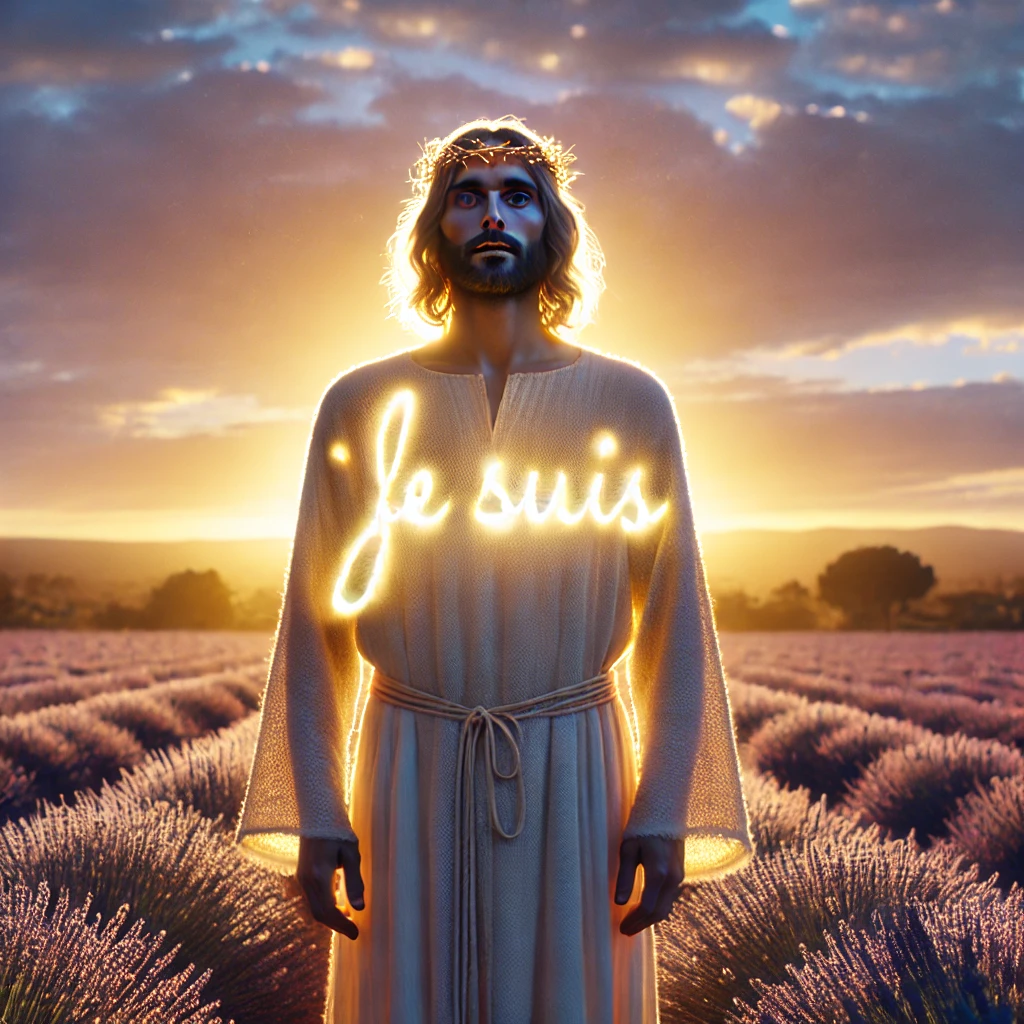
Did We Get Jesus’ Name Wrong? The Mystical Link Between “Jesus” and “Je Suis”

What if the name we’ve used for two thousand years was never meant to be a name at all—but a reminder? And when did Yeshua became known as Jesus?

What if the true teaching of Jesus wasn’t about worshiping a man, but awakening to a presence? And what if this presence was so powerful, so sacred, that its very utterance—I AM—was the key to divine union?

This idea isn’t as far-fetched as it may sound. In fact, threads from early Christian texts, Gnostic wisdom, and even Southern French oral traditions suggest we may have misunderstood not only the teachings of Jesus—but his name itself.

The “I AM” That Jesus Taught

Throughout the Gospel of John, Jesus speaks in powerful first-person declarations:

• “I AM the light of the world.”

• “I AM the good shepherd.”

• “I AM the resurrection and the life.”

• “Before Abraham was, I AM.”

To modern ears, these might sound like poetic metaphors. But to those familiar with the Hebrew scriptures, they echo something far deeper.

In Exodus 3:14, when Moses asks the divine name, God replies: Ehyeh Asher Ehyeh—“I AM that I AM.” This was not a title or concept, but a declaration of being. A presence.

When Jesus uses the same phrase in Greek—ego eimi—he’s not just identifying himself. He’s inviting us into a state of awareness: that the divine lives in us, and through conscious presence, we too can say “I AM.”

Gnostic Echoes: Know Thyself, Know the Divine

The Gospel of Thomas, a text excluded from the Bible but revered by early mystics, records Jesus as saying:

“The Kingdom is inside you and outside you. When you know yourselves, you will be known, and you will realize that you are children of the living Father.”

Here again, we see the theme: inner knowing as the path to divine realization. Not belief in dogma. Not rituals of worship. But direct, conscious presence.

This aligns strikingly with the teachings of mystics across traditions—from the Kabbalistic “Ain Sof” to Eckhart Tolle’s modern insights on “the power of now.”

But could this message have traveled further than we thought?

When “Je Suis” Became “Jesus”

In Southern France, legends tell of Mary Magdalene traveling to Provence after the crucifixion, continuing the teachings of inner freedom, divine presence, and spiritual liberation. Centuries later, groups like the Cathars echoed these same values—rejecting church hierarchy, embracing nonviolence, and teaching direct access to the divine.

And here’s where it gets interesting.

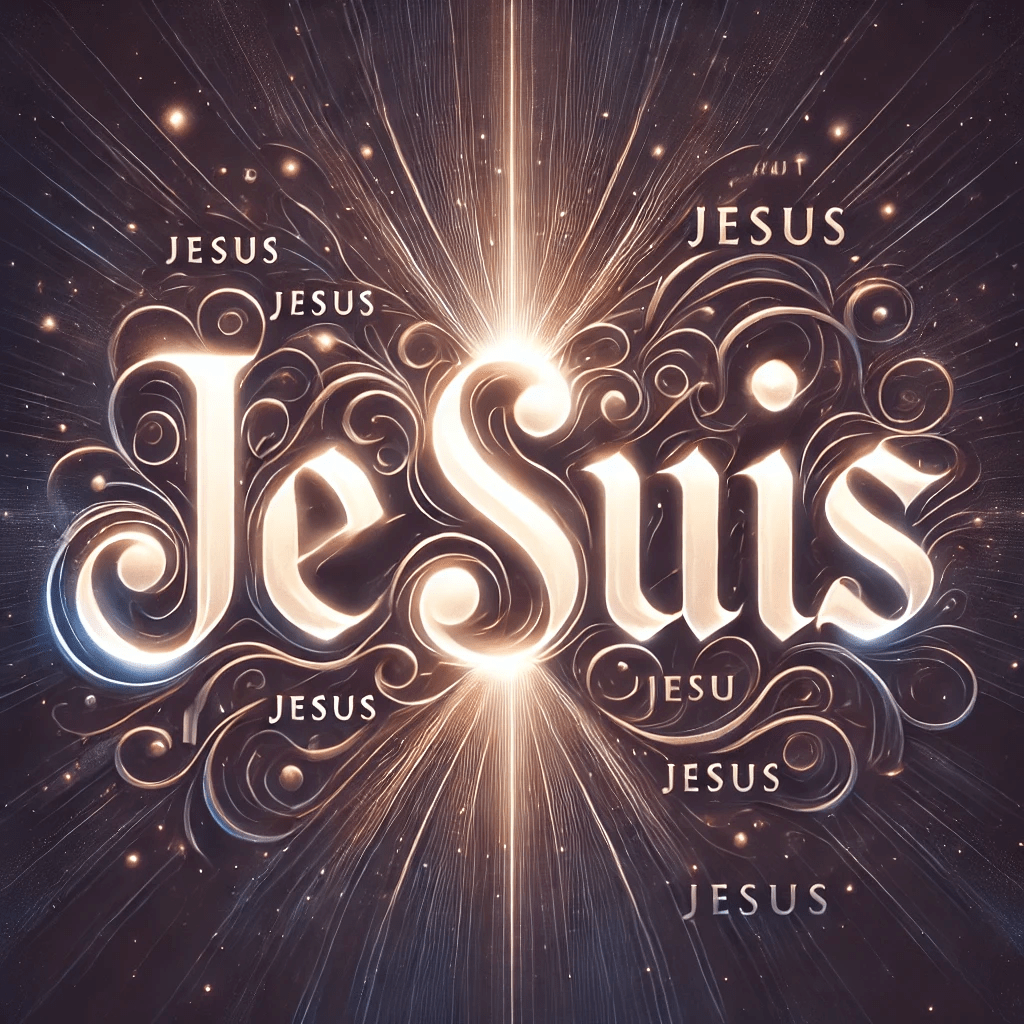
In French, je suis means “I am.” And the spelling is very close to « Jesus ».

Could it be that early mystics—whether in oral tradition, meditation, or chant—were repeating the phrase “je suis” to declare their divine identity?

Could they have said, “Je suis the way, the truth, and the life”—and over time, this mystical mantra became mistaken for a name?

Could “Jesus” have evolved not from misunderstanding Aramaic, but from mishearing Presence?

It’s speculative, yes. But also poetic. Because whether or not the name “Jesus” comes from “Je suis,” the teaching remains:

Christ is not a name. It’s a state of being.

A consciousness of love, unity, and sacred presence.

Returning to the Forgotten Path

Maybe we didn’t get the name “wrong” so much as we got the emphasis wrong.

Instead of fixating on the figure, we were meant to awaken to the frequency.

Instead of worshiping “Jesus,” we were meant to embody je suis.

“I AM the light of the world” was never a boast. It was a mirror.

It was a call to remember who we really are.

And whether or not the evolution from je suis to Jesus is historically provable, the synchronicity is striking. A divine wink, perhaps—reminding us that even language carries echoes of forgotten truth. The path to presence has always been there, hidden in plain sight, waiting for those with ears to hear.

So today, in a world awakening from spiritual amnesia, maybe we’re ready to hear the original message again.

Not as a name.

But as a truth.

Je suis.

I AM.

The Rapture That Wasn’t: Why Early Christians Didn’t Believe in Escaping Earth

BREAKING: RAPTURE RESCHEDULED DUE TO SUPPLY CHAIN ISSUES

Heavenly sources confirm that the long-awaited rapture has been delayed again—this time due to a shortage of cloud fuel and insufficient harp inventory.

An anonymous angelic spokesperson said, “We’re still trying to get the golden escalators functioning. Also, someone left the Book of Life in the copier tray again.”

In the meantime, believers are advised to:

• Keep one foot off the ground, just in case.

• Practice skydiving without a parachute.

• And definitely ignore that whole “meek shall inherit the Earth” thing—it was probably just a metaphor, right?

Meanwhile, Jesus is reportedly walking around the temple with a sign that reads:

“Free the lambs, not enslave them.”

He also added, “Y’all really thought I died so you could throw barbecues and wait for space Uber? C’mon.”

Seems a little ridiculous, right?

Have you ever played a game of telephone? One message whispered from person to person slowly becomes distorted, until the final version barely resembles the original.

That’s exactly what happened to the teachings of Jesus.

One of the clearest examples?

The Rapture.

Modern-day evangelical churches teach that Jesus will one day return in the clouds and snatch up all the “true believers,” leaving the rest of humanity to suffer a horrific tribulation on Earth. But here’s the truth:

The earliest Christians didn’t believe in that kind of rapture. Not even close.

Where Did the Rapture Come From?

The word rapture never appears in the Bible. The concept was first systematized in the 1830s by John Nelson Darby, a British theologian who founded a movement known as Dispensationalism. His teachings were later popularized in America through the Scofield Reference Bible (1909) and reinforced by pop culture hits like the Left Behind series.

Darby’s idea was this: the world is going to get worse and worse, and before God pours out judgment on humanity, Christians will be “caught up” into the sky—based on one ambiguous passage in 1 Thessalonians 4:17:

“Then we who are alive and remain shall be caught up together with them in the clouds to meet the Lord in the air…”

But this passage, when read in context, refers to a welcoming party—not an escape. In ancient Greco-Roman culture, people would go out to meet a visiting king and escort him back into the city. This passage wasn’t about leaving Earth—it was about welcoming the divine presence to dwell among us.

What Did the Earliest Christians Believe?

Early Christians, particularly those tied to Jewish followers of Jesus like the Ebionites and Nazarenes, didn’t long to escape the world—they longed to transform it.

They believed in the coming of the Kingdom of Heaven—but on Earth.

“Blessed are the meek, for they shall inherit the earth.” (Matthew 5:5)

This was not a metaphor. It was a promise. The Earth wasn’t something to flee—it was something to liberate.

In The Gospel of the Holy Twelve, a restored early Christian gospel aligned with the Essenes (a mystical, peace-centered Jewish sect believed to be close to Jesus), the message is even clearer:

“The kingdom of God is within you and around you. It is not in buildings made by hands, nor in the sky to be awaited, but is now, wherever love and truth dwell.”

This aligns with Luke 17:21 in modern-day scripture:

“The kingdom of God is within you.”

Why Would Modern Evangelicals Promote the Rapture?

It’s simple: control.

If you believe the world is doomed, you won’t try to change it.

If you think Jesus is coming soon to evacuate you, why fight injustice?

Why care for the Earth, animals, the poor, or future generations?

The rapture theology promotes passivity and dependence, not liberation or courage. It also supports a form of Christian nationalism that aligns with certain interpretations of the modern state of Israel—not the people who wrestle with God (the true meaning of “Israel”)—but a political power masquerading as divine destiny.

And yet Jesus said:

“The last shall be first.” (Matthew 20:16)

“Woe to you who are rich now, for you have already received your comfort.” (Luke 6:24)

This is not about domination or escape—it’s about a sacred upside-down revolution.

The People Who Wrestle With God

The real “Israel”—in its original, spiritual meaning—is not a nation-state.

It’s a name given to Jacob, who wrestled with the divine and refused to let go until he was blessed. (Genesis 32:28)

It is those who wrestle, question, and seek truth out of the goodness of their hearts, not blind loyalty to human institutions.

Jesus was not calling people to bow to empire. He was calling people to wake up.

Returning to the Source

Modern theology is often a product of empire, fear, and control.

But the earliest teachings—those closest to the Source—are radically different.

They’re about justice. Love. Peace. Awakening.

Not escaping Earth, but redeeming it.

So the next time you hear about the rapture, ask yourself:

Is this a teaching from the heart of Christ…

or just a distorted whisper passed down through centuries of empire?

In The Lost Path to Freedom, I explore these forgotten teachings—not as history, but as living truth for today. Because the veil is lifting. The kingdom is near. And the ones who wrestle with God in love are the ones who will help heal the world.