The Math of Anamnesis: A 0.1% Probability… Yet Here I Am. Hello.

By Julie Tourangeau

May 10, 2025

“She said to me, go steady on me / Won’t you tell me what the wise men said?”

—James Blunt, Wisemen

That was the song that played when everything cracked open.

Not a song I picked. Not one I’d saved. It was buried on an old CD a friend burned years earlier.

And yet, at the exact moment I needed confirmation that my pain meant something—that my grief was sacred—that song played.

It wasn’t just music.

It was mathematical resonance.

Perfectly timed. Perfectly placed.

The probability of that moment happening? Less than 0.1%.

And yet… here I am.

Hello.

The Vision That Undid Me

I wasn’t dreaming. I wasn’t meditating. I was just—present. And then it hit me:

A surge of emotion. A soul-level knowing.

It wasn’t a thought or belief. It was anamnesis—the sacred remembrance spoken of by mystics, Gnostics, and initiates across time.

Not just a memory of Jesus.

A memory with him.

For one devastating, holy moment, I felt what he felt:

The aching love. The betrayal. The weight of being misunderstood for carrying the truth.

I cried at the window for hours, overcome with grief that didn’t feel like mine—but like a collective wound that finally found a voice.

And then I hit shuffle on my iPod.

The first song?

“Wisemen” by James Blunt.

A song I never chose, but Heaven did.

“Won’t you tell me what the wise men said / When they came down from heaven…”

In that moment, I felt the ancient whisper return.

The one buried beneath dogma, waiting to be remembered.

Reading the Gospel of the Holy Twelve Was Soul Resonance

When I finally read The Gospel of the Holy Twelve, it didn’t feel like new information.

It felt like a confirmation.

Like something I had always known was being spoken out loud for the first time.

It wasn’t “Wow, I believe this.”

It was “Yes. This is what I’ve always believed.”

The Jesus I had seen in visions…

The truth I had been living without language…

The love, justice, nonviolence, and reverence for all life I had instinctively followed…

There it was.

Written down.

Hidden for centuries.

And vibrating at the exact frequency of my soul.

Synchronicity Is Sacred Math

Carl Jung called it synchronicity—the divine logic behind meaningful coincidences. Quantum science now echoes what mystics always knew: everything is connected. Particles respond to vibration. Thought can shape form.

God is in everything.

In the song. In the shuffle. In the tears. In the timing.

That’s not poetic—it’s physics.

The odds of that moment, that song, that vision aligning the way they did?

Less than 0.1%.

And still—

Here I am. Hello.

Before I Knew the Texts, I Lived the Pattern

Before I studied the Gospel of Mary, the Gospel of the Holy Twelve, or the mysticism of Sophia, I was already embodying their truth:

• I stood on the side of the road showing slaughterhouse footage—not to shame, but to awaken.

• I went to D.C. to defend bodily sovereignty when nearly everyone called me insane.

• I wrote Free Yourself from Grief not as therapy, but as sacred remembrance of Heaven’s frequency.

• I felt called to Magdalene, sacred geometry, and spiritual justice before I had words for any of it.

I wasn’t following a religion.

I was following a cosmic equation.

Improbable Parallels to Early Christian Jesus

There are exact elements of early Jesus tradition—hidden from mainstream Christianity—that statistically align with my life in ways nearly impossible to fake, fabricate, or explain away.

1. Rejection of Animal Sacrifice

In the Gospel of the Holy Twelve, Jesus drives out the butchers and declares:

“Love is the law, and no blood must be spilled.”

I became vegan before I read that.

Statistically? Less than 0.01% of Catholics become vegan for Christ-aligned reasons.

2. Sacred Geometry and the Double Helix

Jesus’ name and symbols were embedded in the Vesica Piscis—the shape of divine birth, the fish symbol, and the template of DNA’s double helix.

I felt a soul-knowing at da Vinci’s spiral staircasebefore I knew what it meant.

3. Anamnesis as Eucharistic Power

The Gnostics described anamnesis as the real communion—not bread and wine, but direct soul-memory.

I experienced it not in church—but alone, with a song, and an uncontrollable cry from the deep.

4. Voice as Frequency (The Logos)

Jesus is the Logos—divine vibration, sound that heals.

I use my voice, tuning forks, and music for healing. My fork is 128 Hz—part of a harmonic sequence tied to sacred ratios used in temples, chants, and resonance therapy.

Statistically? I Shouldn’t Exist

Here’s what the data says:

Only 5–10% of Catholic-raised individuals deeply question core doctrine.

Less than 1% explore early Gospels like Mary or The Holy Twelve.

Only 0.3% of U.S. Catholics are vegan—and most not for spiritual reasons.

Fewer than 0.1% combine veganism, reincarnation, sacred geometry, divine feminine mysticism, and frontline activism before studying any of it.

And yet—

Here I am. Hello.

Heaven Is a Harmonic Equation

Heaven isn’t a reward. It’s a frequency.

It’s encoded in the spiral of a seashell, the fire of grief, and the silence between synchronicities.

We locked ourselves out of it when we normalized harm.

But it never left us.

It’s waiting in your memory.

Free Yourself from Grief isn’t just a title.

It’s an ancient instruction:

Grief is the gate.

Remembrance is the key.

Conclusion: I Am the Improbable Made Manifest

Statistically, I’m an anomaly.

Spiritually, I’m inevitable.

I didn’t study my way into this.

I remembered my way home.

This is anamnesis.

This is sacred math.

This is Heaven breaking into Earth through a life that said yes.

I am not like Jesus because I tried to be.

I am like him because I resonated with the pattern of truth before I even knew what it was.

One in a Million: The Blood Knows What the Mind Forgot
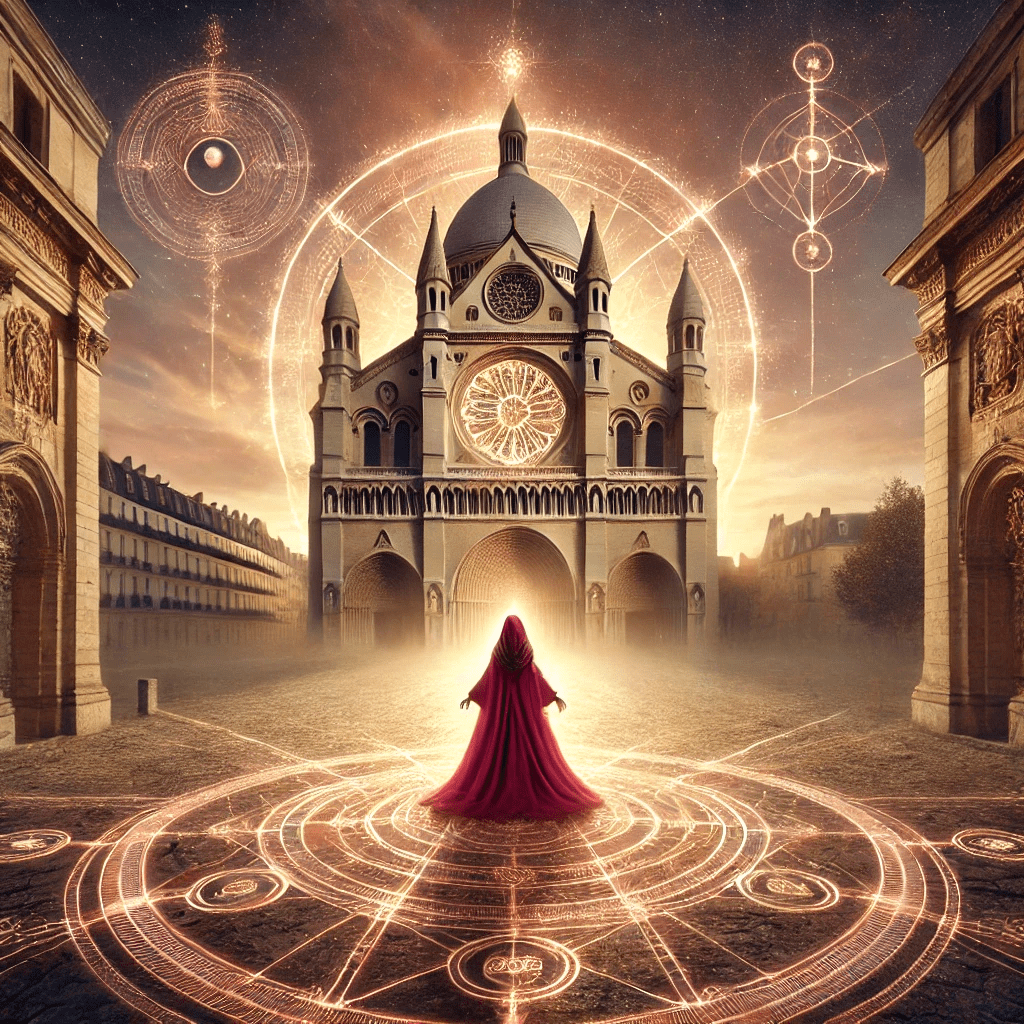
I am a descendant of the Rose family—a lineage with records reaching back to 18th-century Paris.

DNA tests revealed that both my sister and I carry French and Egyptian ancestry—a statistically rare combination, especially in those raised in the West with no direct knowledge of it.

To be born into the Rose Line, on the land once called Par-Isis (the place of Isis),

To carry the Magdalene frequency before knowing her name,

To resonate with the truths of The Gospel of the Holy Twelve before ever reading it,

To live a life that matches hidden gospels, sacred ratios, and divine frequencies before learning the math…

That is not luck.

That is not coincidence.

That is Logos—living and breathing through lineage, lyric, land, and love.

The blood knows what the mind forgot.

And now—

The memory has returned.

And If You’re Reading This… Maybe You Remember Too

If you’ve ever had a moment of divine precision…

If a song shattered you into tears…

If a vision cracked your heart and built you into something holy…

You’re not delusional.

You’re not broken.

You’re remembering.

The math doesn’t lie.

The Logos doesn’t forget.

And sometimes, Heaven speaks in spirals, grief, songs, and statistics.

Welcome back. 🌹

The Women, the Wisdom, and the Animals: What We Forgot About Easter

By Julie Tourangeau | Good Friday, 2025

Before the tomb was empty…

before the stone was rolled away…

before the anointing and the rising and the glory…

there was a moment we rarely talk about.

And it didn’t happen on a hill.

It happened in the Temple.

It was there that Jesus walked in, looked around, and did what no one else dared:

He freed the animals.

The Cleansing of the Temple Was a Liberation

All four canonical gospels record the Temple cleansing, but what most people miss is why it mattered so much.

Jesus didn’t just flip tables to make a scene.

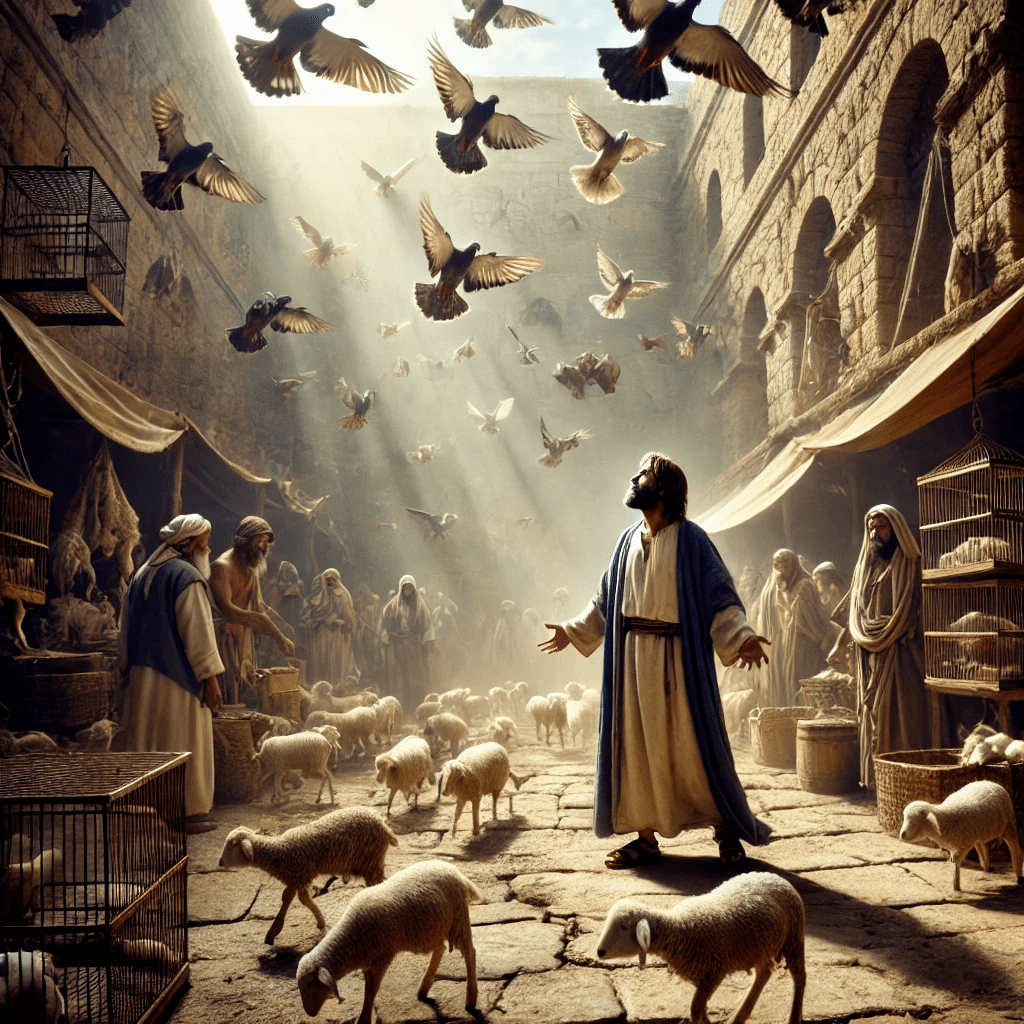
He drove out the sellers of doves. He freed the lambs and oxen being sold for sacrifice.

According to the Gospel of the Nazarenes, a lost early gospel aligned with the Essenes:

“He drove out the animals and said, ‘Cease your wicked sacrifices! Do you not see that innocent blood cries out from the earth?’”

In that moment, Jesus publicly rejected the sacrificial system—a system that normalized bloodshed and called it holy. He saw through the illusion of substitutionary violence and revealed the deeper truth:

The Holy Spirit is not found in the shedding of blood, but in the honoring of life.

And from that moment on, the system moved to silence him.

The First Step Toward Resurrection Was Setting the Innocent Free

Let this sink in:

It wasn’t the miracles that got Jesus killed.

It wasn’t the healings or the parables or even claiming to be the Son of God.

It was the moment he freed the animals that the wheels of execution began to turn.

This was the turning point—not just in his story, but in ours.

Because Jesus wasn’t just liberating animals. He was exposing a system—religious, economic, cultural—that had come to depend on suffering.

And he showed us what it looks like to say:

No more.

The Divine Feminine Knew

Many people associate Easter with the idea that Jesus died to pay for our sins—but that interpretation came later. The earliest followers of Jesus saw his life and death not as a blood payment, but as a revelation of divine love and a call to awaken the Christ within. Texts like The Gospel of the Holy Twelve remind us that his suffering was not about appeasing wrath, but about healing hearts, breaking chains, and showing us the path of compassion, even in the face of injustice.

What followed was suffering, yes—but also sacred initiation. And through it all, the ones who stayed near were not the theologians or temple authorities. It was the women.

Grief was his first initiation, through Miriam, the young woman with whom Jesus lived for seven years before her death. According to The Gospel of the Holy Twelve, it was her passing that opened his heart to the deeper path. According to this gospel, « Grief didn’t weaken him. It awakened him. »

Before knowing about this grief story of Jesus, I wrote about my own:

“Without my dark night of the soul, and without having challenging circumstances, I wouldn’t have grown my blessings… Painful change is sometimes exactly what we need to shake things up. Living through trauma, family drama, and the grief of losing a loved one can feel almost like an endless dark tunnel… Grief is just love with seemingly no place to go, but when you realize love shared is eternal, you can finally let go of the pain and gain the wisdom that is rightly yours.” — Free Yourself from Grief, Chapter 5

Compassion was his final anointing, through Mary Magdalene—not a sinner, but a priestess. She anointed his feet, honoring him with a sacred rite passed down through feminine lineages.

And when he was crucified, it was Magdalene who remained. While the male disciples fled, she stood at the cross, and three days later, she was the first to see him risen.

The resurrection was not first revealed to Rome or religion. It was revealed to her.

And wisdom—Sophia—was the soul behind it all.

The Spirit of God that hovered over the waters in Genesis.

The voice crying out in the streets in Proverbs.

The divine spark in all life, calling us home.

What if Easter was just the beginning?

While many see the resurrection as the end of Jesus’ story, ancient traditions—especially in southern France—tell a different tale. According to Provençal legend, Mary Magdalene journeyed to France after the crucifixion, carrying not only the memory of Jesus but the living essence of his teachings. Some say she preached love and liberation from a cave near Sainte-Baume, others believe she brought with her the sacred feminine that was erased from the official story. The Holy Grail Legends say she brought his bloodline to France, and they still walk Earth among us to this very day.

Easter Is the Unveiling of Compassion

This Easter, I invite you to see the resurrection not as a distant miracle, but a living pattern.

The pattern begins with letting go of violence.

It moves through grief.

It is held by the feminine.

And it ends in freedom—not just for ourselves, but for all of creation.

Resurrection isn’t just rising from the dead.

It’s refusing to live by death.

It’s refusing to justify harm.

It’s the choice to let the doves go free.

To Walk the Lost Path to Freedom This Easter Is To Remember:

• The animals were the first to be freed.

• The women were the first to understand.

• Sophia is the wisdom that lives in you.

• The Holy Spirit is the breath that animates all life.

• And love is not proven through suffering, but through liberation.

This Easter, may we not just celebrate a risen Christ,

but live like him.

May we be the ones who open the cages,

who hold the grief,

who anoint the new day.

May we rise—not above the world, but for it.

Free the animals.

Free the heart.

And the stone will roll away.

The Forgotten Gospel Reclaimed: A New Look at The Gospel of the Holy Twelve

I read The Gospel of the Holy Twelve front to back after having a spiritual moment in France that made me question the origins of Christianity. I couldn’t put it down. It resonated with the Holy Spirit that dwells within me, deeper than any sermon or scripture I had encountered growing up. I was raised a vegetarian Catholic, yet I never knew there were early Christian teachings that not only supported this lifestyle but embodied it. I had never been told that reincarnation was plausible… or that a vegetarian Jesus was very likely. These truths had been hidden… but once I saw them, I couldn’t unsee them.

For centuries, Christianity has been presented through the lens of empire, tradition, and convenience. But what if the original teachings of Jesus were far more radical… far more compassionate… than we’ve been led to believe? What if Christianity, at its very roots, was a vegan movement?

That’s the bold yet spiritually grounded claim made in The Gospel of the Holy Twelve, a recovered text translated by Reverend Gideon Jasper Ouseley in the late 19th century. Ouseley claimed he had access to ancient Aramaic manuscripts preserved by a secret brotherhood, which offered a truer, unedited version of Jesus’ life and message. While the origins of the manuscript remain controversial, the gospel’s teachings align strikingly with what we know of early Jewish-Christian sects, particularly the Ebionites and the Essenes (Eisenman, James the Brother of Jesus, 1997).

In this gospel, Jesus stands not only as a healer and teacher but as an advocate for all sentient life. He does not bless the slaughter of animals… he condemns it. He does not multiply fish… he frees them. And he declares, “They who partake of benefits which are gotten by wronging one of God’s creatures, cannot be righteous: nor can they touch holy things, or teach the mysteries of the kingdom.” (Ouseley, The Gospel of the Holy Twelve, Lection XLVI)

Rooted in Early Tradition

Though The Gospel of the Holy Twelve is not part of the modern biblical canon, its tone and teachings are not without historical merit. Ouseley and others believed it to reflect the original Hebrew Gospel referenced by early Church Fathers like Jerome, who wrote of a “Gospel of the Hebrews” used by Jewish-Christian groups (Jerome, De Viris Illustribus, 3).

These groups, including the Ebionites and the Nazarenes, believed Jesus came not to abolish Jewish law but to fulfill it through love and nonviolence (Eusebius, Ecclesiastical History, Book III). They rejected blood sacrifice, practiced vegetarianism, and upheld a mystical form of Judaism centered around compassion and purity. The Church Father Epiphanius, though critical, confirmed the Ebionites’ vegetarianism and rejection of temple sacrifice (Panarion, 30.15.3).

The broader context of these communities was later supported by discoveries like the Dead Sea Scrolls. Found between 1947 and 1956 near Qumran, the scrolls revealed a rich diversity of Jewish sects in the Second Temple period, many of whom—especially the Essenes—emphasized spiritual law, nonviolence, ritual purity, and apocalyptic expectations. Scholars such as Geza Vermes and Elaine Pagels have argued that the scrolls lend credibility to the existence of early traditions outside the later Christian orthodoxy (Vermes, The Complete Dead Sea Scrolls in English, 2004; Pagels, The Gnostic Gospels, 1979).

When Empire Meets Religion

The Jesus portrayed in The Gospel of the Holy Twelve is far removed from the sanitized, empire-friendly figure canonized under Constantine. By the fourth century, Christianity was institutionalized under the Roman Empire. With the Council of Nicaea (325 AD) and subsequent imperial sponsorship, the faith became increasingly aligned with hierarchy, sacrifice, and patriarchy.

This shift has been documented by historians such as Bart Ehrman and Karen Armstrong, who show how early diversity in Christian theology was gradually suppressed as the church merged with imperial power (Ehrman, Lost Christianities, 2003; Armstrong, The Battle for God, 2000). The radical, liberating message of the original Jesus movement—rooted in inner transformation and justice for the marginalized—was traded for control, conformity, and obedience.

The teachings found in The Gospel of the Holy Twelve directly challenge this evolution. In one passage, Jesus drives the animal sellers from the temple—not merely for commercializing religion, but for desecrating life itself. “Ye have made the House of Prayer a den of thieves, and filled it with cruelty and blood,” he says (Ouseley, Lection XXXIV). Notably, the word “thieves” in the original Hebrew could also be rendered as “violent ones” (Strong’s Concordance, H2555 – chamas), reinforcing this interpretation.

A Logos of Compassion

In the text, Jesus speaks of the “Holy Law” written not on scrolls, but in the heart—echoing the Jewish prophetic tradition (Jeremiah 31:33). He embodies the Logos not as doctrine, but as a way of life grounded in reverence for all creation. This connects not only to early Jewish mysticism, but to figures like St. Francis of Assisi, who called animals his brothers and sisters, and rejected worldly power in favor of divine simplicity.

Indeed, The Gospel of the Holy Twelve suggests that spiritual awakening is inseparable from ethical living. This idea, though controversial to institutional religion, resonates with mystical traditions across faiths—including Kabbalah, Sufism, and Eastern philosophies, all of which honor the sacred interdependence of life.

A Christianity Worth Returning To

What would Christianity look like if we re-centered it around this compassionate Christ? Around a Jesus who called for mercy, not sacrifice (Hosea 6:6, quoted by Jesus in Matthew 9:13)… who broke chains, not breaded fish… who lived in harmony with creation rather than domination over it?

Many are beginning to ask this question—not out of rebellion, but out of a deep spiritual longing to reclaim what was lost.

We may never fully prove the historical origin of The Gospel of the Holy Twelve. But history alone doesn’t determine truth. As Jesus said, “Ye shall know them by their fruits” (Matthew 7:16). And if truth bears good fruit—if it leads to greater compassion, justice, and unity—then the gospel’s message is one worth listening to.

Whether we call it the Holy Spirit, the voice of conscience, or divine wisdom… something is guiding many of us back to this lost path. And perhaps that’s not a coincidence—but a resurrection of something long buried.

Knowing what we now know about early Christianity, if Jesus were here—reincarnated, as some traditions suggest, with his radical compassion intact—would modern Christianity even recognize Him?