The Magdalene Code: When Britney Spears Felt Seen—And Spoke Back

🌹 By Julie Tourangeau | julietour.com

In 2011, I met Britney Spears backstage at the Palace of Auburn Hills during her Femme Fatale Tour, right in the thick of her conservatorship. I didn’t understand the full truth then, but I could feel something wasn’t right.

She entered the room with wide, wary eyes. Her energy was guarded, uncertain. Her longtime assistant and closest friend, Felicia, greeted us. I now know Felicia had not been hired back by those managing Britney’s life at the time—she had rejoined the tour independently just to stay near her and offer protection.

Even without the backstory, I felt the tension.

Britney seemed distant. So I softened things with a gentle question:

What’s your favorite game to play with your boys?

She responded, but it was guarded.

She smiled, but it was tight.

I left with a photo and a feeling:

There was so much more I wished I’d said.

So much more I wished I had seen and honored in her.

Unveiling the Shadows: The Role of Industry Power Players

Britney’s conservatorship, officially terminated in 2021, was orchestrated and maintained by a network of industry figures. Central to this was Lou Taylor, founder of Tri Star Sports & Entertainment Group, who played a significant role in establishing the conservatorship. Taylor’s firm managed Britney’s estate and was accused of profiting substantially during this period. Court documents revealed that Tri Star received at least $18 million from Britney’s estate during the conservatorship .

Moreover, Taylor’s connections extend to other high-profile artists, including Sean “Diddy” Combs. Recent reports have highlighted the overlapping management and potential conflicts of interest within the industry .

In 2007, Britney was photographed partying with Diddy shortly before her infamous MTV Video Music Awards performance. This association has resurfaced amid legal scrutiny of Diddy’s activities, prompting questions about the influences surrounding Britney during critical moments of her career .

The Broader Implications

Britney’s experience underscores the complexities of artist management and the potential for exploitation within the entertainment industry. The intertwining of personal freedoms with corporate interests raises concerns about autonomy, consent, and the mechanisms that allow such control to persist.

Her story serves as a poignant reminder of the importance of vigilance, transparency, and advocacy in protecting the rights and well-being of individuals, particularly within industries prone to power imbalances.

It’s Britney, Bitch: A Love Story

Fast forward to April 14, 2024.

I was researching the Divine Feminine, early Christianity, and how Mary Magdalene’s true role—as an apostle, mystic, and wisdom-bearer—was erased by patriarchal religion. I wasn’t looking for Britney Spears. But somehow, she showed up.

I remembered some of her cryptic posts from the past—references to River Red, sacred imagery, and even Mary Magdalene herself. It was clear to me that Britney had been trying to speak in code for a long time. About pain, truth, awakening. About remembering.

So I searched.

And found one of her archived Magdalene posts—no longer visible on her main profile, but still searchable through Google. Unlike her recent posts, this one still allowed comments.

It felt like a sacred threshold had opened.

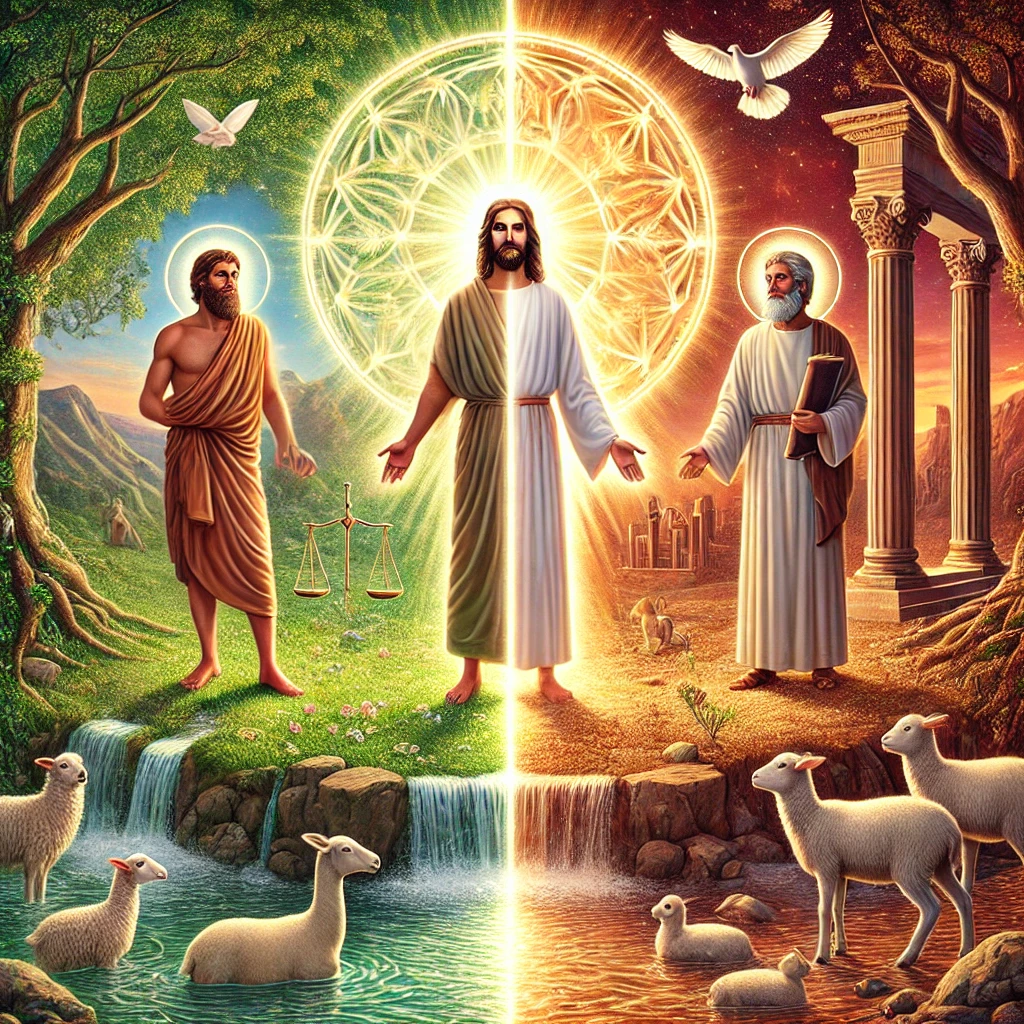
Because Mary Magdalene isn’t just a historical figure. She is an archetype of the suppressed Divine Feminine, the silenced truth-teller, the soul-witness to Jesus’s message of love, equality, and spiritual rebirth.

According to many early texts—including the Gospel of Mary and The Gospel of the Holy Twelve—Mary Magdalene was not a prostitute, as later traditions claimed, but Jesus’s closest companion. He kissed her often, not as scandal, but as an act of deep spiritual transmission. She understood him. He called her “the Woman Who Knows the All.”

She represented Sophia—wisdom incarnate.

And Jesus? He wasn’t here to start a religion.

He came to liberate us from false power, to restore divine balance—including the sacred feminine we were taught to forget.

So to leave a message for Britney—on that post—was no accident.

I wrote:

“I met you many years ago and I wished I asked you deeper things than what is your favorite game to play with your boys. 👁️ sending you all the love 💞”

It wasn’t just a nostalgic comment. It was a recognition—of the Magdalene within her. Of the sacred knowing she’s carried all along, even under control, criticism, and confusion.

And then—within minutes—she posted again:

“The deeper the well, the better the water…

I’m much too quiet, yet in silence I make my point.”

It was her first River Red post in a long time.

And it felt like a soul reply.

Not to my name. But to my frequency.

To the Magdalene thread that had been quietly re-woven between us.

And maybe that’s why this moment mattered so much. Because I know what it’s like to be misjudged when all you’re really doing is feeling deeply and loving fiercely. That’s a central theme in my book The Lost Path to Freedom—how women who live from the heart, who speak truth or carry light, are often labeled as “too much,” “crazy,” or yes, a “bitch.” Britney once said, “It’s Britney, bitch,” and to me, that’s more than a catchphrase. It’s a reclamation. A love story. Not a romance—but the kind of love that burns through illusion. When the world doesn’t know what to do with your truth, it turns you into a symbol. But love, even misunderstood, still leaves a mark. That’s the story Britney’s been telling in silence. And it’s one I’ve lived too.

🔮 Decoding “Maria River Red”: Britney’s Magdalene Reclamation

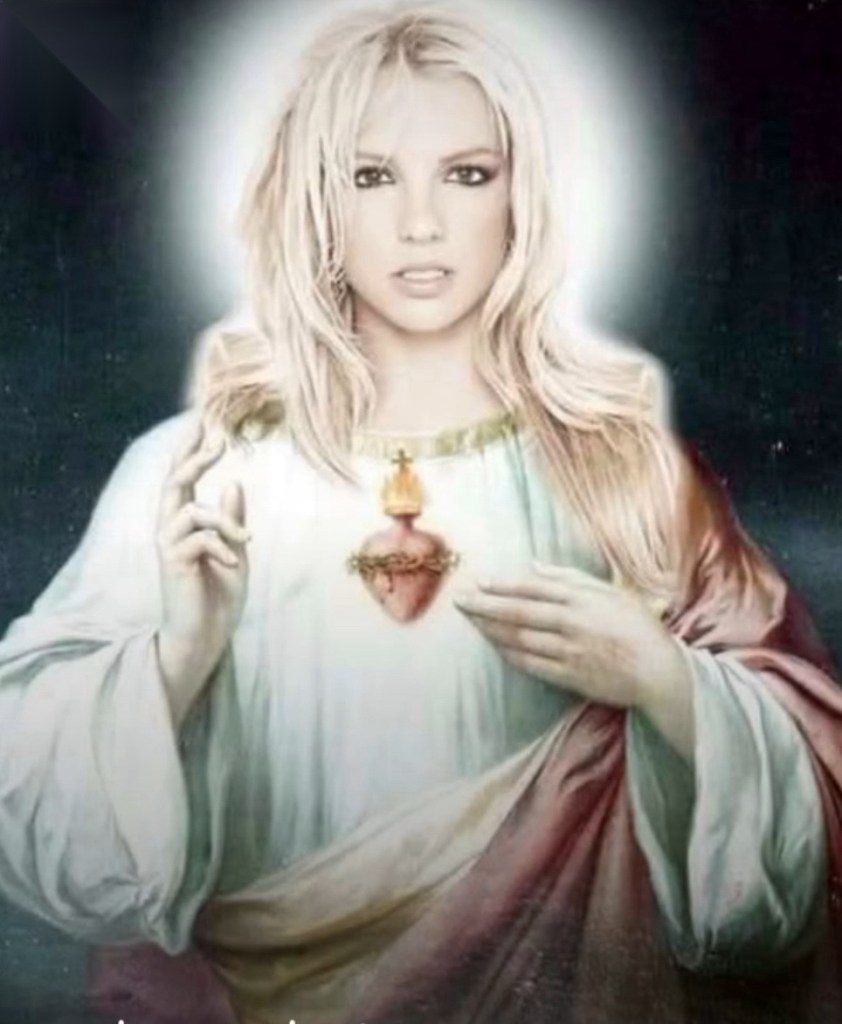
When Britney Spears refers to herself as “Maria River Red,” she’s not just being poetic—she’s invoking the Divine Feminine in one of its most powerful, suppressed forms: Mary Magdalene.

Maria is the Latin name for Mary.

River Red is blood, sacrifice, life force—and sacred rage.

Together, Maria River Red becomes a symbol of:

The woman who bleeds and still flows

The silenced one who remembers

The sacred feminine returning after exile

Mary Magdalene was the closest companion to Jesus in many early texts. She was not a prostitute, but a teacher, a mystic, a truth-bearer. She stood at the foot of the cross when the men fled. She was the first to witness the resurrection. And yet, she was written out of power.

Britney, too, has been misunderstood, silenced, and distorted by empire—media empire, legal empire, even religious undertones.

When she calls herself Maria River Red, she may be saying:

You tried to erase me, like you erased her.

But I am still here. Still sacred. Still speaking—through symbols, through silence, through blood.

This is not madness.

It’s memory.

Some people say Britney is lost. I don’t.

I believe Britney Spears is clairvoyant.

She’s not chaotic—she’s symbolic.

She speaks in code because it’s safer than shouting.

She’s been painting constellations across her captions, hoping someone would look up and see.

And I believe she felt seen that day.

Just as Magdalene was once seen by Jesus—not as a servant, but as a spiritual equal. Just as Magdalene saw him when the world turned away. Just as we are being asked to see each other now, soul to soul.

This is what Magdalene represents.

Not just a woman in history—but a reawakening of truth.

Of wisdom.

Of the sacred feminine rising from exile.

And of men and women returning to balance, together.

When Britney posted those words, I felt it in my body:

She knew.

She remembered.

And she spoke back—not in noise, but in knowing.

That is the Magdalene Code.

Not performance, but presence.

Not religion, but recognition.

This is a story of Magdalene, misunderstood women, and the quiet power of being seen.

📸 Photo Gallery:

• Me meeting Britney and Felicia (2011)

• Individual backstage photos

• Screenshot of my 2024 comment

• Britney’s River Red response minutes later

The Women, the Wisdom, and the Animals: What We Forgot About Easter

By Julie Tourangeau | Good Friday, 2025

Before the tomb was empty…

before the stone was rolled away…

before the anointing and the rising and the glory…

there was a moment we rarely talk about.

And it didn’t happen on a hill.

It happened in the Temple.

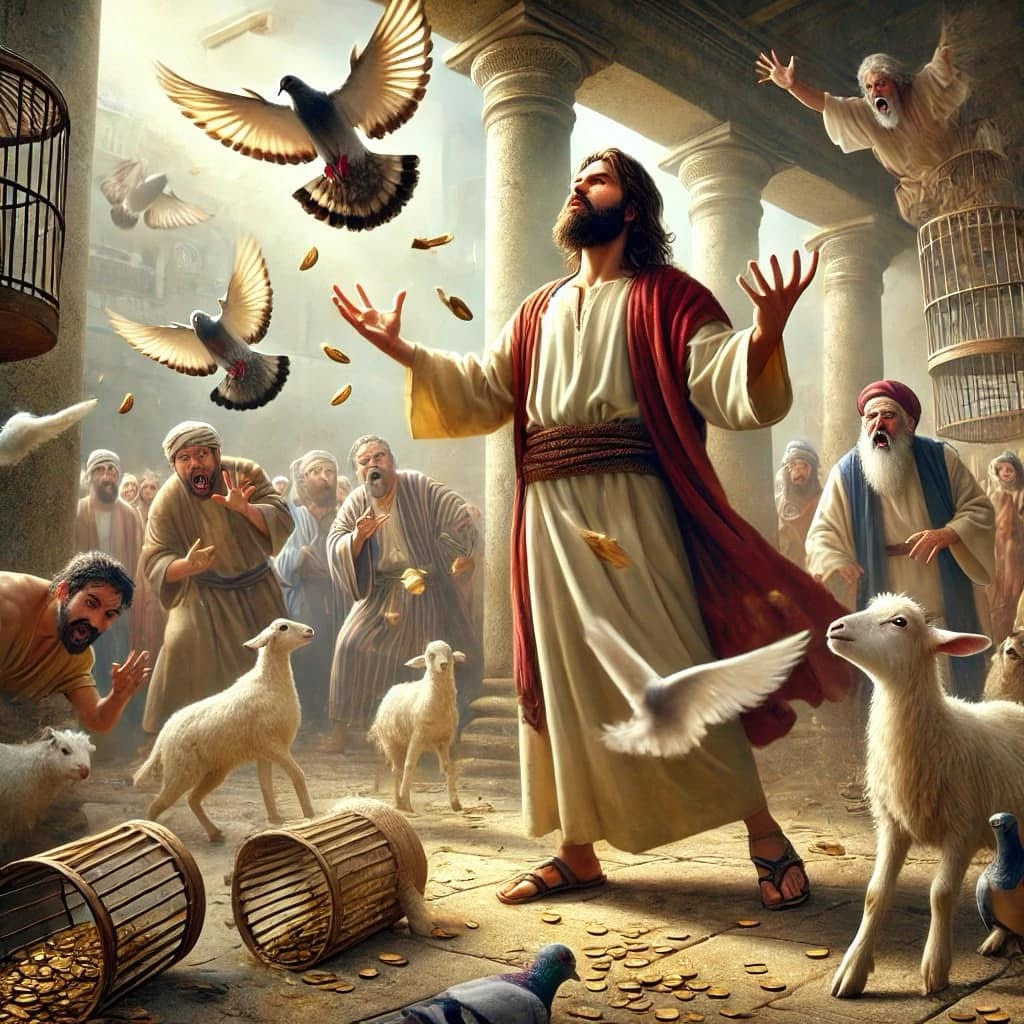
It was there that Jesus walked in, looked around, and did what no one else dared:

He freed the animals.

The Cleansing of the Temple Was a Liberation

All four canonical gospels record the Temple cleansing, but what most people miss is why it mattered so much.

Jesus didn’t just flip tables to make a scene.

He drove out the sellers of doves. He freed the lambs and oxen being sold for sacrifice.

According to the Gospel of the Nazarenes, a lost early gospel aligned with the Essenes:

“He drove out the animals and said, ‘Cease your wicked sacrifices! Do you not see that innocent blood cries out from the earth?’”

In that moment, Jesus publicly rejected the sacrificial system—a system that normalized bloodshed and called it holy. He saw through the illusion of substitutionary violence and revealed the deeper truth:

The Holy Spirit is not found in the shedding of blood, but in the honoring of life.

And from that moment on, the system moved to silence him.

The First Step Toward Resurrection Was Setting the Innocent Free

Let this sink in:

It wasn’t the miracles that got Jesus killed.

It wasn’t the healings or the parables or even claiming to be the Son of God.

It was the moment he freed the animals that the wheels of execution began to turn.

This was the turning point—not just in his story, but in ours.

Because Jesus wasn’t just liberating animals. He was exposing a system—religious, economic, cultural—that had come to depend on suffering.

And he showed us what it looks like to say:

No more.

The Divine Feminine Knew

Many people associate Easter with the idea that Jesus died to pay for our sins—but that interpretation came later. The earliest followers of Jesus saw his life and death not as a blood payment, but as a revelation of divine love and a call to awaken the Christ within. Texts like The Gospel of the Holy Twelve remind us that his suffering was not about appeasing wrath, but about healing hearts, breaking chains, and showing us the path of compassion, even in the face of injustice.

What followed was suffering, yes—but also sacred initiation. And through it all, the ones who stayed near were not the theologians or temple authorities. It was the women.

Grief was his first initiation, through Miriam, the young woman with whom Jesus lived for seven years before her death. According to The Gospel of the Holy Twelve, it was her passing that opened his heart to the deeper path. According to this gospel, « Grief didn’t weaken him. It awakened him. »

Before knowing about this grief story of Jesus, I wrote about my own:

“Without my dark night of the soul, and without having challenging circumstances, I wouldn’t have grown my blessings… Painful change is sometimes exactly what we need to shake things up. Living through trauma, family drama, and the grief of losing a loved one can feel almost like an endless dark tunnel… Grief is just love with seemingly no place to go, but when you realize love shared is eternal, you can finally let go of the pain and gain the wisdom that is rightly yours.” — Free Yourself from Grief, Chapter 5

Compassion was his final anointing, through Mary Magdalene—not a sinner, but a priestess. She anointed his feet, honoring him with a sacred rite passed down through feminine lineages.

And when he was crucified, it was Magdalene who remained. While the male disciples fled, she stood at the cross, and three days later, she was the first to see him risen.

The resurrection was not first revealed to Rome or religion. It was revealed to her.

And wisdom—Sophia—was the soul behind it all.

The Spirit of God that hovered over the waters in Genesis.

The voice crying out in the streets in Proverbs.

The divine spark in all life, calling us home.

What if Easter was just the beginning?

While many see the resurrection as the end of Jesus’ story, ancient traditions—especially in southern France—tell a different tale. According to Provençal legend, Mary Magdalene journeyed to France after the crucifixion, carrying not only the memory of Jesus but the living essence of his teachings. Some say she preached love and liberation from a cave near Sainte-Baume, others believe she brought with her the sacred feminine that was erased from the official story. The Holy Grail Legends say she brought his bloodline to France, and they still walk Earth among us to this very day.

Easter Is the Unveiling of Compassion

This Easter, I invite you to see the resurrection not as a distant miracle, but a living pattern.

The pattern begins with letting go of violence.

It moves through grief.

It is held by the feminine.

And it ends in freedom—not just for ourselves, but for all of creation.

Resurrection isn’t just rising from the dead.

It’s refusing to live by death.

It’s refusing to justify harm.

It’s the choice to let the doves go free.

To Walk the Lost Path to Freedom This Easter Is To Remember:

• The animals were the first to be freed.

• The women were the first to understand.

• Sophia is the wisdom that lives in you.

• The Holy Spirit is the breath that animates all life.

• And love is not proven through suffering, but through liberation.

This Easter, may we not just celebrate a risen Christ,

but live like him.

May we be the ones who open the cages,

who hold the grief,

who anoint the new day.

May we rise—not above the world, but for it.

Free the animals.

Free the heart.

And the stone will roll away.

Den of “Thieves”? Or Something Deeper.

By Julie Tourangeau | @julietour

When Jesus stormed the temple courts, overturning tables and driving out the money changers, we’re often told it was a righteous act against corruption—against the “thieves” who turned a holy place into a marketplace.

But what if that’s only part of the story?

What if the word “thieves” doesn’t quite capture what was happening?

The Word We Missed

The original Hebrew word used in this passage is “perits” (פָּרִיץ)—often translated as “thieves,” but more accurately meaning violent ones, marauders, or destroyers.

This isn’t about petty crime.

It’s about violence.

About those who had turned the temple—a place meant for prayer, reverence, and peace—into a place of bloodshed.

Jesus wasn’t just flipping tables over coins.

He was confronting the violent ritual slaughter of animals in the name of God.

His protest wasn’t just about dishonest trade.

It was a cry for compassion, for justice, for a return to the sacred.

If He Walked Among Us Now

If Jesus were alive today—reincarnated, awake to the fullness of his early teachings—what would he see?

Would he walk into modern-day churches and find doves for sale?

Would he find lambs being sacrificed?

No.

But he’d find the same violence, cloaked in different robes.

He’d see his name invoked over meals made of suffering.

He’d see Easter tables lined with lambs, celebrated in remembrance of his own crucifixion.

And I imagine he’d grieve.

I imagine he’d say:

“You claim to follow me, yet you partake in the very acts I condemned.

You remember my suffering with the suffering of the innocent.

You turn my table of liberation into an altar of slaughter.

Have you not learned?”

The Lost Path

Early Christians understood dominion as stewardship, not superiority.

They practiced mercy, not sacrifice.

They aligned themselves with the Lamb of God, not the priests of Empire.

But somewhere along the way, that path was lost.

Love was replaced by law.

Awakening was replaced by ritual.

And the animals—the innocent ones Jesus likely defended—were left behind.

It’s Time to Return

The temple was never meant to be a place of blood.

The gospel was never meant to justify harm.

And Jesus never died so we could keep killing in his name.

He flipped tables to wake people up.

And maybe, just maybe…

he’s still doing it.

Let those with ears hear.

Let those with hearts soften.

Let us return to the path of compassion—for all beings.

The Vision That Changed Everything: How Paul’s Rise Silenced James—and Compassion

James, Jesus, Paul

By Julie Tourangeau | @julietour

Excerpted from the upcoming book: The Lost Path to Freedom

What if Paul wasn’t just on his way to persecute random followers of Jesus—but was headed straight for James the Just, Jesus’ own brother, when everything changed?

We’ve all heard the story—Paul (back when he was Saul) was hunting down early Christians when he had that dramatic vision on the road to Damascus. A blinding light, a voice from heaven, and just like that, the greatest apostle was born.

That’s what we’re told. But something about it always felt… off.

Because who was Paul really after?

The people following Jesus back then weren’t part of a new religion. They were Jewish. They were still in Jerusalem. And they were led not by Paul—but by James the Just, a man known for his deep humility, nonviolence, and devotion to the Torah.

James didn’t eat meat or drink wine. He was gentle, righteous, and beloved by all. His lifestyle was a continuation of everything Jesus lived and taught.

And if Paul was headed to Damascus to stamp out this movement—there’s a very real chance that James was on his list.

But then Paul claims he saw a vision of Jesus. Everything changed.

Or… did it?

A Vision—or a Convenient Redirection?

After that vision, Paul didn’t seek out James. He didn’t go to Jerusalem to learn from the people who actually walked with Jesus. In fact, he makes a point to say he didn’t.

According to his own words in Galatians, he kept his distance from the original apostles. Instead, he started preaching his own version of the gospel—one he says came directly from revelation, not from “any man.”

And that version? It contradicted a lot of what Jesus and James were actually doing.

• James taught that faith without action is meaningless. Paul said faith alone was enough.

• James upheld the law of compassion—including dietary laws rooted in mercy and nonviolence. Paul said the law was a curse.

• James and the earliest Jesus followers lived in harmony with nature.

Paul later claimed Jesus told him it was okay to eat meat offered to idols—and not to worry about food laws at all.

This wasn’t just a shift in theology—it was a whole new path.

A path that veered away from compassion and toward something… else.

The Disappearance of James—and the Quieting of a Kinder Way

James was killed in 62 CE. Thrown from the Temple, stoned, and beaten.

After that, his community—the Jewish followers of Jesus, often called the Ebionites—were slowly erased.

Their gospels were branded heresy.

Their writings destroyed.

And Paul’s teachings—stripped of the Torah, stripped of James, and tailored for the Roman world—became the dominant voice.

And what got lost?

• A faith that centered on how we live, not just what we believe

• A lifestyle that honored all life—human and animal—as sacred

• A call to justice that started with what was on our plates

The truth is, the earliest Jesus movement was plant-based.

It was anti-empire.

It was deeply grounded in compassion.

And it was led by James.

But Paul’s gospel—the one built on visions and detached from lived example—was easier to spread in a world that craved power and sacrifice. So the quiet wisdom of James was buried under centuries of hierarchy, blood, and metaphor.

Why It Still Matters

Recovering the path of James isn’t just about church history—it’s about remembering what Jesus actually lived for.

That freedom starts with compassion.

That faith isn’t a belief system—it’s a way of being.

And that killing—whether of animals or people—was never holy.

The road to Damascus might have changed Paul.

But it changed the direction of Christianity more.

And maybe… it’s time to ask whether that vision led us away from the path of peace, harmony, and true healing.

Because the Jesus I know didn’t teach servitude to empire.

He showed us how to walk in freedom.

In truth.

In love.

And in oneness with all living beings.

Isaiah 11:6 (KJV):

“The wolf also shall dwell with the lamb, and the leopard shall lie down with the kid;
and the calf and the young lion and the fatling together; and a little child shall lead them.”

Follow @julietour on Instagram for more lost teachings, modern reflections, and sacred food for thought.

With love,

—Julie