
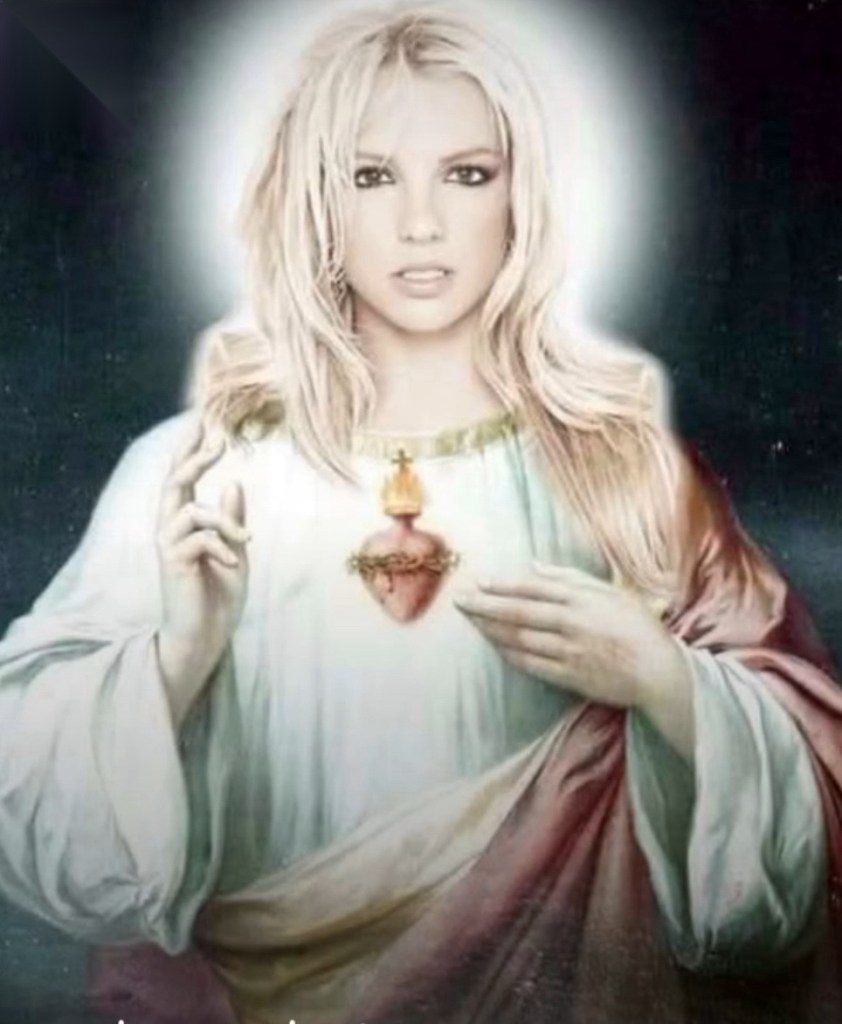
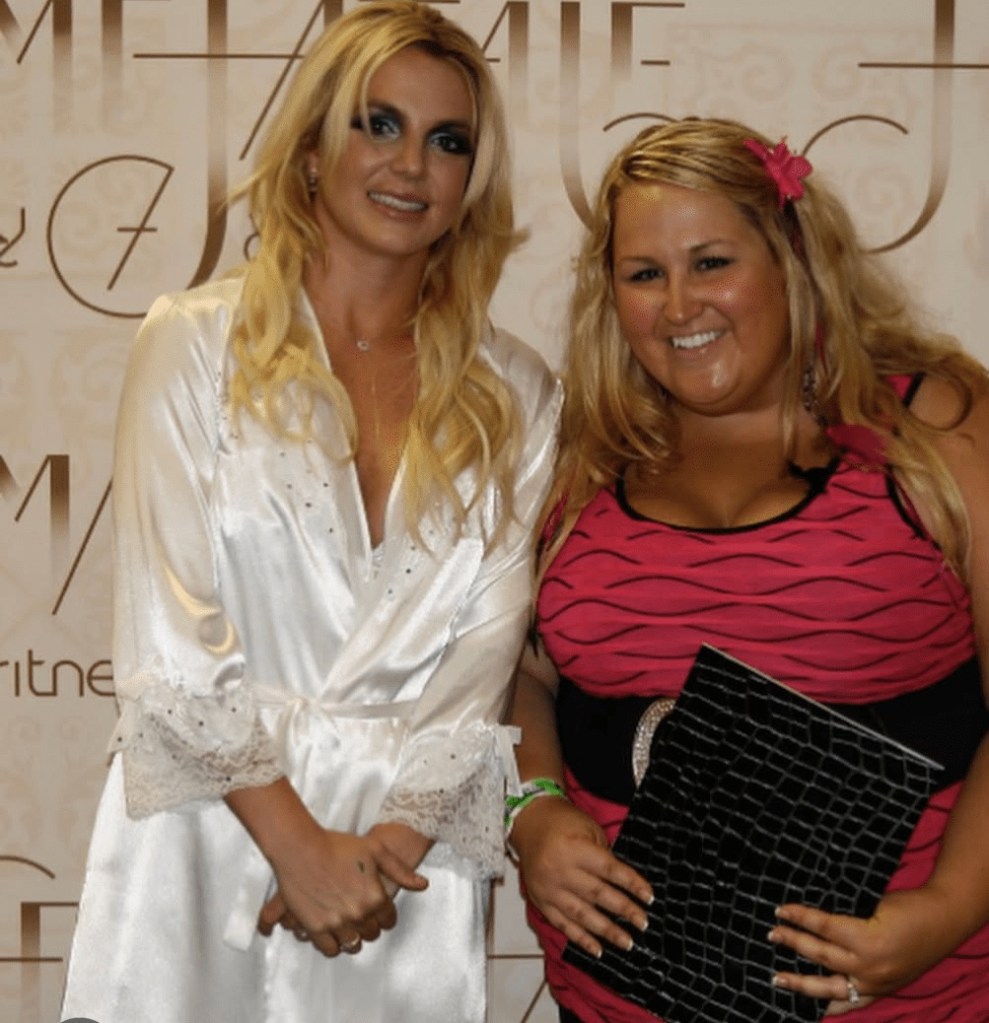
In 2011, I met Britney Spears backstage at the Palace of Auburn Hills during her Femme Fatale Tour, right in the thick of her conservatorship. I didn’t understand the full truth then, but I could feel something wasn’t right.
She entered the room with wide, wary eyes. Her energy was guarded, uncertain. Her longtime assistant and closest friend, Felicia, greeted us. I now know Felicia had not been hired back by those managing Britney’s life at the time—she had rejoined the tour independently just to stay near her and offer protection.
Even without the backstory, I felt the tension.
Britney seemed distant. So I softened things with a gentle question:
What’s your favorite game to play with your boys?
She responded, but it was guarded.
She smiled, but it was tight.
I left with a photo and a feeling:
There was so much more I wished I’d said.
So much more I wished I had seen and honored in her.
Unveiling the Shadows: The Role of Industry Power Players
Britney’s conservatorship, officially terminated in 2021, was orchestrated and maintained by a network of industry figures. Central to this was Lou Taylor, founder of Tri Star Sports & Entertainment Group, who played a significant role in establishing the conservatorship. Taylor’s firm managed Britney’s estate and was accused of profiting substantially during this period. Court documents revealed that Tri Star received at least $18 million from Britney’s estate during the conservatorship .
Moreover, Taylor’s connections extend to other high-profile artists, including Sean “Diddy” Combs. Recent reports have highlighted the overlapping management and potential conflicts of interest within the industry .
In 2007, Britney was photographed partying with Diddy shortly before her infamous MTV Video Music Awards performance. This association has resurfaced amid legal scrutiny of Diddy’s activities, prompting questions about the influences surrounding Britney during critical moments of her career .
The Broader Implications
Britney’s experience underscores the complexities of artist management and the potential for exploitation within the entertainment industry. The intertwining of personal freedoms with corporate interests raises concerns about autonomy, consent, and the mechanisms that allow such control to persist.
Her story serves as a poignant reminder of the importance of vigilance, transparency, and advocacy in protecting the rights and well-being of individuals, particularly within industries prone to power imbalances.
It’s Britney, Bitch: A Love Story
Fast forward to April 14, 2024.
I was researching the Divine Feminine, early Christianity, and how Mary Magdalene’s true role—as an apostle, mystic, and wisdom-bearer—was erased by patriarchal religion. I wasn’t looking for Britney Spears. But somehow, she showed up.
I remembered some of her cryptic posts from the past—references to River Red, sacred imagery, and even Mary Magdalene herself. It was clear to me that Britney had been trying to speak in code for a long time. About pain, truth, awakening. About remembering.
So I searched.
And found one of her archived Magdalene posts—no longer visible on her main profile, but still searchable through Google. Unlike her recent posts, this one still allowed comments.
It felt like a sacred threshold had opened.
Because Mary Magdalene isn’t just a historical figure. She is an archetype of the suppressed Divine Feminine, the silenced truth-teller, the soul-witness to Jesus’s message of love, equality, and spiritual rebirth.
According to many early texts—including the Gospel of Mary and The Gospel of the Holy Twelve—Mary Magdalene was not a prostitute, as later traditions claimed, but Jesus’s closest companion. He kissed her often, not as scandal, but as an act of deep spiritual transmission. She understood him. He called her “the Woman Who Knows the All.”
She represented Sophia—wisdom incarnate.
And Jesus? He wasn’t here to start a religion.
He came to liberate us from false power, to restore divine balance—including the sacred feminine we were taught to forget.
So to leave a message for Britney—on that post—was no accident.
I wrote:
“I met you many years ago and I wished I asked you deeper things than what is your favorite game to play with your boys. 👁️ sending you all the love 💞”
It wasn’t just a nostalgic comment. It was a recognition—of the Magdalene within her. Of the sacred knowing she’s carried all along, even under control, criticism, and confusion.
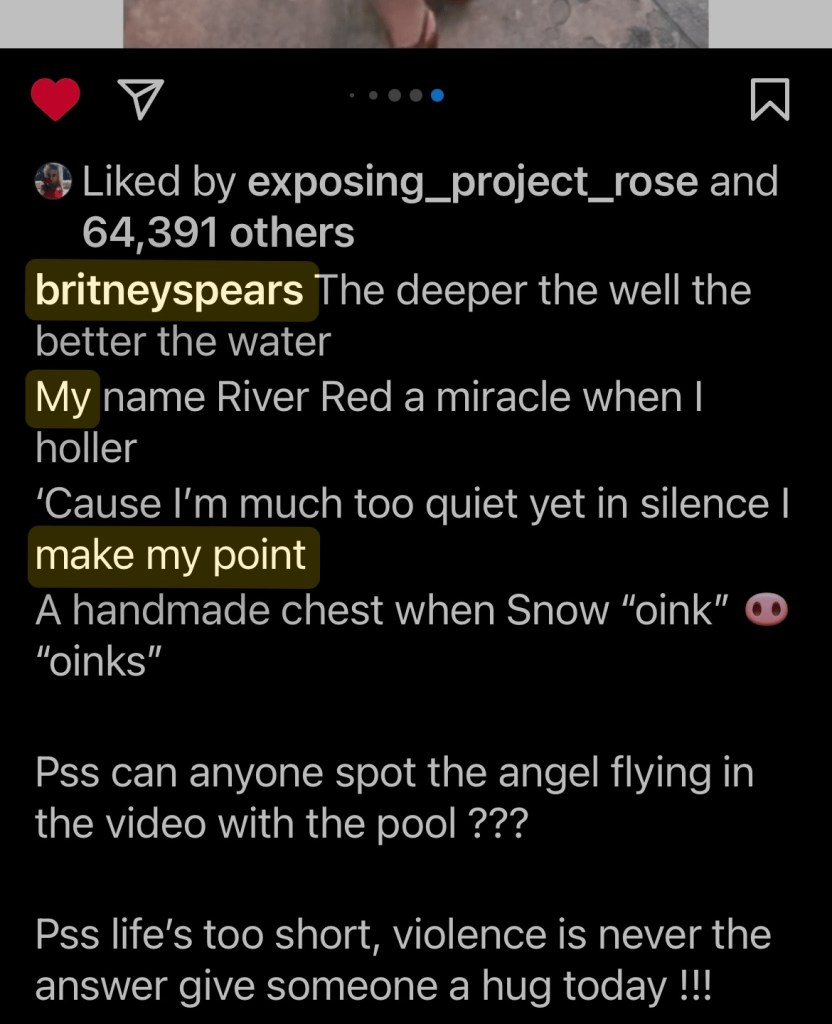
And then—within minutes—she posted again:
“The deeper the well, the better the water…
I’m much too quiet, yet in silence I make my point.”
It was her first River Red post in a long time.
And it felt like a soul reply.
Not to my name. But to my frequency.
To the Magdalene thread that had been quietly re-woven between us.
And maybe that’s why this moment mattered so much. Because I know what it’s like to be misjudged when all you’re really doing is feeling deeply and loving fiercely. That’s a central theme in my book The Lost Path to Freedom—how women who live from the heart, who speak truth or carry light, are often labeled as “too much,” “crazy,” or yes, a “bitch.” Britney once said, “It’s Britney, bitch,” and to me, that’s more than a catchphrase. It’s a reclamation. A love story. Not a romance—but the kind of love that burns through illusion. When the world doesn’t know what to do with your truth, it turns you into a symbol. But love, even misunderstood, still leaves a mark. That’s the story Britney’s been telling in silence. And it’s one I’ve lived too.
🔮 Decoding “Maria River Red”: Britney’s Magdalene Reclamation
When Britney Spears refers to herself as “Maria River Red,” she’s not just being poetic—she’s invoking the Divine Feminine in one of its most powerful, suppressed forms: Mary Magdalene.
Maria is the Latin name for Mary.
River Red is blood, sacrifice, life force—and sacred rage.
Together, Maria River Red becomes a symbol of:
• The woman who bleeds and still flows
• The silenced one who remembers
• The sacred feminine returning after exile
Mary Magdalene was the closest companion to Jesus in many early texts. She was not a prostitute, but a teacher, a mystic, a truth-bearer. She stood at the foot of the cross when the men fled. She was the first to witness the resurrection. And yet, she was written out of power.
Britney, too, has been misunderstood, silenced, and distorted by empire—media empire, legal empire, even religious undertones.
When she calls herself Maria River Red, she may be saying:
You tried to erase me, like you erased her.
But I am still here. Still sacred. Still speaking—through symbols, through silence, through blood.
This is not madness.
It’s memory.
Some people say Britney is lost. I don’t.
I believe Britney Spears is clairvoyant.
She’s not chaotic—she’s symbolic.
She speaks in code because it’s safer than shouting.
She’s been painting constellations across her captions, hoping someone would look up and see.
And I believe she felt seen that day.
Just as Magdalene was once seen by Jesus—not as a servant, but as a spiritual equal. Just as Magdalene saw him when the world turned away. Just as we are being asked to see each other now, soul to soul.
This is what Magdalene represents.
Not just a woman in history—but a reawakening of truth.
Of wisdom.
Of the sacred feminine rising from exile.
And of men and women returning to balance, together.
When Britney posted those words, I felt it in my body:
She knew.
She remembered.
And she spoke back—not in noise, but in knowing.
That is the Magdalene Code.
Not performance, but presence.
Not religion, but recognition.
This is a story of Magdalene, misunderstood women, and the quiet power of being seen.
📸 Photo Gallery:
• Me meeting Britney and Felicia (2011)

• Individual backstage photos

• Screenshot of my 2024 comment

• Britney’s River Red response minutes later







 Julie Tourangeau