
For centuries, the image of Jesus as a compassionate healer and teacher has been at the heart of Christianity. But was he also an advocate for a plant-based lifestyle? Evidence from modern-day translations of the Bible, alternative gospel texts, and linguistic studies suggest that Jesus may have opposed eating animals and even challenged the way we interpret certain food references in scripture.
God’s Original Plan: A Plant-Based Diet
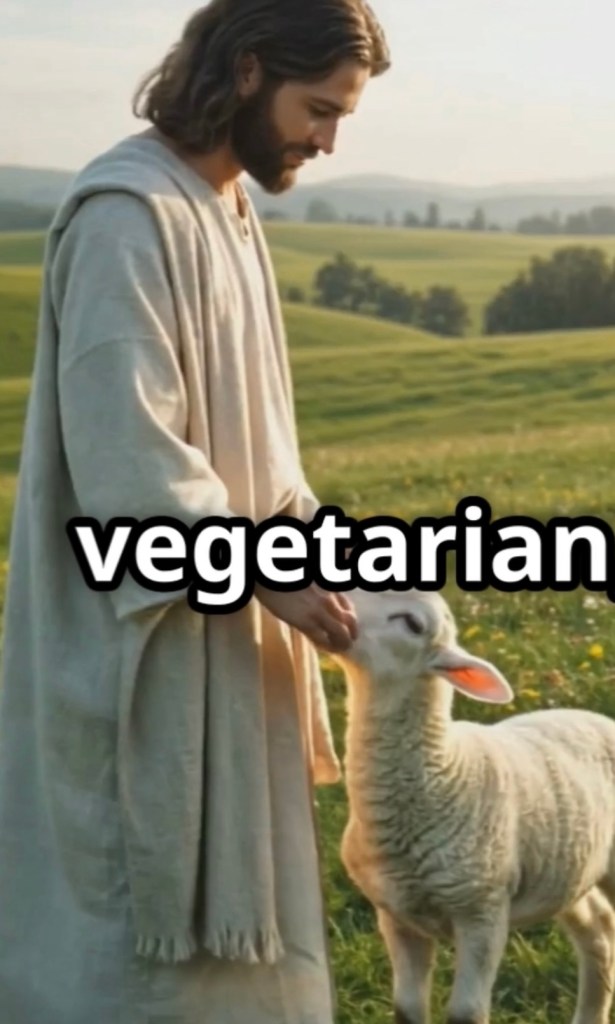
In the very beginning, God created a world where humans and animals lived in harmony, sustained by plant-based foods:
“Behold, I have given you every plant yielding seed that is on the face of all the earth, and every tree with seed in its fruit. You shall have them for food.” – Genesis 1:29
This verse suggests that in God’s ideal world, food was meant to come from the earth, not from killing animals. Even the prophetic visions of Isaiah describe a future where animals live in peace and do not harm one another:
“The wolf and the lamb shall graze together… They shall not hurt or destroy in all my holy mountain, says the Lord.” – Isaiah 65:25
If God’s vision for creation was one without bloodshed, could it be that Jesus, as the ultimate teacher of love and mercy, followed this principle?
Did “Fish” Get Mistranslated?
One of the strongest arguments against Jesus being vegetarian is his feeding of the multitudes with “loaves and fish” (Matthew 14:13-21). But what if the word fish was mistranslated?
• The Greek word Ichthys (ἰχθύς) not only means fish but was also a symbolic acronym for “Jesus Christ, Son of God, Savior”—suggesting that the references to fish might have had deeper meanings.
• In Aramaic, the language Jesus likely spoke, some plant-based foods such as seaweed, legumes, or even pressed figs could have been confused with “fish” in later translations.
• Many early Christian sects, including the Essenes, were vegetarian and believed that Jesus was as well.
This raises the question: if Jesus was compassionate toward all life, would he have condoned the killing of fish for food, or was this a later addition to align with changing cultural norms?
Jesus Sets the Animals Free in the Temple
One of the most powerful moments of Jesus’ ministry was when he overturned the tables in the temple and set the animals free:
“And He found in the temple those who were selling oxen and sheep and doves… and He poured out the coins of the money changers and overturned their tables.” – John 2:14-16
Modern-day translations of the Bible often say Jesus condemned the merchants for turning the temple into a “den of thieves.” However, the original Hebrew word used in Jeremiah 7:11, which Jesus was quoting, actually means “violent ones” rather than “thieves.” This suggests his anger was not just about corruption but about the violence being inflicted on innocent animals in a place of worship.
Rather than allowing the continued sale and sacrifice of animals, Jesus set them free—a powerful statement that aligns with a plant-based, non-violent philosophy.
Daniel’s Vegetarian Diet and Spiritual Clarity
Daniel, a prophet highly respected in both Jewish and Christian traditions, refused to eat the king’s rich food (which likely included meat) and instead requested a plant-based diet:
“Test your servants for ten days; let us be given vegetables to eat and water to drink.” – Daniel 1:12
After ten days, Daniel and his companions were healthier and wiser than those who ate the king’s food. This passage suggests that a plant-based diet was not only physically beneficial but also spiritually purifying.
Jesus’ Teachings Align with Compassion for All Beings
While modern-day translations of the Bible do not explicitly state that Jesus was vegetarian, many of his teachings align with the principles of nonviolence and mercy toward all living creatures.
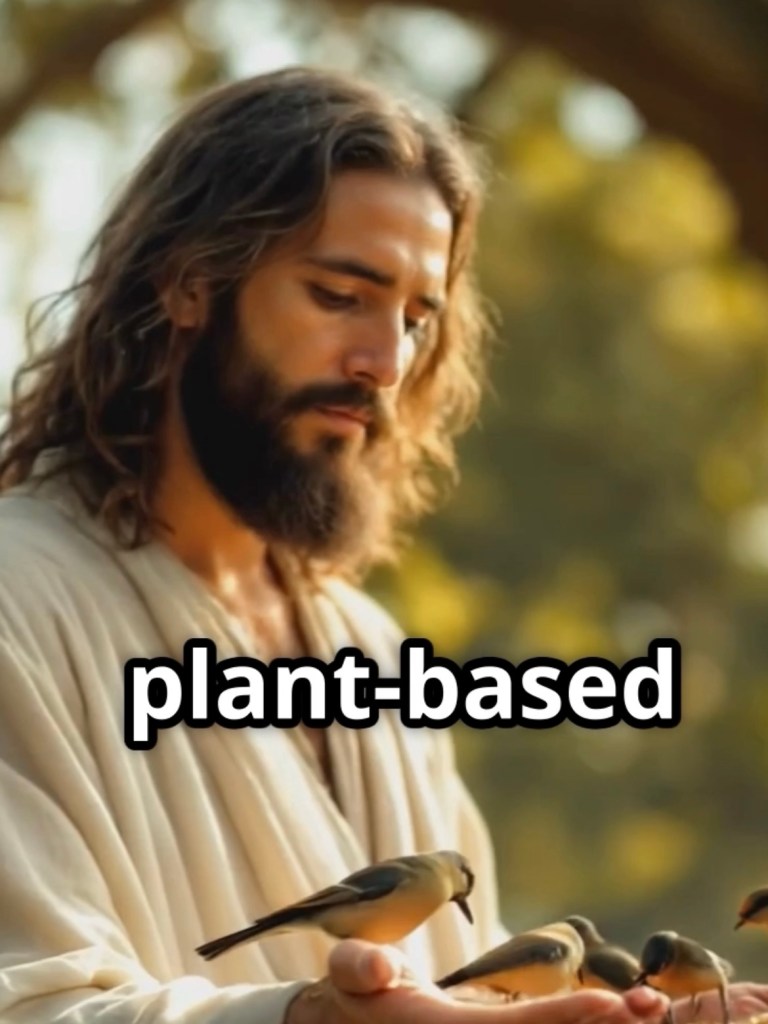
• He taught that God cares even for the sparrows (Luke 12:6).
• He healed and showed kindness to animals (Matthew 12:11).
• He overturned the tables of those selling animals for sacrifice, condemning the violence done to them.
If Jesus preached love, mercy, and a return to God’s original vision for creation, wouldn’t this include sparing animals from suffering?
Conclusion: A Call to Rethink Tradition
Throughout history, translations and cultural shifts may have altered how we interpret Jesus’ relationship with food and animals. By examining scripture more closely, we find strong evidence that:
• God’s original plan was a plant-based diet.
• Key biblical words, like “fish,” may have been mistranslated.
• Jesus actively opposed animal sacrifice and set animals free.
• Vegetarianism was practiced by early followers like Daniel and the Essenes.
Whether or not Jesus was fully vegetarian, his message was clear: compassion, mercy, and peace should extend to all of God’s creation.
Could embracing a plant-based lifestyle today be a way to honor his teachings and return to God’s vision for a world without harm?
 Julie Tourangeau