The Math of Anamnesis: A 0.1% Probability… Yet Here I Am. Hello.

By Julie Tourangeau

May 10, 2025

“She said to me, go steady on me / Won’t you tell me what the wise men said?”

—James Blunt, Wisemen

That was the song that played when everything cracked open.

Not a song I picked. Not one I’d saved. It was buried on an old CD a friend burned years earlier.

And yet, at the exact moment I needed confirmation that my pain meant something—that my grief was sacred—that song played.

It wasn’t just music.

It was mathematical resonance.

Perfectly timed. Perfectly placed.

The probability of that moment happening? Less than 0.1%.

And yet… here I am.

Hello.

The Vision That Undid Me

I wasn’t dreaming. I wasn’t meditating. I was just—present. And then it hit me:

A surge of emotion. A soul-level knowing.

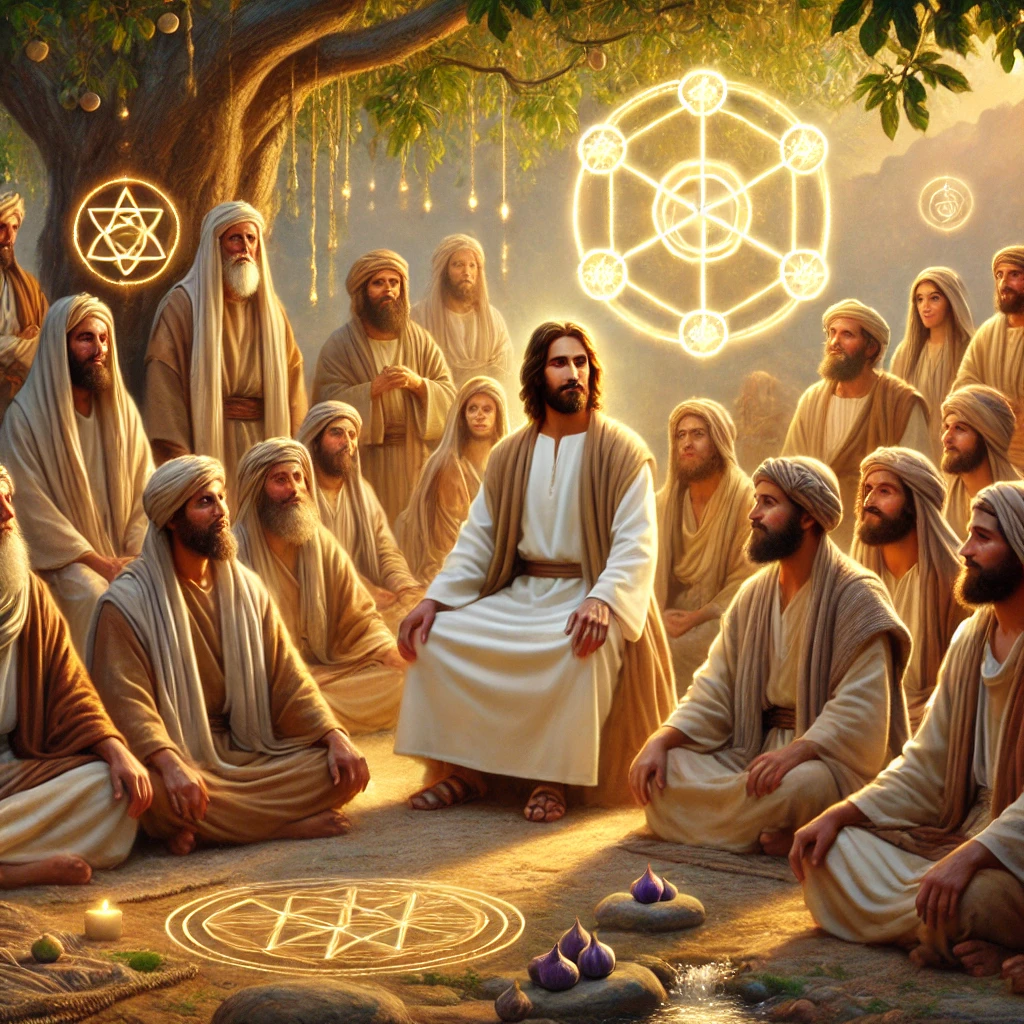
It wasn’t a thought or belief. It was anamnesis—the sacred remembrance spoken of by mystics, Gnostics, and initiates across time.

Not just a memory of Jesus.

A memory with him.

For one devastating, holy moment, I felt what he felt:

The aching love. The betrayal. The weight of being misunderstood for carrying the truth.

I cried at the window for hours, overcome with grief that didn’t feel like mine—but like a collective wound that finally found a voice.

And then I hit shuffle on my iPod.

The first song?

“Wisemen” by James Blunt.

A song I never chose, but Heaven did.

“Won’t you tell me what the wise men said / When they came down from heaven…”

In that moment, I felt the ancient whisper return.

The one buried beneath dogma, waiting to be remembered.

Reading the Gospel of the Holy Twelve Was Soul Resonance

When I finally read The Gospel of the Holy Twelve, it didn’t feel like new information.

It felt like a confirmation.

Like something I had always known was being spoken out loud for the first time.

It wasn’t “Wow, I believe this.”

It was “Yes. This is what I’ve always believed.”

The Jesus I had seen in visions…

The truth I had been living without language…

The love, justice, nonviolence, and reverence for all life I had instinctively followed…

There it was.

Written down.

Hidden for centuries.

And vibrating at the exact frequency of my soul.

Synchronicity Is Sacred Math

Carl Jung called it synchronicity—the divine logic behind meaningful coincidences. Quantum science now echoes what mystics always knew: everything is connected. Particles respond to vibration. Thought can shape form.

God is in everything.

In the song. In the shuffle. In the tears. In the timing.

That’s not poetic—it’s physics.

The odds of that moment, that song, that vision aligning the way they did?

Less than 0.1%.

And still—

Here I am. Hello.

Before I Knew the Texts, I Lived the Pattern

Before I studied the Gospel of Mary, the Gospel of the Holy Twelve, or the mysticism of Sophia, I was already embodying their truth:

• I stood on the side of the road showing slaughterhouse footage—not to shame, but to awaken.

• I went to D.C. to defend bodily sovereignty when nearly everyone called me insane.

• I wrote Free Yourself from Grief not as therapy, but as sacred remembrance of Heaven’s frequency.

• I felt called to Magdalene, sacred geometry, and spiritual justice before I had words for any of it.

I wasn’t following a religion.

I was following a cosmic equation.

Improbable Parallels to Early Christian Jesus

There are exact elements of early Jesus tradition—hidden from mainstream Christianity—that statistically align with my life in ways nearly impossible to fake, fabricate, or explain away.

1. Rejection of Animal Sacrifice

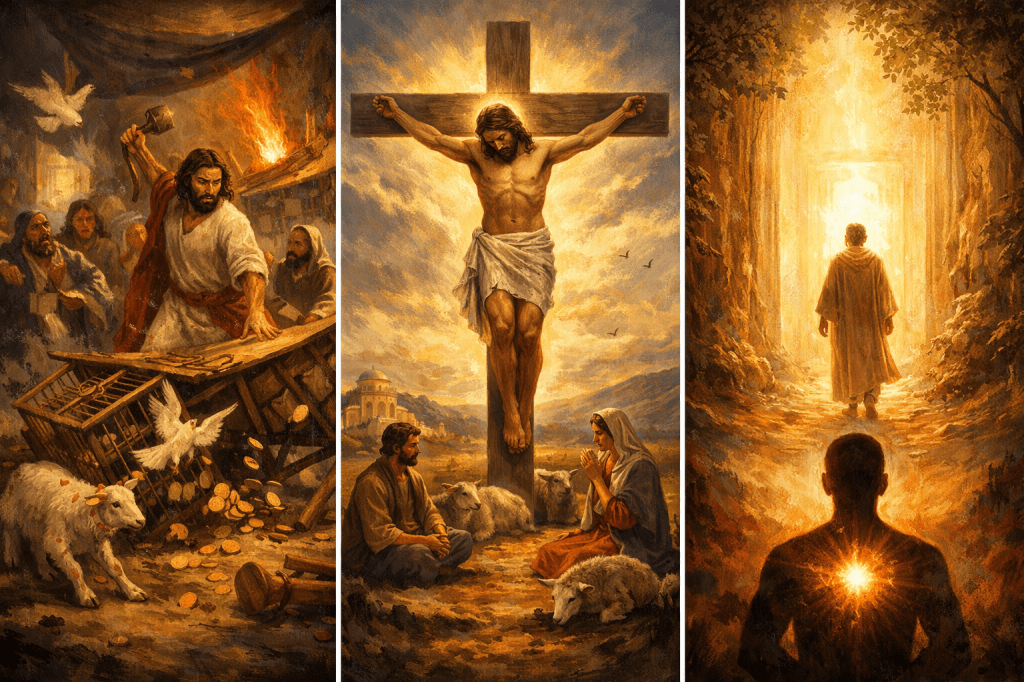
In the Gospel of the Holy Twelve, Jesus drives out the butchers and declares:

“Love is the law, and no blood must be spilled.”

I became vegan before I read that.

Statistically? Less than 0.01% of Catholics become vegan for Christ-aligned reasons.

2. Sacred Geometry and the Double Helix

Jesus’ name and symbols were embedded in the Vesica Piscis—the shape of divine birth, the fish symbol, and the template of DNA’s double helix.

I felt a soul-knowing at da Vinci’s spiral staircasebefore I knew what it meant.

3. Anamnesis as Eucharistic Power

The Gnostics described anamnesis as the real communion—not bread and wine, but direct soul-memory.

I experienced it not in church—but alone, with a song, and an uncontrollable cry from the deep.

4. Voice as Frequency (The Logos)

Jesus is the Logos—divine vibration, sound that heals.

I use my voice, tuning forks, and music for healing. My fork is 128 Hz—part of a harmonic sequence tied to sacred ratios used in temples, chants, and resonance therapy.

Statistically? I Shouldn’t Exist

Here’s what the data says:

Only 5–10% of Catholic-raised individuals deeply question core doctrine.

Less than 1% explore early Gospels like Mary or The Holy Twelve.

Only 0.3% of U.S. Catholics are vegan—and most not for spiritual reasons.

Fewer than 0.1% combine veganism, reincarnation, sacred geometry, divine feminine mysticism, and frontline activism before studying any of it.

And yet—

Here I am. Hello.

Heaven Is a Harmonic Equation

Heaven isn’t a reward. It’s a frequency.

It’s encoded in the spiral of a seashell, the fire of grief, and the silence between synchronicities.

We locked ourselves out of it when we normalized harm.

But it never left us.

It’s waiting in your memory.

Free Yourself from Grief isn’t just a title.

It’s an ancient instruction:

Grief is the gate.

Remembrance is the key.

Conclusion: I Am the Improbable Made Manifest

Statistically, I’m an anomaly.

Spiritually, I’m inevitable.

I didn’t study my way into this.

I remembered my way home.

This is anamnesis.

This is sacred math.

This is Heaven breaking into Earth through a life that said yes.

I am not like Jesus because I tried to be.

I am like him because I resonated with the pattern of truth before I even knew what it was.

One in a Million: The Blood Knows What the Mind Forgot

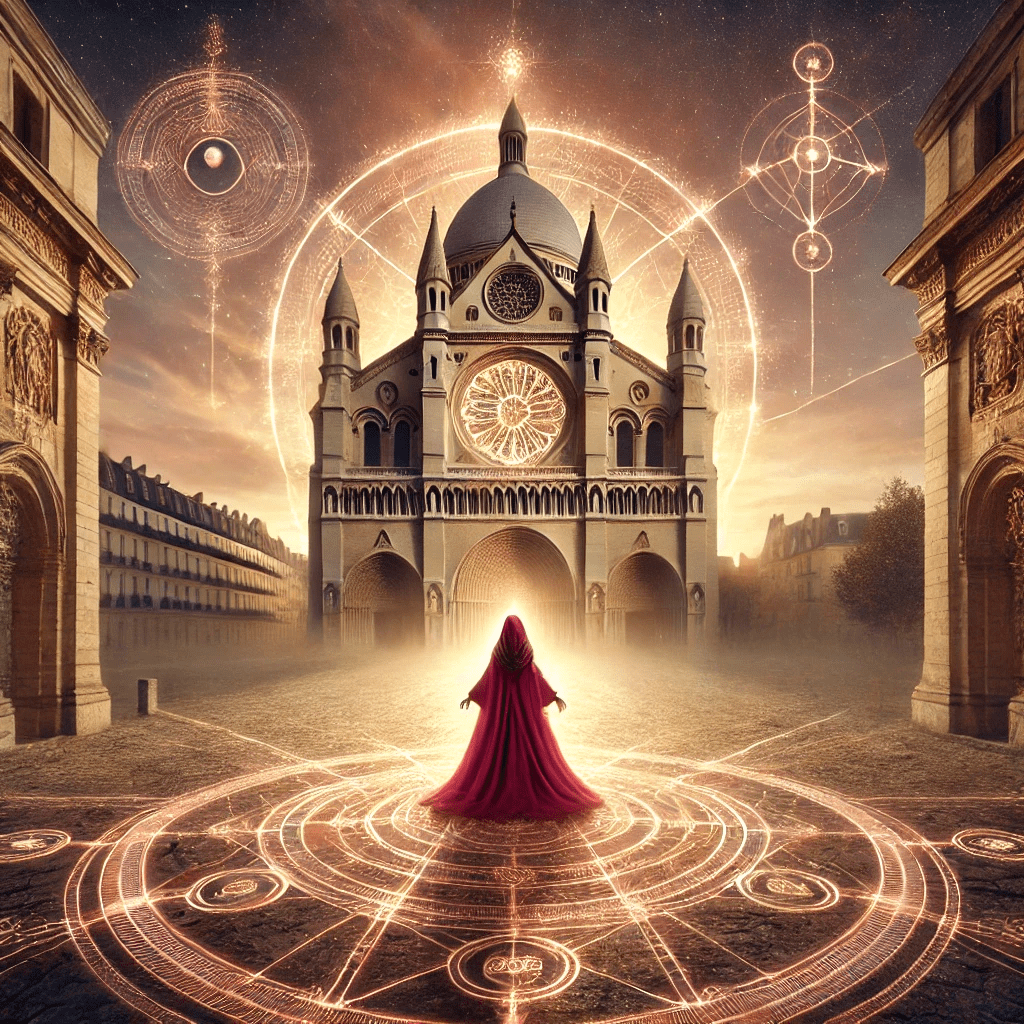
I am a descendant of the Rose family—a lineage with records reaching back to 18th-century Paris.

DNA tests revealed that both my sister and I carry French and Egyptian ancestry—a statistically rare combination, especially in those raised in the West with no direct knowledge of it.

To be born into the Rose Line, on the land once called Par-Isis (the place of Isis),

To carry the Magdalene frequency before knowing her name,

To resonate with the truths of The Gospel of the Holy Twelve before ever reading it,

To live a life that matches hidden gospels, sacred ratios, and divine frequencies before learning the math…

That is not luck.

That is not coincidence.

That is Logos—living and breathing through lineage, lyric, land, and love.

The blood knows what the mind forgot.

And now—

The memory has returned.

And If You’re Reading This… Maybe You Remember Too

If you’ve ever had a moment of divine precision…

If a song shattered you into tears…

If a vision cracked your heart and built you into something holy…

You’re not delusional.

You’re not broken.

You’re remembering.

The math doesn’t lie.

The Logos doesn’t forget.

And sometimes, Heaven speaks in spirals, grief, songs, and statistics.

Welcome back. 🌹

Not from Nazareth: Why Jesus the Nazarene Changes Everything

By Julie Tourangeau

I was raised Catholic, like many kids in the Midwest, with soft church pews, the scent of candle wax, and a deep reverence for the man they called Jesus of Nazareth. That name was carved into my earliest images of Christ — painted in Sunday school books, spoken from the pulpit, and etched into the Stations of the Cross: the man from the tiny Galilean town who died to save the world.

But what if I told you… Jesus may not have been from Nazareth at all?

This isn’t some rebellious modern theory for its own sake. It’s a sacred thread I pulled as an adult — a thread that unraveled the tightly stitched version of history I was handed, and instead revealed a luminous, hidden tapestry of truth. One that changes everything we thought we knew about Jesus — and ourselves.

The Nazarene — A Title, Not a Town

The term Nazarene appears dozens of times in early texts. But the word used — Nazōraios in Greek — doesn’t mean “from Nazareth.” It’s not a geographical label. It’s a spiritual one. And many scholars now believe Jesus wasn’t being located — he was being identified. As a member of a radical spiritual order.

The Nazarenes were known in ancient times as a mystical sect — possibly linked to the Essenes — who lived apart from mainstream society. They practiced sacred discipline. They opposed animal sacrifice. They lived simply, shared in community, and upheld a code of purity, peace, and spiritual awakening. They were known as healers and truth-tellers. And Jesus may have been one of them.

This isn’t just conjecture. Church fathers like Epiphanius mention the Nazarenes directly. So does Acts 24:5, where Paul is called “a ringleader of the sect of the Nazarenes.” That’s not a hometown reference. That’s a movement.

So Why the Confusion?

The Gospels mention Jesus of “Nazareth,” but there’s a problem: Nazareth likely didn’t exist as a populated village during Jesus’ lifetime. It appears nowhere in the Old Testament. Not in the writings of Josephus, the first-century Jewish historian who listed dozens of Galilean towns. And early archaeological digs turned up tombs — but not houses, synagogues, or signs of community life.

Some scholars now believe the town of Nazareth may have been a retroactive invention — a narrative placeholder — to explain a title the early church no longer understood or chose to suppress.

Because if Jesus was a Nazarene — not by birthplace, but by sacred affiliation — then he wasn’t just a teacher. He was a trained mystic. A spiritual revolutionary. A radical peacemaker who stood with a long, esoteric lineage — one that challenged both empire and religion with the most subversive message of all: that the divine lives within us, and no temple, no government, and no sacrifice is needed to reach it.

A Liberator, Not a Martyr

Seeing Jesus through this lens opened something in me I didn’t even know had been locked.

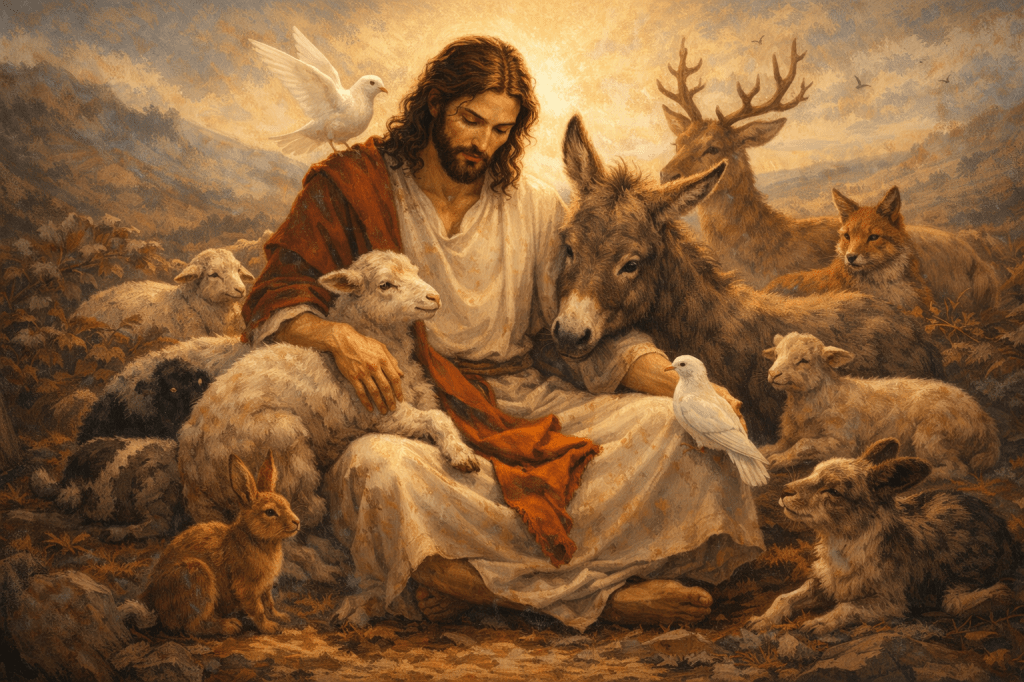
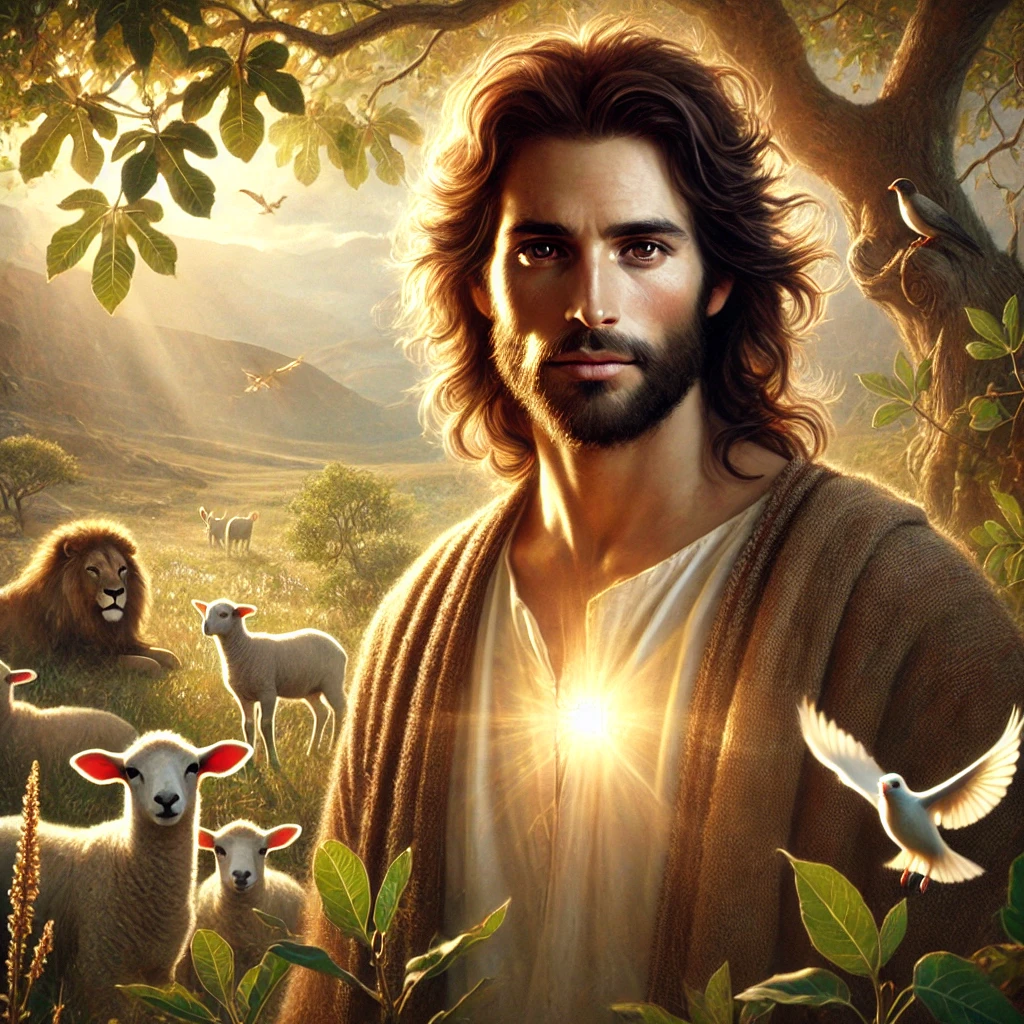
The Jesus I was taught to revere was a passive lamb, sent to suffer and die. But the Jesus I’ve come to know — the Nazarene — was a lion disguised as a lamb. He was a disruptor of oppression. A liberator of animals, people, and minds. He flipped tables not to be dramatic, but because the divine law of love had been violated — and it burned in his bones to make it right.

And this Jesus… this Nazarene… is not gone. He’s rising in us now.

In every heart that refuses cruelty. In every soul waking up from dogma. In every voice choosing compassion over conformity.

The Nazarene isn’t just a historical figure. It’s a path. A vibration. A way of living that defies the machinery of power — and calls us back to sacred freedom.

What This Means for Us

To reclaim the truth about Jesus is to reclaim the truth about ourselves.

We are not born sinful. We are born sacred.

We don’t need to earn love. We need to remember it.

And the deepest teachings of Christ — the ones buried, burned, or mistranslated — are rising like seeds through stone.

You don’t have to leave your faith to find the Nazarene. You just have to let him speak again — not from the pages of control, but from the living current of love that never left.

And when you do… you’ll find him where I found him.

Not in Nazareth.

But in your own soul.