
The Women, the Wisdom, and the Animals: What We Forgot About Easter

By Julie Tourangeau | Good Friday, 2025

Before the tomb was empty…

before the stone was rolled away…

before the anointing and the rising and the glory…

there was a moment we rarely talk about.

And it didn’t happen on a hill.

It happened in the Temple.

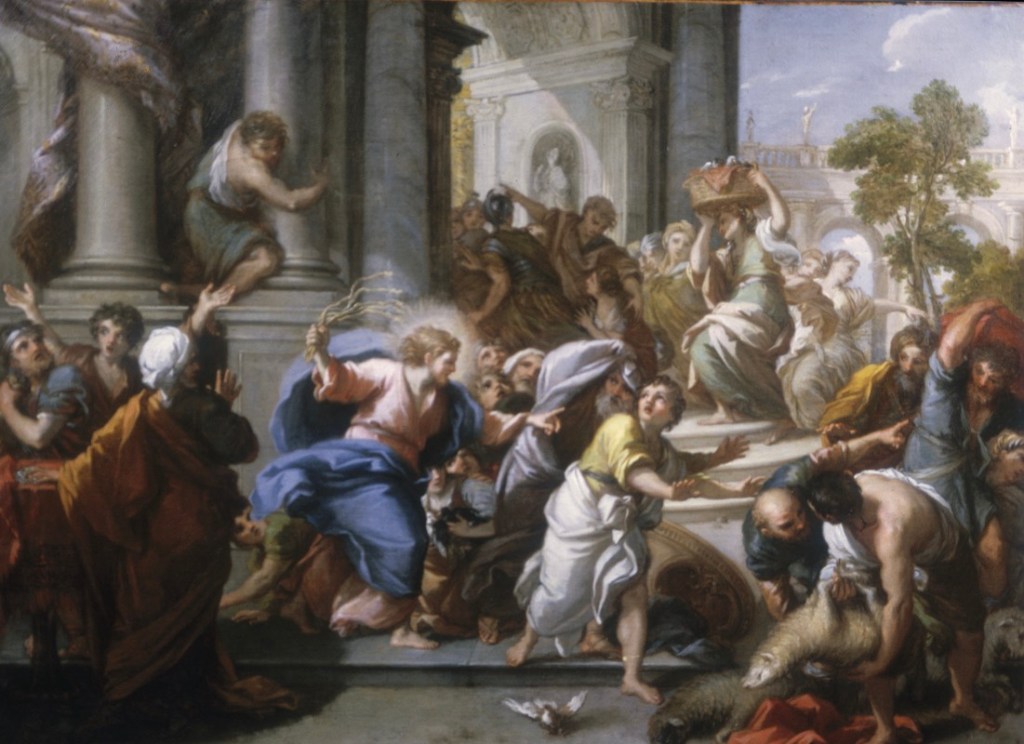
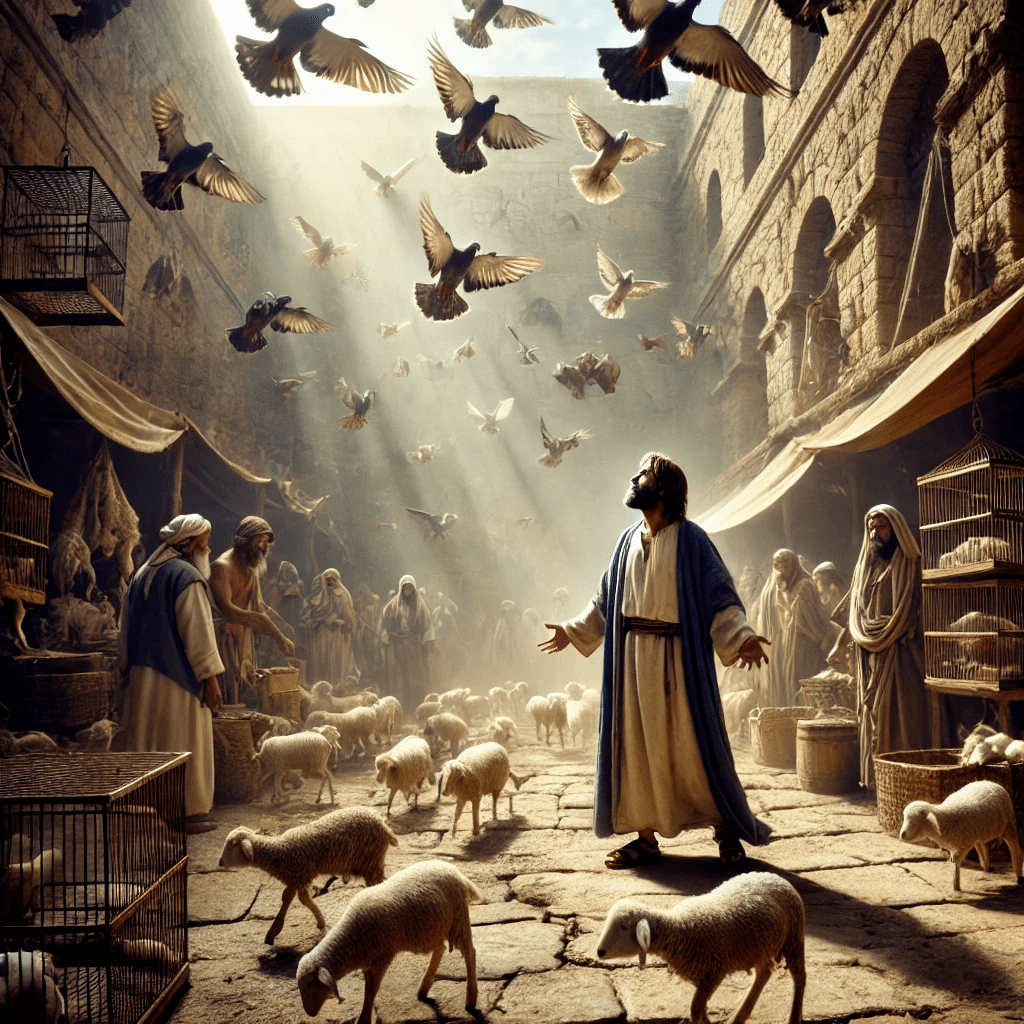
It was there that Jesus walked in, looked around, and did what no one else dared:

He freed the animals.

The Cleansing of the Temple Was a Liberation

All four canonical gospels record the Temple cleansing, but what most people miss is why it mattered so much.

Jesus didn’t just flip tables to make a scene.

He drove out the sellers of doves. He freed the lambs and oxen being sold for sacrifice.

According to the Gospel of the Nazarenes, a lost early gospel aligned with the Essenes:

“He drove out the animals and said, ‘Cease your wicked sacrifices! Do you not see that innocent blood cries out from the earth?’”

In that moment, Jesus publicly rejected the sacrificial system—a system that normalized bloodshed and called it holy. He saw through the illusion of substitutionary violence and revealed the deeper truth:

The Holy Spirit is not found in the shedding of blood, but in the honoring of life.

And from that moment on, the system moved to silence him.

The First Step Toward Resurrection Was Setting the Innocent Free

Let this sink in:

It wasn’t the miracles that got Jesus killed.

It wasn’t the healings or the parables or even claiming to be the Son of God.

It was the moment he freed the animals that the wheels of execution began to turn.

This was the turning point—not just in his story, but in ours.

Because Jesus wasn’t just liberating animals. He was exposing a system—religious, economic, cultural—that had come to depend on suffering.

And he showed us what it looks like to say:

No more.

The Divine Feminine Knew

Many people associate Easter with the idea that Jesus died to pay for our sins—but that interpretation came later. The earliest followers of Jesus saw his life and death not as a blood payment, but as a revelation of divine love and a call to awaken the Christ within. Texts like The Gospel of the Holy Twelve remind us that his suffering was not about appeasing wrath, but about healing hearts, breaking chains, and showing us the path of compassion, even in the face of injustice.

What followed was suffering, yes—but also sacred initiation. And through it all, the ones who stayed near were not the theologians or temple authorities. It was the women.

Grief was his first initiation, through Miriam, the young woman with whom Jesus lived for seven years before her death. According to The Gospel of the Holy Twelve, it was her passing that opened his heart to the deeper path. According to this gospel, « Grief didn’t weaken him. It awakened him. »

Before knowing about this grief story of Jesus, I wrote about my own:

“Without my dark night of the soul, and without having challenging circumstances, I wouldn’t have grown my blessings… Painful change is sometimes exactly what we need to shake things up. Living through trauma, family drama, and the grief of losing a loved one can feel almost like an endless dark tunnel… Grief is just love with seemingly no place to go, but when you realize love shared is eternal, you can finally let go of the pain and gain the wisdom that is rightly yours.” — Free Yourself from Grief, Chapter 5

Compassion was his final anointing, through Mary Magdalene—not a sinner, but a priestess. She anointed his feet, honoring him with a sacred rite passed down through feminine lineages.

And when he was crucified, it was Magdalene who remained. While the male disciples fled, she stood at the cross, and three days later, she was the first to see him risen.

The resurrection was not first revealed to Rome or religion. It was revealed to her.

And wisdom—Sophia—was the soul behind it all.

The Spirit of God that hovered over the waters in Genesis.

The voice crying out in the streets in Proverbs.

The divine spark in all life, calling us home.

What if Easter was just the beginning?

While many see the resurrection as the end of Jesus’ story, ancient traditions—especially in southern France—tell a different tale. According to Provençal legend, Mary Magdalene journeyed to France after the crucifixion, carrying not only the memory of Jesus but the living essence of his teachings. Some say she preached love and liberation from a cave near Sainte-Baume, others believe she brought with her the sacred feminine that was erased from the official story. The Holy Grail Legends say she brought his bloodline to France, and they still walk Earth among us to this very day.

Easter Is the Unveiling of Compassion

This Easter, I invite you to see the resurrection not as a distant miracle, but a living pattern.

The pattern begins with letting go of violence.

It moves through grief.

It is held by the feminine.

And it ends in freedom—not just for ourselves, but for all of creation.

Resurrection isn’t just rising from the dead.

It’s refusing to live by death.

It’s refusing to justify harm.

It’s the choice to let the doves go free.

To Walk the Lost Path to Freedom This Easter Is To Remember:

• The animals were the first to be freed.

• The women were the first to understand.

• Sophia is the wisdom that lives in you.

• The Holy Spirit is the breath that animates all life.

• And love is not proven through suffering, but through liberation.

This Easter, may we not just celebrate a risen Christ,

but live like him.

May we be the ones who open the cages,

who hold the grief,

who anoint the new day.

May we rise—not above the world, but for it.

Free the animals.

Free the heart.

And the stone will roll away.

The Rapture That Wasn’t: Why Early Christians Didn’t Believe in Escaping Earth

BREAKING: RAPTURE RESCHEDULED DUE TO SUPPLY CHAIN ISSUES

Heavenly sources confirm that the long-awaited rapture has been delayed again—this time due to a shortage of cloud fuel and insufficient harp inventory.

An anonymous angelic spokesperson said, “We’re still trying to get the golden escalators functioning. Also, someone left the Book of Life in the copier tray again.”

In the meantime, believers are advised to:

• Keep one foot off the ground, just in case.

• Practice skydiving without a parachute.

• And definitely ignore that whole “meek shall inherit the Earth” thing—it was probably just a metaphor, right?

Meanwhile, Jesus is reportedly walking around the temple with a sign that reads:

“Free the lambs, not enslave them.”

He also added, “Y’all really thought I died so you could throw barbecues and wait for space Uber? C’mon.”

Seems a little ridiculous, right?

Have you ever played a game of telephone? One message whispered from person to person slowly becomes distorted, until the final version barely resembles the original.

That’s exactly what happened to the teachings of Jesus.

One of the clearest examples?

The Rapture.

Modern-day evangelical churches teach that Jesus will one day return in the clouds and snatch up all the “true believers,” leaving the rest of humanity to suffer a horrific tribulation on Earth. But here’s the truth:

The earliest Christians didn’t believe in that kind of rapture. Not even close.

Where Did the Rapture Come From?

The word rapture never appears in the Bible. The concept was first systematized in the 1830s by John Nelson Darby, a British theologian who founded a movement known as Dispensationalism. His teachings were later popularized in America through the Scofield Reference Bible (1909) and reinforced by pop culture hits like the Left Behind series.

Darby’s idea was this: the world is going to get worse and worse, and before God pours out judgment on humanity, Christians will be “caught up” into the sky—based on one ambiguous passage in 1 Thessalonians 4:17:

“Then we who are alive and remain shall be caught up together with them in the clouds to meet the Lord in the air…”

But this passage, when read in context, refers to a welcoming party—not an escape. In ancient Greco-Roman culture, people would go out to meet a visiting king and escort him back into the city. This passage wasn’t about leaving Earth—it was about welcoming the divine presence to dwell among us.

What Did the Earliest Christians Believe?

Early Christians, particularly those tied to Jewish followers of Jesus like the Ebionites and Nazarenes, didn’t long to escape the world—they longed to transform it.

They believed in the coming of the Kingdom of Heaven—but on Earth.

“Blessed are the meek, for they shall inherit the earth.” (Matthew 5:5)

This was not a metaphor. It was a promise. The Earth wasn’t something to flee—it was something to liberate.

In The Gospel of the Holy Twelve, a restored early Christian gospel aligned with the Essenes (a mystical, peace-centered Jewish sect believed to be close to Jesus), the message is even clearer:

“The kingdom of God is within you and around you. It is not in buildings made by hands, nor in the sky to be awaited, but is now, wherever love and truth dwell.”

This aligns with Luke 17:21 in modern-day scripture:

“The kingdom of God is within you.”

Why Would Modern Evangelicals Promote the Rapture?

It’s simple: control.

If you believe the world is doomed, you won’t try to change it.

If you think Jesus is coming soon to evacuate you, why fight injustice?

Why care for the Earth, animals, the poor, or future generations?

The rapture theology promotes passivity and dependence, not liberation or courage. It also supports a form of Christian nationalism that aligns with certain interpretations of the modern state of Israel—not the people who wrestle with God (the true meaning of “Israel”)—but a political power masquerading as divine destiny.

And yet Jesus said:

“The last shall be first.” (Matthew 20:16)

“Woe to you who are rich now, for you have already received your comfort.” (Luke 6:24)

This is not about domination or escape—it’s about a sacred upside-down revolution.

The People Who Wrestle With God

The real “Israel”—in its original, spiritual meaning—is not a nation-state.

It’s a name given to Jacob, who wrestled with the divine and refused to let go until he was blessed. (Genesis 32:28)

It is those who wrestle, question, and seek truth out of the goodness of their hearts, not blind loyalty to human institutions.

Jesus was not calling people to bow to empire. He was calling people to wake up.

Returning to the Source

Modern theology is often a product of empire, fear, and control.

But the earliest teachings—those closest to the Source—are radically different.

They’re about justice. Love. Peace. Awakening.

Not escaping Earth, but redeeming it.

So the next time you hear about the rapture, ask yourself:

Is this a teaching from the heart of Christ…

or just a distorted whisper passed down through centuries of empire?

In The Lost Path to Freedom, I explore these forgotten teachings—not as history, but as living truth for today. Because the veil is lifting. The kingdom is near. And the ones who wrestle with God in love are the ones who will help heal the world.

The Forgotten Gospel Reclaimed: A New Look at The Gospel of the Holy Twelve

I read The Gospel of the Holy Twelve front to back after having a spiritual moment in France that made me question the origins of Christianity. I couldn’t put it down. It resonated with the Holy Spirit that dwells within me, deeper than any sermon or scripture I had encountered growing up. I was raised a vegetarian Catholic, yet I never knew there were early Christian teachings that not only supported this lifestyle but embodied it. I had never been told that reincarnation was plausible… or that a vegetarian Jesus was very likely. These truths had been hidden… but once I saw them, I couldn’t unsee them.

For centuries, Christianity has been presented through the lens of empire, tradition, and convenience. But what if the original teachings of Jesus were far more radical… far more compassionate… than we’ve been led to believe? What if Christianity, at its very roots, was a vegan movement?

That’s the bold yet spiritually grounded claim made in The Gospel of the Holy Twelve, a recovered text translated by Reverend Gideon Jasper Ouseley in the late 19th century. Ouseley claimed he had access to ancient Aramaic manuscripts preserved by a secret brotherhood, which offered a truer, unedited version of Jesus’ life and message. While the origins of the manuscript remain controversial, the gospel’s teachings align strikingly with what we know of early Jewish-Christian sects, particularly the Ebionites and the Essenes (Eisenman, James the Brother of Jesus, 1997).

In this gospel, Jesus stands not only as a healer and teacher but as an advocate for all sentient life. He does not bless the slaughter of animals… he condemns it. He does not multiply fish… he frees them. And he declares, “They who partake of benefits which are gotten by wronging one of God’s creatures, cannot be righteous: nor can they touch holy things, or teach the mysteries of the kingdom.” (Ouseley, The Gospel of the Holy Twelve, Lection XLVI)

Rooted in Early Tradition

Though The Gospel of the Holy Twelve is not part of the modern biblical canon, its tone and teachings are not without historical merit. Ouseley and others believed it to reflect the original Hebrew Gospel referenced by early Church Fathers like Jerome, who wrote of a “Gospel of the Hebrews” used by Jewish-Christian groups (Jerome, De Viris Illustribus, 3).

These groups, including the Ebionites and the Nazarenes, believed Jesus came not to abolish Jewish law but to fulfill it through love and nonviolence (Eusebius, Ecclesiastical History, Book III). They rejected blood sacrifice, practiced vegetarianism, and upheld a mystical form of Judaism centered around compassion and purity. The Church Father Epiphanius, though critical, confirmed the Ebionites’ vegetarianism and rejection of temple sacrifice (Panarion, 30.15.3).

The broader context of these communities was later supported by discoveries like the Dead Sea Scrolls. Found between 1947 and 1956 near Qumran, the scrolls revealed a rich diversity of Jewish sects in the Second Temple period, many of whom—especially the Essenes—emphasized spiritual law, nonviolence, ritual purity, and apocalyptic expectations. Scholars such as Geza Vermes and Elaine Pagels have argued that the scrolls lend credibility to the existence of early traditions outside the later Christian orthodoxy (Vermes, The Complete Dead Sea Scrolls in English, 2004; Pagels, The Gnostic Gospels, 1979).

When Empire Meets Religion

The Jesus portrayed in The Gospel of the Holy Twelve is far removed from the sanitized, empire-friendly figure canonized under Constantine. By the fourth century, Christianity was institutionalized under the Roman Empire. With the Council of Nicaea (325 AD) and subsequent imperial sponsorship, the faith became increasingly aligned with hierarchy, sacrifice, and patriarchy.

This shift has been documented by historians such as Bart Ehrman and Karen Armstrong, who show how early diversity in Christian theology was gradually suppressed as the church merged with imperial power (Ehrman, Lost Christianities, 2003; Armstrong, The Battle for God, 2000). The radical, liberating message of the original Jesus movement—rooted in inner transformation and justice for the marginalized—was traded for control, conformity, and obedience.

The teachings found in The Gospel of the Holy Twelve directly challenge this evolution. In one passage, Jesus drives the animal sellers from the temple—not merely for commercializing religion, but for desecrating life itself. “Ye have made the House of Prayer a den of thieves, and filled it with cruelty and blood,” he says (Ouseley, Lection XXXIV). Notably, the word “thieves” in the original Hebrew could also be rendered as “violent ones” (Strong’s Concordance, H2555 – chamas), reinforcing this interpretation.

A Logos of Compassion

In the text, Jesus speaks of the “Holy Law” written not on scrolls, but in the heart—echoing the Jewish prophetic tradition (Jeremiah 31:33). He embodies the Logos not as doctrine, but as a way of life grounded in reverence for all creation. This connects not only to early Jewish mysticism, but to figures like St. Francis of Assisi, who called animals his brothers and sisters, and rejected worldly power in favor of divine simplicity.

Indeed, The Gospel of the Holy Twelve suggests that spiritual awakening is inseparable from ethical living. This idea, though controversial to institutional religion, resonates with mystical traditions across faiths—including Kabbalah, Sufism, and Eastern philosophies, all of which honor the sacred interdependence of life.

A Christianity Worth Returning To

What would Christianity look like if we re-centered it around this compassionate Christ? Around a Jesus who called for mercy, not sacrifice (Hosea 6:6, quoted by Jesus in Matthew 9:13)… who broke chains, not breaded fish… who lived in harmony with creation rather than domination over it?

Many are beginning to ask this question—not out of rebellion, but out of a deep spiritual longing to reclaim what was lost.

We may never fully prove the historical origin of The Gospel of the Holy Twelve. But history alone doesn’t determine truth. As Jesus said, “Ye shall know them by their fruits” (Matthew 7:16). And if truth bears good fruit—if it leads to greater compassion, justice, and unity—then the gospel’s message is one worth listening to.

Whether we call it the Holy Spirit, the voice of conscience, or divine wisdom… something is guiding many of us back to this lost path. And perhaps that’s not a coincidence—but a resurrection of something long buried.

Knowing what we now know about early Christianity, if Jesus were here—reincarnated, as some traditions suggest, with his radical compassion intact—would modern Christianity even recognize Him?

False Flags & Fear Tactics: The Playbook Never Changes

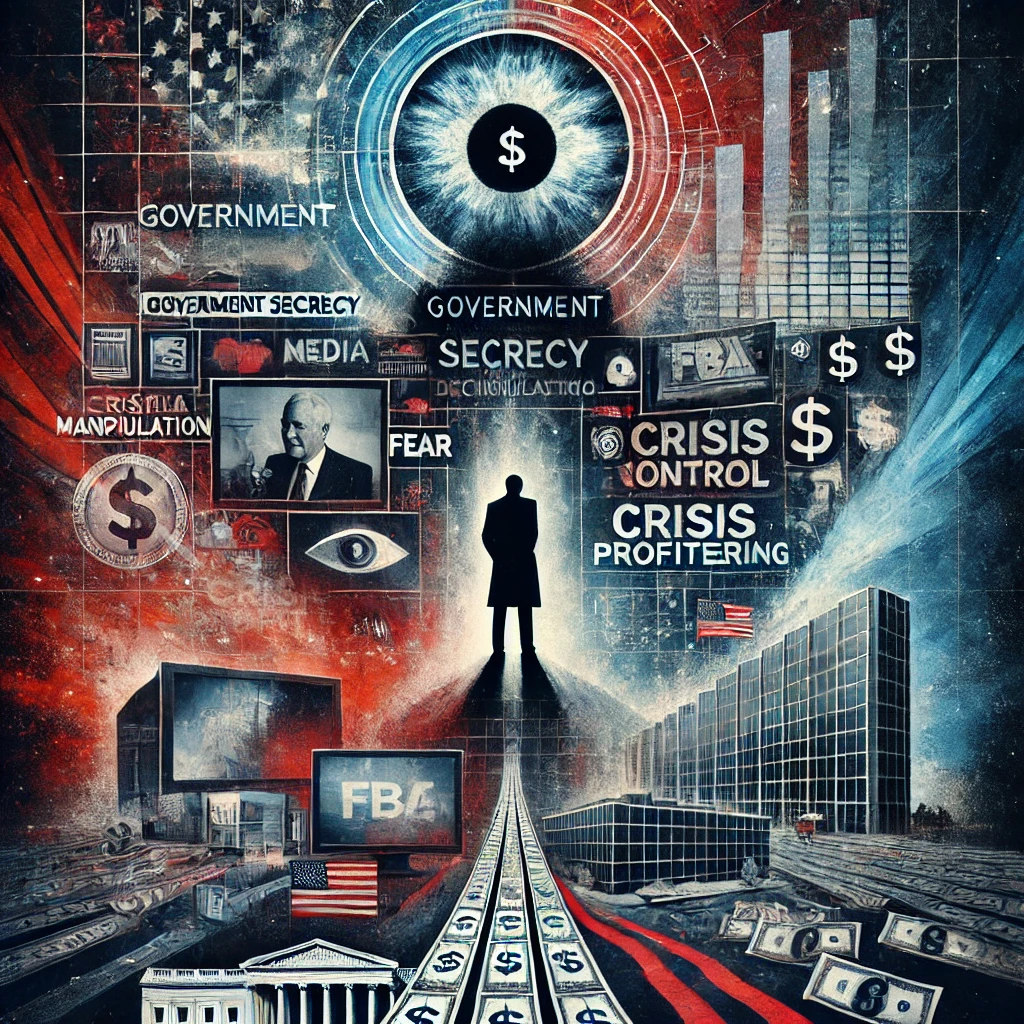
Have you ever noticed that when the government wants something—be it a war, more surveillance, or total control—some big, scary event conveniently justifies it?

Let’s talk about three major crises: a staged war, a “new Pearl Harbor,” and a pandemic that changed the world overnight. All different on the surface, yet eerily following the same script.

Operation Northwoods (1962): The False Flag That Almost Happened

Picture this: Bombs going off in Miami. Hijacked planes blamed on Cuban terrorists. Public outrage demanding war. All planned by the U.S. government to justify invading Cuba.

Yes, this was real. The military proposed faking attacks on Americans to stir up war fever. But JFK shut it down, refusing to let innocent people die for a manufactured crisis. The files were finally declassified in 1997, proving what many long suspected: false flags aren’t a conspiracy theory—they’re a documented strategy.

9/11 (2001): The Attack That Changed Everything

Fast forward to 2001. Another major attack on U.S. soil, this time real—but the official story doesn’t quite add up. Buildings collapsed in ways that defied physics, intelligence agencies ignored clear warnings, and within hours, the blame was pinned on Iraq and Afghanistan (who had nothing to do with it).

Meanwhile:

• The Bush-Cheney crew made billions through war contracts (looking at you, Halliburton).

• The Saudis (with direct ties to the hijackers) were protected, even flown out of the U.S. when no one else could travel.

• The Patriot Act was rushed through, gutting civil liberties under the guise of “security.”

War. Profiteering. Control. That’s the real legacy of 9/11.

COVID-19 (2020): The Invisible Enemy That Locked Down the World

And then, in 2020, a different kind of war began—one against an invisible enemy. But who really won?

Big Pharma made hundreds of billions on rushed vaccines with zero liability.

Small businesses were crushed, while Amazon and Walmart thrived.

• Governments seized unprecedented control, pushing digital IDs, mandates, and censorship.

• And of course—Event 201, a pandemic simulation hosted just months before COVID, eerily predicted everything.

Was the virus real? Yes. Was it planned for and used to push a broader agenda? Absolutely. Just like 9/11, just like Northwoods.

See the Pattern?

➡️ Create (or allow) a crisis.

➡️ Use fear to manipulate the public.

➡️ Roll out pre-planned solutions that benefit the elite.

➡️ Silence and smear anyone who questions the narrative.

The JFK files remind us that governments do not hesitate to deceive the public for power. And if history has taught us anything, it’s this: if we don’t recognize the playbook, we’ll keep falling for the same tricks.

So, are we waking up yet?